


Cutlines and structures that the oil and gas industry built in the Canadian boreal forest may be attracting—and potentially resulting in the death of—wood bison.
New research shows that these seismic surveying pathways and pipelines may be causing a plateau in numbers for a reintroduced population.
“They may be a trap because bison are attracted by them, but those features may not confer benefits,” said TWS member Thomas Jung, an adjunct professor in biology at the University of Alberta.
Seismic surveying is a method used to discover oil and gas buried under the soil. In northern Alberta and British Columbia, companies cut paths through the boreal forest so surveyors can conduct their work. These lines have cut up tens of thousands of kilometers of the fossil fuel-rich area of Canada into grid patterns.
Researchers have determined the effects these cutlines and other oil and gas infrastructure have on species like caribou (Rangifer tarandus), moose (Alces alces) and coyotes (Canis latrans). But scientists have often neglected to study wood bison’s (Bison bison athabascae) response to these lines, perhaps due to the misconception that these large herbivores are resilient to human impacts.
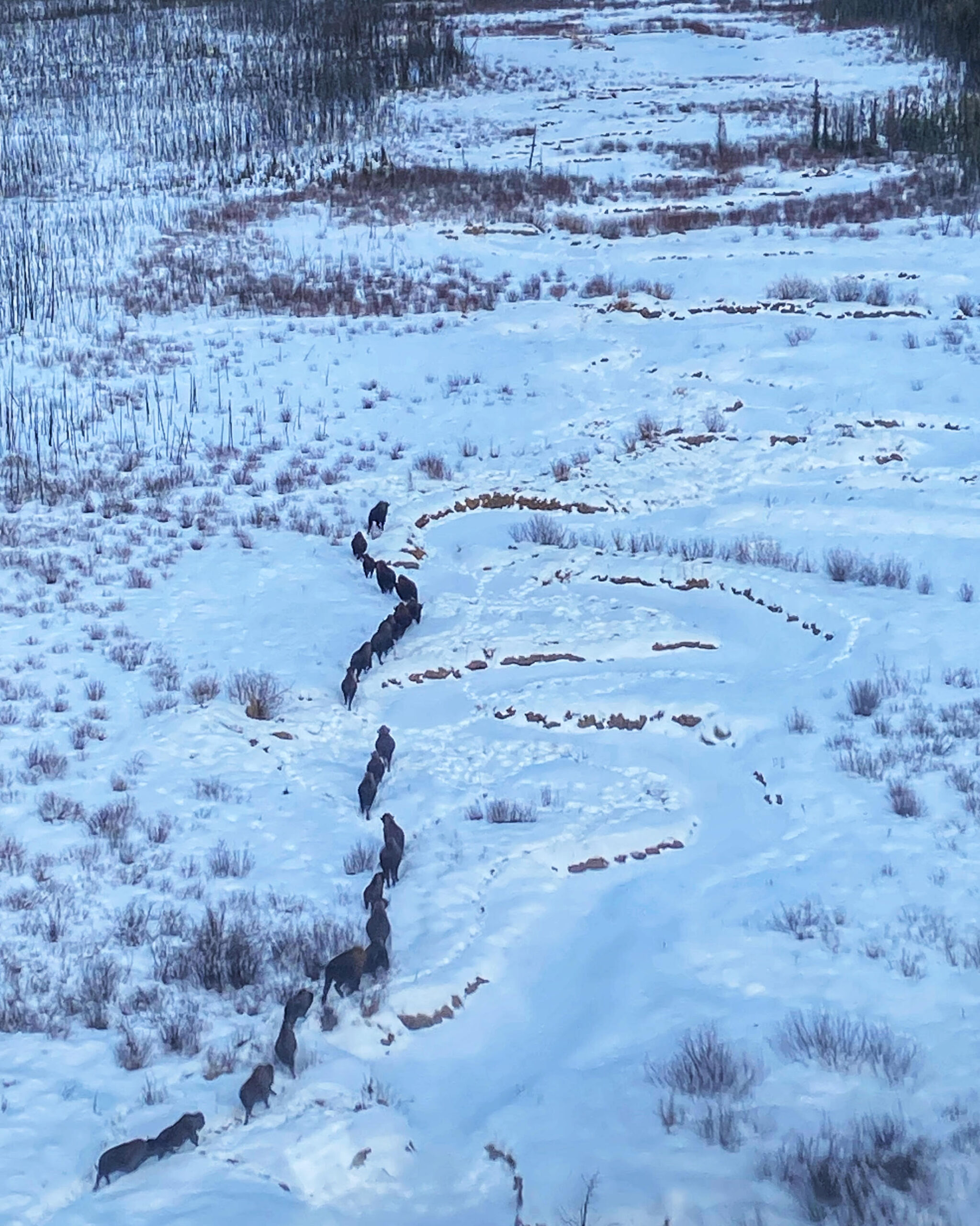
Indeed, they can seem impervious, unphased as they forage in herds along the sides of highways. Some people even see them as a nuisance when they congregate around roads or oil and gas infrastructure. “Bison have a public image issue,” Jung said.
But while Canada’s Committee on the Status of Endangered Wildlife in Canada recommended downlisting the species from “threatened” to “special concern” in 2013, the national Species at Risk Act still considers them officially “threatened.” Five out of 10 wood bison populations reintroduced as part of the species’ recovery strategy are in the greater oil sands region of Canada. “We expect it’s going to be a growing issue as existing populations expand and, perhaps, new populations reintroduced,” Jung said. He and his colleagues wanted to see whether cutlines and other oil development-related features were affecting bison.
The wood bison herd in northeastern British Columbia was first introduced in 1999 and 2000. Managers translocated 43 animals from the population in Elk Island National Park in Alberta. These few dozen animals reproduced and grew, reaching roughly 400 individuals about a decade ago. The population moves back and forth between British Columbia and Alberta, but researchers still didn’t know much about them.
Tracking a restored bison population
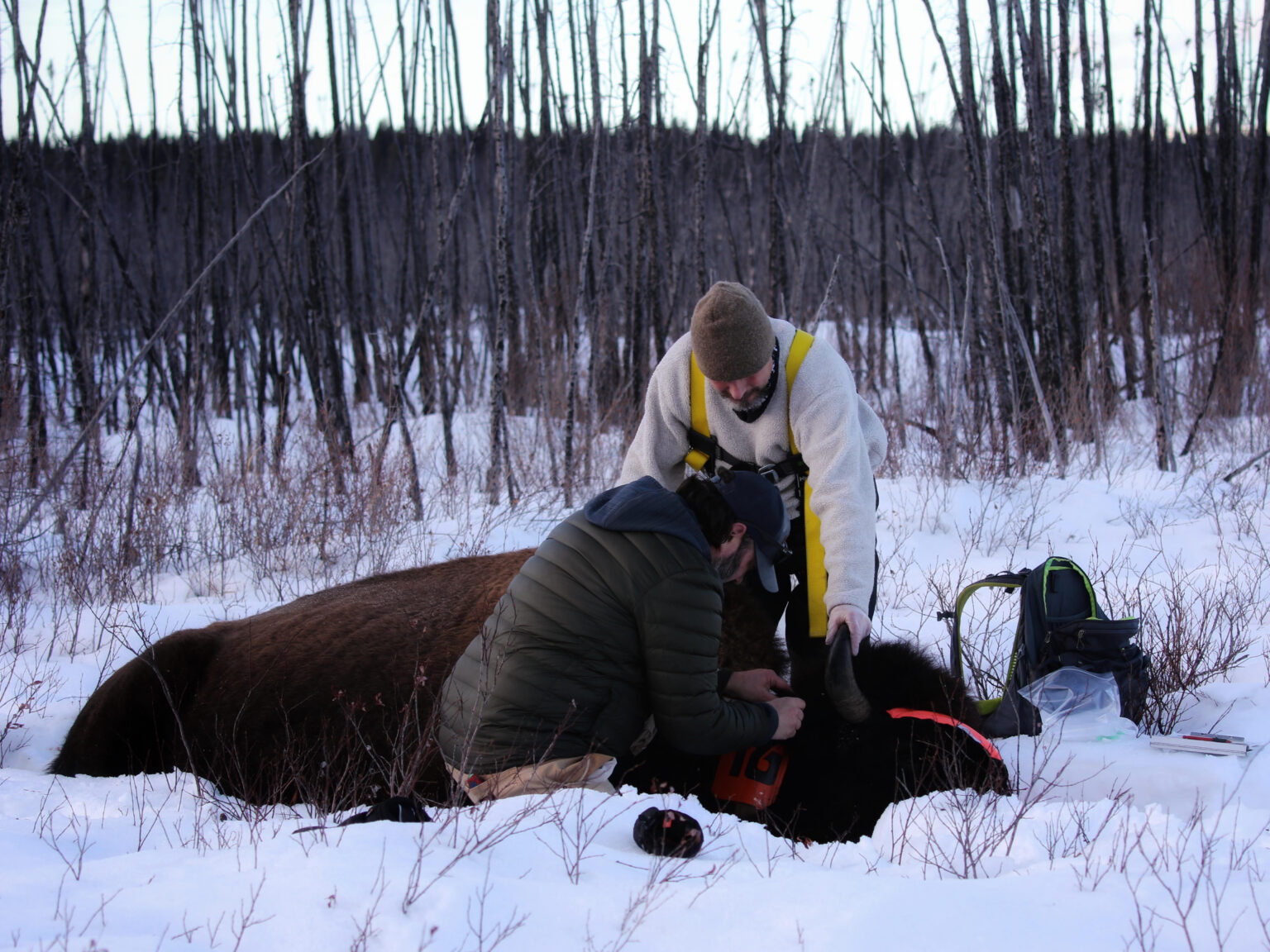
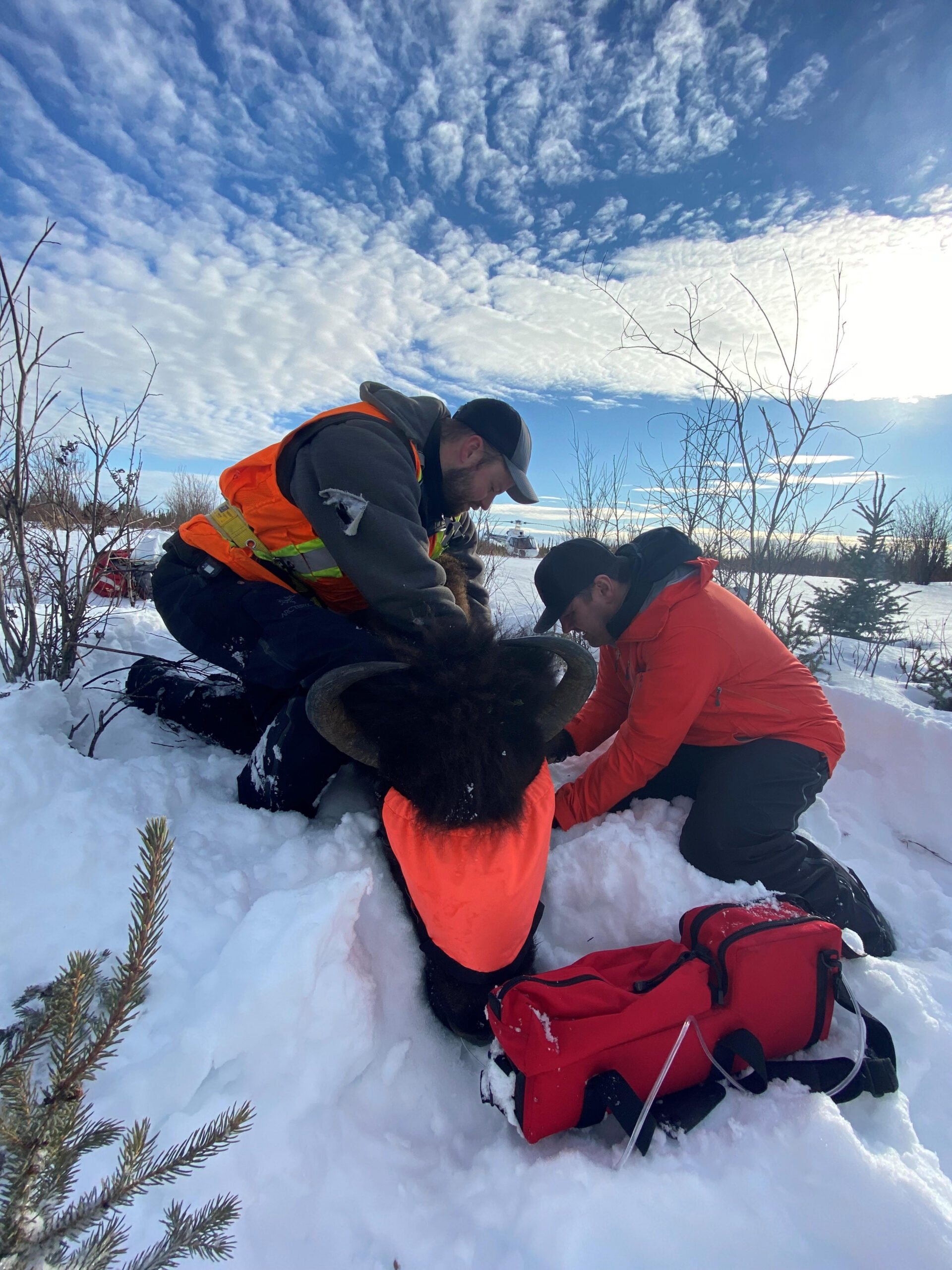
In a study published recently in Animal Conservation, the team surveyed bison movement in the northeastern corner of British Columbia bordering Alberta and the Northwest Territories. In 2020, the team first began conducting aerial surveys of the population. Then, in 2022, they began to fit animals with GPS collars, tracking them until the end of 2023.
Once they got the data, they ran models to determine the way that 14 collared bison were using the landscape in the summer and winter.
They found that bison seemed to spend more time near seismic lines, pipelines and facilities like oil pumps, said Lisa Koetke, first author on the study and a postdoctoral researcher at the U.S. Forest Service’s Rocky Mountain Research Station at the University of Montana.
She said that the bison are likely using these cutlines to travel through the landscape, foraging on the grasses and young forbs as they move along.
Wood bison seem to have a limit for how much disturbance they can tolerate, though. When human disturbance is too dense, bison avoid the area, said Koetke, who did this work on contract with the provincial government of British Columbia while finishing her PhD at the University of Northern British Columbia.
An ecological bison trap
While bison may gravitate toward features like roads and seismic trails, the cutlines likely don’t do the big ungulates any good. That creates a lot of potential for human interaction, said Ingebjørg Jean Hansen, a coauthor on the study and the president elect of the British Columbia Chapter of The Wildlife Society.
The bison cross roads, where they can get killed or injured by vehicles. Poachers also sometimes kill them due to perceived problems they cause to oil and gas operations. Chris Lewis, another coauthor on the paper and an ecosystems biologist with the British Columbia government, said that he has found some evidence of this through other GPS tracking work. “We’ve picked up collars on carcasses, and origin of death is questionable,” he said.
Further, young bison using cutlines may be more at risk from predators like gray wolves (Canis lupus), which also make use of these fast lanes through otherwise dense boreal forest.
All of these reasons may contribute to the fact that the bison population isn’t growing as quickly in this area—it has hovered around 400 for about a decade. “We haven’t seen the population take off in numbers,” said Hansen, who was working as a senior ecosystems biologist with the British Columbia government at the time of this research.
“That’s pretty poor population performance for bison,” Koetke added.
The main implications of this research, Koetke said, are that wood bison need to be managed a little different than caribou, another at-risk species in the area. “There are times when they diverge and times when they converge,” Jung said.
Just the same, the researchers cautioned against taking away the message from their research that bison prefer cut forests. “We’d like to have wild bison out there that aren’t reliant on anthropogenic habitats,” Jung said.
Article by Joshua Rapp Learn