


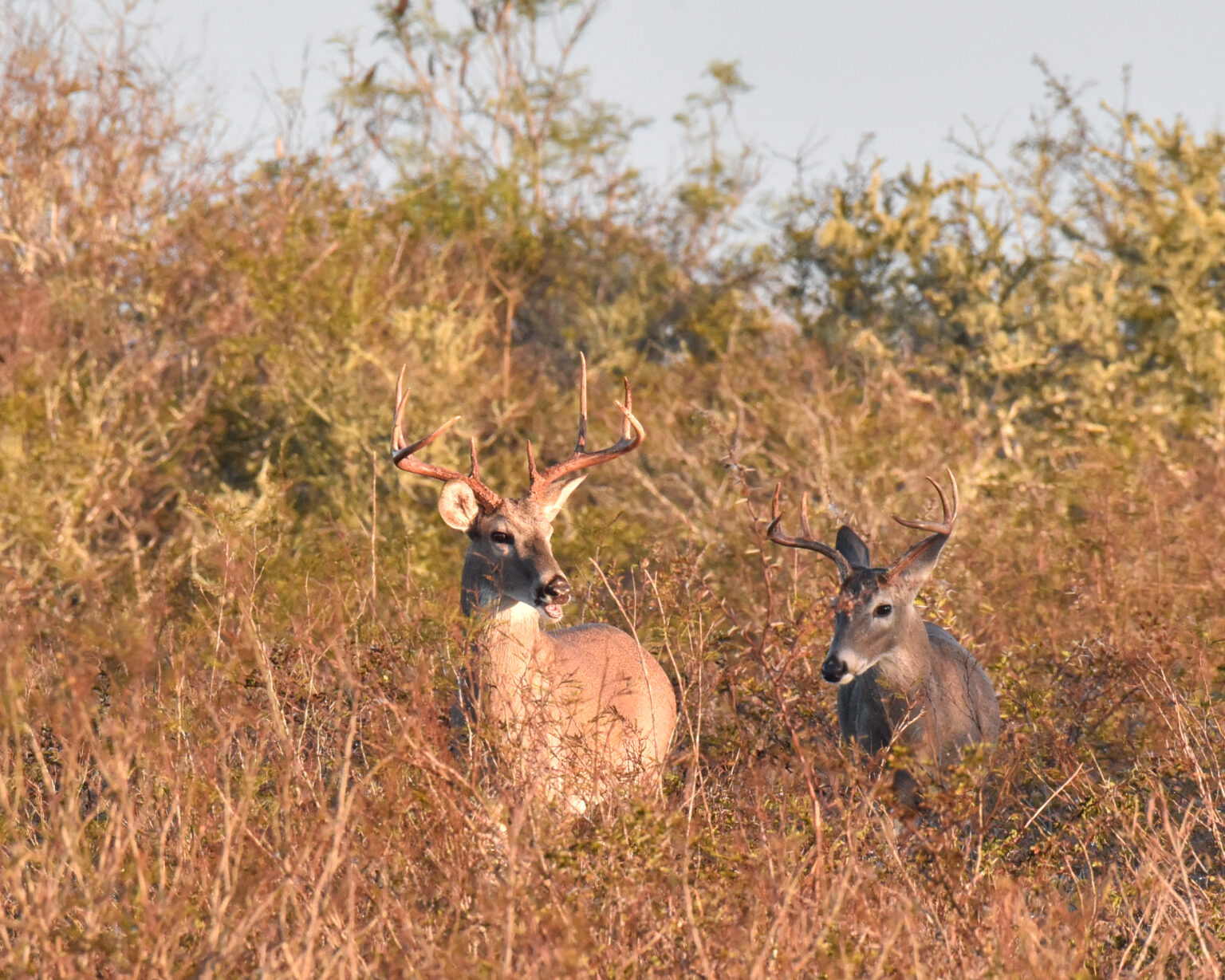
A massive, multiyear study in South Texas has revealed that sustained removal of small-antlered deer doesn’t boost the rack antler size in older bucks.
“Culling didn’t change the size of the antlers in the treatment area compared to the control area,” said TWS member Charles DeYoung, a professor emeritus in wildlife management with the Caesar Kleberg Wildlife Research Institute at Texas A&M University-Kingsville.
The study—now the largest conducted of its kind—helps biologists answer an ongoing question: does sustained hunting pressure against small antlered deer prompt an evolutionary response?
Such human-mediated reductions in size have occurred in other species. Studies have shown that overharvest of oysters in Florida, for example, has resulted in a significant drop in the size of the shelled critters. In fact, a host of species may be affected by overharvest. In one relatively isolated population in Alberta, researchers have tracked a reduction in the horns of bighorn (Ovis canadensis) rams due to overharvesting of trophy sheep.
But researchers in this study, published recently in Wildlife Monographs, were looking at the opposite end of this argument. They wanted to see if culling smaller antlered deer from a population could produce a population with bigger trophy racks. This, in turn, could boost game opportunities at private ranches.
The study was a follow-up from earlier research Texas Parks and Wildlife conducted about 25 years ago. The agency demonstrated that they could increase the average antler size of white-tailed deer (Odocoileus virginianus) and that this larger antler trend was inherited by subsequent generations of males. As a result, the state agency has been recommending land managers and property owners interested in having big-racked bucks to cull males with small antlers.
However, that research was conducted using penned animals. DeYoung and his colleagues wanted to repeat the experiment on a larger scale to see if they got the same results.
Starting in 1999 on the King Ranch—a private working ranch focused on land conservation in South Texas with low, permeable fences—wildlife managers began culling male deer with smaller than average antlers for their age class in different areas. The researchers enlisted the help of volunteer hunters to cull these bucks using rifles.
Following these cullings, which totaled 135, the team captured deer randomly every year until 2005 and measure their antlers both in the culling area and in an area where no culling took place as a control. They also took small tissue samples to determine paternity and track any inherited effect.
They found that this effort did little to impact antler size. “We found that at King Ranch, we couldn’t find any effect of our culling treatment,” DeYoung said.
Expanding the scope
At King Ranch, though, recreational hunters were still killing bucks on the land at the same time as the experiment, which may have affected the outcome somewhat, as hunters tend to single out large-racked bucks.
To be sure of their findings, the team then conducted a similar experiment in Comanche Ranch, also in South Texas, starting in 2006. Recreational hunting occurred there, but on a much smaller scale.
At Comanche, the researchers also expanded the scope of their experiment, using two different culling treatments in two separate areas: one where they culled 878 bucks older than or equal to 3.5 years with smaller antlers, and a more intense treatment in which they culled 365 small-antlered bucks of all ages. They culled deer from 2006 to 2012 at Comanche and reduced the intensive-treatment male population by 88% of the bucks there during those six years.
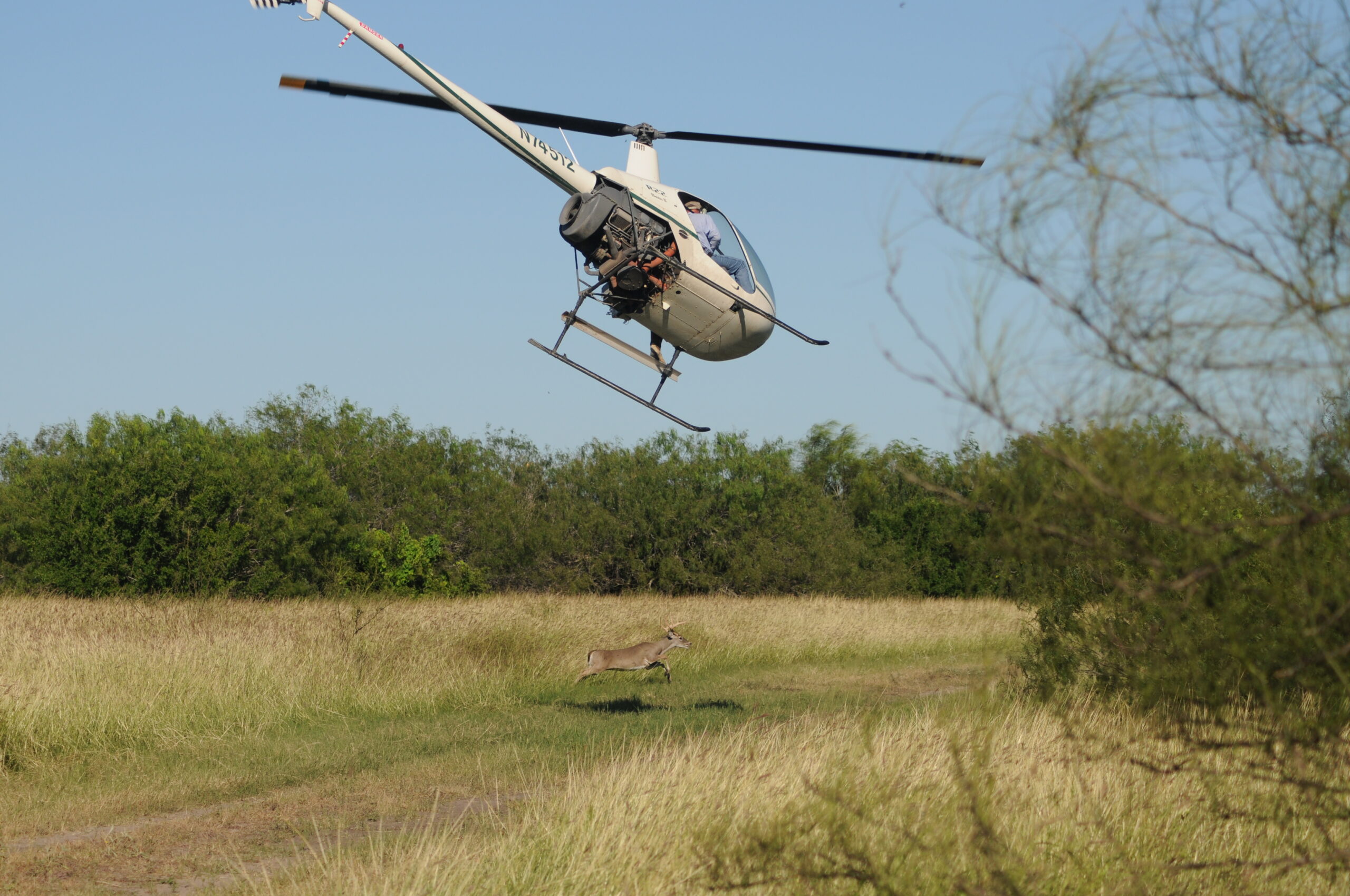
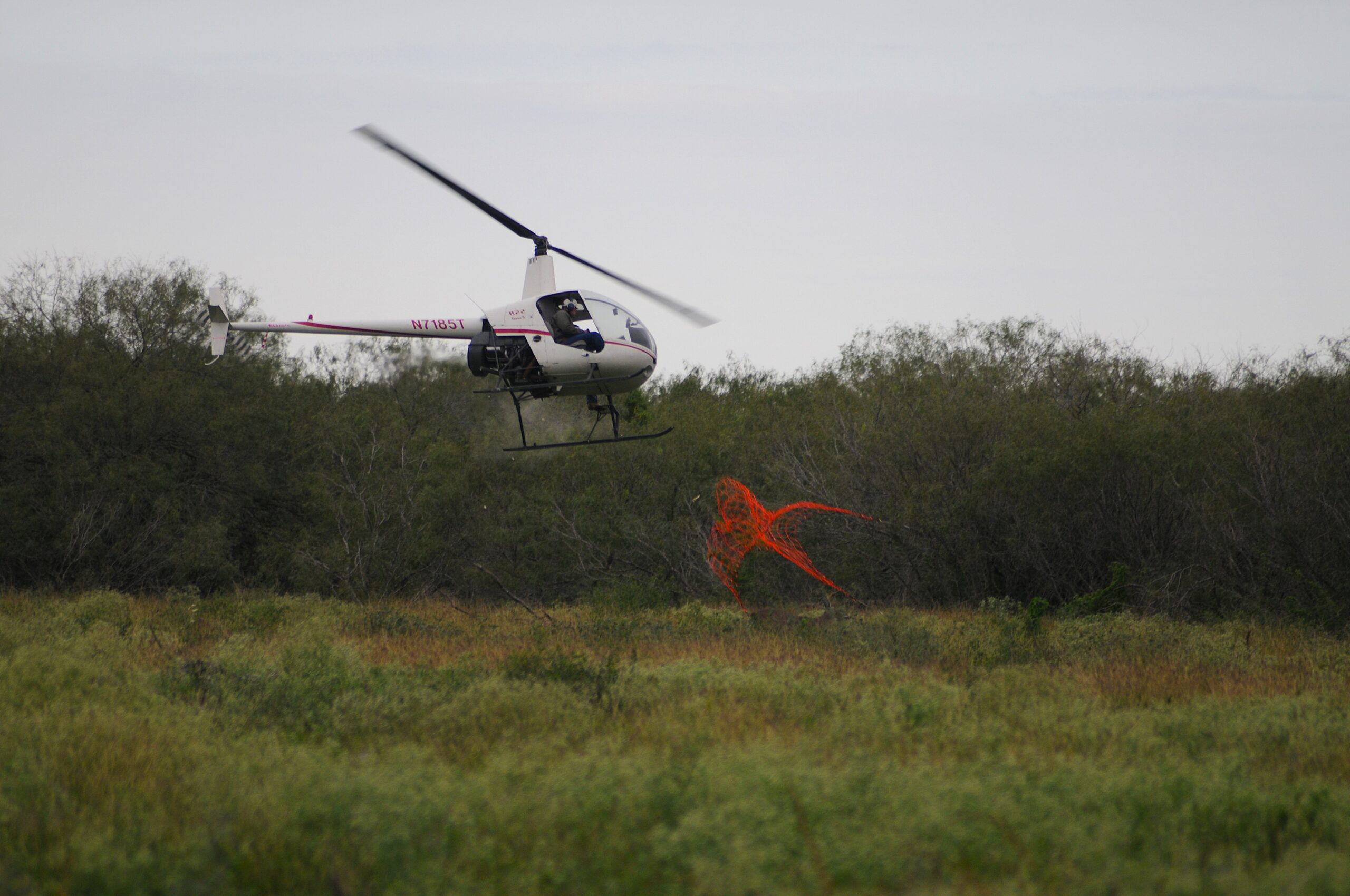
To cull more deer than they could using on-the-ground hunters alone, they deployed helicopters with net guns to capture more deer. They’d shoot the net out once they were about 50 feet away from the animal. “It’s a crazy technique, but it’s used often in the West,” said TWS member David Hewitt, executive director of wildlife research at the Caesar Kleberg Wildlife Research Institute and a coauthor on the study.
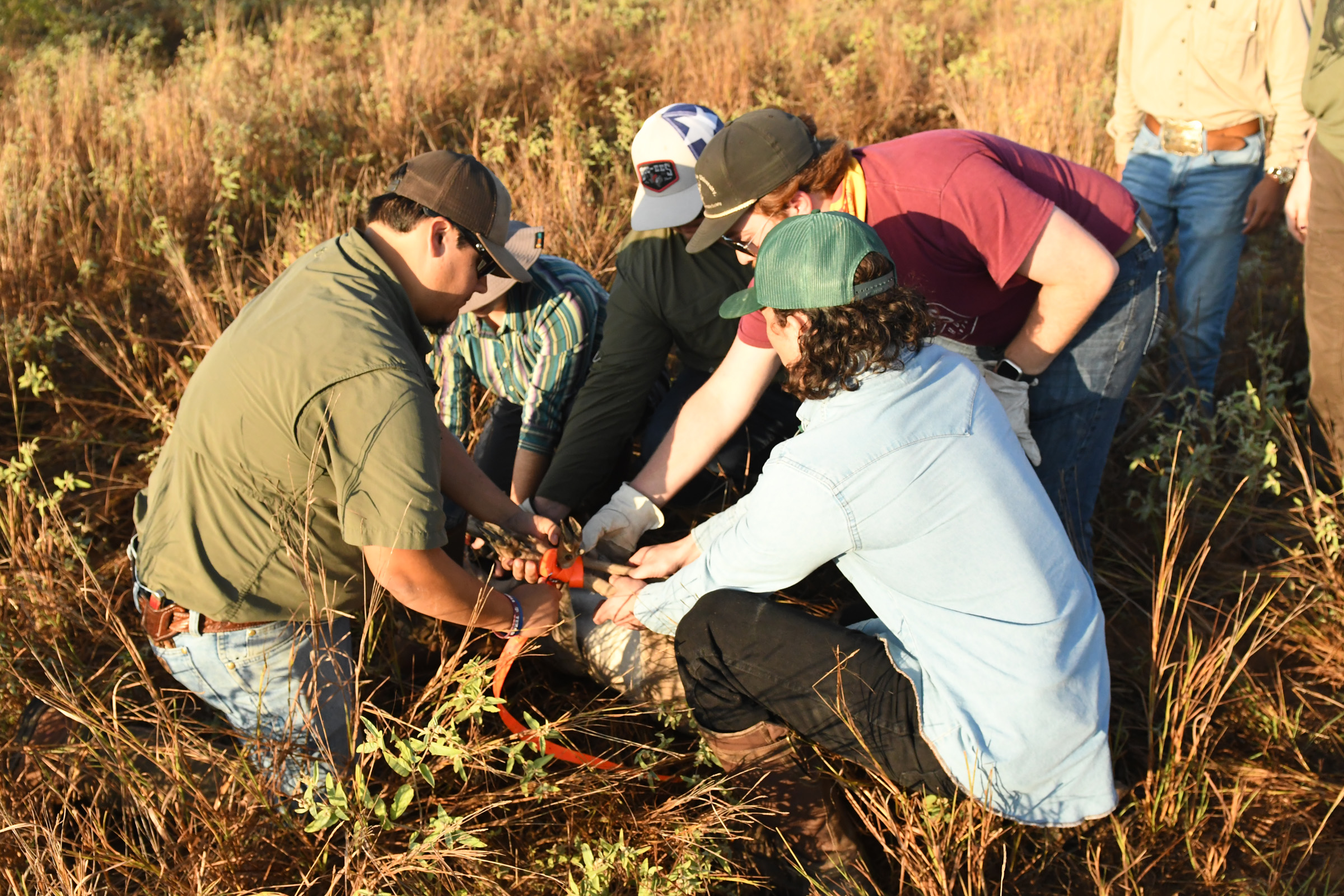
This technique increased their capture rate—some days, the team would capture more than 100 animals. They took these animals to a separate area where they would measure and sometimes cull them, depending on the antler size. They captured about 6,000 deer in total in subsequent years, catching animals every year until 2018. About half of those were recaptures.
At Comanche, which is a high-fenced property with a closed population, the team did see some immediate effect from their culling. The antler size increased in bucks aged 3.5 years and up after seven years of culling. But after the team finished culling in 2012, they continued capturing deer for six more years, when the average antler size of bucks was either smaller or no different from when they started culling. “There was no evidence of genetic improvement from the fact that we increased the larger antler size,” DeYoung said.
It’s hard to predict the future
Overall, the experiment reveals that it’s difficult to boost average antler size in the long term using a culling method like those conducted in the study.
“It’s exceptionally good work,” said Marco Festa-Bianchet, a professor emeritus in biology at the University of Sherbrooke in Quebec who was not involved in this recent research. “This idea that this selective culling of small antlered animals will lead to the evolution of bigger antlered animals—I think this study clearly shows it won’t work.”
Festa-Bianchet has conducted numerous studies on the way that intense trophy hunting pressure contributes to the shrinking of mountain sheep horns over time, but he said that deer are much different. For one, deer lose and regrow their antlers every year, whereas bighorns’ horns grow a little more each year throughout their lives. He says that removing most mountain sheep with large horns that have a higher chance of mating success will have an evolutionary impact over time. But the opposite isn’t likely to have as strong of an effect, since smaller antlered deer are less likely to reproduce anyway. “If a hunter removes a small yearling buck, that yearling buck probably wasn’t going to reproduce at all,” he said.
Hewitt said that part of the problem is, while a small antlered buck is more likely to have small antlers as an adult, this prediction isn’t ironclad. For one, there is a lot of annual variability involved. Drought can lower the food in a given area, meaning bucks have fewer resources that would allow them to produce big antlers. As a result, when resources are low in drought years, the average antler size may decrease in all bucks—even those that might otherwise have larger racks.
Another problem is that white-tailed deer females don’t always choose mates with the largest racks.
“The white-tailed deer breeding system doesn’t lend itself very well to big genetic changes in antler size, because a lot of bucks successfully reproduce,” Hewitt said. “So, any one buck doesn’t have a huge impact.”
Festa-Bianchet agrees. “The size of the antlers does not seem to have a huge role in how successful the male is,” he said.
Further, the intensity of the culling may have impacted the size of antlers in subsequent years. Since 88% of bucks were removed, some fawns at Comanche may have been born later in the year due to a lack of potential sires. This may have meant that their offspring were smaller and had smaller racks as a result. “It was kind of a vicious cycle,” Hewitt said.
Finally, it would be difficult to sustain the level of culling that researchers conducted at Comanche. The culling would have to be so massive and continuous as to make the technique impractical. “No manager would likely ever be able to do that or want to do that,” DeYoung said.
He added that intensively managed ranches may still see some benefit in the short term. “But it’s not going to make any genetic change for the population,” he said.
The “scope and scale” of the experiment, above all, really shows how well this question about culling bucks might affect average antler size among adults, Hewitt said. “I really think it’s definitive.”
This article features research that was published in a TWS peer-reviewed journal. Individual online access to all TWS journal articles is a benefit of membership. Join TWS now to read the latest in wildlife research.
Article by Joshua Rapp Learn