




Bringing your dog to bear country for protection might do more harm than good.
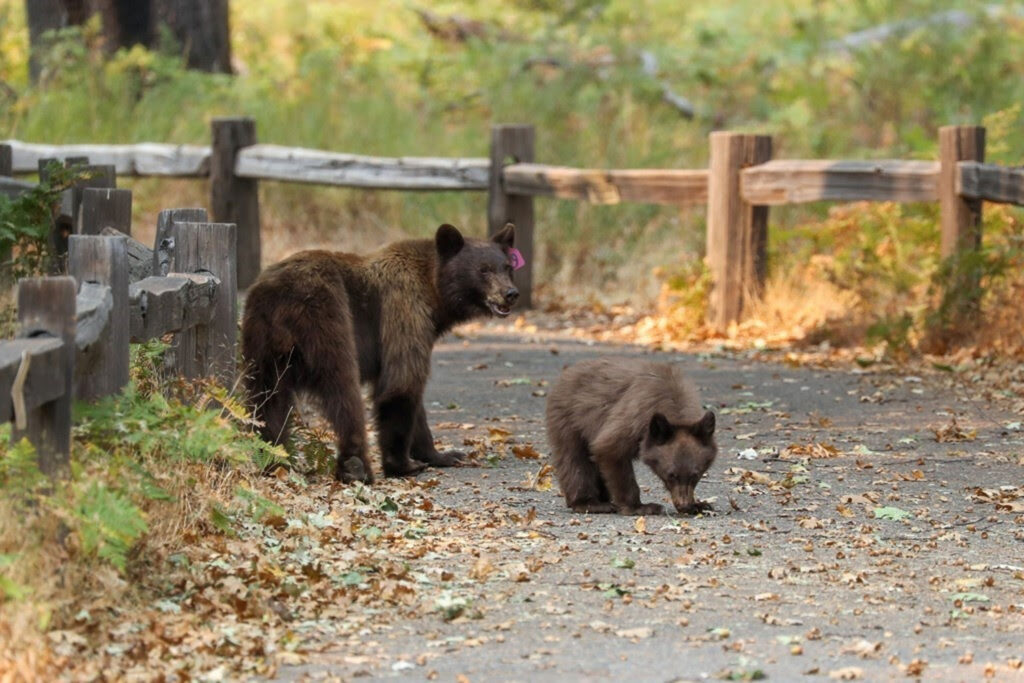
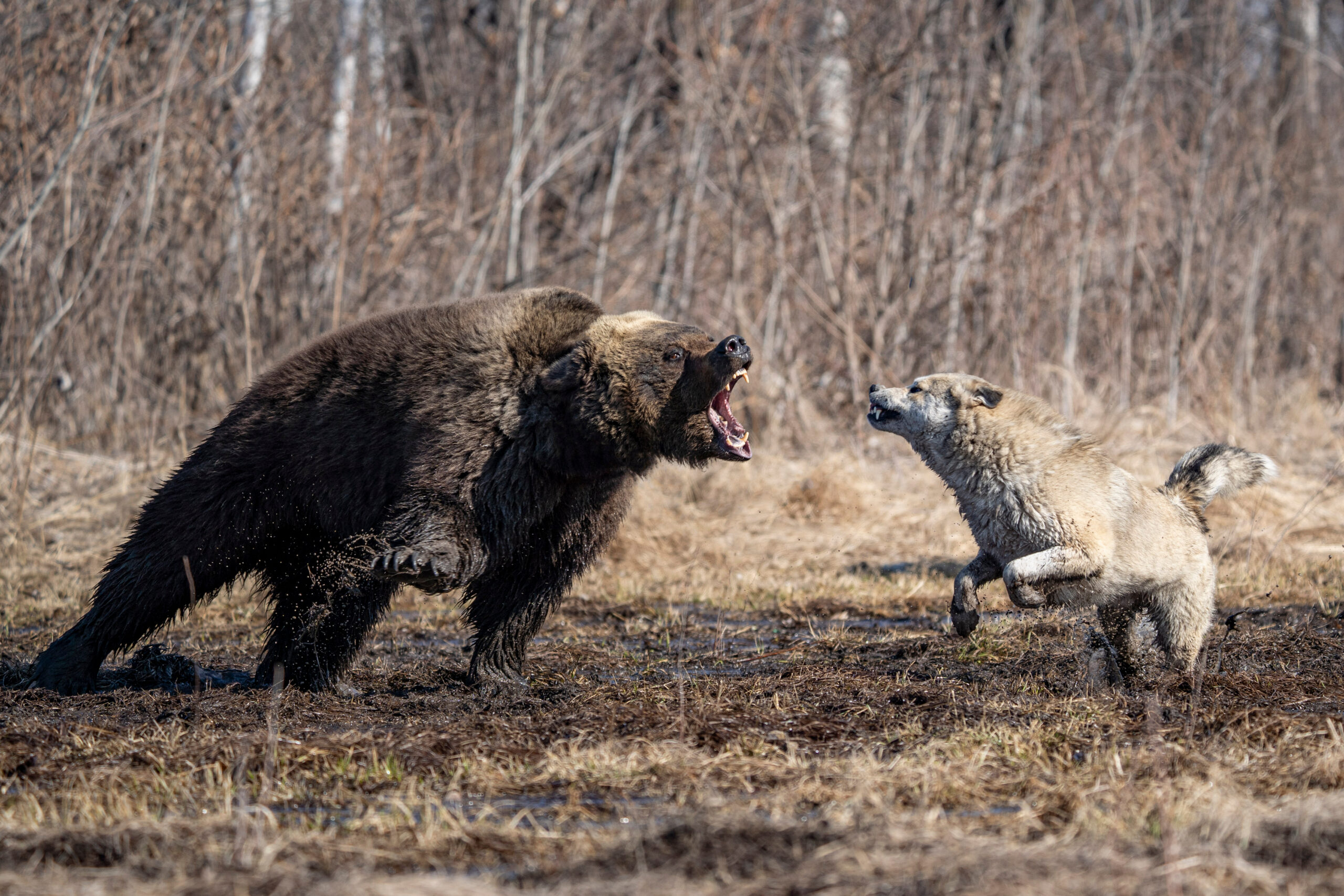
Of more than 300 human-bear conflicts, dogs initiated the attack more than half the time. Dogs either left the encounters injured or died in two out of every three encounters.
“Our data suggests that they are more of a hindrance than a help,” said Tom Smith, a professor of plant and wildlife sciences at Brigham Young University in Utah and the lead author on a new paper in The Journal of Wildlife Management. But that doesn’t mean you should leave your dog at home every time. “It is possible to coexist with [bears] quite peaceably, but it’s not without some due diligence on your own part.”
Calculating risk
Smith’s research focuses on human-bear conflict in North America, including how to prevent it and what deterrents are most effective. He’s worked with all sorts of bears, testing methods like bear spray—sometimes even accidentally spraying himself. For this paper, Smith and his colleagues looked at 326 human-bear conflicts involving domestic dogs. They gathered these reports from a database Smith and his coauthor Stephen Hererro put together from scouring newspapers, books, government reports and the web for reported black (Ursus americanus), brown (Ursus arctos) and polar (Ursus maritimus) bear encounters.
There were 170 human injuries and five human fatalities reported in the encounters, while 56 dogs were killed. These encounters occurred both in backcountry and much more developed front-country locations, and dogs initiated attacks 54% of the time.
When dogs were off leash, they sometimes even brought bears to their owners rather than scaring them away. Dogs flushed bears out of the brush and brought them back to their owner in 8.3% of cases. During this kind of encounter, owners were injured 70% of the time.
While larger groups of humans help deter an attack with and without a dog, the trend was much smaller when a dog was involved. Having a dog, regardless of group size, more than doubled a group’s odds of having a negative interaction with a bear when compared to a group of the same size without a dog.
The instances of dogs helping their owners in attacks were minimal—it only occurred about one third of the time. And dogs alerted their owners to the presence of bears in only about 9% of times. In only about one third of attacks, dogs came to the aid of their owners.
Humans, though, often jumped in to help their dogs. The study documented 102 people who tried to intervene, around half of them sustaining minor to serious injuries because of their efforts. Smith, who has two dogs of his own, understands pets are a part of the family, but says it’s never a good idea to try to intervene without a deterrent, like bear spray, when a dog is being mauled.
Deterrents are the best way to eliminate risk with a dog. In the study, not a single person with a deterrent—even though they had a dog—got injured. “People with deterrents were far and away less involved,” Smith said.
Why dogs and bears don’t mix
Certain dogs are bred and trained to haze bears, but your average house pet doesn’t have the training to safely take on an agitated bear. While there are stories of dogs protecting their owners, Smith said that based on the data, you can’t expect your dog to step up in a moment of need. The vast majority of dogs in the study either fled or watched the bears attack their owners.
Bears and canids have coevolved for millennia. In the wild, bears and wolves (Canis lupus) fight over food caches. While your labradoodle might be a far stretch from a wolf, in the bear’s eyes, they look and smell similar. “They don’t recognize Snickers as a pampered domestic dog,” Smith said. “There’s no love lost between these species.”
Smith said that from study to study, his findings all sound a little similar: “The odds [of a bear attack] are already low, but if you do a few simple things, you can make the odds even lower.”
When it comes to dogs, the rules are similar to any other hike in bear country. Carry a deterrent like bear spray; hike in groups; and talk amongst yourselves so as to not surprise a bear on the trail. When you’re hiking with a dog, Smith said it’s important to keep your pet on a leash. However, if they are well-trained and reliably listen to your commands, Smith said dogs can be off leash where regulations allow. Well-trained dogs in this case mean that they stay a few paces away and don’t run ahead on the trail.
While dogs can make it riskier to hike in bear country, humans can make efforts to reduce—but not eliminate—the risk to their furry companions. Smith hikes in Utah—where there’s a low density of black bears—with his two dogs for an hour every day and has never had an incident. But he said he’s also been driving for 57 years without an accident and still wears his seatbelt. “It only takes one mauling to ruin your day, so always be alert and prepared,” he said.
Smith says it’s important not to lose perspective, though. With or without a dog, bear conflicts are an extremely rare event. Making smart choices in bear country can help keep you and your pet safe. “Put [the worry] in its place; now go out and enjoy yourself,” he said. “Don’t obsess about it.”
Article by Olivia Milloway