

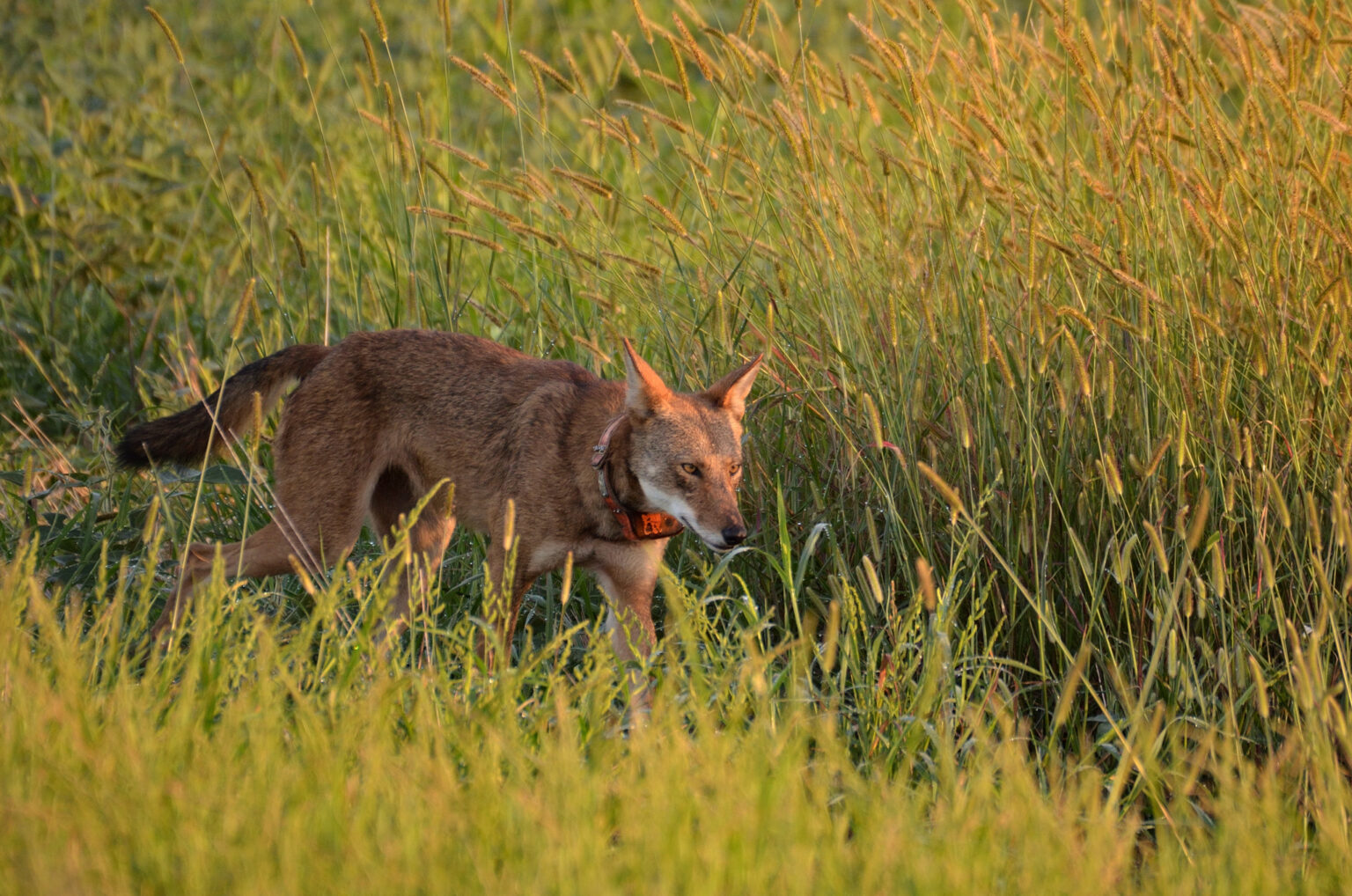
Wolves need wide open spaces—something that’s not easy to come by in the American Southeast. Subdivisions, farms and roads dot the landscape across the red wolf’s historic range.
The red wolf (Canis rufus) is the most endangered canid in the world, with only 30 or so animals remaining in the wild. But there are hundreds of red wolves in captivity waiting to be released. There’s just no good place to put them.
The only wild population of red wolves is in coastal North Carolina. Reintroduction efforts in the Great Smoky Mountains National Park failed in the late 1990s and since then have stalled.

A new paper published in The Journal of Wildlife Management argues that military lands might be the key to recovering red wolves in the southeast. The Department of Defense (DOD) owns, leases or manages millions of acres across the country for everything from munition testing to training to storage. A handful of the bases within the red wolf’s historic range in the Southeast have enough habitat to support the species.
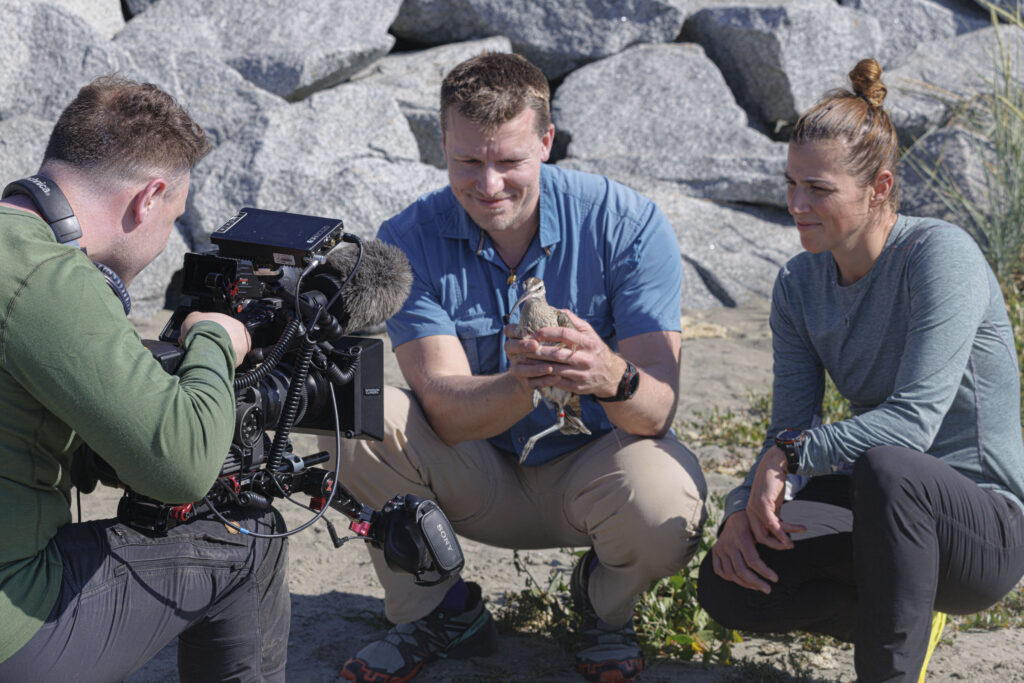
In our latest Q&A, TWS chatted with lead author Meghan Keating, a TWS member and postdoctoral researcher at Clemson University, on why these lands might be a good fit to help restore red wolves to the Southeastern U.S.
What role do military lands already play in conservation?
In the U.S., military lands have been involved in a lot of species conservation. Being part of the federal government, they have to follow the Endangered Species Act (ESA) and provide habitat for a listed species if it occurs there. DOD employs biologists who conduct endangered species surveys and endangered species habitat assessments. The army was very involved in red-cockaded woodpecker (Dryobates borealis) management.
They’re the most stable federal facilities we have, and they also have very consistent staffing, funding and logistical support.
Why are red wolves a good candidate for reintroduction on military lands?
Today, the things we’re most worried about are red wolves being intentionally or accidentally killed by humans. When they disperse to a new area, they’re often mistaken for coyotes (Canis latrans)—which are seen as a nuisance species—and shot.
Hybridization with coyotes is also a concern. Research suggests that when a red wolf pack has a proper pack structure, they won’t hybridize. But when the density gets low and they have to search for a partner, they can mate with coyotes.
The bases would protect the wolves from persecution and the threat of coyote hybridization. Lots of military bases already engage in coyote control. And we think that a strong population of red wolves would exclude coyotes, so it’s a win-win.
Military lands tend to harbor really high densities of wildlife because of the undisturbed habitat, meaning that a lot of bases have a white-tailed deer (Odocoileus virginianus) problem. On U.S. Air Force bases, a lot of deer and coyotes are hit during takeoff and landing. From what we know about red wolves historically, they eat a lot of beavers (Castor canadensis) and deer. Adding red wolves might reduce or eliminate the need for deer culls on bases.
What if the wolves moved off the bases?
We identified three bases that we thought would be good candidates for reintroduction: Eglin Air Force Base on the Florida panhandle, Fort Stewart in Georgia and Fort Polk in Louisiana. They are all large, at 1,800 square kilometers, 1,100 square kilometers and 900 square kilometers, respectively. Alligator River National Wildlife Refuge, where the wolves live now, is only 800 square kilometers, and it is also adjacent to a military base that they travel on and off.
The sites we looked into have lots of food, protection and high-quality habitat for the wolves. If the reintroduction is going well and the wolves are breeding, they will disperse. We picked each of these bases because they are within a short distance of other federally protected land—within 34 kilometers, the average red wolf dispersal distance. The wolves could easily disperse into more protected areas, hopefully avoiding conflict.
What are the biggest drawbacks?
The biggest downside is that these bases aren’t connected to one another. Under the U.S. Endangered Species Act, we define a conservation success as having self-sufficient, connected wildlife populations. If we drop them on military bases far from one another, we’d create unconnected metapopulations.
I have been asked if the wolves would be in danger if the military needed to test a bomb or something. Wolves are a lot more wary of people and would hopefully stay out of the way of human activity.
On a base out west with a large population of desert tortoises (Gopherus agassizii), the military needed to do an important drill, so they teamed up with U.S. Fish and Wildlife Service to relocate the tortoises until the drill was finished. Of course, it’s all about partnerships. The U.S. Fish and Wildlife Service would have a heavy hand in the effort, and likely state agencies, too.
We’re not ignoring the difficulties of putting a wolf anywhere, including on a military base. The recovery team has identified what they need to do; they just haven’t identified places to do it. We wanted to think outside the box, because I think creative thinking might just reinvigorate red wolf conservation efforts and make things feel less bleak. Right now, a lot of people are ready to throw their hands up. But we think we should think about more options before we do.
Article by Olivia Milloway