

A panel of experts, including TWS members, highlighted climate threats to biodiversity during the world’s largest annual gathering on climate change.
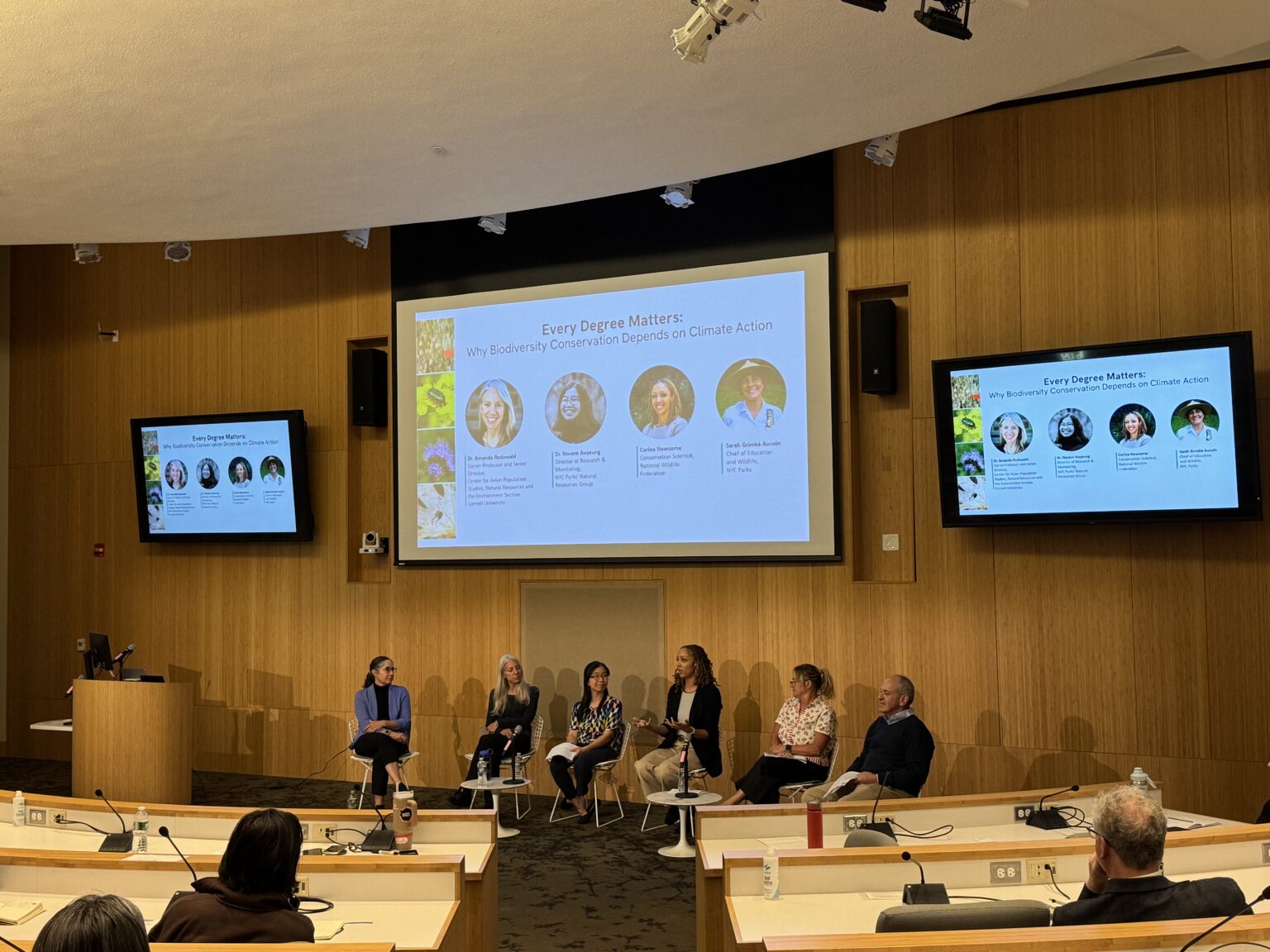
The Wildlife Society, the National Wildlife Federation and the City University of New York’s (CUNY) Advanced Science Research Center Environmental Science Initiative hosted an afternoon of discussion on the urgency of climate action for wildlife and conservation during the annual Climate Week NYC.
The speakers at the event included TWS member and ornithologist Amanda Rodewald of Cornell University; Novem Auyeung, the director of research and monitoring at the NYC Parks’ Natural Resources Group; Corina Newsome, a conservation scientist at the National Wildlife Federation; and TWS member Sarah Grimke Aucoin, NYC Park’s chief of education and wildlife.
The panel was moderated by TWS member Diane Pataki, the chief scientist and vice president for science at the National Wildlife Federation, and Peter Groffman, a professor at the CUNY Advanced Science Research Center’s Environmental Sciences Initiative.
Pataki began the session with an introduction to climate science, noting how little climate science is actually presented at Climate Week. Then, each panelist briefly presented their work—from urban ecology to managing human-wildlife conflict—and how it relates to climate change and biodiversity.
Auyeung and Aucion of NYC Parks spoke about how climate change is affecting places like New York City, which is prone to flooding. “Despite our reputation as being a concrete jungle, NYC has 22,000 acres of natural areas across the city in all five boroughs,” Auyeung said. “Climate change is both a challenge and an opportunity as we do our work.”
Aucoin works on the relationship between New Yorkers and the city’s wildlife. She said that climate change has affected how people interact with wildlife, like animals displaced by intense storms. “We want people to realize that urban wildlife isn’t something separate from the city but something that makes it more healthy, vibrant and resilient to climate change,” she said.
While the threat of climate change looms, the panelists emphasized there’s still time to reverse course. Using art in science communication and engaging people with citizen science in their own communities can help make meaningful strides toward change. “If we act now, we can save thousands of species—and people,” Pataki said.