Good morning, TWS,
The first three months of 2026 found me traveling quite a bit. I roamed the countryside, from as far south as Galveston, Texas, to as far north as Winnipeg, Manitoba, and everywhere in between. Several state/provincial chapters and sections had graciously invited me to attend and present at their annual conferences, and I had gladly accepted. I was excited to bring news and share information on behalf of The Wildlife Society, but I also was looking forward to meeting the members—both new faces and old friends—and, in the process, hopefully strengthening our Society.
It is on this latter aspect that I want to share with you a brief story from one of my trips. In my traveling to these various conferences, I learned something that I suspected for some time but hadn’t quite had the opportunity to fully live: it is the members of TWS that make it special.
We come from all walks of life, and we all have knowledge, talents and gifts that we can share with others. My short reflection today is about a retired wildlife professor that decided to do just that. The story involves oak woodlands and Starker Leopold.
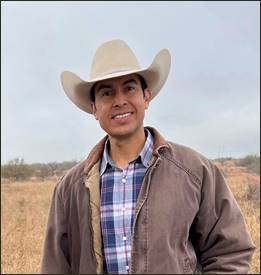
“I just read that you will be attending our meeting! I am delighted. If you are interested, KT (my wife) and I would like to take you to the Hastings Natural History Reservation in the Carmel Valley.”
I found this message in my inbox on a November morning when I got into the office. It was from R.J. “Rocky” Gutiérrez, a long-time TWS member and retired wildlife professor from the University of Minnesota, greeting me after he had read that I would be attending the Western Section’s annual conference in February.
“It could be a half-day trip if you are interested,” he continued. “Of course, if you are interested in doing something else local, we might be able to help with that as well.”
I had never attended the Western Section’s annual conference before, but I had heard many great things about it. The Western Section, one of the largest sections of TWS, hosts conferences that draw in 800+ attendees. They usually feature well-known speakers—movers and shakers—for their plenary. Whatever nervousness or anxiety I may have felt about attending the conference, Rocky’s warm welcome had squashed them.
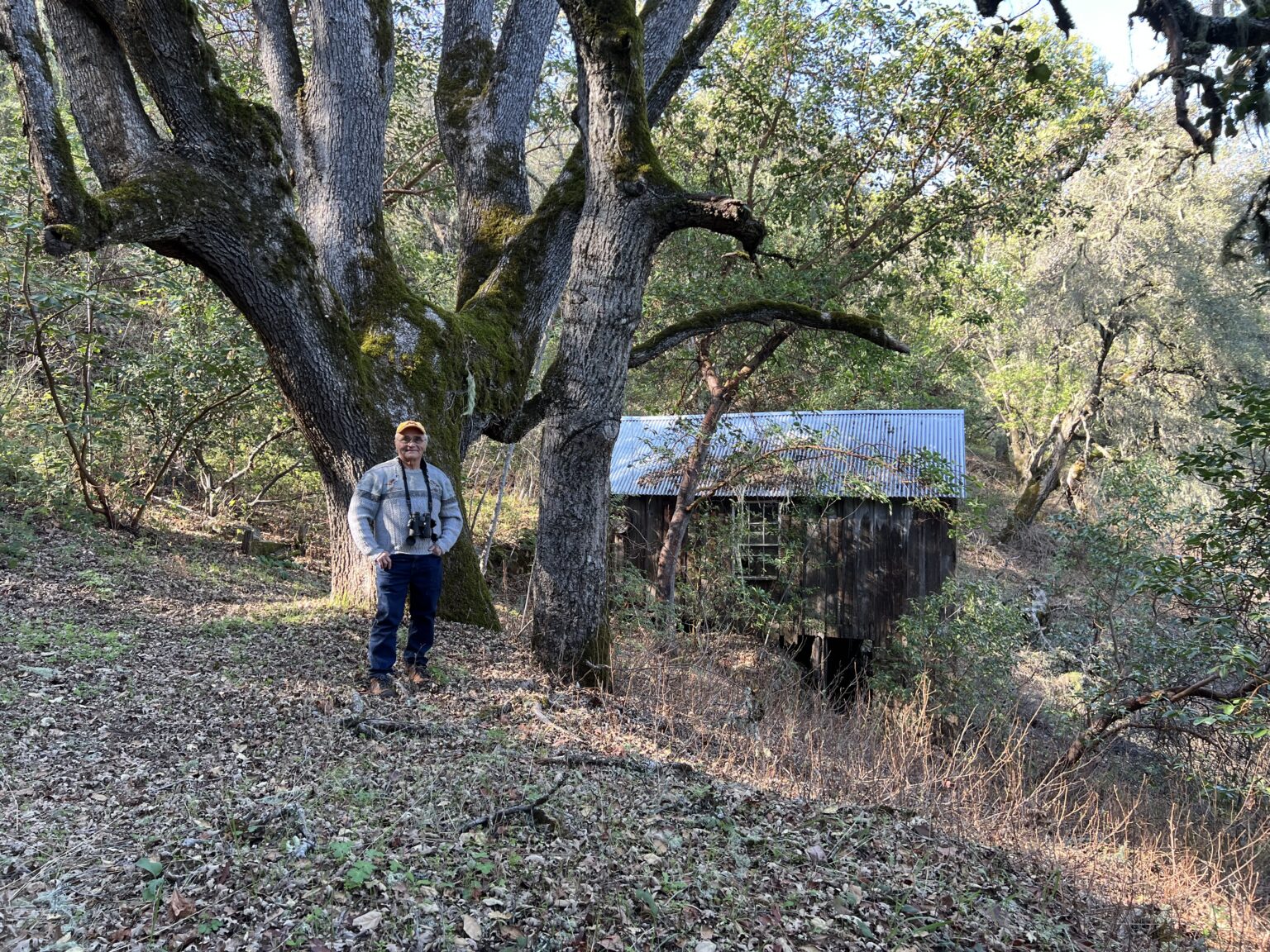
I traveled to Monterey, California, in February and spent three enjoyable days at the conference visiting with members, attending presentations, and mingling at social events. Rocky and I had agreed to meet toward the end of the conference and make a day of visiting the Hastings Natural History Reservation, a beautiful piece of wildland located in the Santa Lucia Mountain Range, where he had done his doctoral research some 40 years prior. The University of California Berkeley established the reserve in 1937 for research and community education purposes. I met Rocky and KT early on a Friday morning, and we set off down a winding road through the Carmel Valley, headed to our destination.
Along the way, Rocky and KT shared stories and knowledge about the ecology and history of the region. Rocky had conducted his PhD research on mountain quail (Oreortyx pictus) and California quail (Callipepla californica) at the nature reserve back in the 1970s. His major advisor had been Starker Leopold, Aldo Leopold’s oldest son, who, at the time, was a professor at UC Berkeley. Rocky had been Starker’s last graduate student.
Rocky shared stories of life as a graduate student back then. I was fascinated hearing about the early years of wildlife science and some of the founders of our profession. The ecology of the Carmel Valley also captivated me, as I learned about the flora and fauna of the region. I learned about the oak woodlands of California and species such as valley oak (Quercus lobata) and blue oak (Q. douglasii), two drought-tolerant oaks endemic to California, that have been experiencing low recruitment for many years. Scientists had proposed several factors as causes of the poor recruitment, including livestock grazing, invasive non-native grasses, altered fire regimes, and changing land uses. Rocky shared this and other knowledge as we toured the reserve and stopped every now and then to see plants, birds, and landscapes.
In my reading on the subject, I learned that the oldest living blue oak is about 400 to 500 years old but that the species can live up to 700 years. I discovered that these ancient woodlands have important knowledge to share, much like Rocky, of times past. The tree rings of blue oak are strongly correlated with precipitation, and hidden within their ancient wood are insights into past climates and hydrological processes. Scientists have been able to reconstruct the hydroclimatic history of California back 600 to 700 years. How amazing is it that these ancient oak woodlands contain information that tells us what salinity levels were in the San Francisco Bay in the 1300s?
We all carry knowledge within, built through our life experiences that we can share with others. It is a gift you give them, much like Rocky’s and KT’s hospitality and sharing of their life experiences were a gift to me. As a professional society, we ought to seek more opportunities to do this—sharing of our knowledge, talents, and time in service of others.
If you are an officer at the student, state, provincial or section level, please consider forwarding this missive to your membership. Otherwise, affiliate members within your chapter or section may never hear from TWS. For anyone receiving this missive, feel free to pass it along to anyone you think may enjoy these musings. You never know; you just may help recruit a new member or inspire a future conservationist.
Thank you for your time and service to TWS.
Until next time, buen camino.
Fidel Hernández
TWS President
Article by Fidel Hernandez