





New studies looking at the impacts of climate change on monarch butterflies have painted a not-so-hopeful picture of their future: climate change might make their food less nutritious, change their migration routes and make them sicker.
“A warmer world could be a sicker world for monarchs,” said Sonia Altizer, a researcher at the University of Georgia who studies migration and wildlife disease. “Everyone is waiting and holding their breaths to see what the new normal will look like.”
Monarch butterflies (Danaus plexippus) are famous for their multi-generation 3,000-mile migrations from their overwintering grounds in Mexico to as far north as Canada. The beloved insects are already threatened by pesticides and habitat loss. Now, new research shows that climate-driven changes might make it harder for monarchs to make it to their wintering grounds.
More than just milkweed
While monarch caterpillars are famous for munching on milkweed, the adults only feed on nectar. “The majority of resources that they need to overwinter in Mexico, they’re getting from the time they’re spending in areas like Ottawa,” said Heather Kharouba, a researcher at the University of Ottawa who studies the interactions between butterflies and the plants they use.
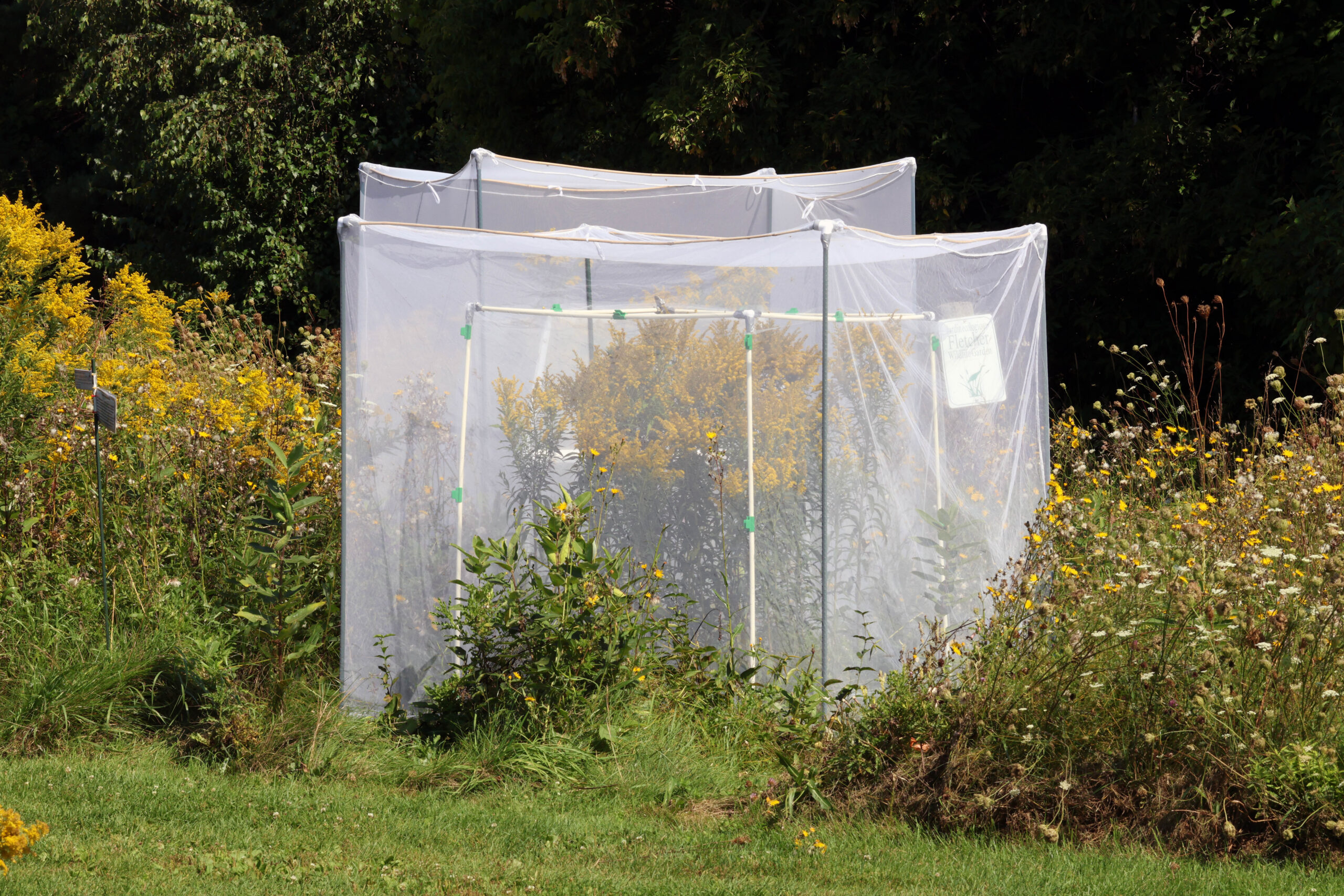
One of Kharouba’s master’s students, Katherine Peel, tested whether rising temperatures make floral nectar less nutritious and if these changes are big enough to affect migratory monarchs.
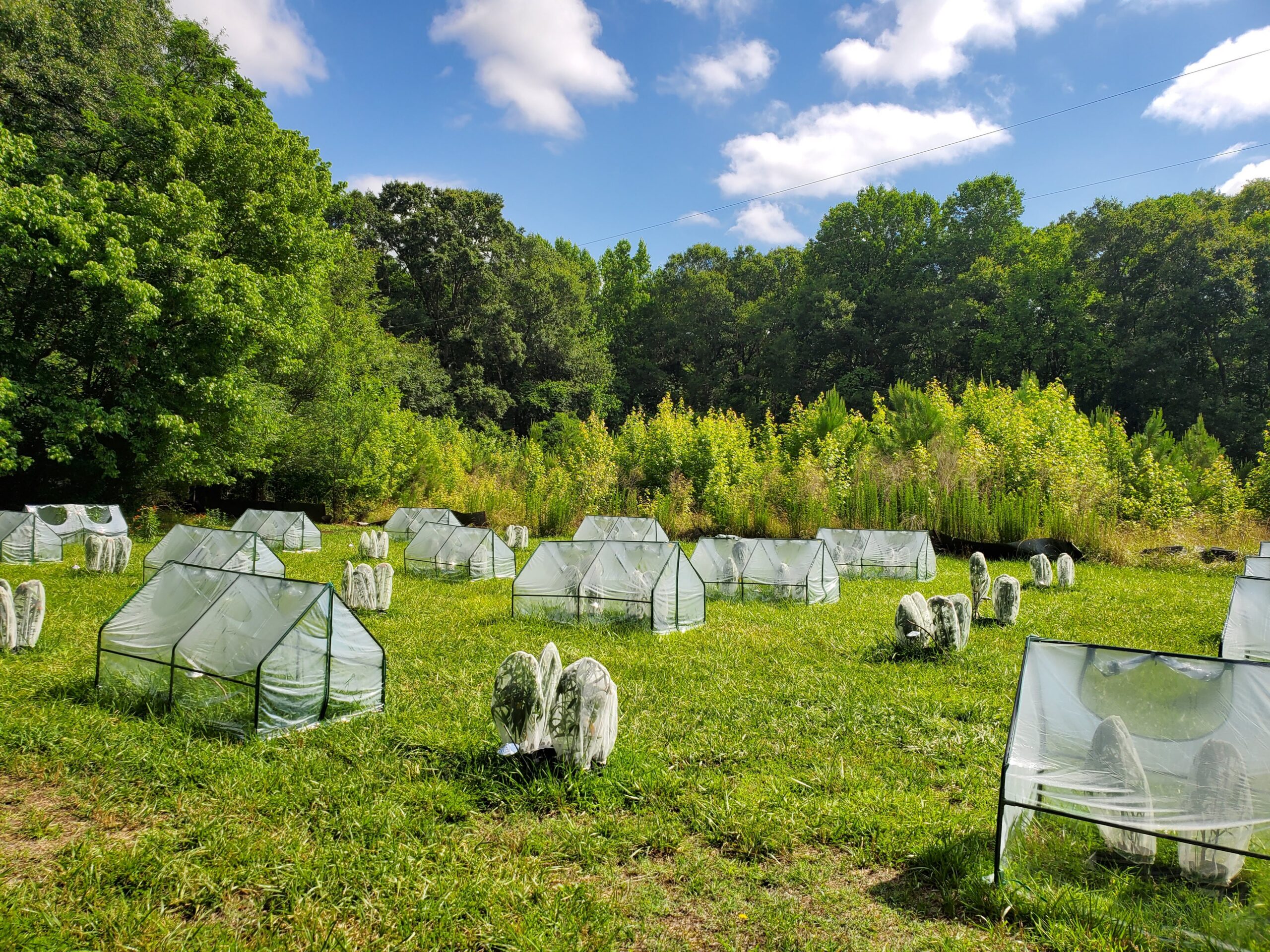
Peel focused on some of the main plants that migratory monarchs feed on in Ottawa before they head south for the winter: wild bergamot (Monarda fistulosa), Canada goldenrod (Solidago canadensis) and New England aster (Symphyotrichum novae-angliae). She grew each of the three plant species within small greenhouses built in the field that made the environment about one-degree Fahrenheit warmer than the air outside.
In research published in Global Change Biology Communications, plants grown in the greenhouses had about 13% fewer flowers per stem. The nectar also had about a quarter less sucrose in it, a nutrient important for butterflies to increase their fat reserves. When monarchs fed on poor nectar, they had 26% less fat compared to butterflies who fed on control plants.
Kharouba suspects that if monarchs can’t stock up on high-quality food while in places like Ottawa, it’ll make their southward migration harder or slower. But she didn’t test how the monarch’s worse body condition might affect their behavior or life expectancy. “That’s a huge question mark that we don’t know at all,” she said. “If they have low energy, how much will that affect their ability to fly?”
Monarchs in a warming world
Kharouba and Peel carefully designed their experiment to isolate the effects of warming temperatures on plants from the effects of warmer temperatures on monarchs themselves. While it gave them useful information, Kharouba said their study is a conservative estimate of how warming will affect the monarchs overall. “We’re not considering that in a real world, the monarchs themselves would be a lot warmer,” she said. Higher temperatures could alter the insects’ metabolism and feeding behaviors. “It’s a compounding effect.”
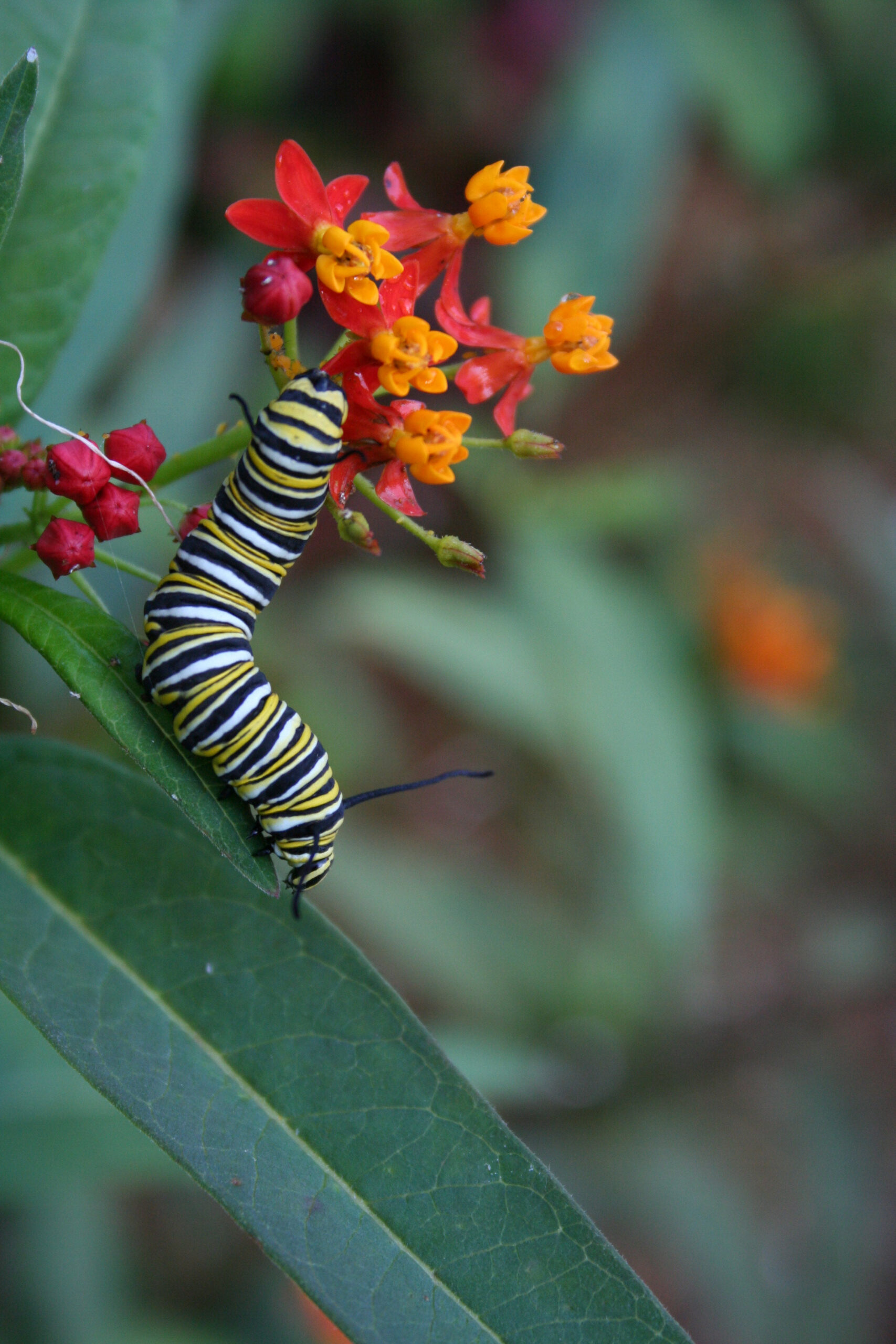
Temperature also impacts monarchs’ interaction with disease—a relationship that researchers at the University of Georgia are investigating. One of the most common sicknesses is caused by the protozoan Ophryocystis elektroscirrha (OE). To Isabella Ragonese, a current postdoctoral researcher at the University of Massachusetts Amherst, OE looks like tiny footballs under a microscope.
Infected mothers can pass OE to their offspring with a single spore. In the most severe cases, infected adults can develop deformities or fail to emerge from their chrysalis entirely. But what’s more common is a less intense infection. Adults don’t fly as well, lose weight faster and are around 20% less likely to survive migration.
But monarchs aren’t totally defenseless against OE. Heavily infected mothers lay their eggs on more toxic species of milkweed so their offspring can self-medicate, giving the caterpillars a better chance of survival.
A bitter pill to swallow
Scientists have been studying this relationship for decades, but Ragonese wanted to know how climate change might be changing these dynamics. “I was wondering if climate warming can reshape relationships that we think we understand,” she said.
For her doctoral thesis, Ragonese first tested how monarchs and OE fared in high temperatures in a laboratory setting. She found that both the host and its parasite did poorly in the highest temperatures. She also knew that past research has shown significantly higher temperatures can increase the level of cardenolides—the toxins that help monarch caterpillars fight off OE infections—especially in tropical milkweed (Asclepias curassavica), which has naturally higher levels of toxins. With weaker parasites and more medicine, she thought the monarchs might have more of a fighting chance against infection as the climate warms.
She took her experiments to the field to test how warmer temperatures and milkweed species would affect both the parasite’s strength and the caterpillars’ ability to fight it. Following a similar protocol to Peel’s experiments, Ragonese grew two different species of milkweed, tropical and swamp milkweed (Asclepias incarnata), in either ambient temperatures or in small greenhouses. She infected half of the caterpillars with OE and reared them on either swamp or tropical milkweed in warm or ambient temperatures. After the caterpillars turned into butterflies, Ragonese measured their parasite loads and other health markers and published her findings in Ecological Entomology.
Overall, her team found elevated temperatures reduced monarch tolerance to OE infection by 22%, regardless of which milkweed species they ate as caterpillars. Under ambient temperatures, they saw the pattern they expected: swamp milkweed-reared caterpillars had a high chance of being infected, whereas tropical milkweed-reared caterpillars were more resistant to infection. “But then in elevated temperatures, that relationship between tropical milkweed and infection totally surprised us,” Ragonese said.
Rather than protecting monarch caterpillars from infection, tropical milkweed seemed to do the opposite: the medicinal effects of tropical milkweed disappeared and even harmed the uninfected caterpillars under warmer conditions. Monarchs reared on swamp milkweed had a 98% survival to adulthood, while monarchs raised on tropical milkweed had only an 85% survival rate.
Milkweed toxins can have side effects similar to human drugs, said Altizer, Ragonese’s former advisor and a coauthor on the paper. Under the higher temperatures, when the caterpillars were already stressed, it seemed that they couldn’t cope with the cost of using the medicinal milkweed.
“Limited nectar availability could really hit infected butterflies hard,” Altizer said. Infected butterflies are already less likely to complete their southward migration. And as the climate warms, if they’re more likely to become infected, suffer worse illness, and have access to more limited and poorer quality nectar, it could be devastating. Recent research out of Mexico predicted that by 2070, climate change will push overwintering habitat in Mexico farther south and reduce monarch habitat by up to 40%. “It could be a double, or even a triple whammy,” Altizer said.
A flutter of hope
Kharouba also thinks about how these factors might come together to make things even harder for monarchs. In Ottawa, the prevalence of OE is extremely low. But scientists are worried that climate change will cause OE to expand its range northward. “There are many different ways that these factors could interact,” Kharouba said.
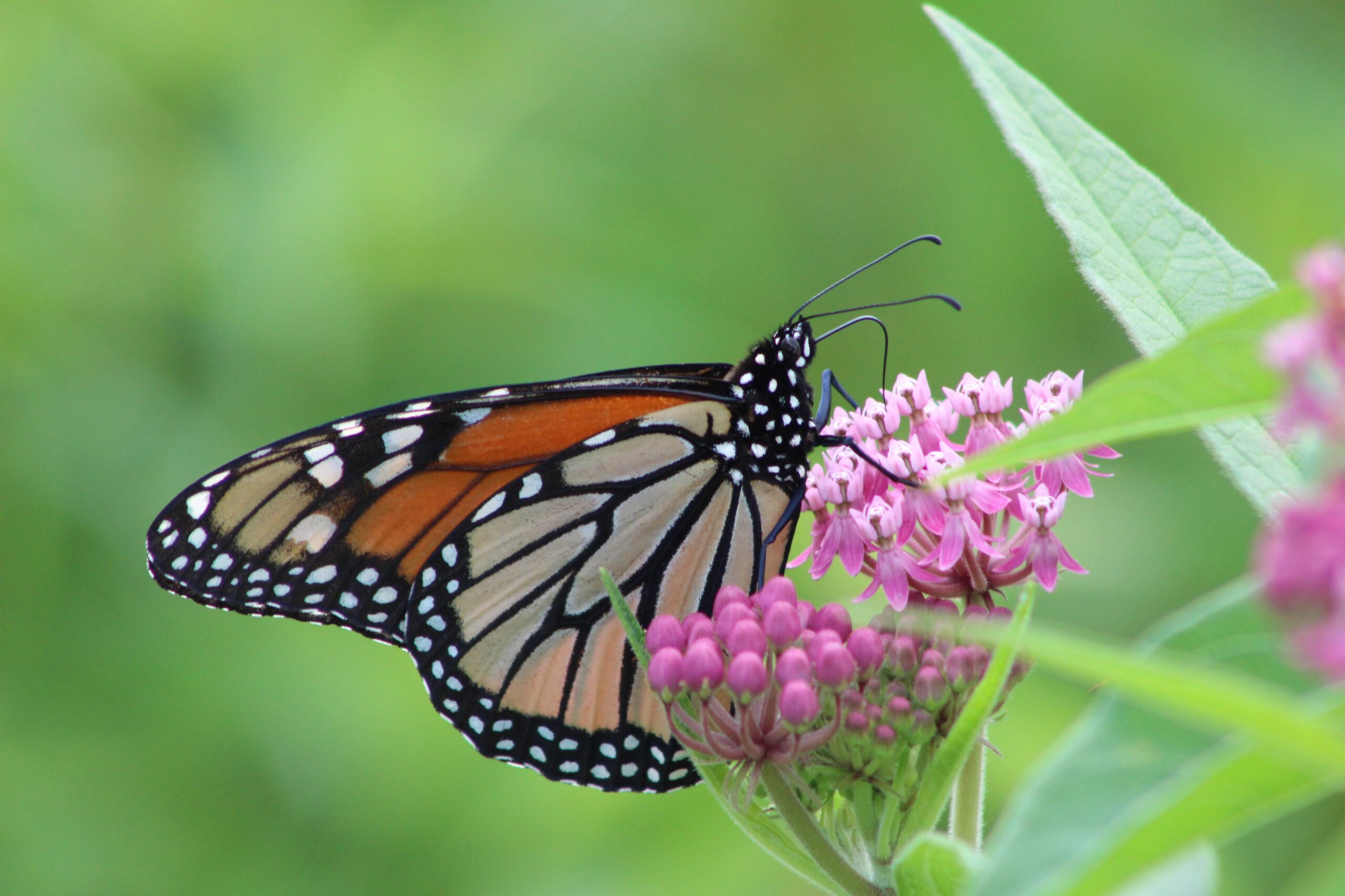
From a restoration standpoint, Kharouba thinks that gardeners should prioritize flowers that bloom late in the summer to make sure migrating monarchs have the fuel they need. Future research can also pinpoint which floral species are more resilient to warming temperatures and still give nutrient-dense nectar to butterflies when they need it most.
Altizer thinks monarchs may still have a fighting chance. “I always think of monarchs as the tanks of the butterfly world,” she said. They migrate across continents, have a vast distribution and a single female can lay up to 2,000 eggs in her lifetime. “They have so much capacity to rebound and bounce back,” she said. And there’s still the question of how climate change, and other human-caused changes will come together to affect monarchs. “The answer is not looking great, but I give them a lot of credit. And the game’s not over yet.”
Article by Olivia Milloway