


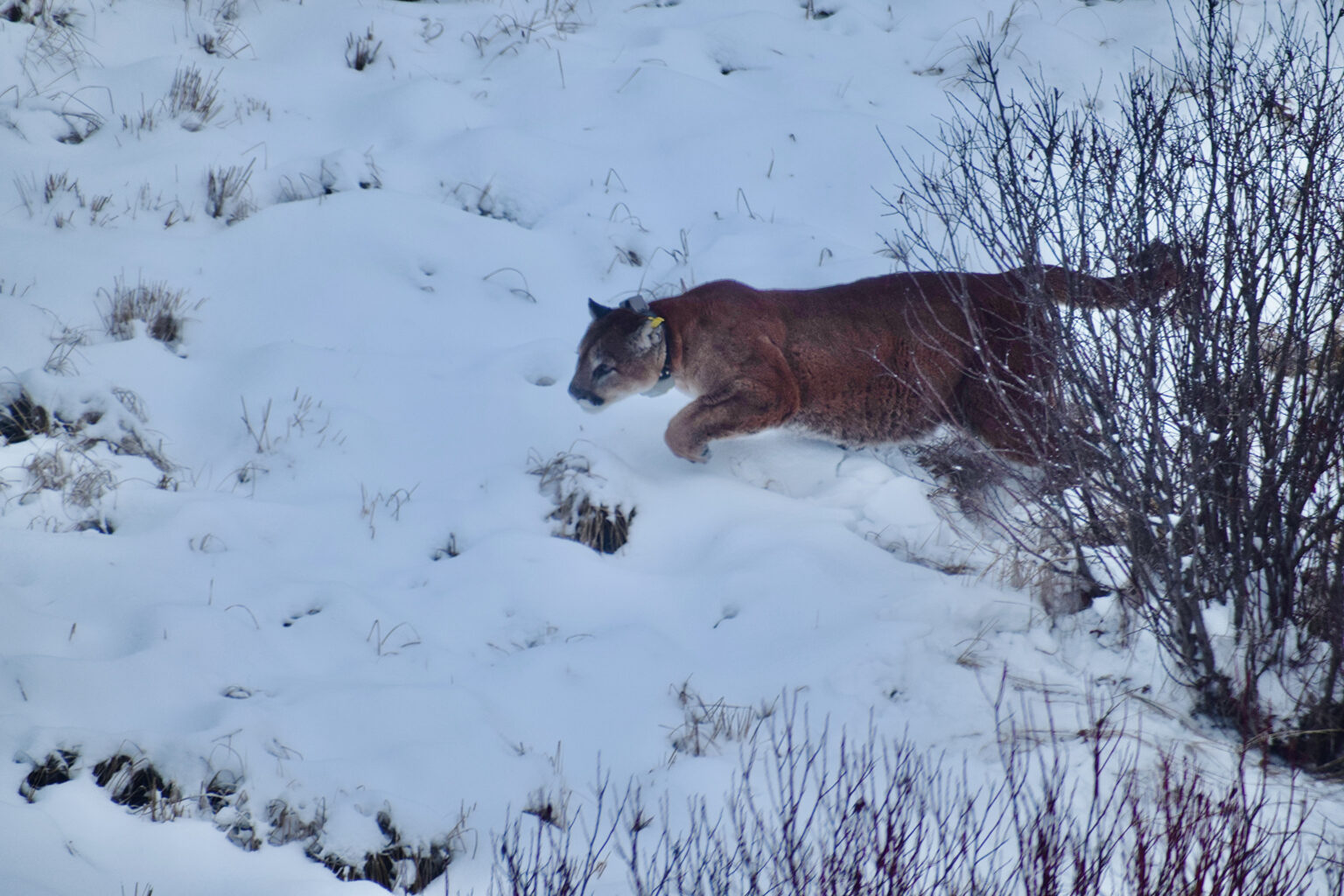
It was the winter of 2022, and hounds were already on the trail of a cougar fresh off a recent kill in the remote wilderness of northern British Columbia. Just a day earlier, Shane White’s colleague was conducting wolf surveys by helicopter when she spotted the cat. The cougar (Puma concolor) took off into the nearby timber as the chopper approached. But knowing that White was about to begin a project trapping cougars in the area to fit them with GPS tracking collars, the colleague immediately notified him.
The very next day, White, a senior wildlife biologist for the provincial government of British Columbia and a TWS member, landed with a pack of hounds and their handler. The group quickly snowmobiled over to the meadow, which was only about two kilometers away, hoping the predator wasn’t completely scared away from its kill. White and his colleague Courtney Jones were trying to get a bearing on the cougar’s reported position when Jones suddenly cried out and pointed at the cat. “It was very Serengeti style, sitting in the open on top of a horse carcass,” White said.
While he was behind on the snowmobile, it wasn’t long before White became part of the action. He could hear baying hounds getting louder as they came toward him. But before the pack—and its quarry—reached him, their barking noises picked up in intensity. They’d chased the cougar up a tree maybe 50 meters from where White had parked his snowmobile.
He scrambled toward the tree, which held a large male cougar, and drew his dart gun. He aimed, took sight and fired. The dart shot out—well, fizzled out—and landed in the snow a few meters from the gun. There was an issue with the gas valve, and the gun had no pressure to propel the projectile forward. The cougar escaped, and the team was left just where it started on its project to fit GPS tracking collars to cougars in the Chilcotin Plateau in the Cariboo Region. “You adapt. The first year is definitely a learning process,” White said.
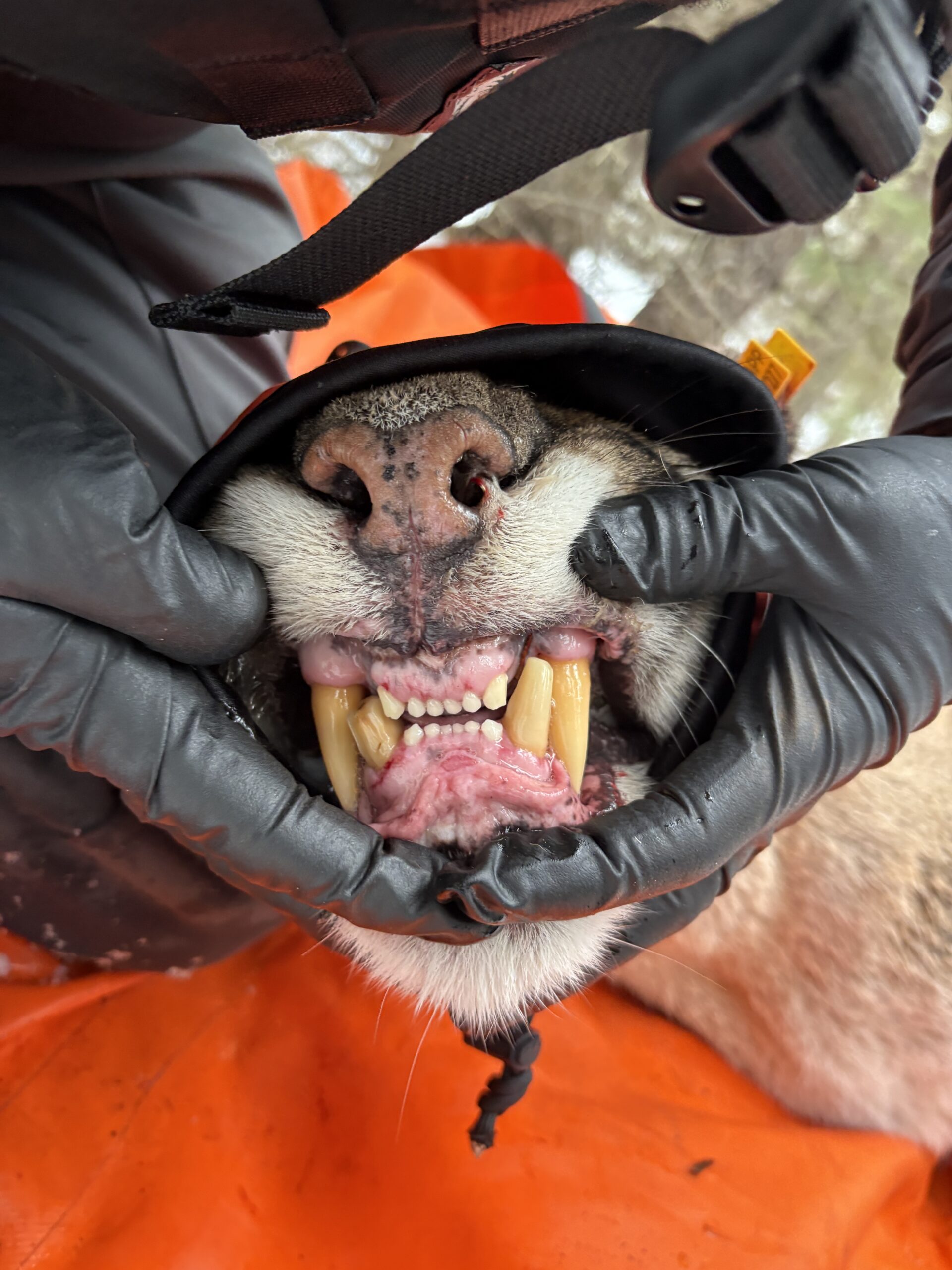
This cougar killed a lot more feral horses than that one that first put White and his hound contractors onto its scent. “He’s a pretty impressive cat—he’s given us a lot of data over the years,” White said.
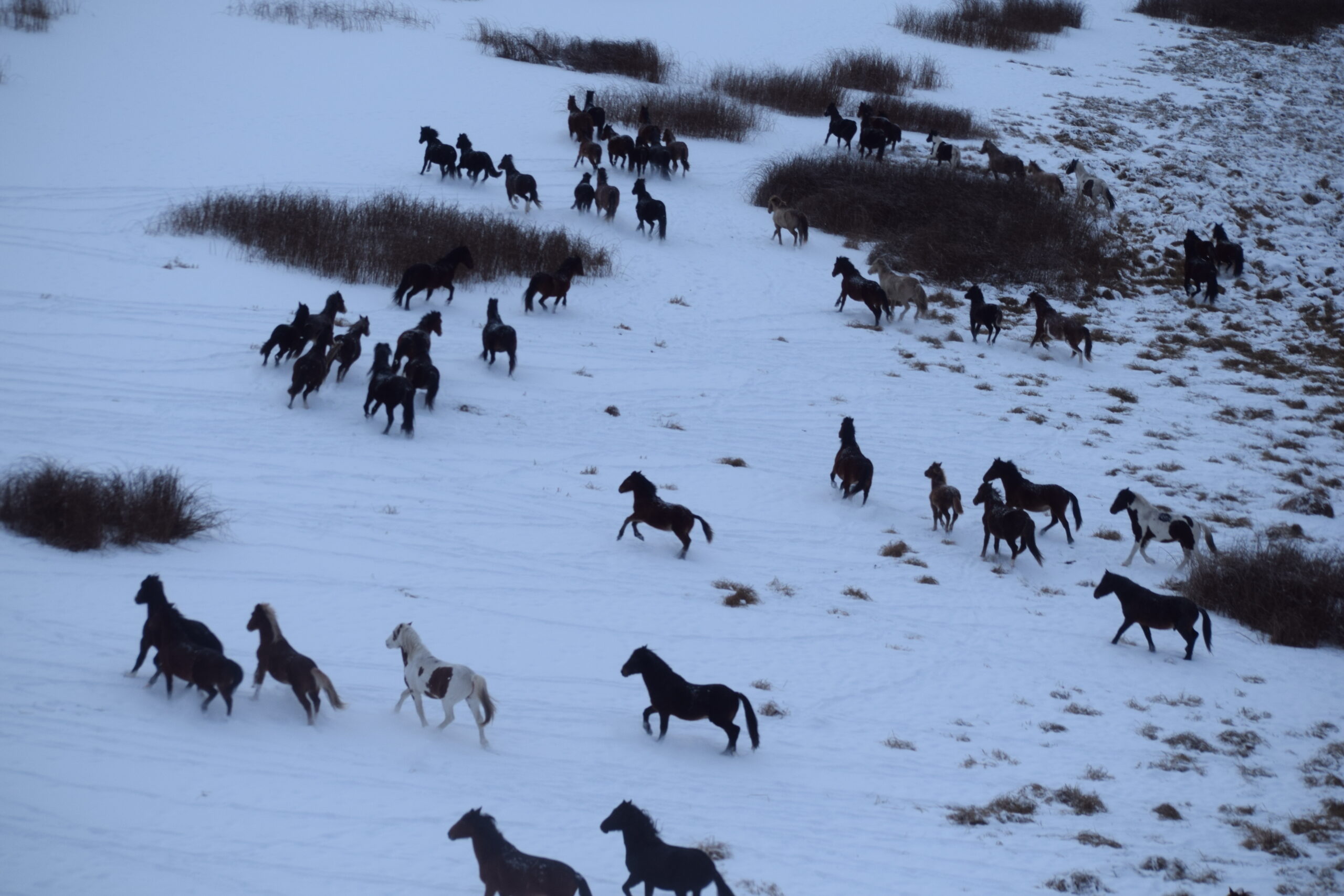
And that male wasn’t alone. For the next few years, tracking data from cougars and aerial surveys on wolf (Canis lupus) packs in the area revealed dozens of instances where the predators killed or scavenged feral horse carcasses in their study area. The data, which White and his colleagues published recently in a study in Ecology and Evolution, shows how these novel ungulates are fitting into the ecology of mountains and forests of central British Columbia, where there are few roads and a low density of humans. It’s also helping researchers determine if horses—by virtue of getting eaten—are having downstream effects on imperiled northern mountain caribou (Rangifer tarandus caribou) in the area.
“We have data to suggest that they do subsidize predator communities,” White said.
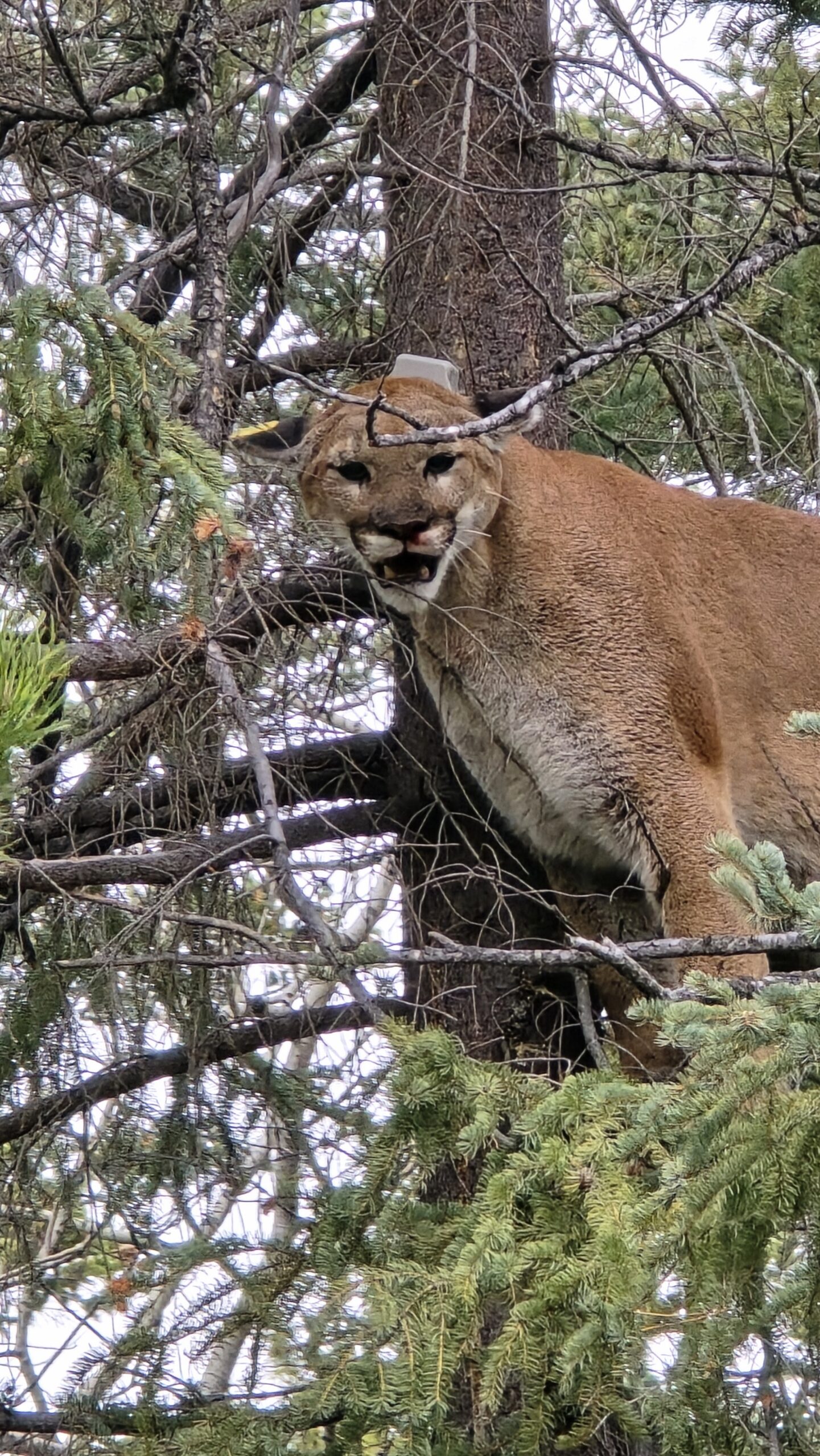
Mountain lions and wolves and bears—oh my!
The first cougar the team collared wasn’t the end of their learning process. “It’s a very remote area—a lot of blood, sweat and trees have gone into getting this study off the ground and collars around their necks, but it’s been tremendously successful,” White said.
White recalls one large animal they and their hounds tracked for 17 kilometers up and down mountain slopes. “What an impressive animal it was,” White said.
They finally managed to get the animal up a tree. But just as they were getting ready to dart it, the cat jumped from the tree “into the abyss” down “steep, nasty country,” White said. Dusk was fast approaching, and temperatures were dropping. On average, White said the temperatures were around -15 degrees Celsius, but after dark it usually goes down to -20 or lower. At -30, the team doesn’t run surveys at all for safety reasons. They had to head home without deploying a cat collar that day.
“You never know how it’s going to go down,” White said. “Every cat’s different.”
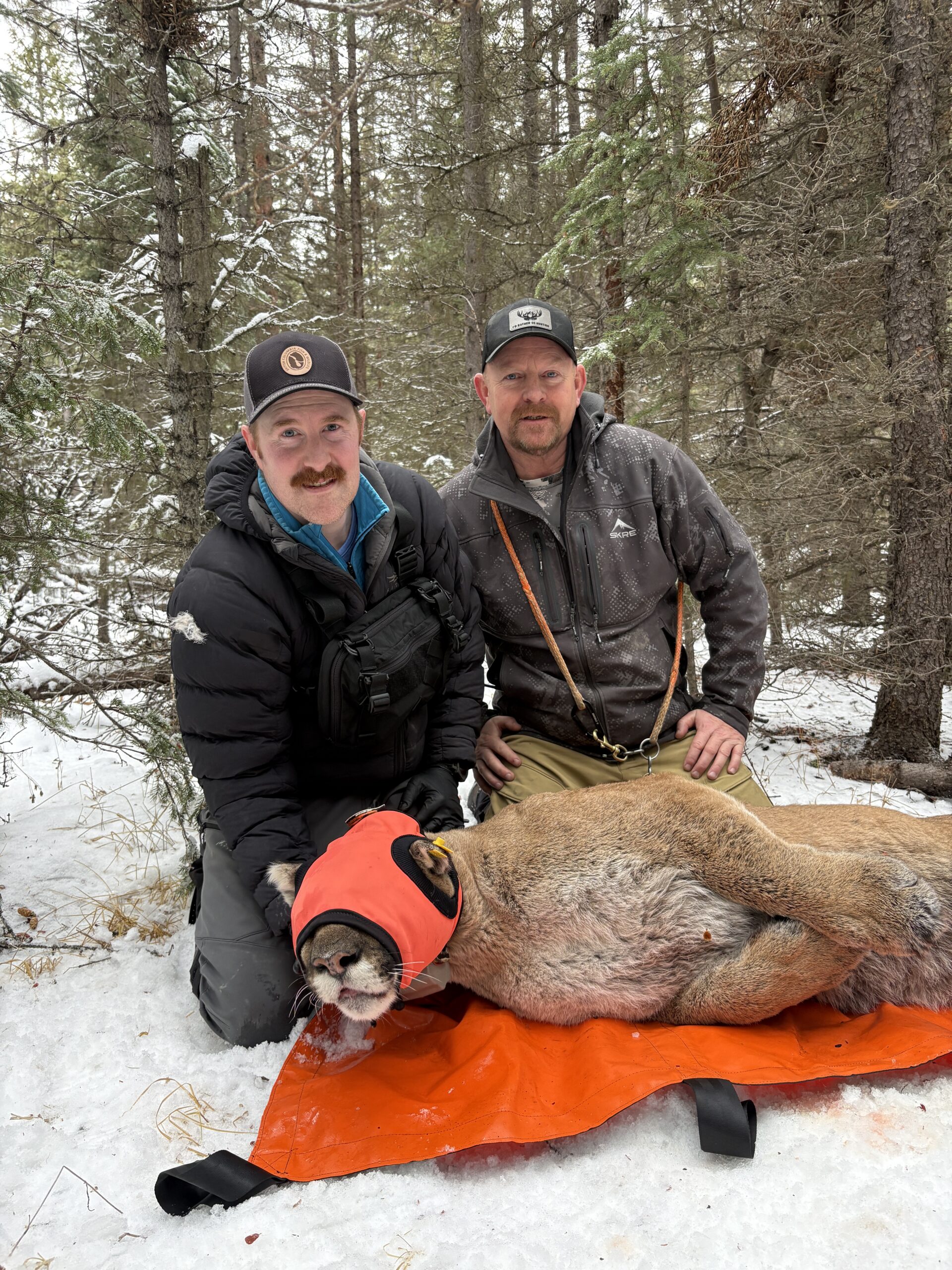
In all, the team—White is picture above on the left—collared 18 cougars from early 2022 to the summer of 2025.
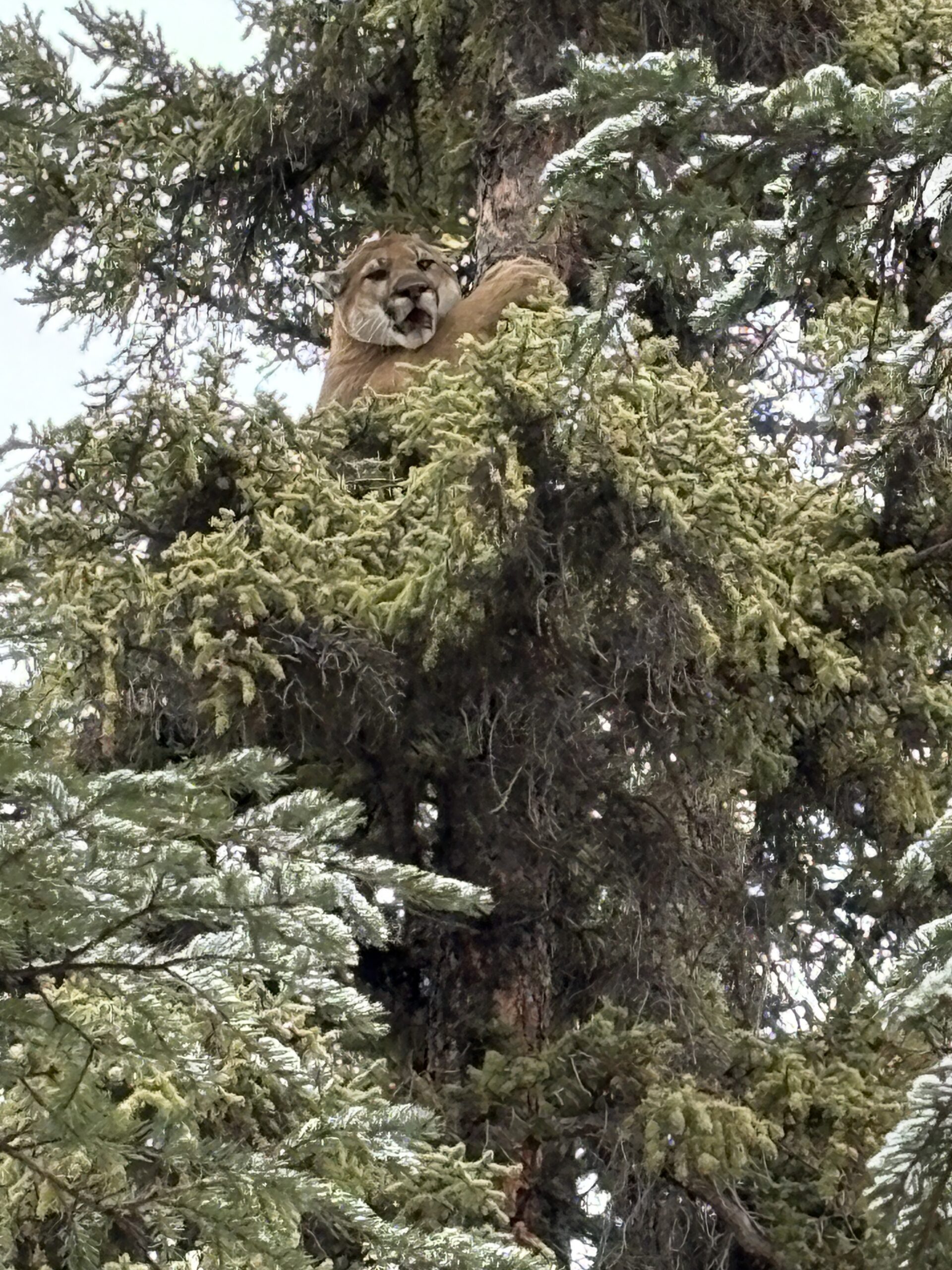
Several times, the team recollared some cats, such as the first one they captured, pictured in a tree on the right, when the batteries ran out.
When GPS data showed clusters that appeared to be potential kills, the team, led by Julie Thomas, a PhD student at the University of Northern British Columbia, headed on snowmobiles or occasionally flew out via helicopter to investigate the kills in the most remote sites. They paired this cougar data with aerial surveys on wolf packs in the area from 2019 to 2025.
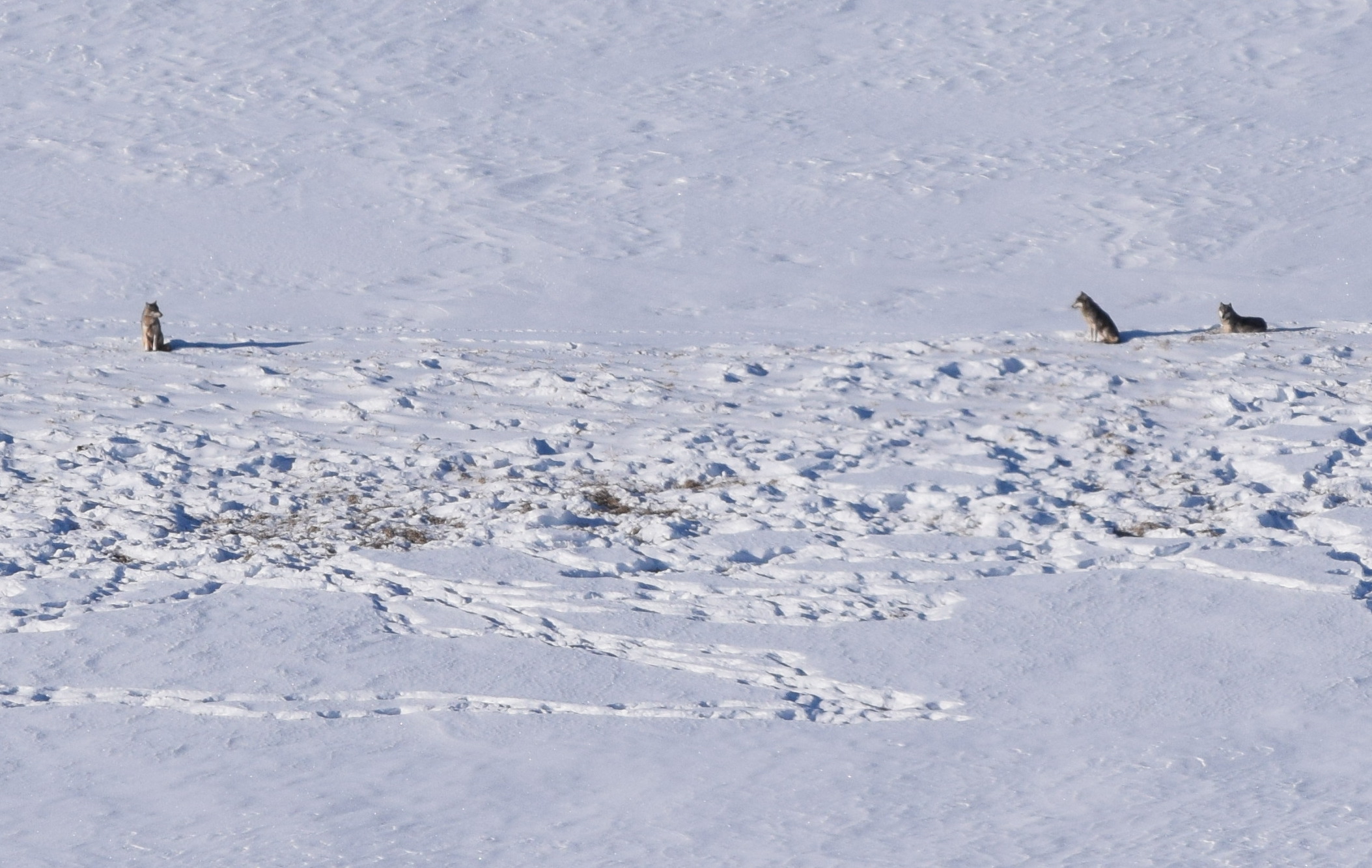
Altogether, the team confirmed 58 instances of cougars preying on feral horses. They also documented 21 instances of wolves scavenging or preying on horses—the team observed the ones in the photo below near a horse herd.
The team couldn’t always be sure if the predators had killed the horses in question or just scavenged the remains of a horse that killed by something else. Horses can die from natural causes, and bears can also prey on horses in this area, though the team didn’t look at that factor in this study. But they did see both black (Ursus americanus) and grizzly bears (Ursus arctos horribilis) on horse carcasses.
And while foals are certainly among the predated horses, cougars and wolves were also killing adults. “I’ve been amazed at some of the kill sites we’ve gone to,” White said. “These are big horses, and they are getting taken down by a cougar.”
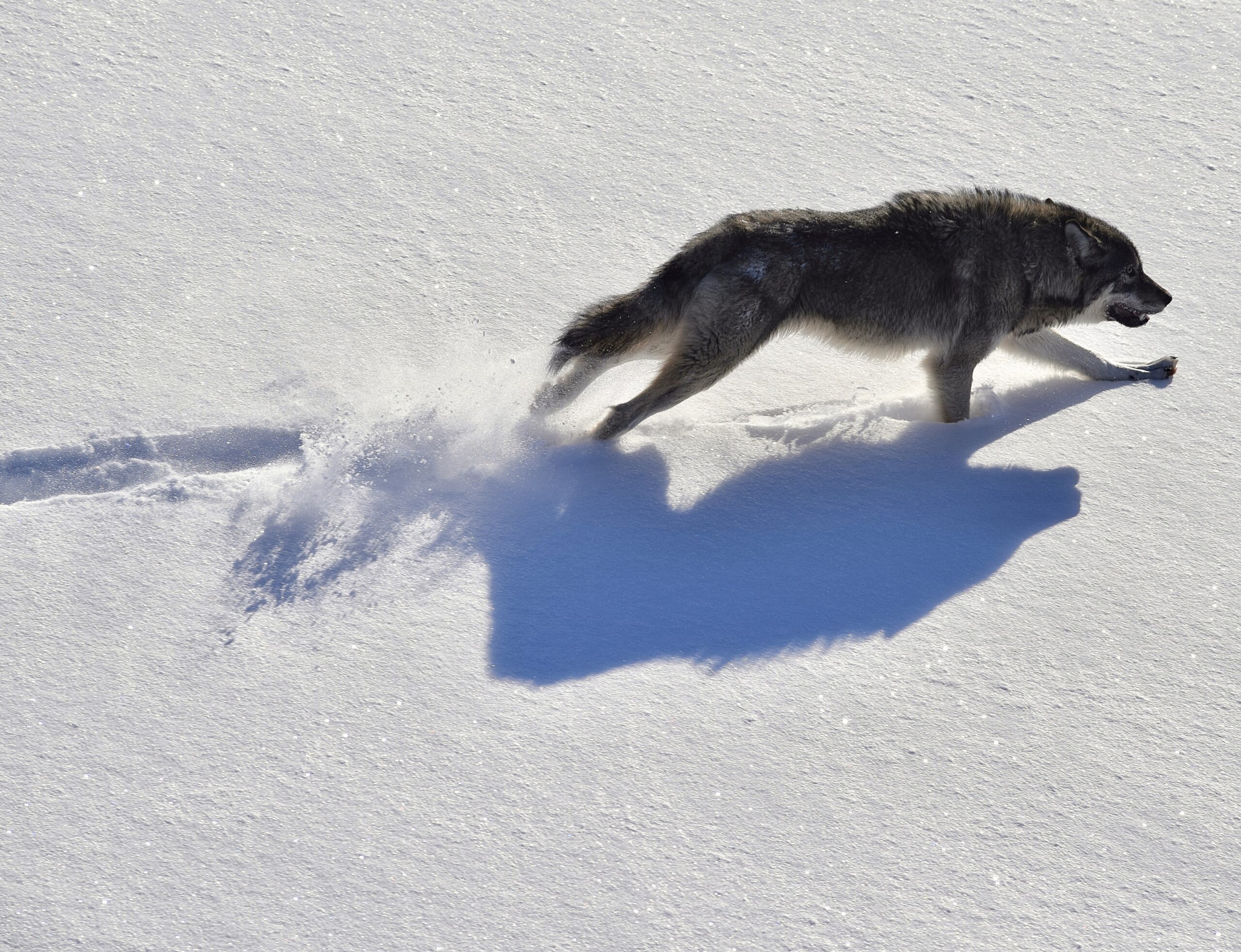
Other researchers have documented cougars killing horses in the Great Basin area. Still, “to the best of our knowledge, these are the first published observations of wolves hunting feral horses and the first records of cougar predation of feral horses in British Columbia,” the authors wrote in their study. However, a month after the publication of White’s research, another study came out in The Journal of Wildlife Management showing evidence of Mexican wolves (C. l. baileyi) preying on feral horses in Arizona and New Mexico.
The British Columbia study has implications for caribou ecology as well. The Itcha-Ilgachuz northern mountain caribou herd has precipitously dropped in recent decades. “They’ve declined from a peak of over 2,000 caribou back in 2003 to 385 in 2019,” White said.
The herd on the Chilcotin Plateau moves from high elevations in the summer into valleys during the winter. Their winter range puts them into areas with plenty of feral horses and mule deer (Odocoileus hemionus). While the team didn’t study cougar predation on caribou directly for this paper, they did observe the cats taking them down.
White believes that horses in the area are subsidizing predators, which in turn means wolves, cougars and perhaps bears are also incidentally taking more native ungulates like moose(Alces alces) and caribou. Thomas is currently looking into this, but preliminary work has revealed that the presence of horses in the area is increasing predation on caribou. This could compound the ungulate’s problems, as mountain caribou, listed as special concern under Canada’s Species at Risk Act, may also suffer from other problems, such as competition from deer and moose prompted by human disturbance, White has found in other research.
This article features research that was published in a TWS peer-reviewed journal. Individual online access to all TWS journal articles is a benefit of membership. Join TWS now to read the latest in wildlife research.
This photo essay is part of an occasional series from The Wildlife Society featuring photos and video images of wildlife taken with camera traps and other equipment. Check out other entries in the series here. If you’re working on an interesting camera trap research project or one that has a series of good photos you’d like to share, email Josh at jl****@******fe.org.
Article by Joshua Rapp Learn