


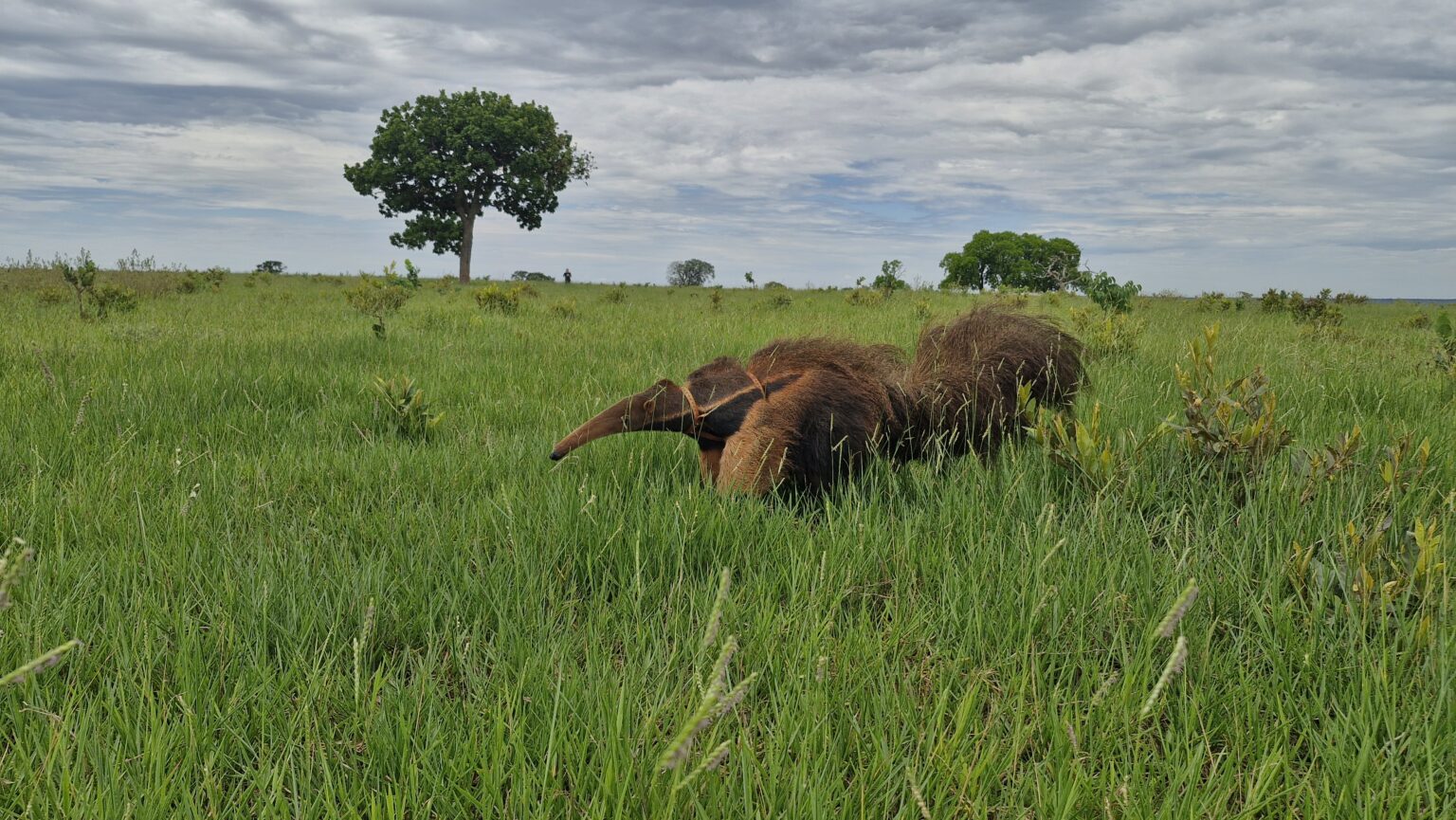
Giant anteaters work hard for their dinner. With the help of their long noses and tongues, the world’s largest insectivore must consume more than 30,000 ants a day to fill up their bellies.
While they have a menagerie of adaptations to make them efficient insect eaters, this lifestyle has its drawbacks. One weakness is the mammals aren’t good at regulating their own body temperatures—they need forests to cool off in and rest. But new research shows they don’t like places humans have changed, which leaves fewer and fewer places for them to live.
“We cannot continue to destroy their habitats,” said TWS member Ana Yoko Ykeuti Meiga and lead author on new research published in Movement Ecology. Her paper showed that giant anteaters (Myrmecophaga tridactyla) tend to avoid human-altered landscapes, like pastures and eucalyptus plantations, preferring native forest and savannas. As agriculture booms in the region, researchers are worried about the future of the species.
From grassland to pasture to monoculture
Giant anteaters, classified as vulnerable by the International Union for Conservation of Nature, are found from Central America through southern Brazil. Their range includes two neighboring but distinct biomes: the Pantanal and the Cerrado. The Pantanal is the world’s largest wetland, famous for its wildlife viewing and nicknamed the Brazilian Serengeti. To the Pantanal’s east is the much larger Cerrado biome, a tropical savanna with rich biodiversity, similar species, but fewer legal protections. The Cerrado has already lost around half of its native habitat.
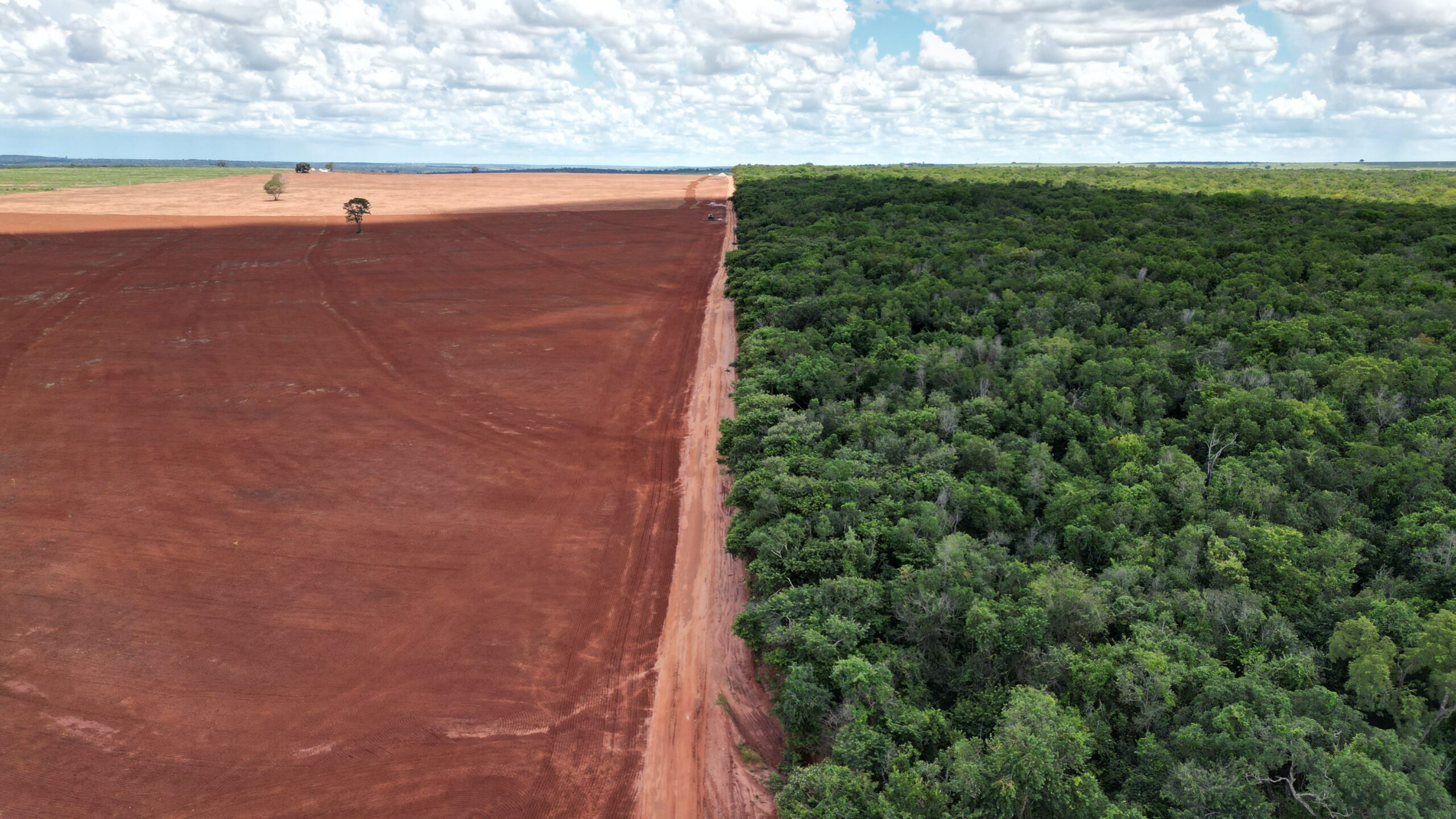
Over the last century, native savanna, including grasslands and wooded savanna, was cleared to make way for cattle pastures and highways. The highways pose a major problem: with poor eyesight and no eyeshine to alert oncoming motorists, giant anteaters started turning up as roadkill in droves.
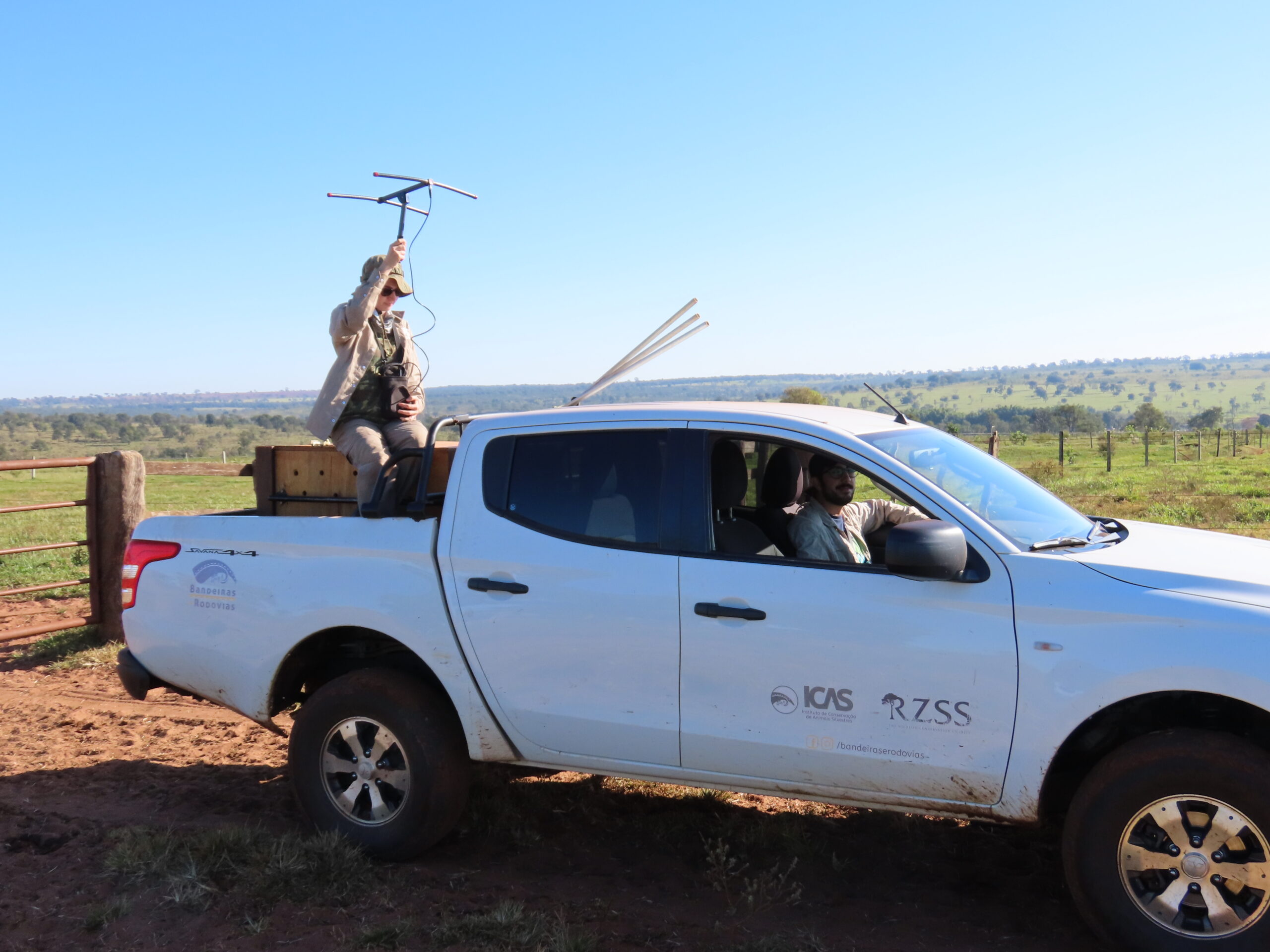
Brazil’s Wild Animal Conservation Institute (ICAS), a nonprofit organization, began collaring and tracking anteaters in 2017 to get a better estimate of the species’ future—and what might be done to help them. Meiga, who is originally from a small town in São Paulo State and is now a PhD student at the University of Florida, is collaborating with ICAS to study how anteaters are responding to landscape change: first from savanna to cattle pastures and more recently to soy and eucalyptus monocultures.
Cooling off in the trees
Based on past research, Meiga knows that giant anteaters rely on forested areas to rest and regulate their temperatures. Giant anteaters have one of the lowest body temperatures of any mammal. Combined with their size and dietary choice—ants and termites aren’t the most nutritious of insects—anteaters have a limited capacity to thermoregulate, Meiga said. “When it’s too hot or too cold, these animals use forests as a buffer for the temperature.”
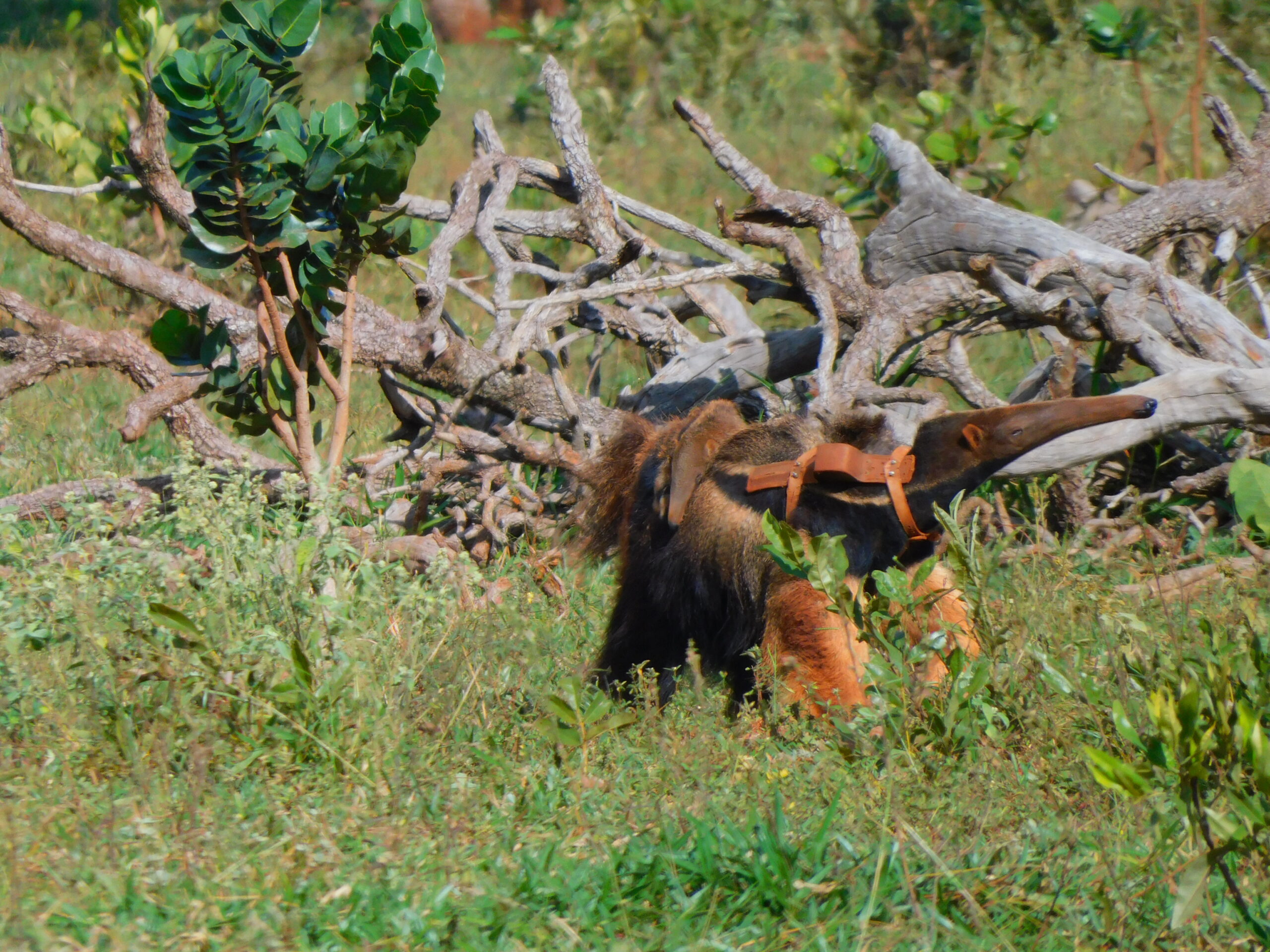
Meiga and her collaborators from ICAS expected to find that even in an area so dominated by rapid anthropogenic change, the anteaters would crowd into the remaining forested areas. She also expected that females would spend more time in the forest compared to males. Mothers carry their young on their backs for up to nine months, like in the photo shown above, which burns more energy.
Through analyzing the movements of 41 different anteaters from ICAS’ database, Meiga found that the animals spend more time in native habitats like forests, savannas and wetlands, and that the habitat use of males and females doesn’t differ. She also found that when they do spend time in human-modified landscapes, like in cattle pastures, anteaters are more likely to be active than resting.
She was able to distinguish between these two behaviors based on how quickly the GPS points were changing. Anteaters prefer a sneak attack. If they spend too long at any one food source, the ants start mounting their defense, climbing on and stinging the anteater. To avoid this, the animals prefer to ambush nests quickly before moving on.
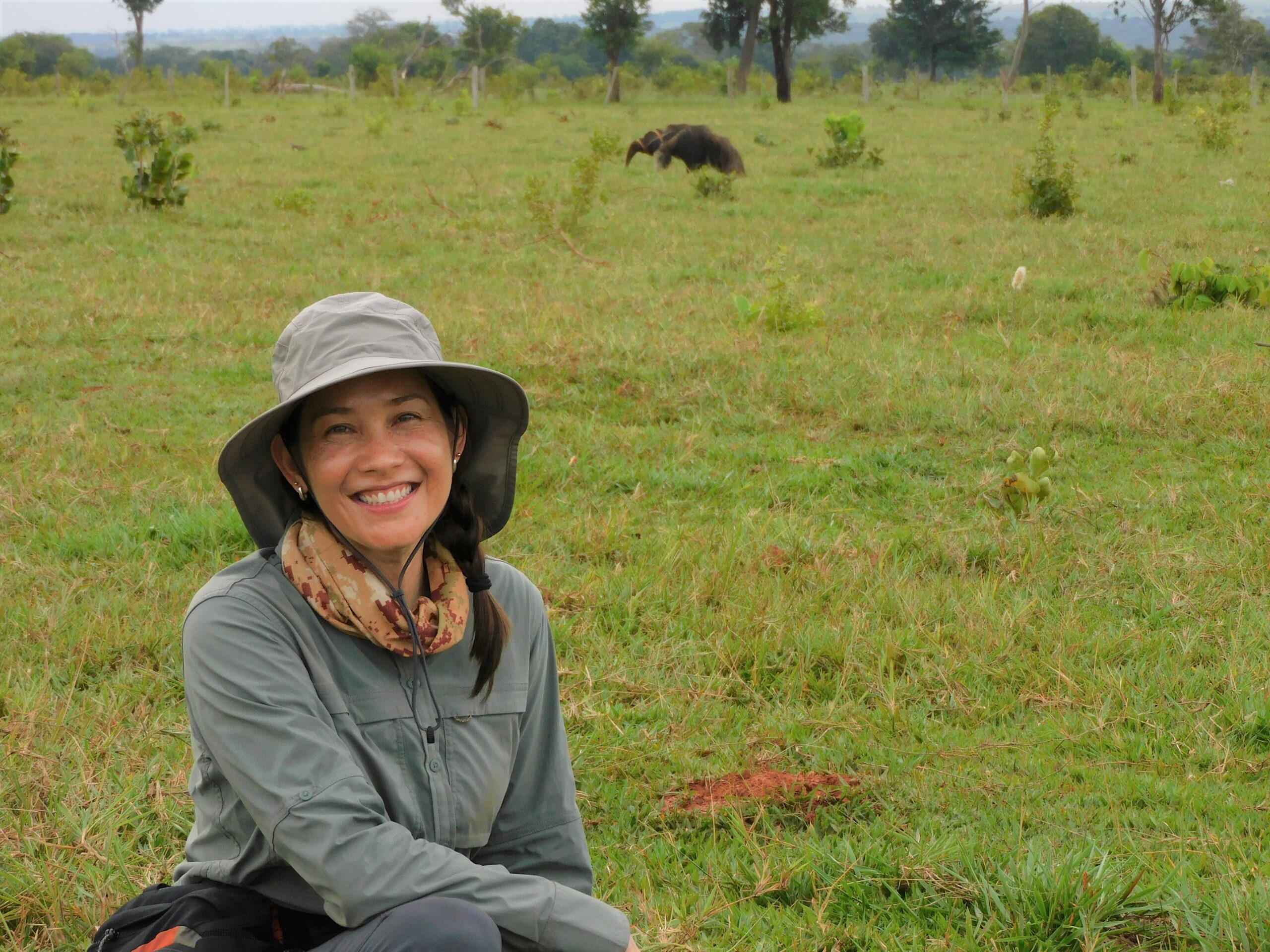
Meiga was interested to see that even though eucalyptus plantations are forests and may provide similar resources like protection from extreme weather and predators, giant anteaters still avoided them compared to native forests.
The lesser evil
Meiga said that by this point, most of the Cerrado has been converted to pasture. Though anteaters prefer native habitats to human-altered ones, there are surprising benefits to pasture compared to crop plantations.
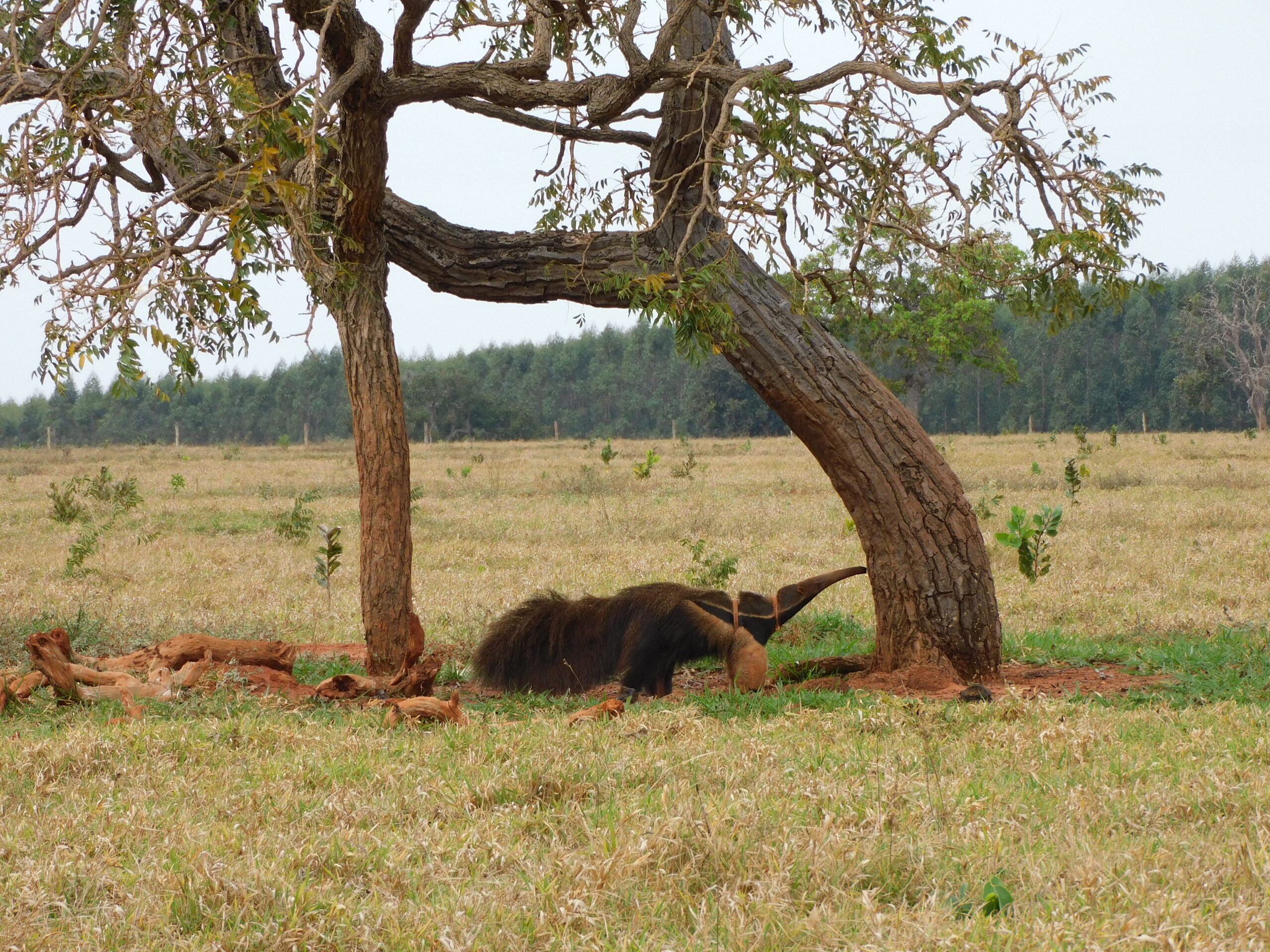
Pastures are relatively similar to the Brazilian savanna’s native grasslands. Pastures have different species of grass that anteaters can forage for ants and are dotted with trees. Even though cattle were brought in to graze the pastures, the ranchers didn’t intensively manage their land, Meiga said. “We actually found that they’re using a lot of trees in these pastures,” she said.
But a soybean, corn or eucalyptus plantation doesn’t offer the same refuge. “It’s really incredible how they have some flexibility in these environments,” she said. “But at the same time, they rely a lot on these native forests.”
Meiga wants to be clear, though, that pastures aren’t the solution to protecting anteaters. Instead, she said her findings call attention to the potential unrecognized ecological impacts of so quickly converting cattle pastures to monoculture plantations.
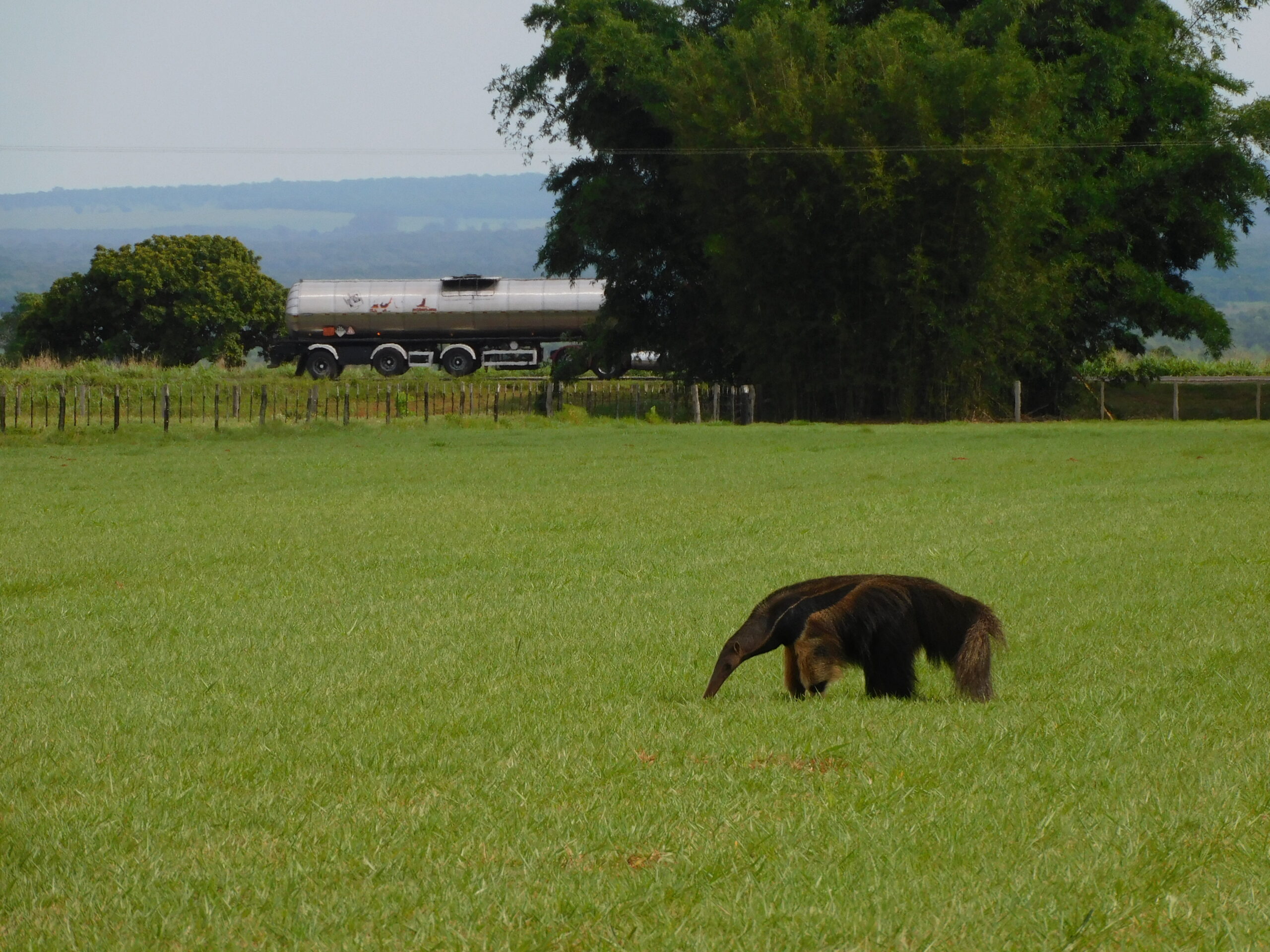
While the transition to pasture took decades, the transition to soybeans is happening more abruptly. The anteaters may have had time to adjust to pastureland, but they can’t keep up with the more recent changes. “It’s a very abrupt change,” she said.
With the disappearance of pastures, Meiga worries the anteaters will be more crowded. While they’re not territorial, there’s an opportunity for competition if there’s not enough space or resources. She’s currently looking into the impacts of converting pastures to soybean plantations on anteaters.
Meiga said that legal protections are one main avenue to help anteaters in the Pantanal and Cerrado. In parts of the Amazon, agreements make it illegal to deforest for soy, but the crop can be planted on already cleared areas. Researchers are also still tracking anteaters to plan wildlife crossings to protect them from vehicle collisions.
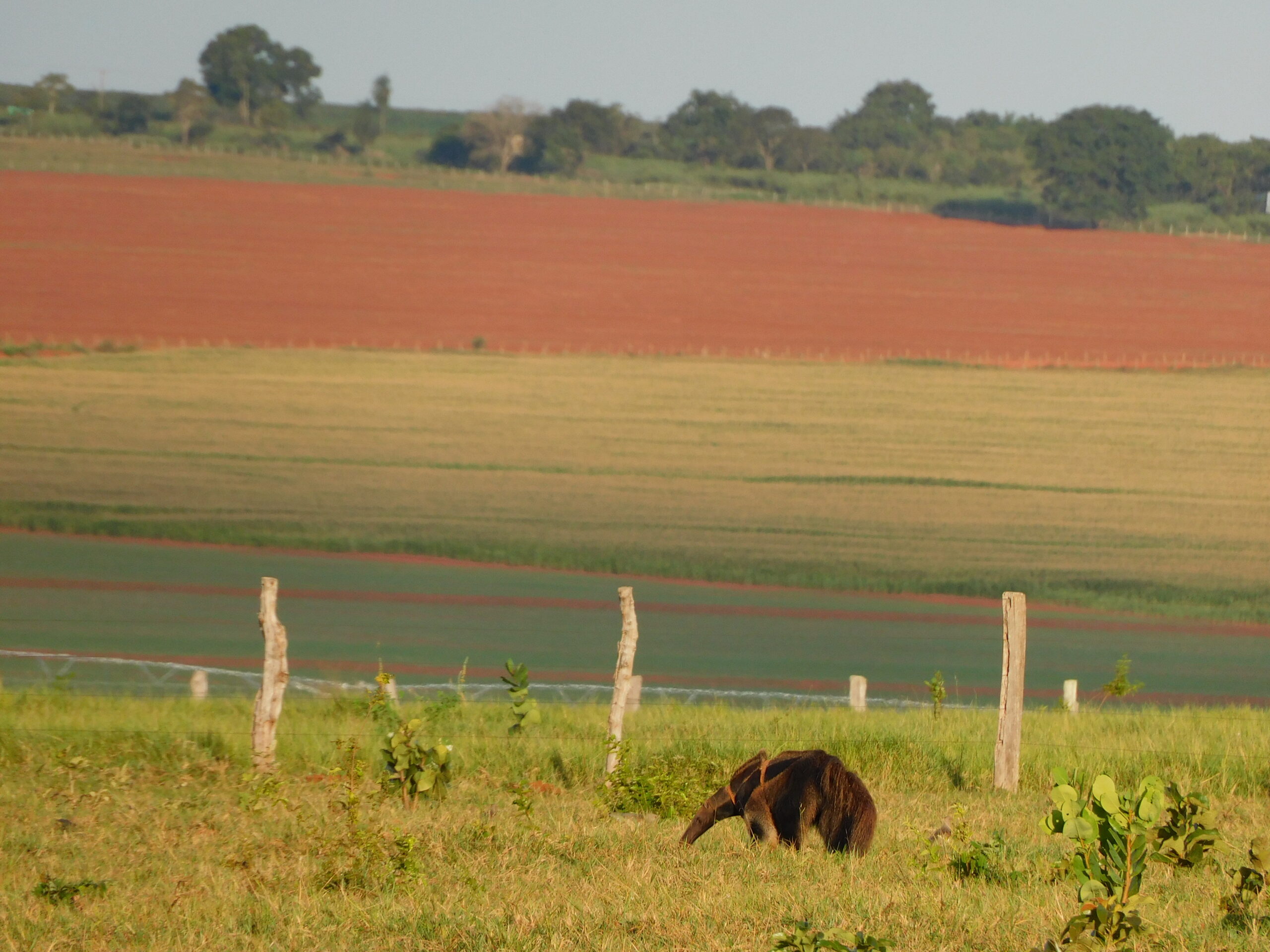
This photo essay is part of an occasional series from The Wildlife Society featuring photos and video images of wildlife taken with camera traps and other equipment. Check out other entries in the series here. If you’re working on an interesting camera trap research project or one that has a series of good photos you’d like to share, email Olivia at om*******@******fe.org.
Article by Olivia Milloway