



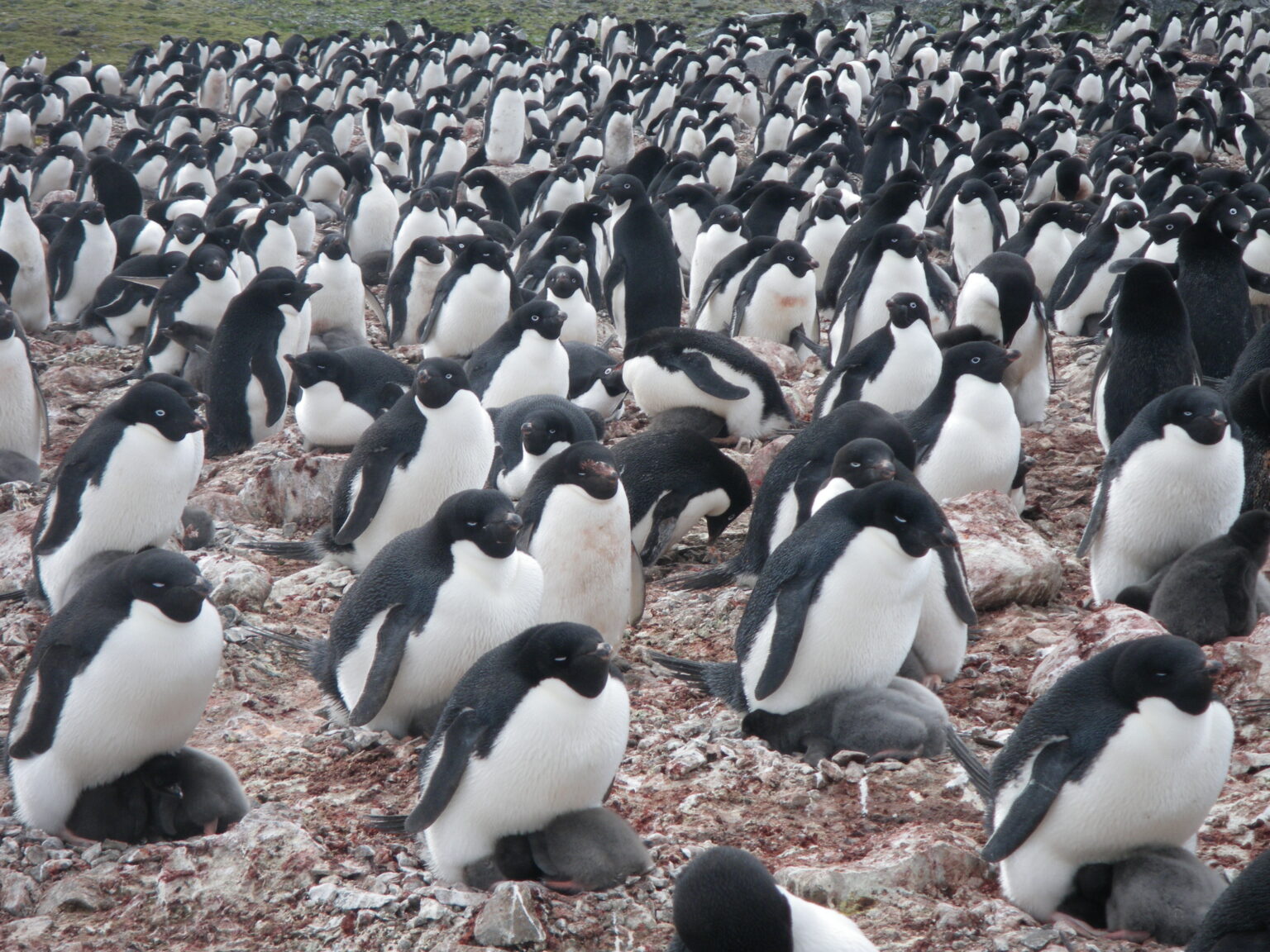
Scientists looked at 30 years of satellite imagery and found that global warming and melting sea ice are pushing Antarctica’s penguins to try a new, less nutritious diet: krill. The researchers, whose study was published in Current Biology, used the color of the penguin guano to understand Adélie penguins’ (Pygoscelis adeliae) diet.
From 1984 to 2013, penguins in areas with lots of sea ice ate more fish. But in years or specific areas with less sea ice, penguins ate more krill.
Using images captured from NASA satellites over the last three decades, the researchers found that a krill-heavy diet, compared to their usual diet of fish, is associated with lower penguin populations. Previous research shows that chicks whose parents feed them krill are less likely to grow as big or survive as long compared to chicks fed fish.
“Antarctica has experienced rapid environmental change in recent decades, and this approach gives us a new and powerful tool to learn how it has affected penguins,” said Michael Polito, one of the study’s coauthors and a professor of ocean sciences at the University of California, Santa Cruz.