




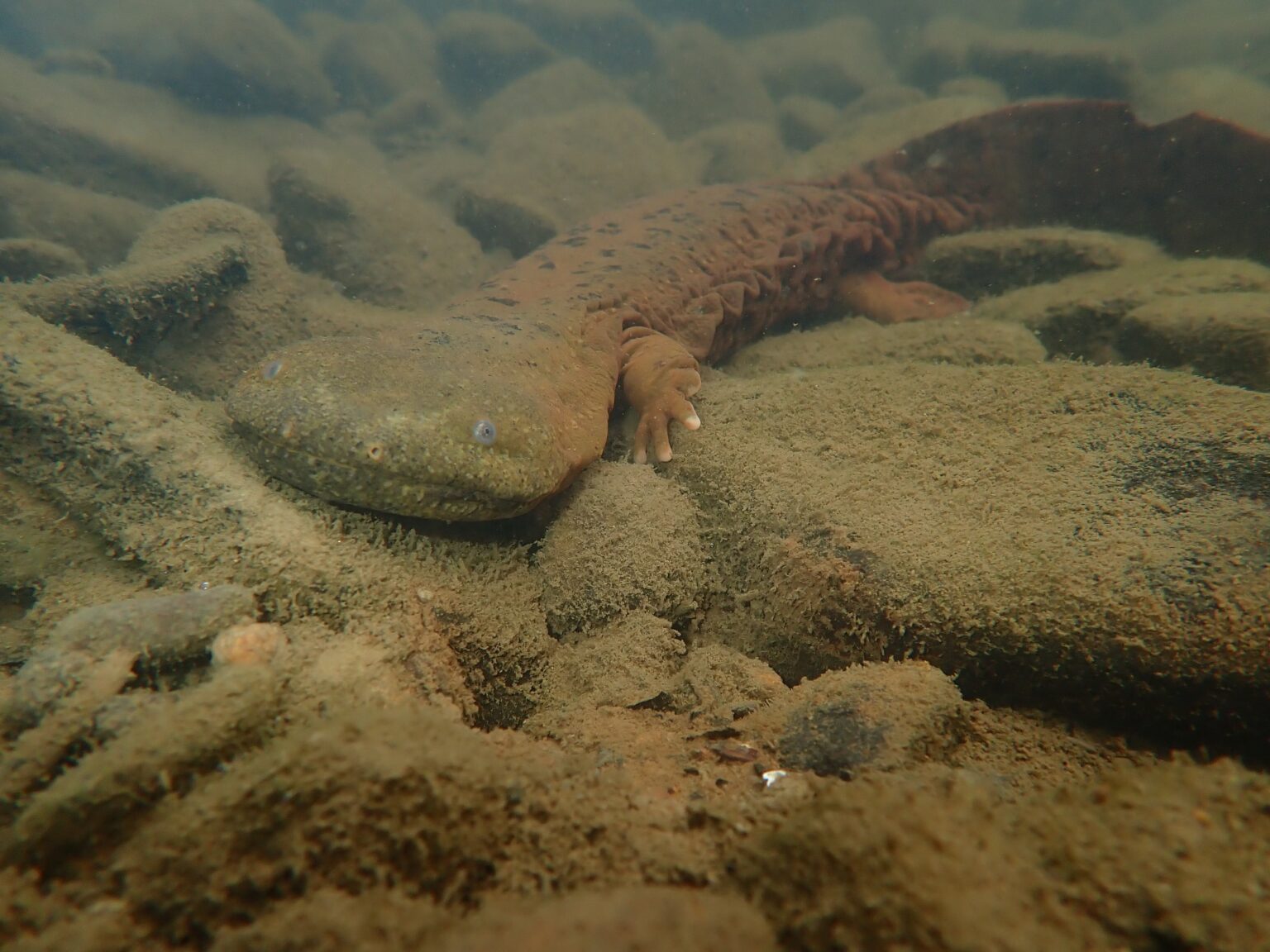
Bad water quality ruins the lives of young hellbenders—their fathers’ parenting suffers when streams become warmer and siltier.
“Altered water quality influenced how much they care,” said Matthew Kaunert, director of the Clean Water Institute at Lycoming College in Pennsylvania.
This new discovery reveals some of the reasons that hellbender populations in Pennsylvania streams haven’t been reproducing well in the past and gives researchers some clues about how best to conserve their nesting habitat.
Hellbenders, which are proposed for federal listing, have been in trouble for years. There are still plenty around in some streams in Pennsylvania, but most are quite old—individuals can live for decades. “It’s often been described as a nursing home population,” Kaunert said, adding that wildlife managers have known about massive declines across the eastern United States since the 1970s.
Finding hidden creatures
But part of the problem is that it’s difficult to track these cryptic creatures, which spend the good part of their long lives hiding under submerged rocks. So researchers used part of the rocks themselves to spy on them. Nearly two decades ago, researchers began building nest boxes to provide males with places to guard their young. Hellbender females usually lay their eggs in dens guarded by their mates before taking off, leaving parenting duties to the males, known as “denmasters,” as a result. Males stick around their eggs for months after they hatch, at which point the young hellbenders disperse.
Once they verified that the denmasters made use of these nest boxes, researchers fixed ice fishing cameras to the boxes that captured five to six hours of footage in a single go. Kaunert often did this on his own while surveying 14 of these nest boxes from 2019 to 2021—he’d change the cameras once every seven to 10 days during nest surveys in western Pennsylvania and eastern Ohio.
“We could hopefully get some basic information that’s long been a mystery,” Kaunert said.
The researchers started monitoring more than 14 nests, but some of these failed soon after the females laid eggs. “Some of these males inexplicably just abandon a nest within a very short period of time,” Kaunert said, adding that they will often get eaten by catfish or other predators if the denmaster isn’t there to keep guard. “The first fish that comes by will come in and eat them all,” he said.
The making of a hellish father
For a study published recently in the Journal of Zoology, the team set these nest boxes up along parts of waterways with varying water quality. They found that the fathers generally invested more care in their eggs and offspring in warmer streams with higher water conductivity. Conductivity is a measure of how many salts and minerals are in the water. While some streams have naturally high conductivity due to their geology, high conductivity can be associated with human impacts, including how silty a stream is—the less clear, the higher the conductivity. High conductivity can also mean there is more dissolved road salt in the water, which is known to cause problems in freshwater ecosystems. The research team also showed in a separate study that high conductivity affects the survival and development of eggs and larvae, making it a critical water parameter to monitor.
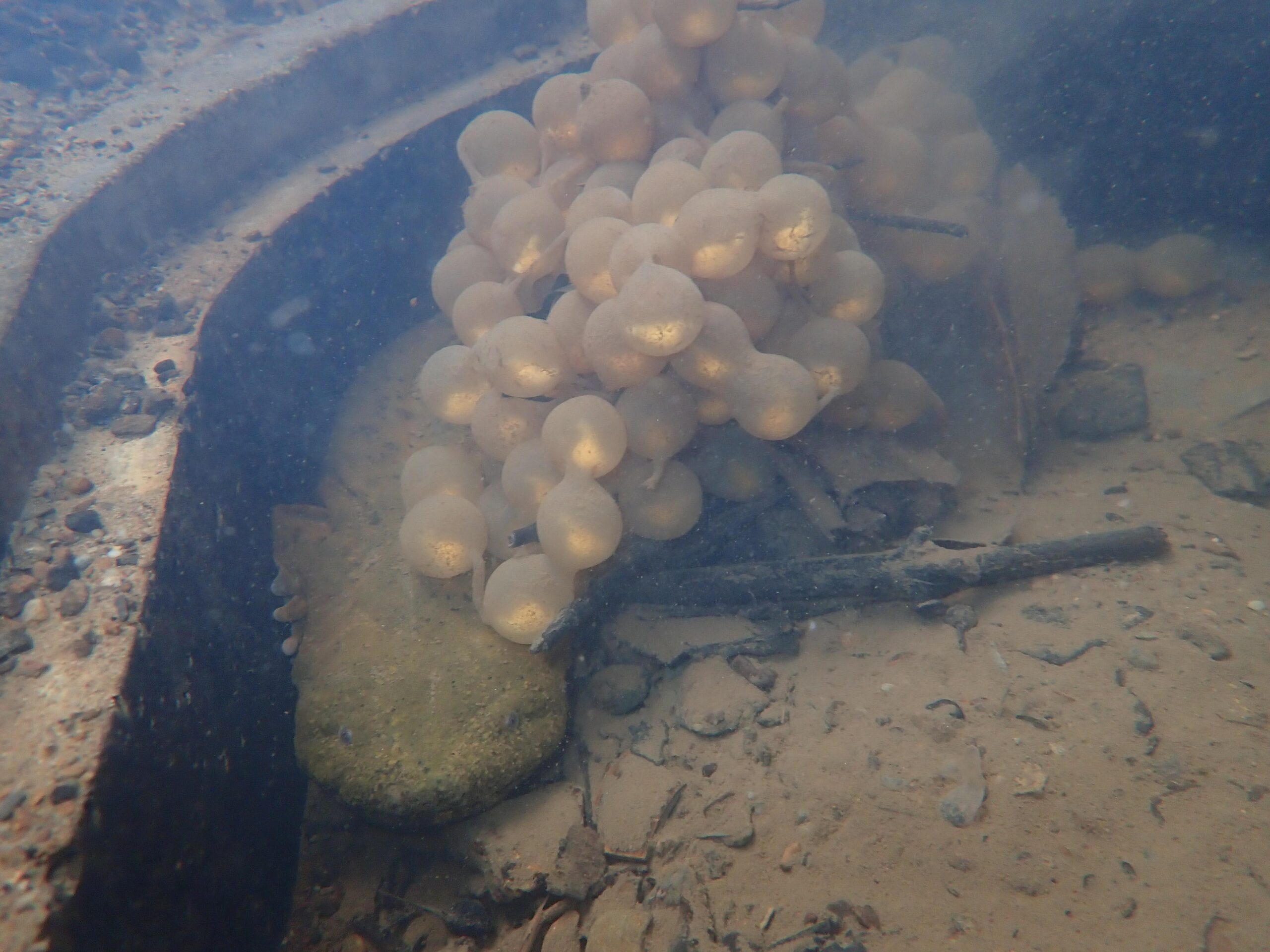
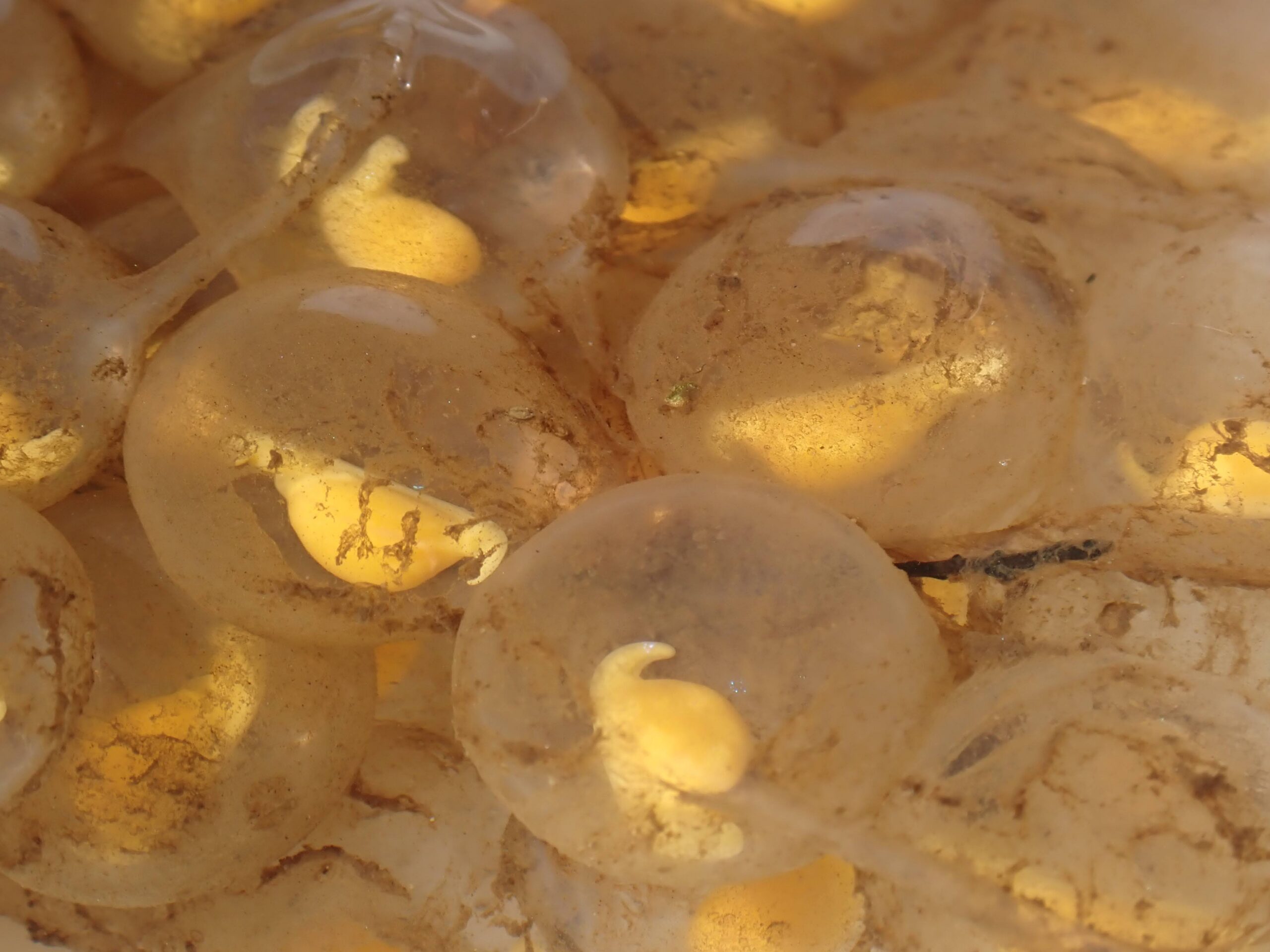
The team measured care based on a few different behaviors they saw on the camera footage. Fathers will fan the eggs with their tails, for example, which may oxygenate them and clear out debris. They will also rock and move around the egg clutches, which look a little like a tangled-up string of Christmas lights. These motions are thought to prevent developmental problems.
Finally, they ate some of their own eggs.
Nest cannibalism is something witnessed at extreme levels in other populations, especially in Virginia, as discussed in the Sept/Oct 2023 feature story on hellbenders in The Wildlife Professional. In those cases, as illustrated in a study published in The American Naturalist, males cannibalized all their eggs and young.
But in the recent study in Pennsylvania, Kaunert said the males only ate a few viable eggs, perhaps to stay healthy themselves while caring for the roughly 200 to 500 eggs per nest. In most cases where they saw this, the male had been tail-fanning its eggs for several minutes before suddenly stopping to eat a couple. “Anecdotally, it looked like he needed something to eat,” Kaunert said.
While any cannibalism may seem a little extreme, Kaunert also speculated that they may sometimes be eating inviable eggs, increasing the hygiene of the den in general and improving the survival chances for remaining eggs.
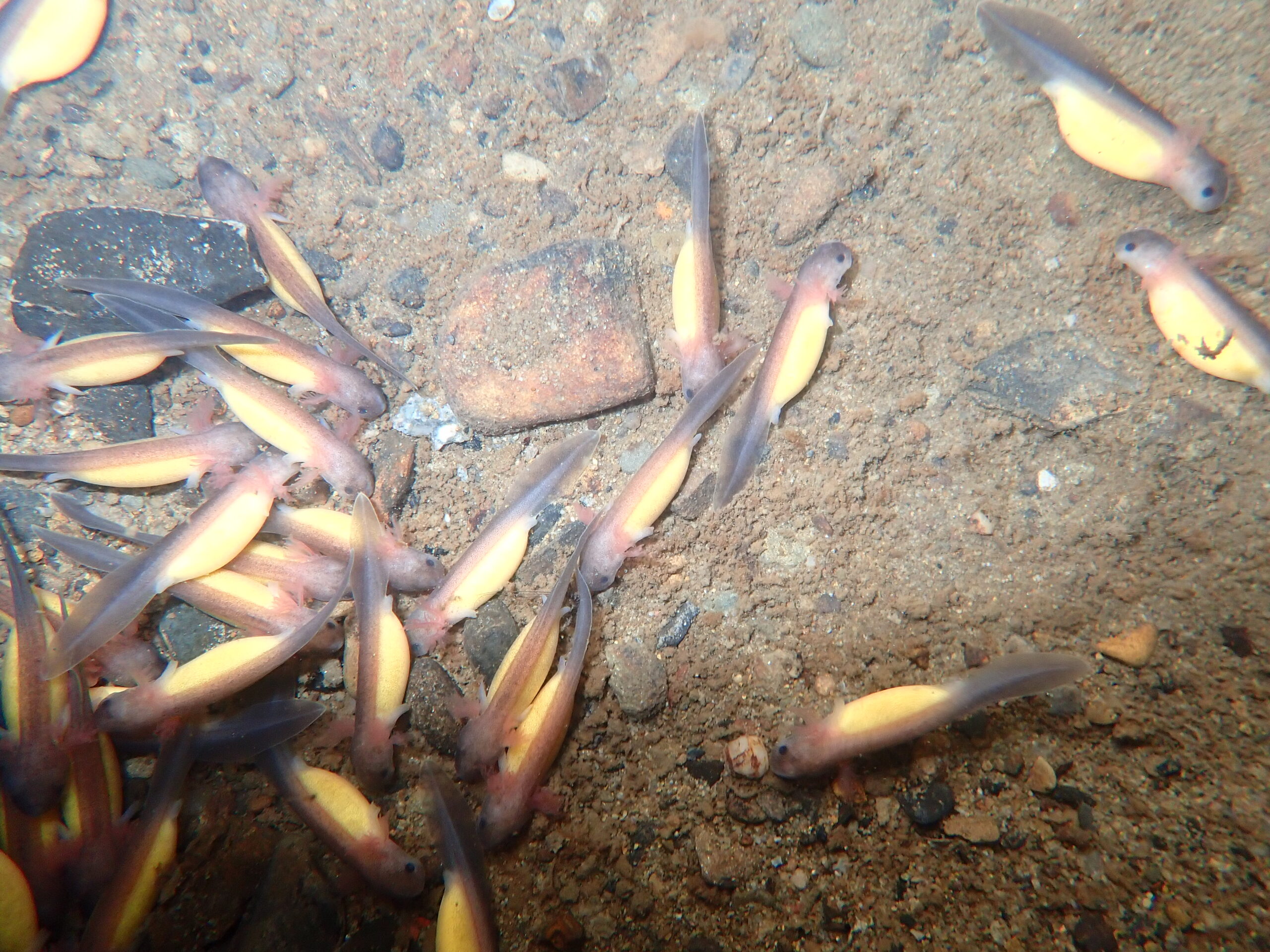
After eggs hatch, males continue to fan the young larvae—their gills aren’t fully developed, and they need help breathing. Hellbenders don’t lose their gills until they are about 1.5 years old.
The researchers found that the fathers that abandoned nests before eggs hatched would also spend less time fanning their eggs before they skipped out. In fact, tail-fanning was a pretty good predictor of whether a nest would fail.
Rough conditions can affect fatherhood
Stream quality alone wasn’t the only indicator of nest success. Some denmasters were just better dads and stuck around regardless of conditions. The team saw denmasters abandon nests just a few meters away from nests that succeeded in the same stream. Furthermore, denmasters also abandoned nests in areas with good water quality.

TWS member Viorel Popescu, a senior lecturer in biodiversity data analytics at Columbia University and a coauthor on the study, said that there are still more questions than answers as to why hellbenders seem to abandon nests in Pennsylvania. But it likely has to do with overall energy expenditure among the fathers. If increased conductivity and temperatures make it harder for them to find food or increase their energy expenditure, for example, they may not be able to support their nests. “They have to think about themselves first,” Popescu said.
This study also reveals how hellbender populations behave differently in different regions, which adds a layer of complexity in conserving the species. Pennsylvania is one of the few places where hellbenders aren’t listed at the state level—a “last stronghold of the species in the Northeast,” Popescu said.
But the population is still aging. As a result, it’s important to see what contributes to nest failure to maintain these large amphibians on the landscape.
Article by Joshua Rapp Learn