


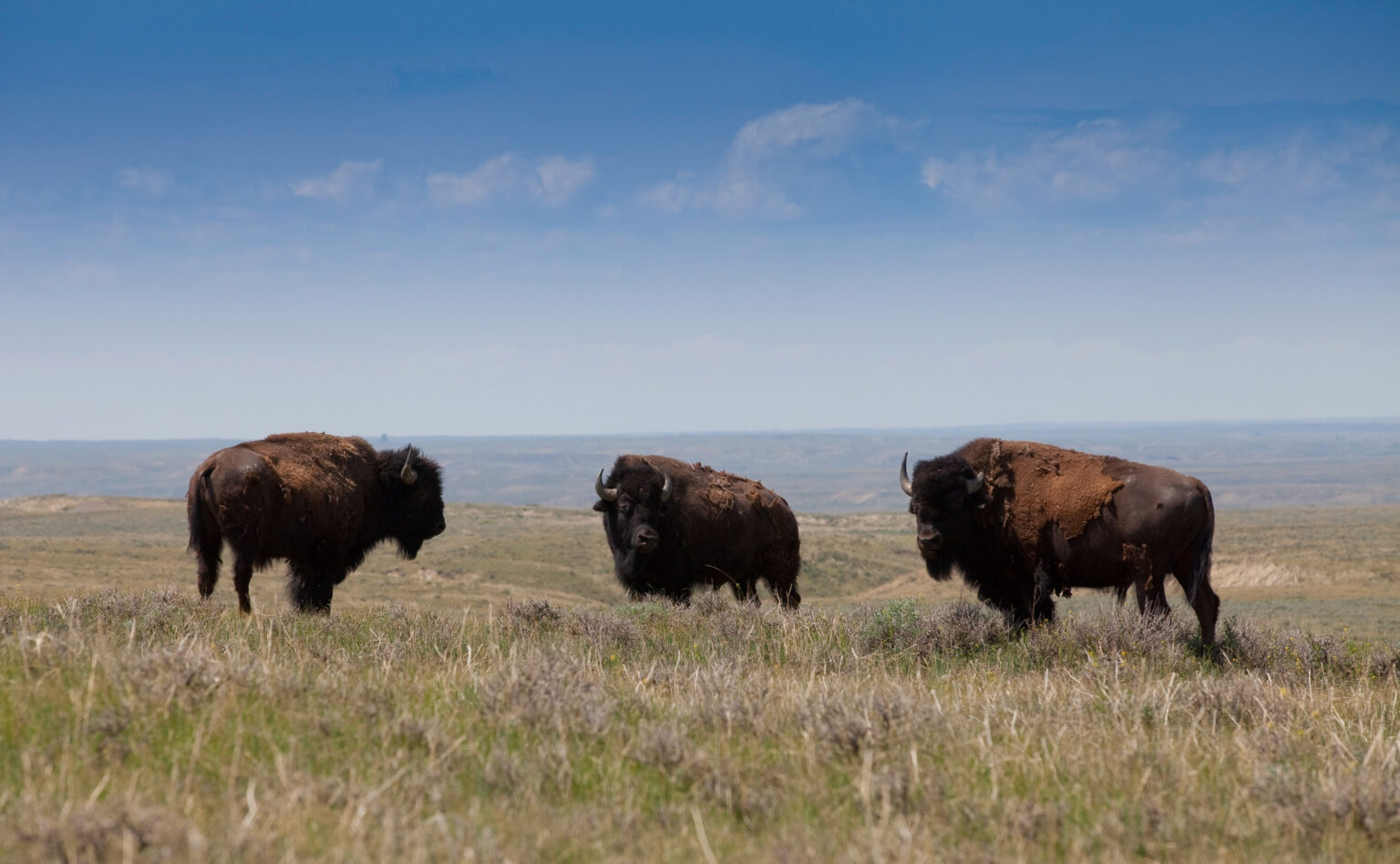
Until recently, tracking down escaped bison made up a good part of Scott Heidebrink’s job. As the former bison manager of American Prairie, a nonprofit organization that works to restore native plains ecosystems, this meant cruising the fence line in an ATV, looking for signs of problems. Usually, problems were few and far between and almost never involved animals trying to break free. Instead, it was more like a bison (Bison bison bison) version of sumo wrestling—one big male would muscle out a slightly smaller or less physically able one from its territory during rutting season. Sometimes, it happened to be near one of the fences that formed the boundary of the reserve. At up to 2,800 pounds, barbed wire and a little voltage were never going to be enough to stop a bison smashed out of competition by its adversary.
But on one occasion, Heidebrink arrived at a corner of one of American Prairie’s bison reserves and witnessed a male standing a quarter mile from the other side of the fence from its apparent opponent. There were no broken wires or bent fence posts—the usual signs that a male had been pushed out of the territory. There wasn’t even a broken top wire indicating the bison had taken an uncharacteristic leap over the barrier. Heidebrink had to drive up and down the length of the area four or five times trying to figure out what happened. “It’s kind of CSI,” he said.
Eventually, he noticed an overlooked detail in the corner of the reserve. The crossbar holding the fence together was cracked, and in the crack was a small tuft of bison hair. “I think that bison literally got picked up and tossed over the fence,” said Heidebrink, now the director of landscape stewardship at American Prairie. “If I hadn’t seen the chunk of fur there, I never would have known.”
Thankfully, bison launching another out of the ring like a professional wrestler were extremely rare, as were other cases of bison escaping. In a study published recently in Ecological Solutions and Evidence, Heidebrink and his team set out to determine how well the fences kept the bison in. They already knew that the specialized fences allowed for the free movement of wildlife like pronghorn (Antilocapra americana) and deer, but their new research found that, for the most part, specialized fences help to keep bison in the restored ecosystems that suit them.
“This shows you can have your cake and eat it too,” Heidebrink said.
Policing bison escapes
Keeping bison behind fences may be more important than ever due to a recent U.S. Bureau of Land Management decision to rescind licenses that the American Prairie holds to allow bison to graze on the agency’s land in Montana. Moving forward, all American Prairie’s bison may have to graze only on the nonprofit’s private reserves.
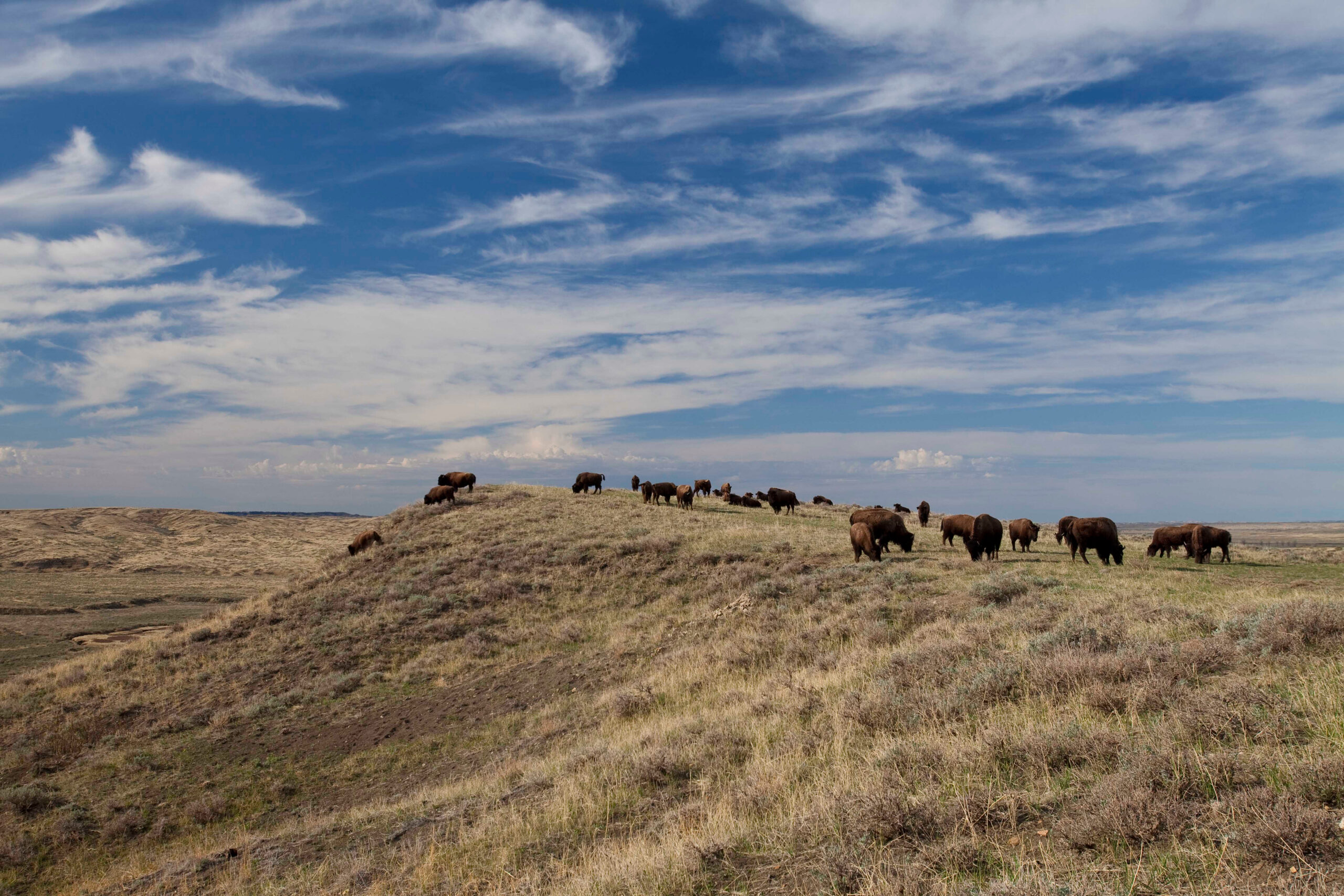
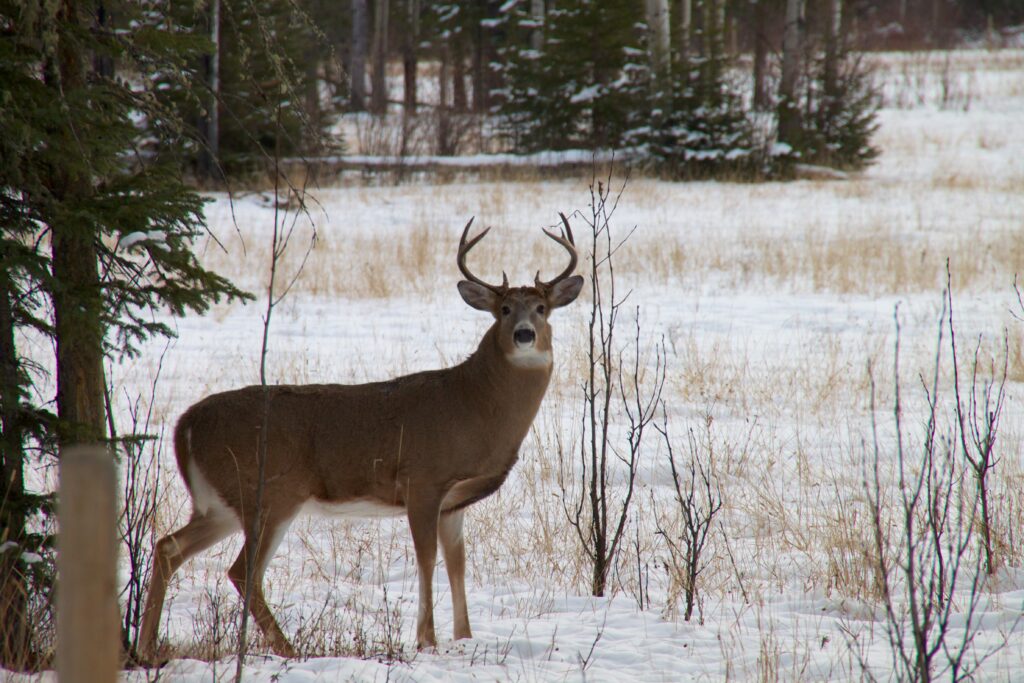
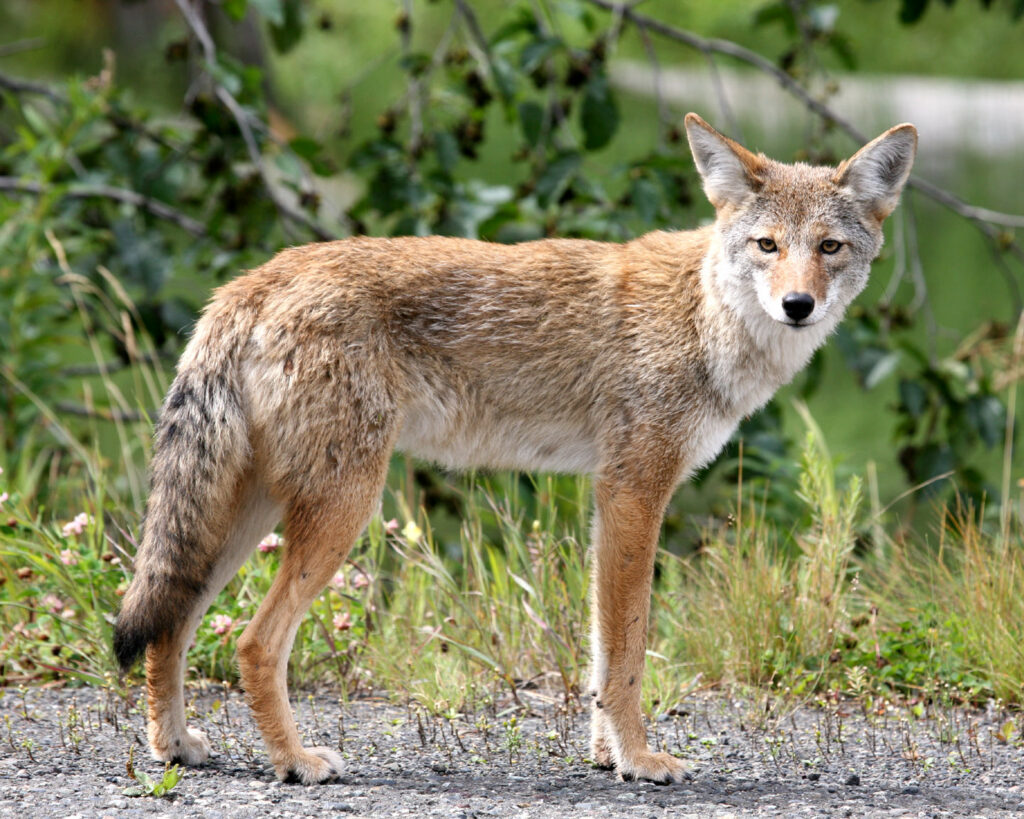
Altogether, American Prairie owns or leases about 600,000 acres of land in Montana. Bison graze on about 45,000 acres of that land, which has a combination of different fences. The team looked at highly specialized fences for this study. The bottom wire, at 18 inches off the ground, is smooth so that deer and pronghorn can pass underneath. The next wire that’s 24 inches from the ground is barbed, and the wire at 30 inches is electrified. Another barbed wire sits on the top at 42 inches from the ground.
A previous study showed that the setup allowed for the passage of pronghorn and deer. In this study, the team looked at whether these fences worked to contain bison. By Montana state law and in order to maintain good relationships with neighbors that may not appreciate bison on their land, the organization polices its boundaries every 10 days to ensure no escapes or fence damage. They also respond quickly to any reports of bison leaving the reserve.
This usually means finding the bison, fixing any damage to the fence, and herding the bison back through one of the gates. But the massive ungulates can be stubborn. On rare occasions, the team has to euthanize animals that seriously injured themselves and won’t go back through the fence. Or they have to tranquilize the animals and get them onto a sled—it usually takes four people to roll a mature bull onto it. They then winch that onto a stock trailer and drive the itinerant roamer back onto American Prairie’s property.
They keep detailed records of these incidents. In this study, the team analyzed escape records from January 2020 to the end of March 2023. They found 31 escape events over the 822 days of study, said Karley Hohn, who was a master’s student at the University of Nebraska-Lincoln when she worked on this study. During this study period, all bison were returned to the reserve within three days and they didn’t have to tranquilize any animals.
Fighting and jumping
Most bison escaped during the rutting season in July and August, and most incidents were related to fights. “A very high percentage are related to that male competition,” Heidebrink said.
Many of these incidents are the bison equivalent of an ice hockey body check into the boards—one male will shove another male right through the fence. The latter may not be able to get back through and sometimes is reluctant to do so, as they sometimes associate the fence with any injury they sustained while being slammed through it.
Bison also occasionally jump the fence—they usually leave a sign of this by destroying the top wire on their way over. They might do this to escape a more dominant bull. “I can’t be here anymore because I’m getting my butt kicked,” Heidebrink said of the escapee’s thought process. But he’s also seen some of them jump over the cattle guards meant to keep them from escaping along gates through the fence.
Heidebrink said that this study reveals one of the challenges of keeping a more natural bison herd. Bison kept for livestock purposes, for example, typically only have about 20% males. But American Prairie’s herd is roughly half male, which is likely why they experience more bison escapes.
Nonetheless, it’s good news that the fences mostly work. Other work has shown that pronghorn and deer can pass under these fences most of the time. “It’s not perfect at either [keeping bison in or allowing other wildlife to pass through], but it’s pretty good at both,” Heidebrink said.
The recent ruling by the BLM is nonetheless a setback. American Prairie’s goal is to connect 3.2 million acres of fully functioning prairie ecosystem in Montana. “We’re trying to grow our bison as much as possible, but there are really limitations in terms of politics,” he said.
As for the male bison that was body-slammed through the fence by its competitor, it got away with just a limp. Heidebrink tried herding it back in with his ATV, but it was leery about returning—it apparently didn’t want to come back for more. He had to leave it overnight and return the next morning with two ATVs and a pickup truck to herd the male through a gate farther from the incident.
“He was injured and didn’t want to get near other bison,” Heidebrink said.
Article by Joshua Rapp Learn