




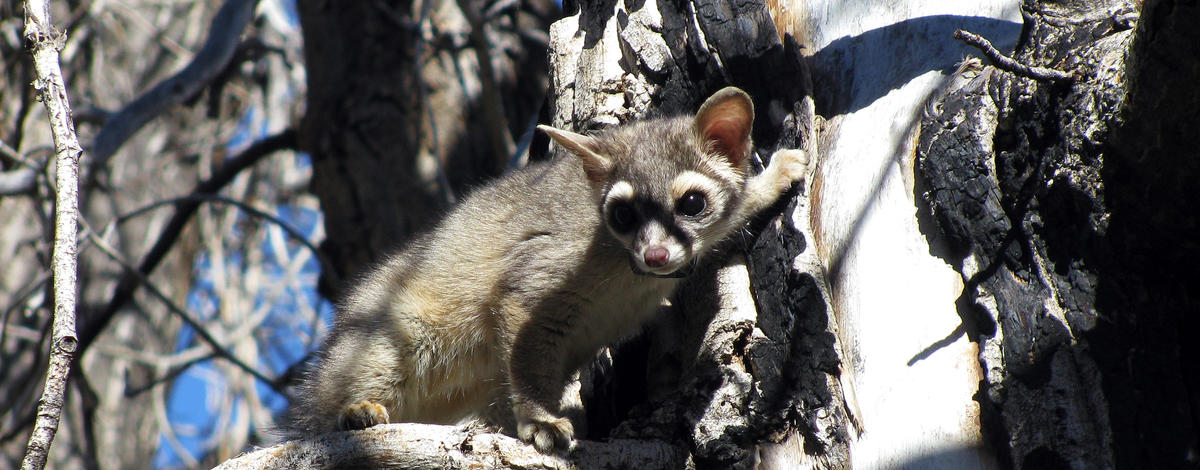
It was December 2021 when workers at the Amalgamated Sugar Company near Twin Falls, Idaho, reported a strange sight. A small creature with a bushy raccoon-like tail was running amok in the factory, but it wasn’t a raccoon (Procyon lotor). The factory called the Idaho Department of Fish and Game (IDFG) to help them get the creature out.
“You can imagine a ringtail would be very hard to catch if there was a mountain of sugar in a building to eat,” said TWS member David Ausband, a wildlife biologist with the U.S. Geological Survey’s Cooperative Fish and Wildlife Research Unit housed at the University of Idaho. “You can’t get it in a trap because it thinks it found heaven.”
But the IDFG succeeded, and wildlife managers ultimately released the sugar fiend south of Twin Falls. This rare occurrence wasn’t the only ringtail (Bassariscus astutus) sighting in Idaho—it was actually the fifth confirmed observation in the state.
Armed with these reports, researchers set out to confirm whether ringtails were making inroads to Idaho, which is north of their historical distribution in the United States.
Cute but understudied
Ringtails are small, omnivorous mammals that are distantly related to raccoons. “They have these crazy paws with almost little suction cups,” Ausband said. “They can rotate their hind legs 180 degrees and come down trees and cliffs headfirst.”
They are nocturnal, which is why a lot of people have never seen one, despite them being common in the U.S. Southwest. “They have these big eyeballs for letting light in,” Ausband said. Traditionally, the northern end of their distribution was in Nevada and Utah. But Ausband and his colleagues had heard reports of ringtails in southern Idaho for years.
Ausband and his colleagues had been conducting a trail camera study chasing reports of another supposed newcomer to Idaho—kit foxes (Vulpes macrotis). But they’d had zero luck confirming the presence of these animals and decided to pivot to ringtails. In a study published recently in Ecology and Evolution, they described the results of placing dozens of trail cameras up in southern Idaho in January and February 2023—the months when ringtails typically breed.
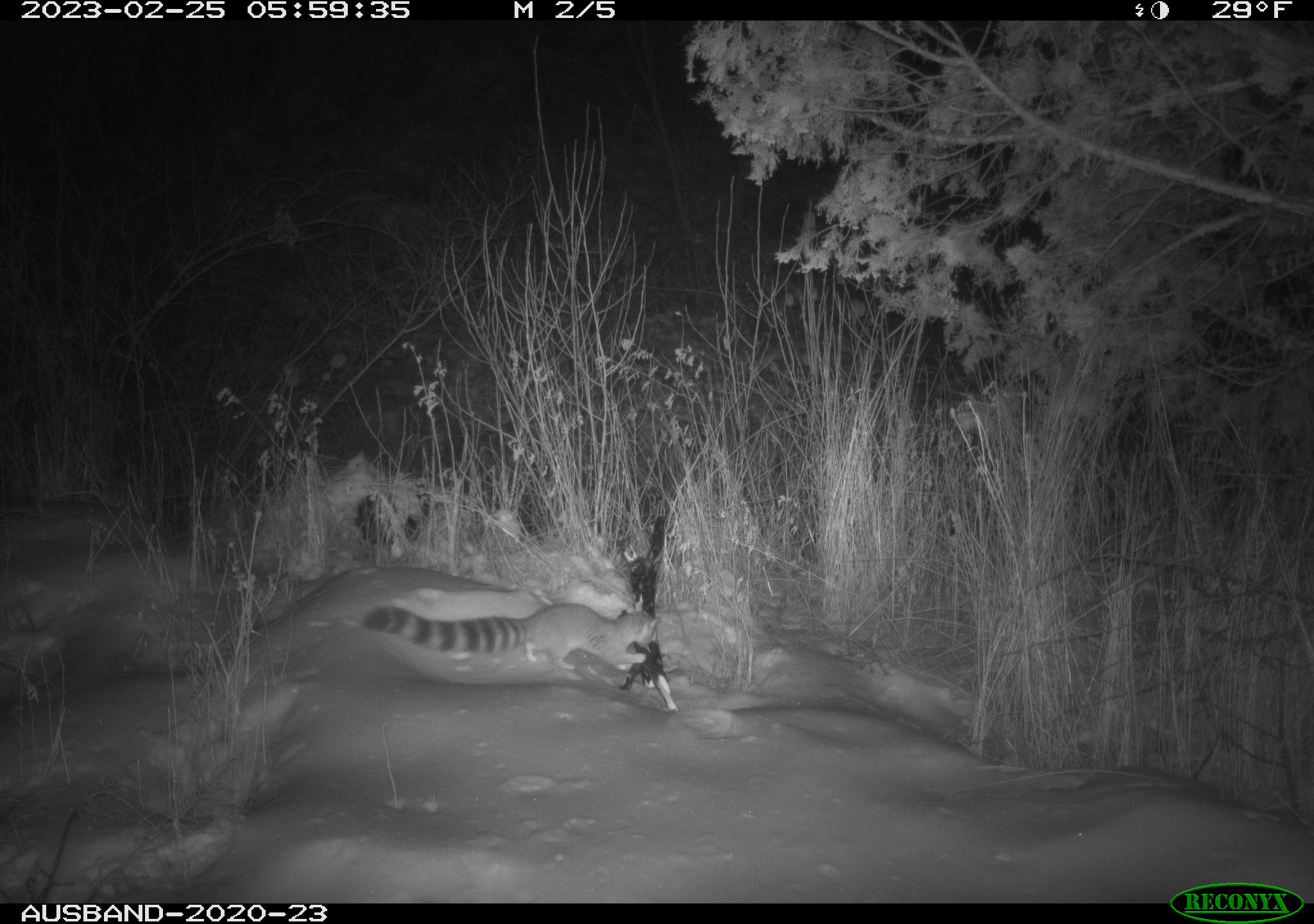
They set the traps up in a canyon area well-connected to known ringtail habitat south of the state border in Nevada. They faced the cameras toward rocks smeared with a lure made up of a pungent mixture of fish oil and Tang drink powder paste. “They love orange sugary drink mix,” Ausband said.
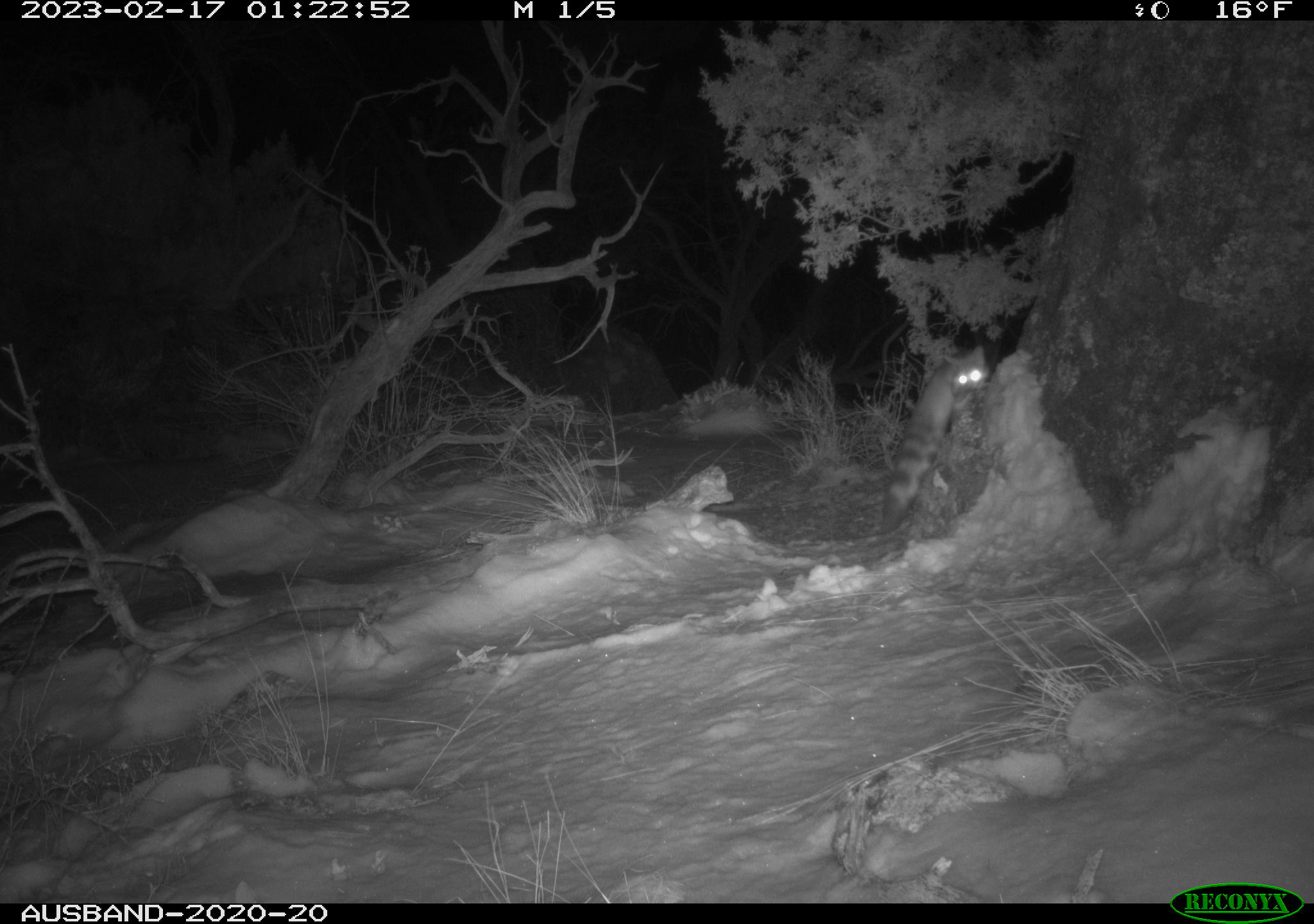
The team had more luck with ringtails than they had with kit foxes. They recorded nine instances of ringtail footage in photos taken from six different cameras. This included one fruitful night when two cameras captured ringtail photos miles away from each other—proof that there were at least two ringtails in the area.
The researchers couldn’t verify individual differences based on the quality of the other photos they captured, but since ringtails have a relatively small home range and many of these cameras were far from each other, “it seems like a handful of individuals,” Ausband said.
How did ringtails arrive in Idaho?
Ausband isn’t sure if ringtails used to live in Idaho centuries ago. He’s also not sure whether Indigenous people in the area have oral history about ringtail presence in the area.
But as far as he can tell, ringtails haven’t been seen in Idaho for a long time before recent sightings. Ausband isn’t sure why they’ve expanded their range northward, but he speculates that it might be related to decades of fire suppression. The decrease in burns in past decades has led to the expansion of juniper trees northward. “Because they love trees, they might have followed that habitat change into Idaho,” Ausband said.
Ausband said that this expansion is surprising. “Sometimes, conservation is such a string of bad news,” he said. “It’s kind of refreshing that these are expanding.”
He also hopes to see more research conducted on them. “They are pretty understudied for how widespread they are,” he said.
But people in southern Idaho might expect to see more of them in the future, as they seem “reasonably bold” when it comes to humans.
“They don’t seem too fussed by people sometimes, so you do get sightings of them in residential areas,” he said.
Article by Joshua Rapp Learn