


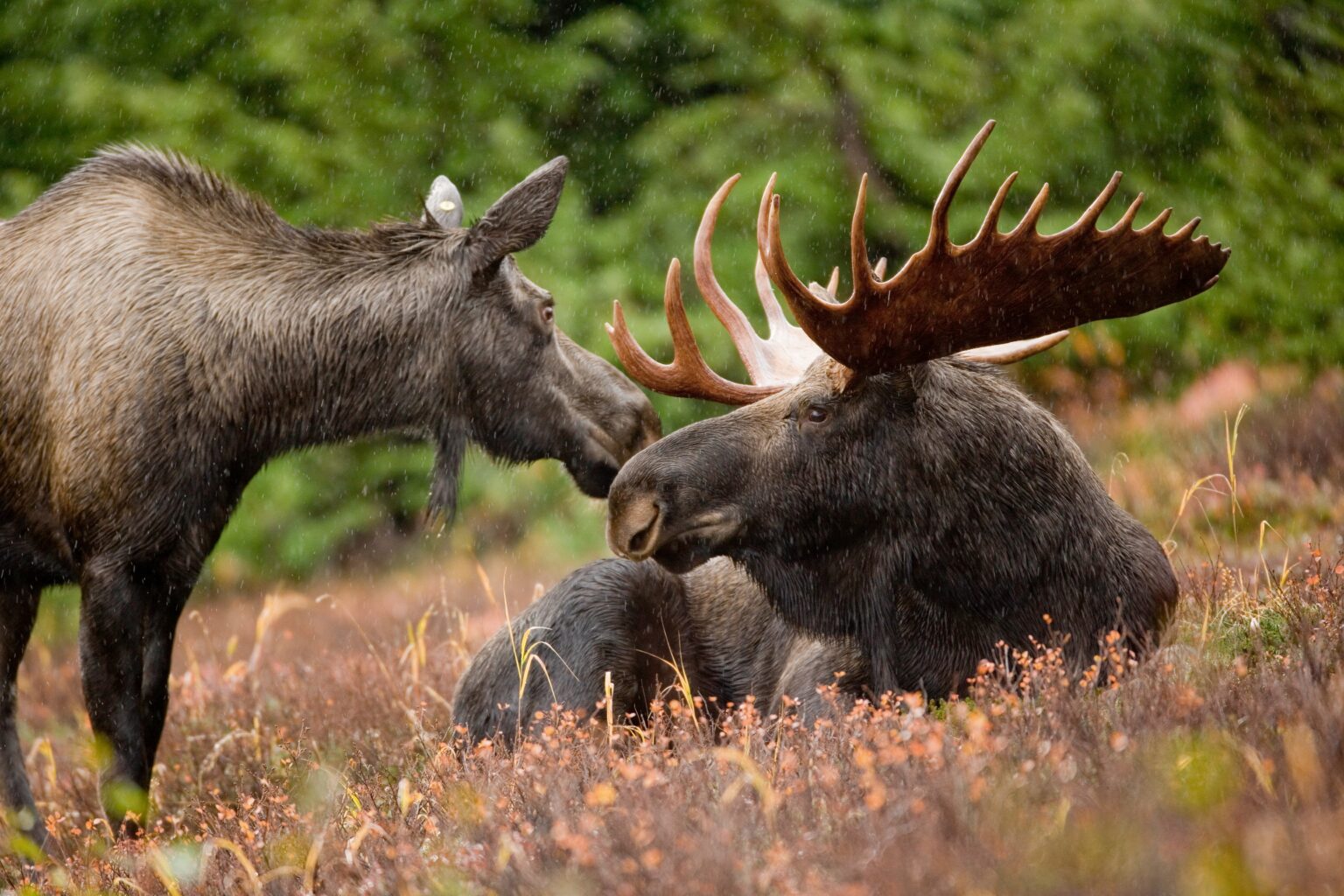
People may not care for close neighbors, but for elk and moose, how tightly humans cluster their homes is more than just bothersome. It can determine whether they migrate through or take a wide detour. New research tracking elk (Cervus canadensis), mule deer (Odocoileus hemionus), pronghorn (Antilocapra americana) and moose (Alces alces) in northwestern Wyoming found that the animals may respond to the layout of development on the landscape, specifically the distance between structures. Populations tracked in rural areas avoided spaces narrower than two kilometers and never used spaces narrower than 50 meters between houses. Contrastingly, their more urban counterparts would use spaces narrower than two kilometers but never used spaces narrower than 50 meters. The results suggest that maintaining spaces more than 500 meters between houses will help with animal movement. However, to maintain migration corridors, spaces more than 2.5 kilometers between houses would be better.