

The Ecological Society of America hosted its annual conference in Salt Lake City, Utah, last month. This was the first ESA conference I had the pleasure of attending, and it did not disappoint. Between reconnecting with old friends, engaging in new discussions and attending intriguing sessions, I left ESA2026 with a renewed sense of purpose in navigating the challenges presented in the theme of the conference: “Ecology in the age of uncertainty.”
No time for competition
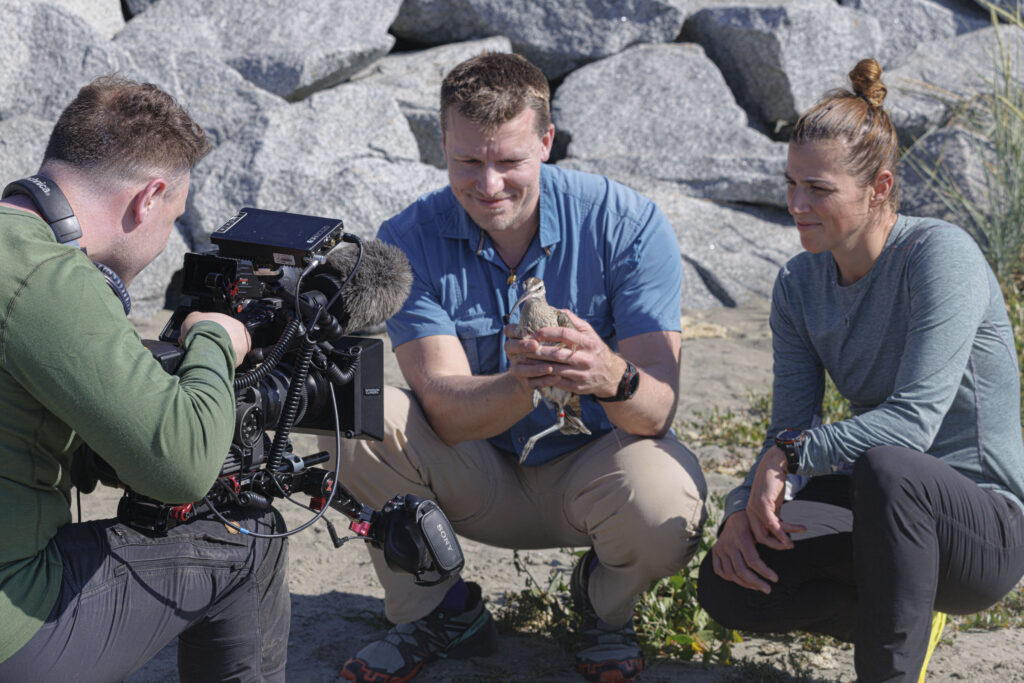
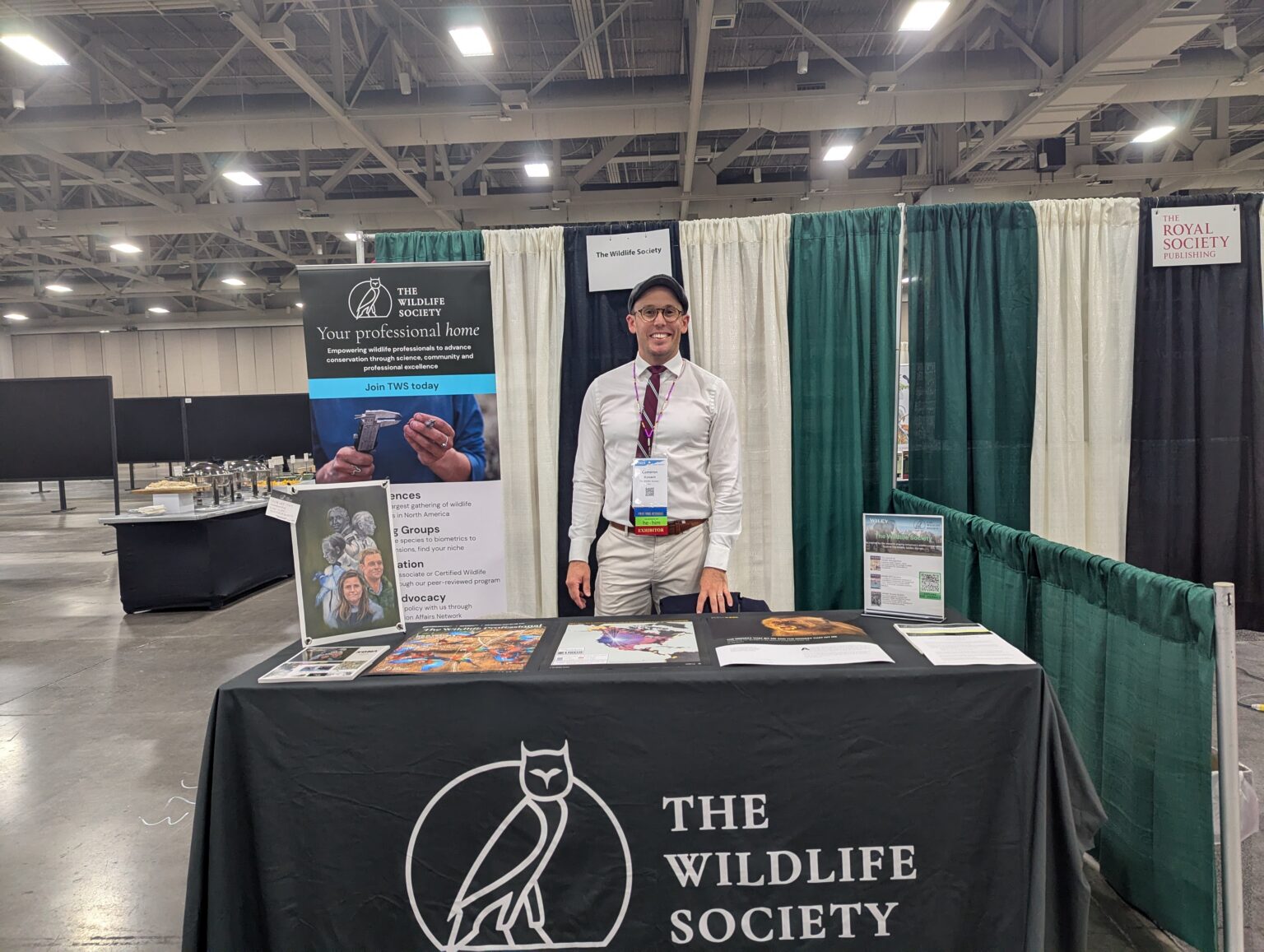
During the week, a few attendees expressed surprise at seeing TWS at the ESA conference, asking, “Aren’t you guys competitors?” Many were surprised to hear that TWS and ESA work closely together across almost all of our program areas. In the age of uncertainty, we do not have the luxury of being competitors.
In fact, for close to a decade now, ESA and TWS have been attending each other’s conferences to support one another, share ideas and build collaboration opportunities. We hope these efforts create even greater connections for our respective memberships through mentorship opportunities, professional development, support for science and meaningful conservation impact.
Shedding the perception of competition and focusing on the areas of overlap across professional societies will enable our communities to amplify important messages to the public and policymakers. Conservation challenges do not recognize the boundaries we have defined for our professions, and neither should the organizations working to address them. Stronger partnerships among scientific societies help ensure that the best available science reaches decision-makers while also building a more connected and resilient natural resources profession.
AI future
Artificial intelligence emerged as one of the most discussed topics throughout the conference, including a thought-provoking scientific plenary by Tanya Berger-Wolf, director of the Translational Data Analytics Institute at The Ohio State University. Presentations highlighted both the tremendous opportunities and legitimate concerns associated with integrating AI into ecological research and natural resource management.
Researchers showcased applications ranging from automated species identification and habitat mapping to predictive ecological modeling. Many of these tools have the potential to dramatically increase efficiency, allowing scientists to process data at scales that would have been unimaginable only a few years ago. At the same time, presenters raised important questions about transparency, data quality, environmental consequences, bias and the risk of overreliance on automated systems.
Throughout these discussions, I was encouraged to hear broad support for the professionals responsible for collecting the field data that fuels these technologies. Speaker after speaker emphasized that AI is only as useful as the information used to train and validate it. Wildlife biologists, ecologists and technicians remain essential to the scientific process. No algorithm can replace the observations scientists gather in the field, the intuition experienced practitioners provide, the cultural importance of the land to Indigenous communities or the deep understanding of ecological systems developed through years of study and stewardship.
Rather than replacing professionals, the prevailing sentiment was that AI should serve as a tool that enables us to ask better questions, identify patterns more quickly and ultimately make more informed decisions.
Technological foil
At the same time, a natural foil to discussions about artificial intelligence emerged throughout the conference: deeper human connections with nature.
While attendees debated the future of increasingly sophisticated technologies, many sessions emphasized the enduring importance of direct observation, outdoor experiences and community engagement. Several speakers noted that ecological science is fundamentally rooted in understanding the natural world through careful observation. Technology can help us process information, but it cannot replace the sense of wonder, curiosity and responsibility that comes from spending time outdoors.
Human intuition and observation unlock a wealth of insights that are difficult to quantify. Experienced field professionals often recognize subtle ecological changes long before they appear in datasets or predictive models. They notice shifts in species behavior, changes in habitat conditions and emerging threats that require attention. These observations frequently provide the foundation for scientific inquiry and management action.
Balancing the utilization of emerging technologies with a concerted effort to strengthen our connection to nature may be one of the most important challenges facing our profession. During one session, the discussion ventured into the idea of wildlife professionals giving themselves permission to express themselves and their passions in ways that traditionally would not be encouraged under a strict focus on emotionless objectivity in science. As tools become more powerful, maintaining that human relationship with the people, landscapes and wildlife we seek to conserve becomes even more critical.
Opportunities in crisis
The unfortunate reality of our uncertain future is that unrelenting change is occurring at a pace many of our institutions seem unprepared to handle. With countless biotic and abiotic factors influencing management decisions around issues, such as climate change, invasive species and habitat loss, the path forward can often appear confusing and overwhelming.
As a result, many sessions at ESA2026 focused on decision-making frameworks designed to help practitioners navigate uncertainty, especially around climate change. Approaches such as Resist-Accept-Direct (RAD) were frequently discussed as practical tools for evaluating management objectives in rapidly changing ecological systems. Rather than searching for perfect answers, these frameworks acknowledge uncertainty and encourage thoughtful, adaptive decision-making that factors in a broad spectrum of possible scenarios.
One particularly memorable presentation lasted only five minutes but left a lasting impression. The speaker challenged attendees to reconsider the meaning of the word crisis. While crises undoubtedly involve risk, they also create opportunities for creativity, adaptation and transformation. I left that session reminded that uncertainty is not merely an obstacle to overcome. It is also the environment in which innovation occurs.
The final slide from that presentation featured a simple fortune cookie message that seemed fitting for both the conference and the profession as a whole:
“Opportunities often disguise themselves as challenges: Face them boldly.”
Standing together in uncertainty
Other sessions explored what this uncertainty means for the future of the profession itself. Students entering natural resource careers are preparing to inherit a world that, in general, is vastly different from the one many established professionals experienced. Their optimism remains strong, but many have never known the ecological conditions that current professionals are striving to maintain or restore. Their interests tend to be broader in scope, their perspectives more interdisciplinary and their willingness to embrace emerging technologies notably higher.
This generational contrast was particularly evident during discussions surrounding AI. Questions from students often reflected excitement and curiosity, while questions from more established professionals focused on risks and limitations. Neither perspective is inherently right or wrong. Together, they provide a valuable balance between innovation and caution. Where some professionals see a potential threat, many students see the future.
As ecologists, wildlife professionals and conservation practitioners, we will continue facing uncertainty. The conversations at ESA2026 reminded me that we do not face it alone. As one student astutely noted: “We don’t need to eliminate uncertainty; we just need to stand in it together.” Through collaboration, innovation and a shared commitment to science-based conservation, we are well positioned to meet the challenges ahead.
We hope you join The Wildlife Society in Des Moines this fall for our annual conference as we continue discussions on many of the topics raised at ESA2026. And if you see our professional society friends from the Ecological Society of America, be sure to stop and say hello or thank them for the important work they do in advancing ecological science and conservation.
Article by Cameron J. Kovach