


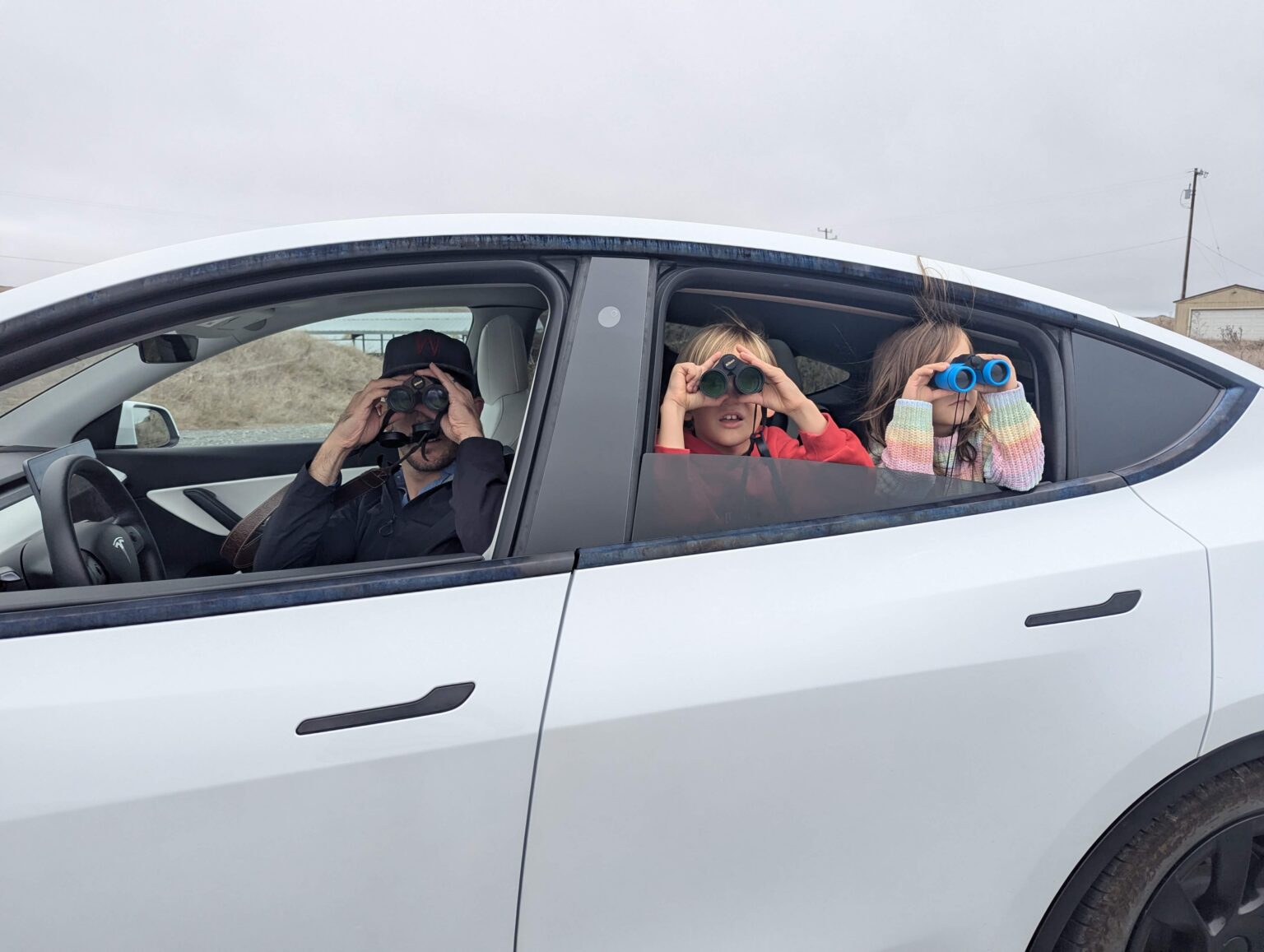
Perspective is often shaped by how we experience a landscape.
For some, insights come from standing still, developing a deep understanding of a place by spending years observing its rhythms and nuances.
For others, perspective is shaped by movement. Experiencing a landscape at the speed of migration reveals patterns that are difficult to see from any single location.
For many wildlife species, survival depends not on a single habitat but on the connections between habitats. Following those connections across thousands of kilometers provides a unique perspective on one of the most fundamental elements of conservation: landscape connectivity. Seen through the lens of migration, the world becomes less of a collection of places and more a network of pathways (and challenges) that wildlife must successfully navigate year after year.
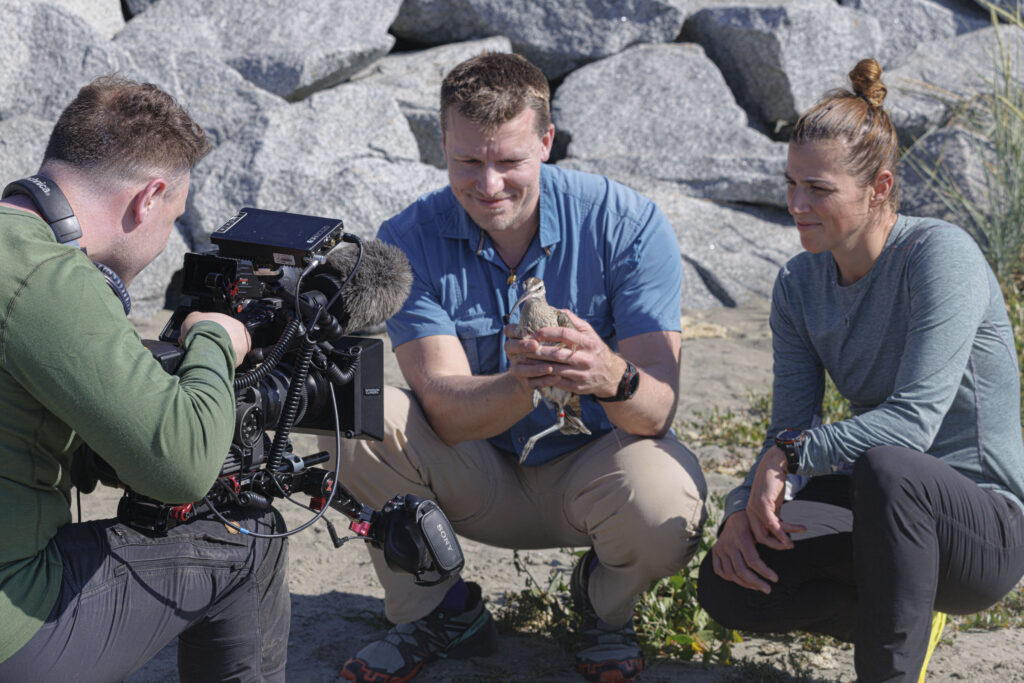
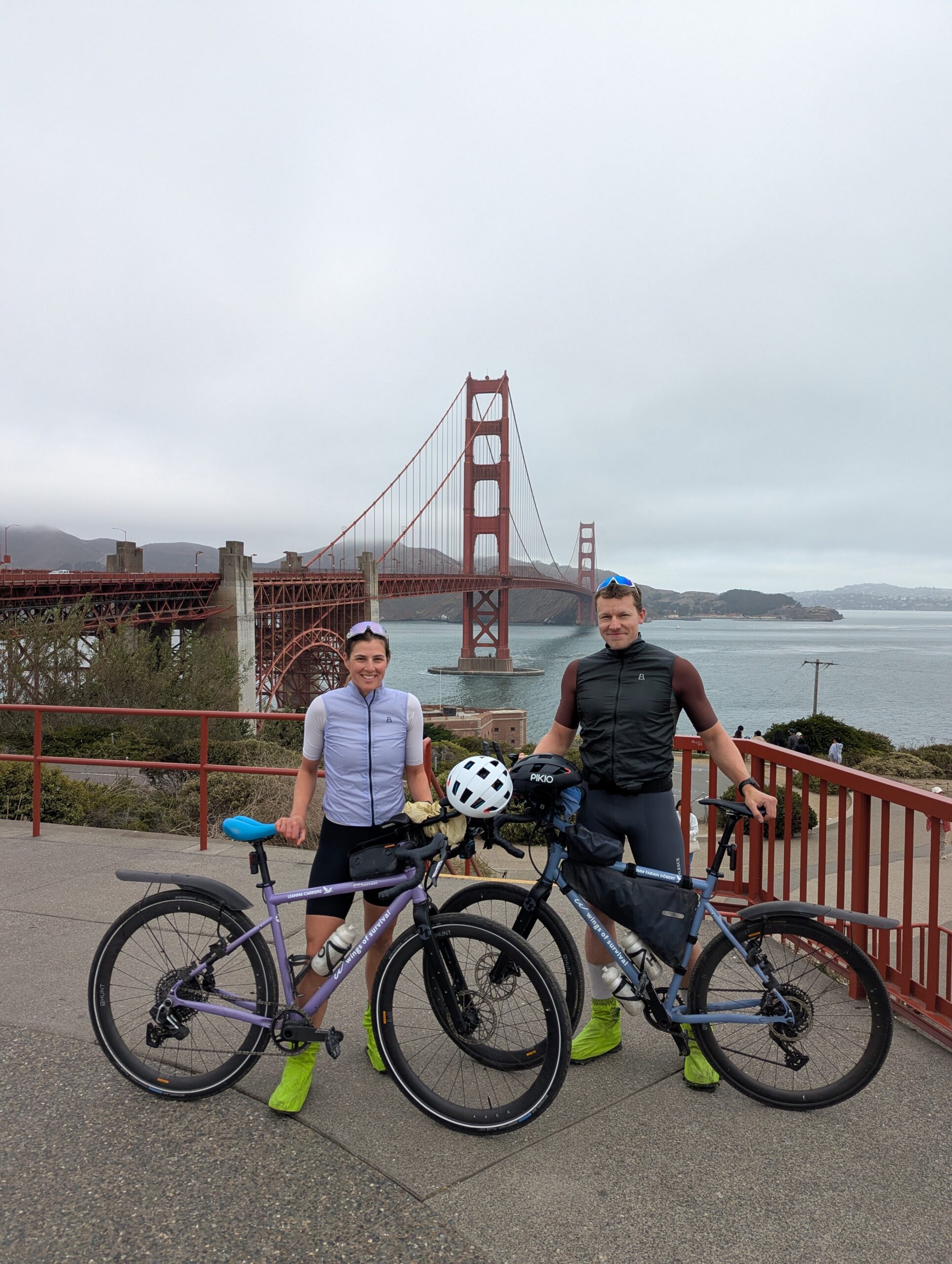
One human-powered expedition, Wings of Survival, is doing its best to trace the migratory pathway of a whimbrel (Numenius phaeopus) from the northern reaches of Alaska to the southern tip of Patagonia by bike. On a not-too-foggy San Francisco morning, I had the privilege of meeting the Wings of Survival team, Leanna Carriere and Timm Döbert, as they crossed the Golden Gate Bridge on day 58 of their remarkable expedition. During my time with Carriere and Döbert, the conversation often touched on the idea of perspective.
A journey fueled by people and purpose
Having now traveled approximately one-fifth of the way through their total planned 30,000-kilometer (18,641-mile) expedition, I was eager to see how Carriere and Döbert felt about the road ahead. I didn’t know what to expect, but I was encouraged to find that the duo still demonstrated the same determination, resilience and passion that originally sparked this journey.
Wings of Survival was founded to raise awareness for wildlife conservation, habitat protection and the importance of connecting people with nature. I can only imagine how challenging the expedition has been both mentally and physically, but neither Carriere or Döbert showed it. They seemed genuinely fueled by the notion that every kilometer traversed was a new opportunity to engage communities, share conservation stories and build support for the protection of species and their habitats.
The perfect pairing
While Carriere and Döbert shared the same passion for the mission, I was fascinated by how differently they interpreted the journey so far. Although they shared every mile of the route and experienced the same places and challenges, their reflections on the journey often focused on different aspects of the experience in ways that I found both interesting and deeply complementary.
Carriere frequently highlighted the individuals she had met along the way. She spoke fondly of their creativity, passion and dedication and how that inspired local communities to address local conservation challenges. For Carriere, the journey was as much about human connections and personal discovery as it was about the physical challenge.
Döbert was equally enthusiastic but often viewed the expedition through a broader ecological lens. His reflections frequently returned to the birds they had GPS tagged and the scientific questions driving the project. He spoke about discoveries emerging from the expedition’s tagged whimbrels, the importance of understanding migration across landscapes that span entire continents and the need to think critically about how wildlife experiences the world around it.
Together, this spectrum of perspectives seemed to encapsulate the expedition itself. Wings of Survival is both a human story and a conservation story. It is about the people who care enough to take action and the wildlife whose journeys inspire those actions. In many ways, Carriere and Döbert appear to be the perfect pairing for a journey that will ultimately take them halfway around the world.
Perspective and scale
Spending time with someone who has biked 6,000 kilometers (3,728 miles) inevitably reshapes how one thinks about movement, endurance and distance. Just looking at the map of Carriere and Döbert’s journey to date, it’s hard to comprehend the sheer scale of their accomplishment. I equate it to how humans often struggle to make sense of the difference between numbers like a million, a billion and a trillion.
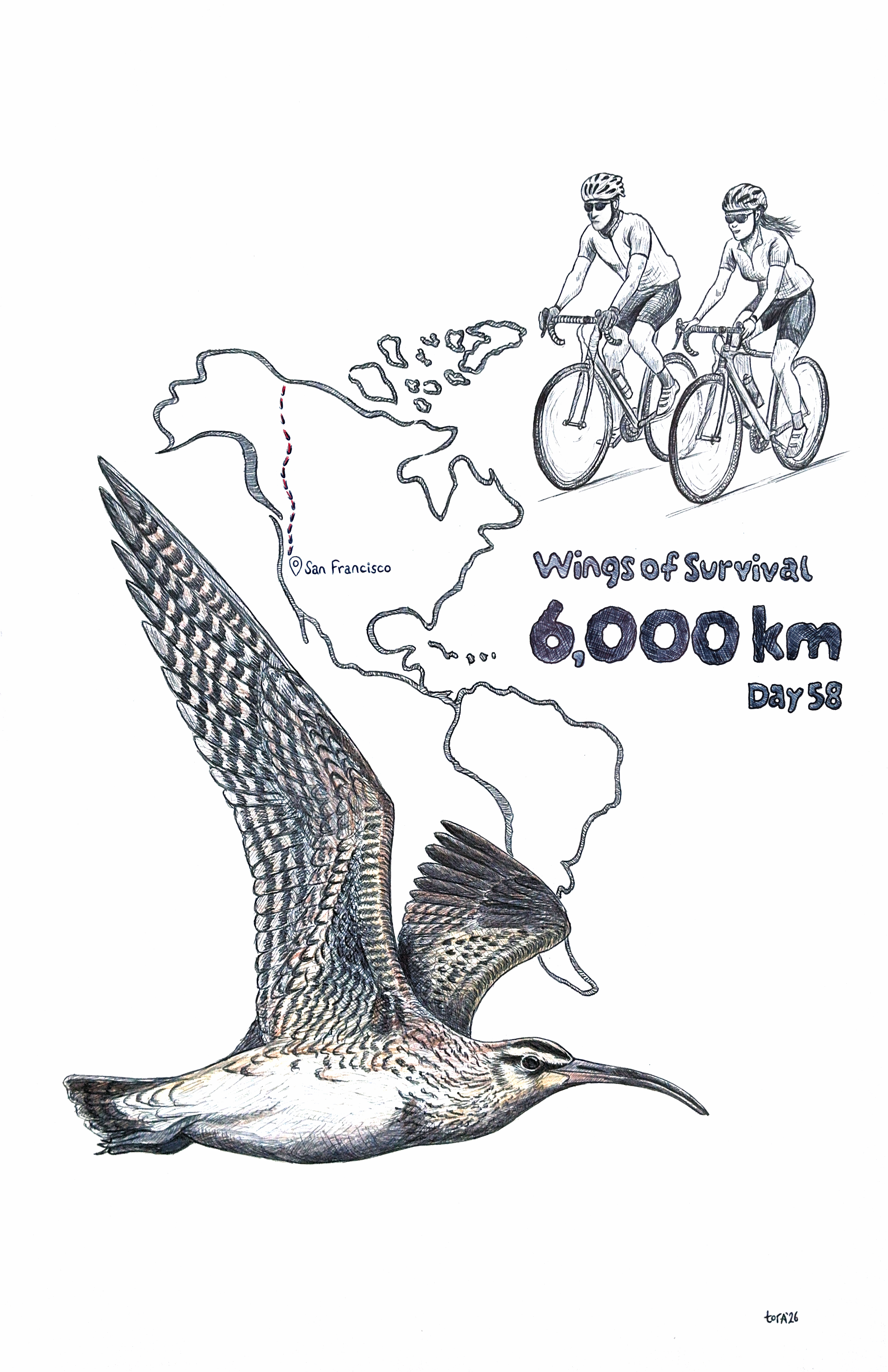
This led me to the realization that despite looking at and using migration maps for years, I never fully contextualized the scale of wildlife migrations until meeting the people who are attempting to recreate these incredible journeys. Without a relatable real-world comparison, I had taken for granted the physical and navigational feats accomplished by migratory birds and other wildlife, reducing them to little more than lines on a map.
For example, I have pointed out shorebirds to my kids many times with the explanation that they flew all the way from the Arctic Circle, but that never really resonated until Carriere and Döbert shared stories of their journey. Now, my kids are not only giving me daily updates on Wings of Survival’s progress but also asking questions about every bird they see.
More than a bike ride
As Wings of Survival departs San Francisco and continues southward, their journey serves as an inspiration to conservation professionals, students, outdoor enthusiasts and beyond. Everyone I speak with about this expedition is inspired by a different aspect of the journey or finds a unique connection to it, which exemplifies the beauty of conservation. We all have a different perspective on the world but are connected across boundaries by this unifying force in nature and the wildlife that traverses it.
To borrow a perspective often shared during the Wings of Survival expedition: birds may well be the world’s greatest athletes. As Wings of Survival continues south, the expedition is helping people see migration through a different lens, not as lines drawn on a map but as incredible journeys requiring extraordinary endurance, resilience and connection. With 6,000 kilometers down and many more ahead, we wish Carriere and Döbert safe travels as they continue tracing one of nature’s greatest journeys. We look forward to following the next chapters of their adventure and the conservation connections they continue to foster along the way.
Article by Cameron J. Kovach