

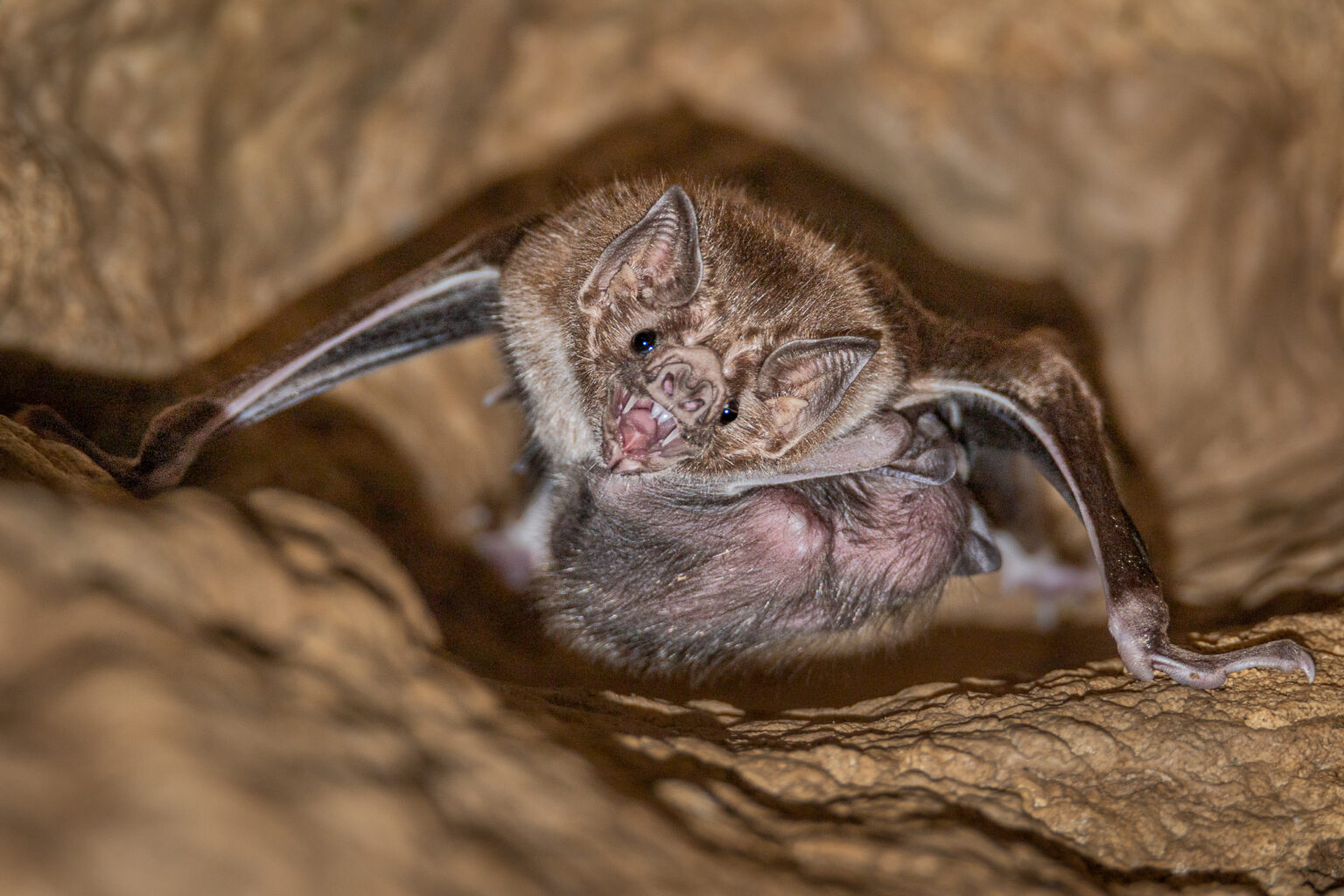
Peter Larsen’s fascination with vampire bats is personal. During a field trip to Guyana, he woke up in the middle of the night with blood running down his foot. While he was there to survey common vampire bats (Desmodus rotundus), one bat had found him first.
Common vampire bats are opportunistic hunters, feeding on the easiest meal whether it’s cattle, birds or rarely, humans. In recent years, climate change has extended their Central and South American range northwards into Mexico.
Because they feed on blood, vampire bats are feared for their ability to spread disease. And as their range extends northwards, a fatal disease is spreading southwards.

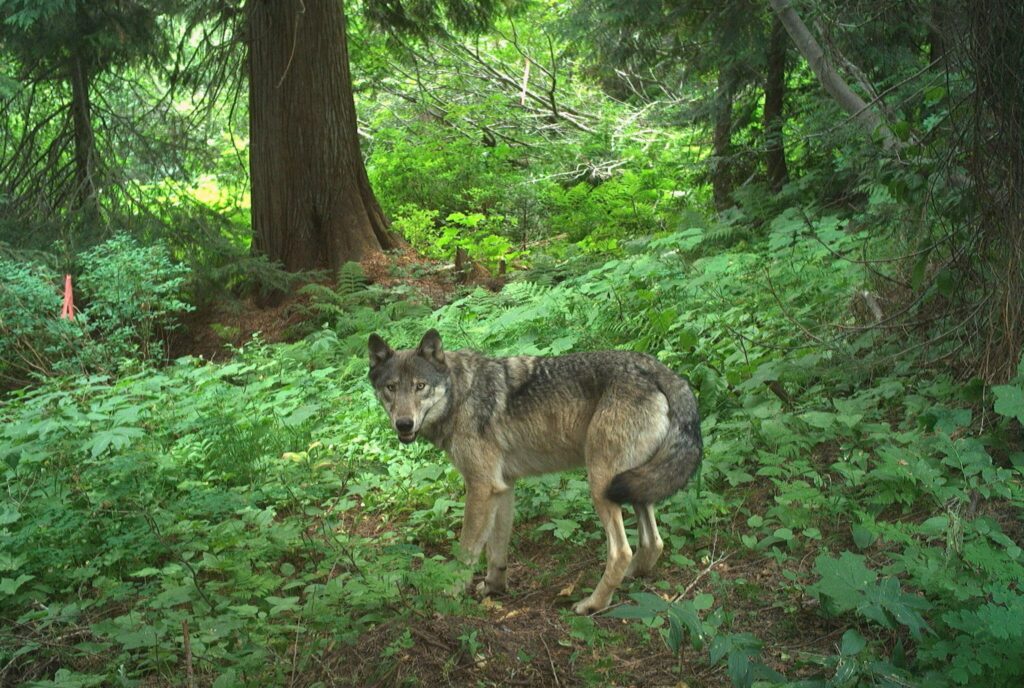
Chronic wasting disease (CWD) is a disease caused by misfolded proteins in the brain called prions. It is fatal, easily transmissible and can live in the environment for years. It’s circulating across 37 U.S. states and five Canadian provinces in white-tailed deer (Odocoileus virginianus), mule deer (Odocoileus hemionus), moose (Alces alces) and elk (Cervus canadensis).
In The Wildlife Society’s latest Q&A, we connected with Larsen, an associate professor in biomedical sciences at the University of Minnesota, to speak about what might happen when the ranges of CWD and vampire bats overlap. His responses are edited for style and brevity.
What are prions, and how can they cause disease?
You have healthy prion proteins right now in your body serving important functions. They’re found everywhere, but most are concentrated in your nervous system.
The best way that we’ve come up to talk about this is by using slinkies. If a slinky gets bent out of shape, it no longer works. It would just roll down the stairs. That’s the same thing that happens with prion diseases. The prions become misfolded and lose their function. Once the misfolded prion comes into contact with a healthy one, it’ll cause the healthy prion to misfold as well. It daisy chains throughout the body and ultimately colonizes the brain.
All mammals have prion proteins and infectious prions, with slightly different shapes, have the potential to cross species boundaries. We know that the prions that cause mad cow disease also cause Creutzfeldt-Jakob disease (CJD) in humans.
How is CWD transmitted? Can other animals, including humans, get infected?
CWD is transmitted through contact with infectious animals or a contaminated environmental source. We can find infectious prions in urine, feces and blood. We can also detect infectious prions in the saliva of deer and elk, and from surfaces they’ve licked, like a feeding station.
There’s no upper bound that we’ve identified, but we know infectious prions can last in the environment for at least 16 years. We can detect them in water, dust and soil. We’ve found them in water coming out of CWD-positive farms. Our latest dust research shows that we can still detect them in dust five or six years after they’ve been deposited on the landscape.
The leading hypothesis for how CWD first evolved is that there was a research facility that housed mule deer alongside sheep that were positive for another prion disease, scrapie. They think that over time, the mule deer exposed to infectious scrapie prions started to get sick as well, and that developed into what we now call CWD.
There’s a body of literature showing there is a super strong species barrier for species like dogs (Canis familiaris) and coyotes (Canis latrans). But other species, like feral hogs (Sus scrofa), have been found with CWD prions in their lymph nodes and brain tissues after exposure. While there’s no evidence that they’re developing prion diseases yet, we know they’re being exposed to many infectious prions on the landscape.
We know that there’s a species barrier with respect to humans, but we don’t know how strong it is. There’s emerging data showing that it might not be 100%. If you have the right combination of a certain prion strain and a person with a particularly susceptible genotype, it could potentially cause CJD.
What’s the concern with vampire bats and CWD?
Vampire bats are slowly moving northward with climate change. There’s concern that they’re going to start inhabiting southern Texas, Louisiana and New Mexico, all areas positive for CWD.
At the same time, we have some rough predictions that CWD will be circulating in all lower 48 states, all Canadian provinces and Mexico by 2030. We believe it’s already circulating through various regions of Mexico undetected because surveillance is lacking. Ranchers in Texas sent live white-tailed deer shipments to Mexico from ranches that were ultimately identified as CWD positive.
Given that it’s very, very likely that CWD is already circulating in regions of Mexico where vampire bats are distributed, I think that vampire bats are probably already feeding on CWD positive deer. We know that within one blood meal taken from a positive animal—whether it’s symptomatic or not—could include several infectious doses. A vampire bat could encounter a strain of CWD that causes prion disease in vampire bats, and it’s possible that more infectious prions could be spread to animals in its saliva or guano.
With the nature of the disease, vampire bats will preferentially feed on animals with CWD. As the disease progresses, it impacts the animal’s behavior. It’s disoriented and stays within the same area, especially if these animals are captive in a high fence ranching situation. We know that those are ideal prey for vampire bats. I don’t know why more people aren’t paying attention to this, because it gets scary really fast.
How worried should we be?
The main thing that I’m concerned about from a prion perspective is that there are millions of infectious doses being shed by positive cervids each year. We can detect them in water, soil and dust. Where are the prions going? Who’s monitoring this? These environmental prions are exposing wildlife, livestock, pets, humans, you name it.
It’s also a national security issue. Infectious prions can also be absorbed by plants. One of our trade partners, Norway, has already banned the import of hay and straw from CWD-positive regions. There are major segments of the North American economy already being impacted by this, and it’s only going to get worse as the disease spreads.
As a prion biologist, knowing what we know now, I would want any venison that I consume to have been tested for CWD. Based on all the latest research on prion biology I’m seeing, I don’t think the species barrier is absolute. I think it’s porous. I think it’s likely that CWD will cause prion disease in other species, including humans, and that it’s just a matter of time.
What can we do about it?
Hunting is our number one tool to slow the spread of CWD, so it’s really important that we encourage hunting. Hunters often also help with surveillance efforts.
With CWD, borders don’t really matter. We need to work together with our international partners to share information and support surveillance so we can be aware of what’s circulating and where. I believe there needs to be more funding to support research and management of the disease at the federal level.
We need to get in touch with our state legislatures to support natural resource departments who are the boots on the ground. They’re being challenged with something almost impossible to wrap your hands around once it’s out there on the landscape.
I view this as an all-hands-on-deck alarm. We need to mobilize now.
Article by Olivia Milloway