



The claimed creation of the world’s first de-extinction of dire wolves has captured the imagination of the public. But did Colossal Biosciences really recreate dire wolves by modifying gray wolf genes? And if it has, what are the implications for wildlife management and conservation?
“We need to be considering the science and ethics of this now,” said TWS member Kristin Brzeski, an associate professor in wildlife ecosystems and conservation at Michigan Technological University, who sits on Colossal’s science advisory board. “It’s a little new for us conservationists and wildlife professionals.”
On April 7, Colossal Biosciences, which touts itself as the “de-extinction company,” announced that it had genetically engineered the first dire wolves to walk the Earth since the last Ice Age. Scientists with the company genetically engineered the genes of gray wolves (Canis lupus) in embryos and then placed them in the uterus of a surrogate domestic dog. In October 2024, the dog gave birth to three white puppies, which have continued to grow in a fenced ecological preserve in a secret location.
Colossal unveiled the announcement with a lot of fanfare, including photos of the puppies, named Romulus, Remus and Khaleesi, after the Roman origin legend and the Game of Thrones character, respectively, sitting on the show’s Iron Throne prop. Media reports jumped on it immediately—the news seemed sensational. But it didn’t take long for some blowback to occur from biologists and geneticists. Were these really dire wolves, and will they ever be released into the wild? What kinds of implications does this science have for conservation and for wildlife that hasn’t become extinct?
What is a dire wolf?
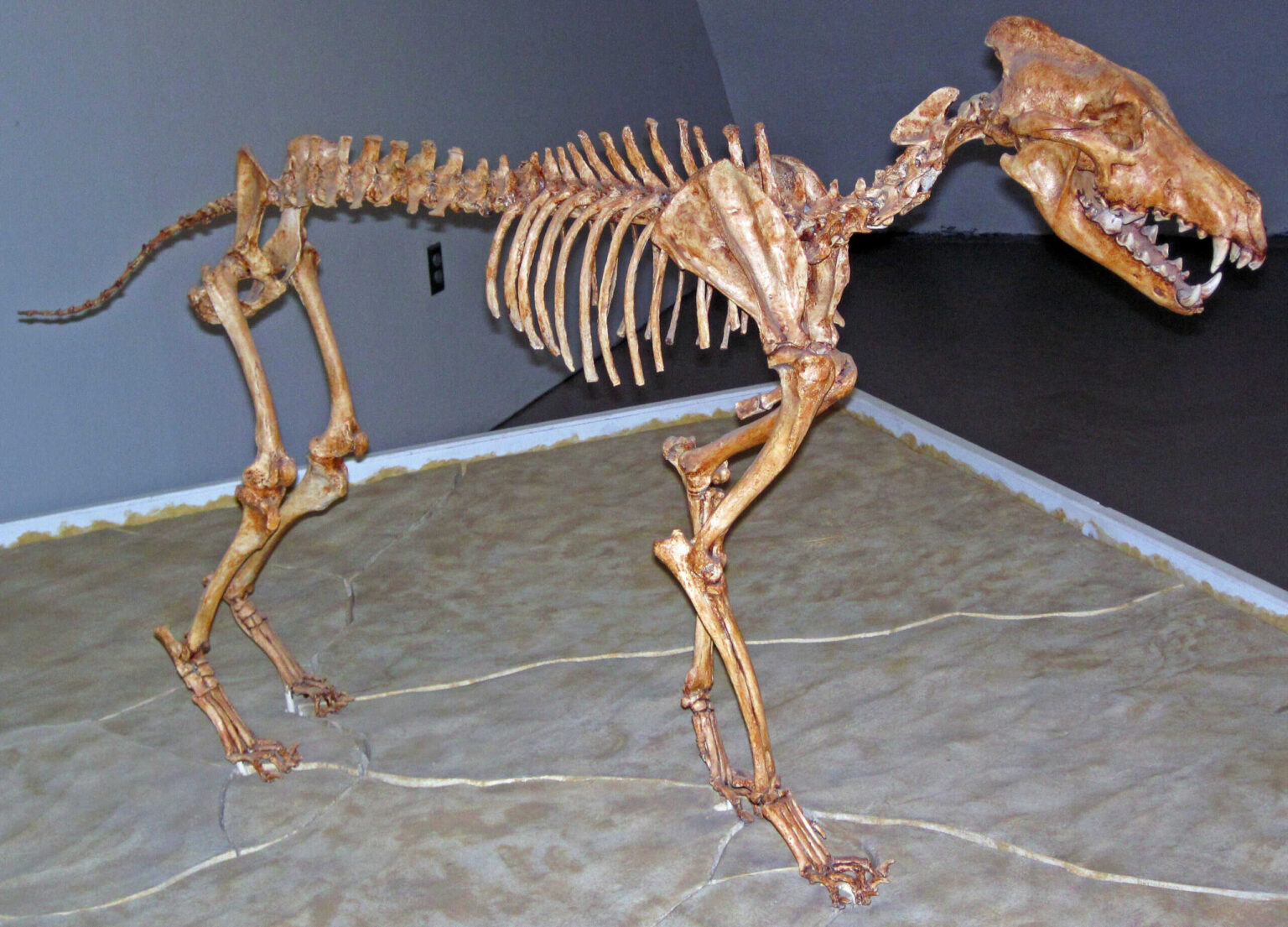
Dire wolves (Aenocyon dirus), a canid species, lived during the Pleistocene Epoch. They first appeared in North America and split off from a common ancestor with gray wolves about 5.7 million years ago, according to DNA comparisons published in Nature in 2021. “In contrast to numerous examples of hybridization across Canidae, there is no evidence for gene flow between dire wolves and either North American gray wolves or coyotes,” Angela Perri and her coauthors stated in the paper. The “highly divergent lineage” likely evolved in North America, much earlier than when the ancestor of gray wolves and coyotes (Canis lupus) colonized the continent.
Nonetheless, they were morphologically similar to gray wolves, particularly in size. Colossal stated that their genetic analysis determined dire wolves had a white coat and long, thick fur—a necessary trait during the Ice Age when they thrived. Colossal said their own genetic analysis provided 500 times more coverage than previous dire wolf genome studies. Despite some previous work that had pointed to African jackals as closer living relatives, Colossal said they found otherwise. “Analyses of the high-quality dire wolf genome, however, revealed that the gray wolf is the closest living relative of dire wolves—with dire wolves and gray wolves sharing 99.5% of their DNA code.” They said that the dire wolf lineage emerged between 3.5 million and 2.5 million years ago. This work has been published only in preprint and has not yet been peer-reviewed.
The dire wolf went extinct about 13,000 years ago, likely due to a combination of factors that may have included the warming climate after the last Ice Age as well as hunting and competition from increasingly numerous humans, who were relative newcomers in North America.
Did Colossal really make dire wolves?
One of the main contentions many researchers have with Colossal’s dire wolf work is the lack of information. Other than the preprint study examining the DNA of two dire wolf fossils, Colossal hasn’t published a study detailing how they created their recent wolves—at this point they have only shared their work via press releases and media interviews. “We actually know nothing about which genes they altered, other than what they claim in their press release,” said Vincent Lynch, a professor in evolutionary biology at the University at Buffalo.
In its public communications, Colossal said it used CRISPR, a gene editing tool, to change 15 genes they identified as belonging to dire wolves in an otherwise gray wolf genome. “These target genes were selected because each is linked to one or more key traits that made dire wolves unique among canids,” the company said. Specifically, these genes were linked to factors like coat color and patterning, overall size, and face and skull morphology.
But they ran into a potential problem—one of the dire wolf genes related to a lighter coat can lead to blindness and deafness in gray wolves. To remedy the issue, they used another gene pathway from domestic dogs to engineer the white-colored coat. This change was one of five other gene edits they made that did not come from the dire wolf genome.
“They just created some white wolf-dogs,” said TWS member Joey Hinton, a senior research scientist at the Wolf Conservation Center. “Other than the company, nobody is calling them dire wolves.”
The Canid Specialist Group of the International Union for Conservation of Nature (IUCN) also refused to call these animals dire wolves or even proxies of a dire wolf in a statement. “There is no evidence that the genetically modified animals are phenotypically distinct from the gray wolf and phenotypically resemble the dire wolf,” the statement, prepared by Andrew Kitchener and others, said. “Second, our knowledge of the behavior, phenotype and ecology is inherently limited because the dire wolf is extinct.”
Will dire wolves be released into the wild?
Arguments about what Colossal has created aside, the general concept of de-extinction has got some wildlife professionals thinking about the ecological implications.
For example, what would happen if they were released into the wild or even escaped?
“Jurassic Park isn’t happening, but Pleistocene Park is,” Lynch said.
Lynch’s first ecological concern is natural wolf populations. If Colossal’s wolves did get into the wild, would they interbreed with gray wolves or even endangered Mexican wolves (Canis lupus baileyi)? Often lost in the initial fanfare over the dire wolves, Colossal also announced it had cloned a red wolf (Canis rufus)—another endangered species. What if this clone, or dire wolves, interbred with individuals in the struggling wild population of red wolves in North Carolina?
“It could be that there are actual negative consequences if [Colossal’s wolf genes] get into other wolf populations or other coyote populations,” Lynch said.
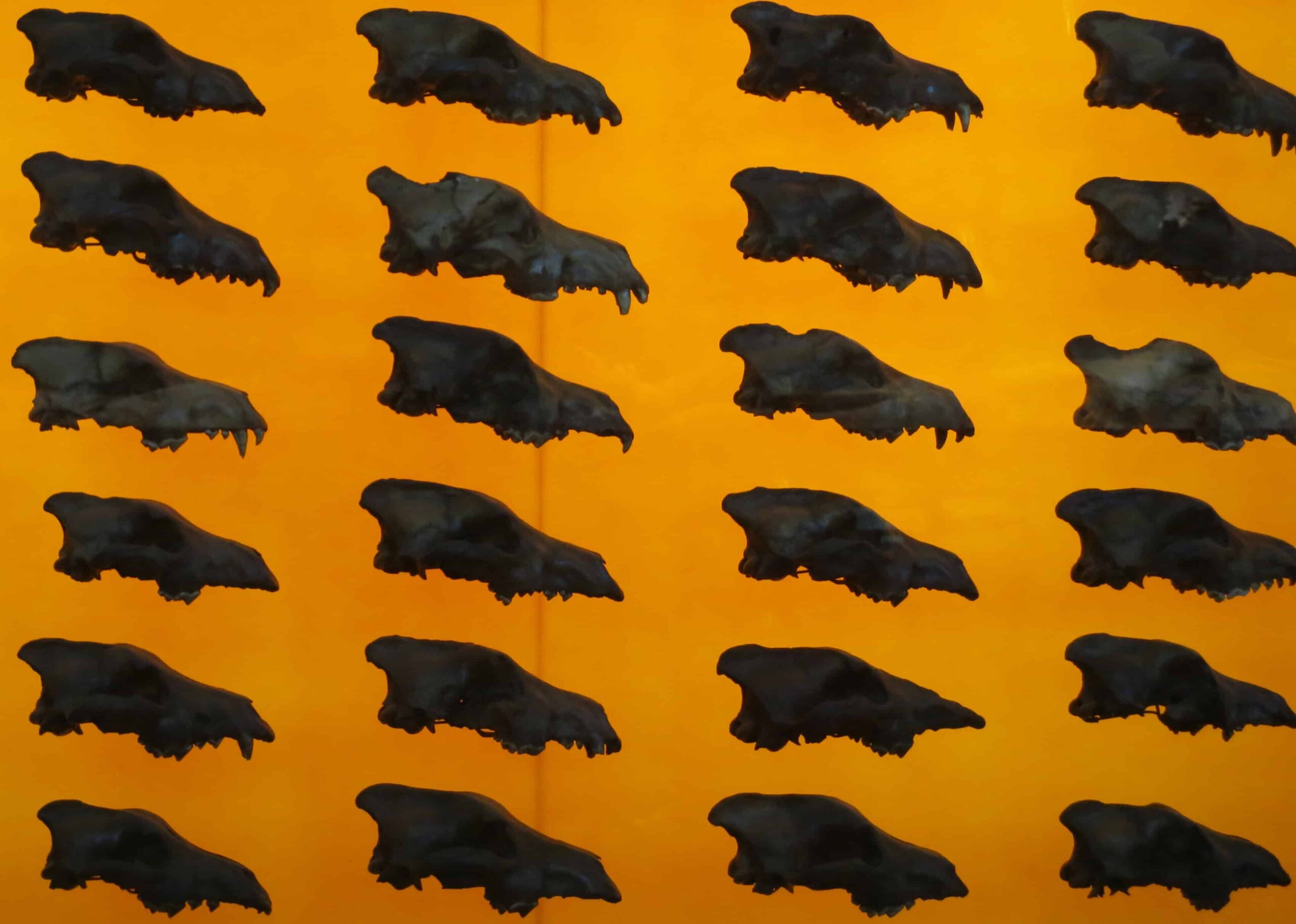
So far, paleontologists have yet to uncover evidence that dire wolves interbred with gray wolves or coyotes in the Pleistocene, even when they did overlap for thousands of years.
There are other implications of introducing a long-extinct species into an environment that has completely changed since dire wolves originally roamed the continent. Horse species also once lived in North America during the Pleistocene, but most went extinct roughly around the time dire wolves died out. In recent decades, the burgeoning populations of feral horses (Equus ferus) and burros (Equus asinus) continue to wreak havoc on native western ecosystems. It’s impossible to say if reintroducing dire wolves would have different consequences, even if it was the exact same species that disappeared. “You can’t predict those consequences,” Lynch said, adding that it would be “introducing a genetically modified organism to an environment it’s never been in.”
Meanwhile, Colossal scientists have said that they do not intend to release these three animals, and they would not make the decision on their own to release them. “There is this misconception that Colossal can live and work in this silo and we can do things unilaterally,” said Matt James, chief animal officer with Colossal Biosciences and executive director of the Colossal Foundation—the part of the company more focused on conservation and de-extinction.
He pointed out that even translocating or reintroducing species that have not been declared extinct takes a massive amount of permitting, conservation partners and bureaucracy. If talking about reintroducing an extinct species, he said there would likely be even more.
That’s one thing that Lynch and James may agree on. “Those dire wolves are never going into the wild,” Lynch said.
What can conservation gain from the dire wolf?
James talks about de-extinction and reintroduction more in terms of improving ecological services rather than attempting to recreate some lost ecosystem. If done right, de-extinction could drive habitat restoration, he said. “We always look backward when we talk about creating space for nature, but I think we need to also look forward.”
He agrees that “there is an enormous ethical implication to all of this.” But he said that discussion of dire wolves aside, Colossal’s technology could be used to edit genes to help living species resist disease or overcome genetic bottlenecks caused by inbreeding. He touts other de-extinction work Colossal is doing on the dodo (Raphus cucullatus)—a flightless bird that went extinct in Mauritius likely by the end of the 17th century, saying that what they are learning about genes in this process could also help them improve a bottlenecked gene pool for pink pigeons (Nesoenas mayeri), a Mauritian bird that the IUCN considers critically depleted.
“We are using the same genetic tools we’re using to recover the dodo to recover this species,” James said.
If they do succeed in bringing back dodos, they will also need land to put them on. James said plantation owners are willing to offer up their land, but they also would need to address problems with invasive species that helped drive dodos to extinction in the first place. These invasive species control and land conservation measures to make a suitable ecological system for dodos could also benefit pink pigeons and a whole host of other species, James said.
In such cases, when dealing with critically endangered species like pink pigeons, he asks what the cost of not using these types of technologies is.
“I think we should act now, and [then] you can get into the nuance of how,” he said.
Marketing gone wild
When you ask some scientists about the intrinsic problems of Colossal, it isn’t always the “what” that bothers them so much as the “how”—specifically how they’ve marketed their work.
The use of improbable-sounding words like “de-extinction” while invoking references from Game of Thrones and Jurassic Park is uncomfortable for scientists used to careful work and cautious language.
Colossal isn’t the only one doing this kind of work. Companies like Monsanto have genetically modified much of the food we eat for years. Researchers have brought back populations of Florida panthers (Puma concolor coryi) and California condors (Gymnogyps californianus) from near extinction thanks to gene-editing the old-fashioned way—carefully crossbreeding with closely related subspecies.
Meanwhile, a growing number of rewilding projects are trying to selectively breed cattle in Europe to get them to appear something like the wild and long-extinct aurochs (Bos primigenius) they were domesticated from.
Lynch said that these kinds of projects make more sense, especially in cases like the aurochs or the red wolf, which have some living species that are more closely related. “It’s much more likely that selective breeding might get you there rather than genetic engineering,” he said.
“The technology development is what they are really after, and you don’t have to sell that technology development through the lens of de-extinction—Monsanto isn’t doing it through the lens of de-extinction,” Lynch said. “It’s not the mechanism; it’s the marketing.”
Article by Joshua Rapp Learn