


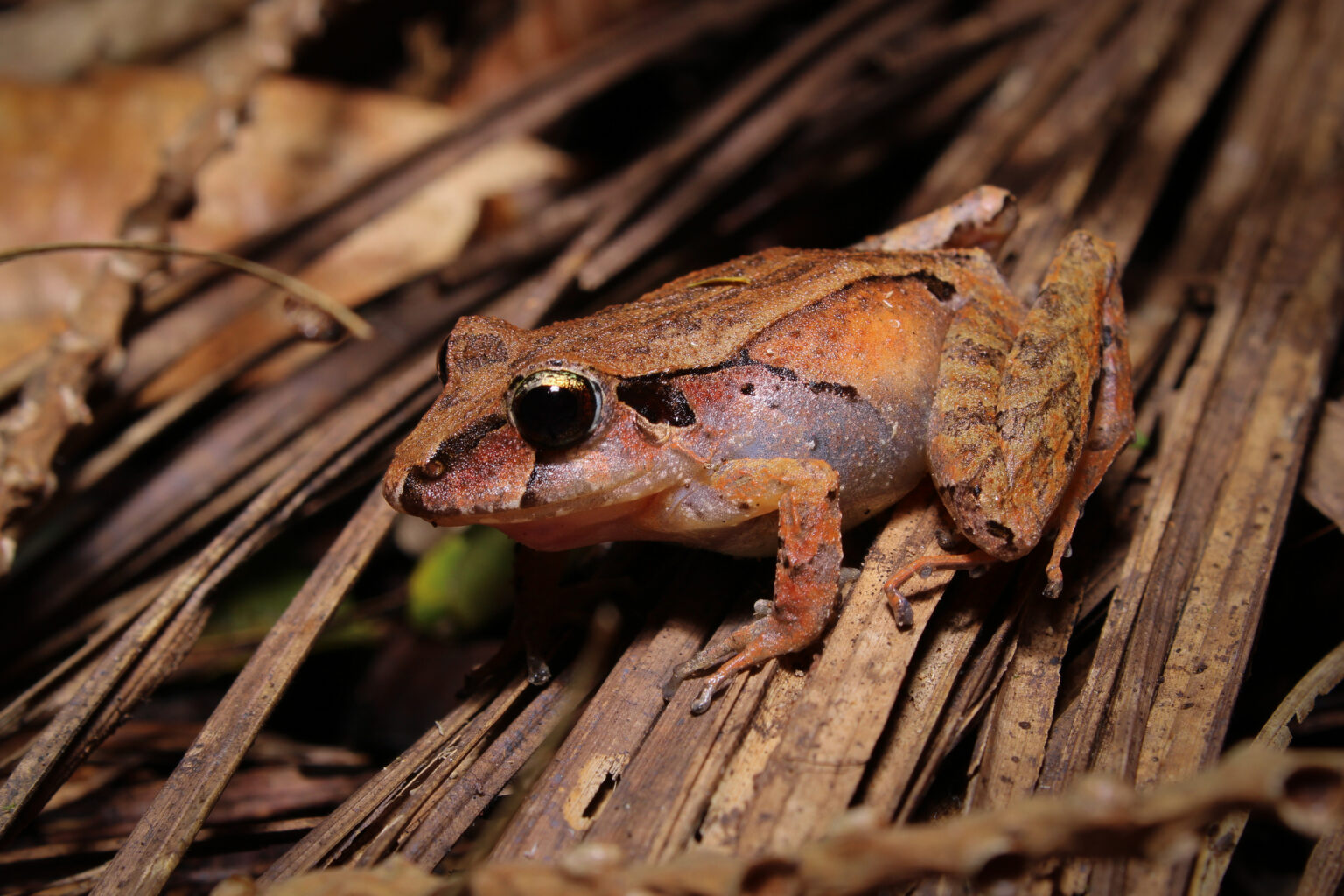
Habitat connectivity is crucial for lots of wildlife—it allows animals to move around to find food, mates and territory. New research published in Proceedings of the National Academy of Sciences shows that linking different kinds of habitats also helps improve the diversity of good microbes on frogs’ skin, helping them fight off deadly infections like Batrachochytrium dendrobatidis (Bd), which has contributed to the decline or extinction of more than 500 species.
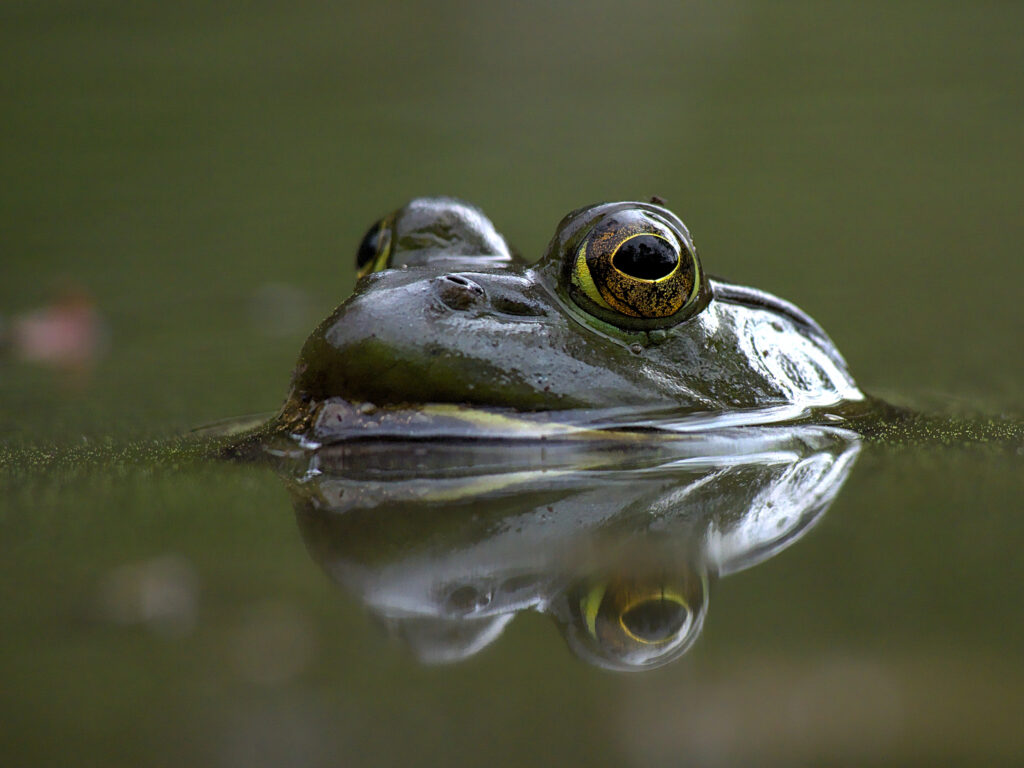
Researchers sampled frogs’ microbial communities across 40 sites in Brazil’s Atlantic Forest, spanning pristine, connected forests to areas with more deforestation and development. They sampled four different species: the clay robber frog (Haddadus binotatus), the ornate forest toad (Rhinella ornata), the blacksmith tree frog (Boana faber) and Hensel’s big-headed frog (Ischnocnema henselii).
They specifically looked at habitat split: what happens when the aquatic environments needed for larval stages are separated from the terrestrial environments adults need? Some species are forced to migrate through cow pastures or crop fields when moving from aquatic larval stages to terrestrial breeding grounds.
The researchers found that when aquatic and terrestrial habitats are separated, frogs have less Bd-fighting bacteria on their skin.
“These results suggest that connected landscapes allow animals to maintain microbiomes that are better equipped to fight pathogens,” said Gui Becker, a biology professor at The Pennsylvania State University and senior author of the study.
The researchers emphasized that these same patterns likely play out across other species experiencing habitat splits, and conservation efforts targeting amphibians should keep these factors in mind.
Read more at the Smithsonian Tropical Research Institute.