
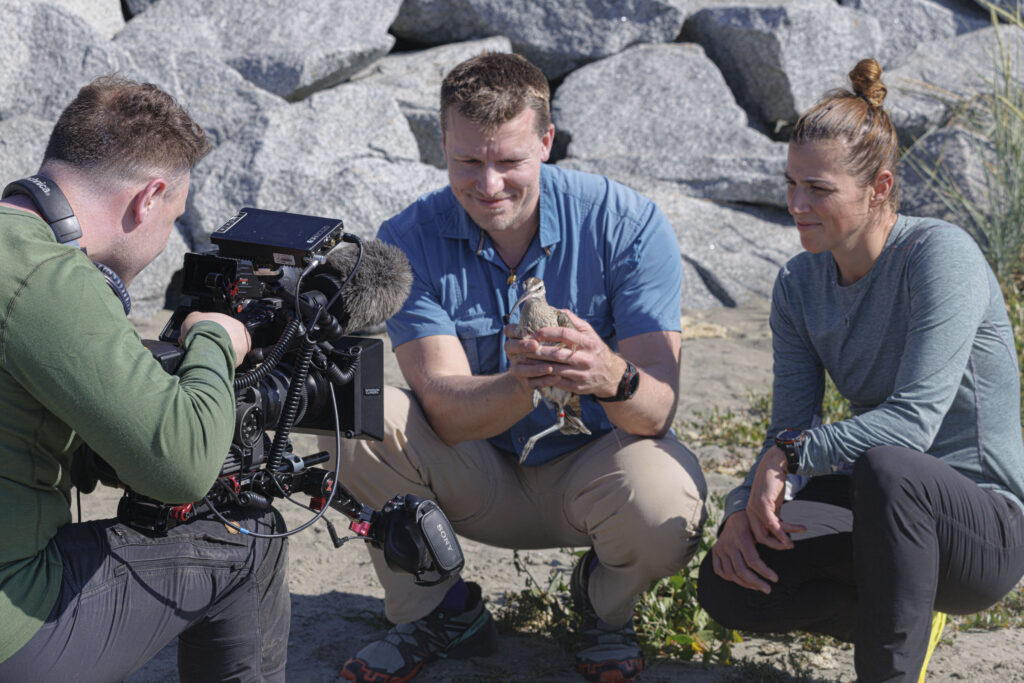

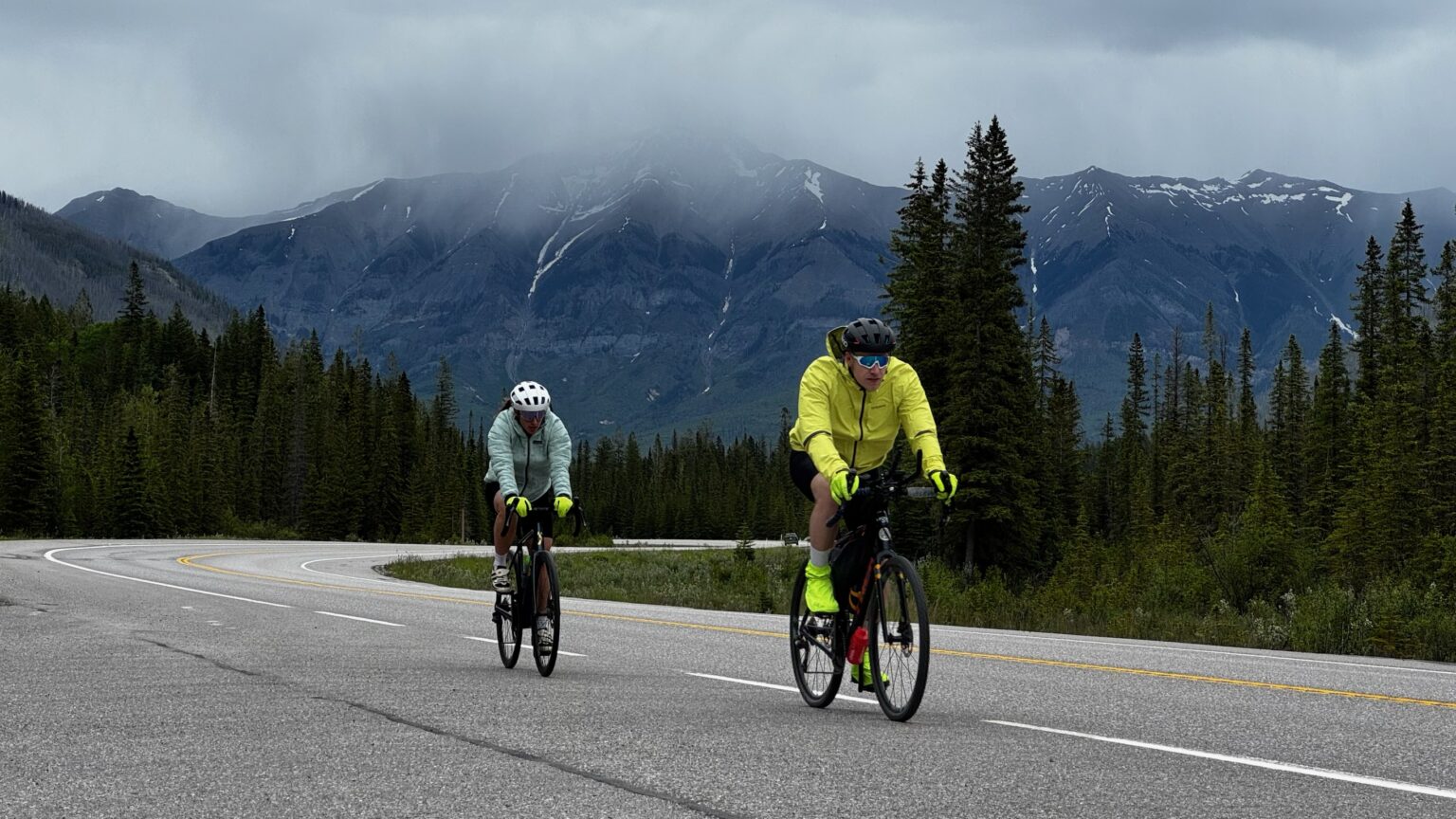
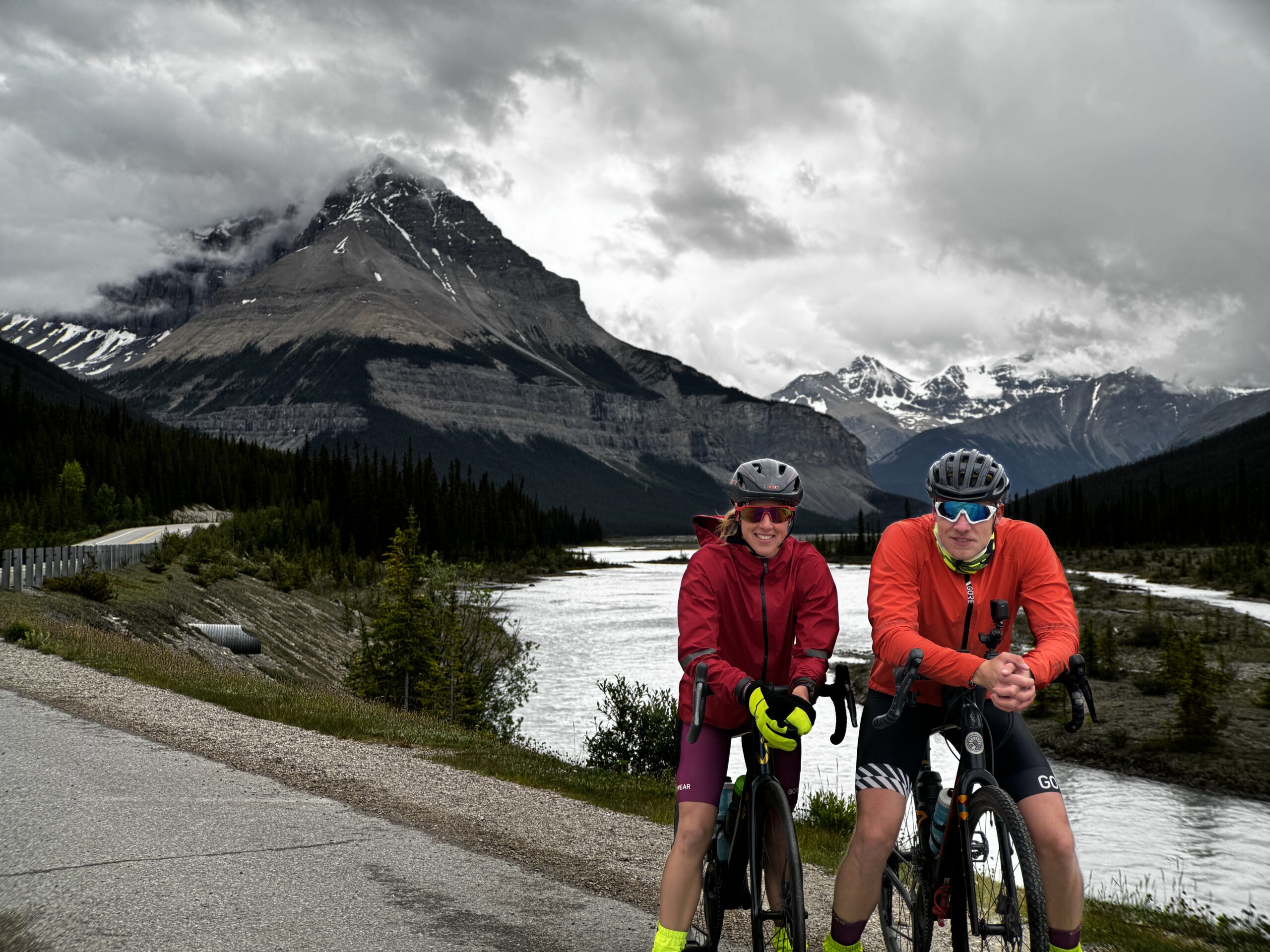
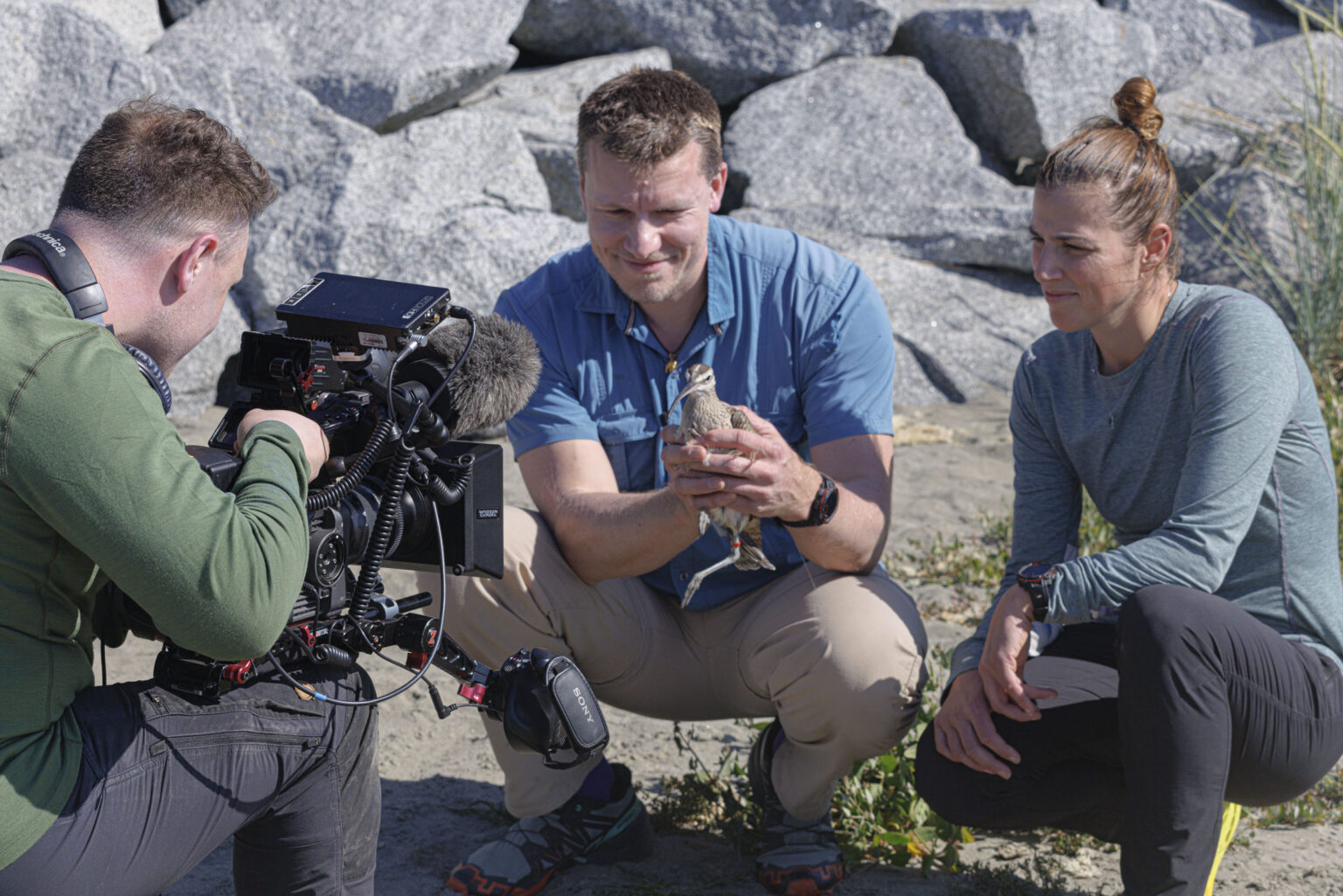
During The Wildlife Society’s 2025 Annual Conference in Edmonton, Alberta, attendees heard Leanna Carriere share an ambitious vision. Together with her partner, conservation scientist Timm Döbert, she discussed a plan to follow the migratory pathway of a whimbrel (Numenius phaeopus) on a human-powered bike expedition from Prudhoe Bay in Alaska to Ushuaia, the southern tip of South America.
On August 1, that vision is one pedal closer to reality, as Carriere and Döbert officially embarked on their journey. Over the next nine months, the duo will cycle over 18,000 miles across 15 countries as part of their “Wings of Survival” expedition, using the journey to engage people with wildlife conservation and the science that supports it.
The connection between endurance sports and conservation
At first glance, endurance sports and wildlife conservation may seem like unlikely companions. However, by combining athletic achievement with storytelling, Carriere and Döbert hope to connect broader audiences with wildlife, conservation challenges and the people working to address them. Their mission aligns closely with TWS’ longstanding commitment to advance science while ensuring that the work of wildlife professionals reaches beyond academic journals and technical reports.
While science serves as the cornerstone for establishing wildlife policies and making management decisions, technical reports rarely elicit the type of awareness or human emotion necessary to drive conservation action. Conservation is ultimately dependent upon the public’s connection with nature. At its core, “Wings of Survival” is about inspiring and empowering that connection with a broader audience. The success of TWS’ mission is, and always has been, intertwined in an essential symbiosis with those who elevate the work of wildlife professionals within the collective consciousness of the general public.
The Ross Sea case study
The value of such an approach is reflected in one of the first conservation policy efforts I helped lead.
In 2010, while attending law school, I served as policy coordinator for the Society for Conservation Biology. Eager to support members and flex my newfound legal knowledge, I drafted a letter to the U.S. Department of State calling on the Convention for the Conservation of Antarctic Marine Living Resources (CCAMLR) to “provide full protection of the Ross Sea, until valid and properly funded science determines that the region will cope with climate change and other threats over which we have minimal control.”
The letter included 24 scientific citations and drew upon conversations with leading researchers, including Adélie penguin expert David Ainley. At the time, I believed that presenting strong science would naturally lead to policy action.
It did not.
No action occurred the following year either … or the year after that, or the year after that. After years of advocacy efforts, conversations with government officials, member engagement campaigns and countless blog posts (it was trendy back then), I eventually stepped away from the issue.
Then, in 2015, something remarkable happened. British endurance swimmer Lewis Pugh jumped into the subfreezing water of the Ross Sea to draw attention to the region’s conservation importance. After completing a series of long-distance and seemingly impossible swims, Pugh’s message reached far beyond the scientific community. Global attention was on the Ross Sea, and policymakers responded.
One year later, CCAMLR unanimously established the Ross Sea Region Marine Protected Area (MPA), the largest marine protected area on the planet.
Optimistic Future
When I heard the news about the Ross Sea MPA, I was elated but a bit befuddled. Why now? What changed? Did my efforts matter?
I like to think they did. The years of research, public engagement and coalition-building created the foundation for action. Pugh’s extraordinary swims helped elevate the issue in ways traditional conservation communications often cannot. Together, those efforts helped generate the momentum needed to secure protection. The science, the advocacy, the swim—it was all connected.
Conservation successes are rarely the result of a single action. They are the product of many people contributing in different ways, often over many years. That is why I am optimistic as Carriere and Döbert begin their own seemingly impossible journey.
Wildlife professionals have spent decades building an extraordinary body of scientific knowledge. Through “Wings of Survival,” Carriere and Döbert are helping bring that knowledge to new audiences. Over the next nine months, TWS will work alongside “Wings of Survival” to highlight wildlife science, amplify conservation stories and help transform awareness into action.
We hope you’ll join us in wishing these incredible athletes a safe journey and thanking them for their physical and emotional commitment to advancing conservation through adventure, storytelling and human endurance
Read more about “Wings of Survival,” here.
Article by Cameron J. Kovach