




Researchers have found a way to work around the wary habits of king rails to conserve birds known for their elusiveness.
“There still seems to be some spots where there is hope for them,” said Dustin Brewer, assistant professor at Lake Superior State University in Michigan.
The king rail (Rallus elegans) is a marsh bird that is declining in many parts of its former range. While unlisted at the federal level, it’s listed as threatened or endangered in many of the states where it is found.
“It’s a species that has experienced really rapid decline due to habitat loss and degradation,” said Brewer, who conducted this work as part of post-doctoral research at the University of Missouri.
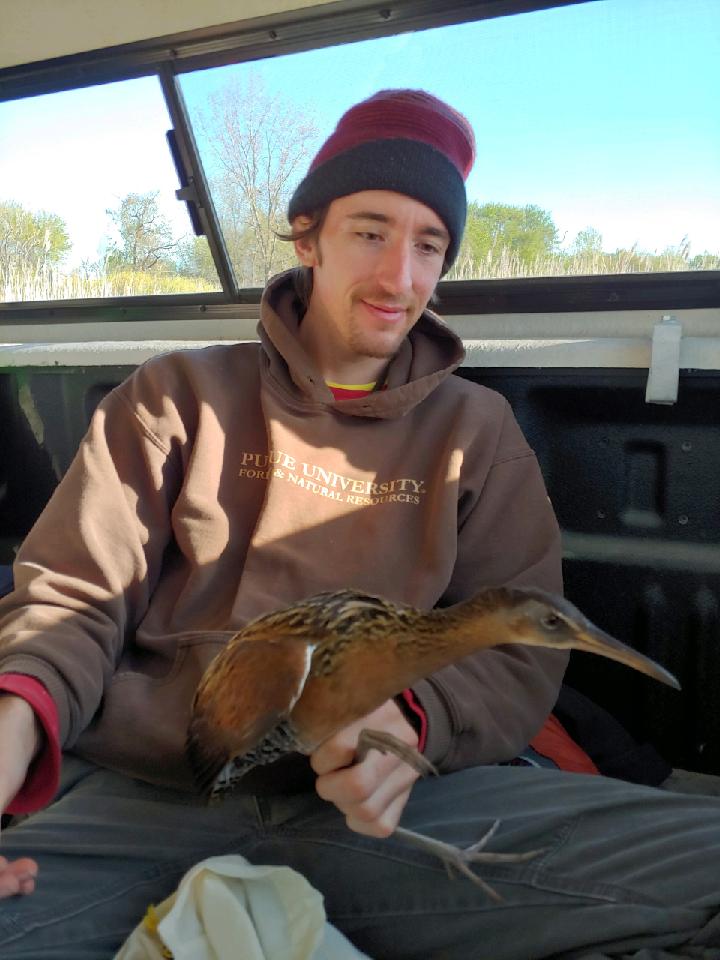
Conservationists have struggled to reverse these negative trends in part because there has been uncertainty about where to focus efforts. Brewer and his colleagues recently predicted some of the best places to conserve and manage these secretive birds.
This study is a follow-up of another that modeled the types of habitat king rails would prefer in the Mississippi alluvial valley, including the states of Illinois, Missouri, Kentucky, Tennessee, Arkansas, Mississippi and Louisiana. In that study, the team used observations reported on eBird, the citizen science bird observation platform, to test whether their predictions worked. They also reviewed the literature and gathered other information from experts
In this more recent study published in Ecological Solutions and Evidence, Brewer and his colleagues wanted to bring these lines of information together to identify the best places to prioritize conservation efforts.
King rail havens
Their models identified 28 properties in the Mississippi flood valley with more than 80 hectares of prime king rail breeding habitat. Eight of these were found in Missouri, another eight in Arkansas, six in Louisiana, three in Kentucky, and two each in Tennessee and Mississippi. These properties were owned by nongovernmental organizations or federal, state or local governments.
Examples of the best areas to focus conservation efforts were the St. Catherine Creek National Wildlife Refuge in Mississippi and the Mingo National Wildlife Refuge in Missouri—places where the bird isn’t currently a focus of management efforts.
“There are certain spots where the conservation efforts would be very useful,” Brewer said.
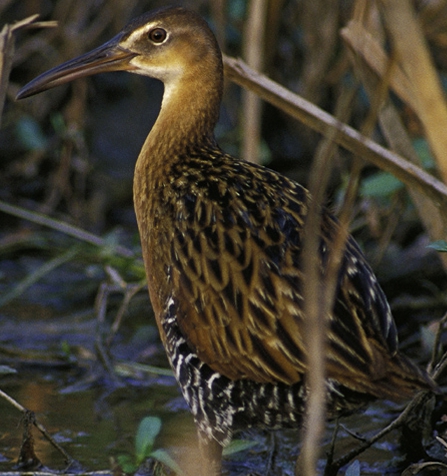
When instituting conservation efforts to help king rails, wildlife managers might look to the example of Freddie Black Choctaw Island Wildlife Management Area/Deer Research Area in Arkansas, Brewer said.
Wildlife managers at the western part of Choctaw Island have been successful by mowing through emerging vegetation to create passages for king rails through water that isn’t too deep or shallow for the finicky birds.
Brewer also said that historically, some areas managed mostly for waterfowl habitat don’t necessarily favor king rails. Too much open water, for example, may not favor the rails, which prefer the dense cover of plants that grow out of water like cattails.
Some organizations like Ducks Unlimited have begun to look at wetland conservation more holistically, Brewer said. “There is a sweet spot where both [waterfowl and king rails] can be benefited if we can figure out the conditions best for both,” he said.
Article by Joshua Rapp Learn