


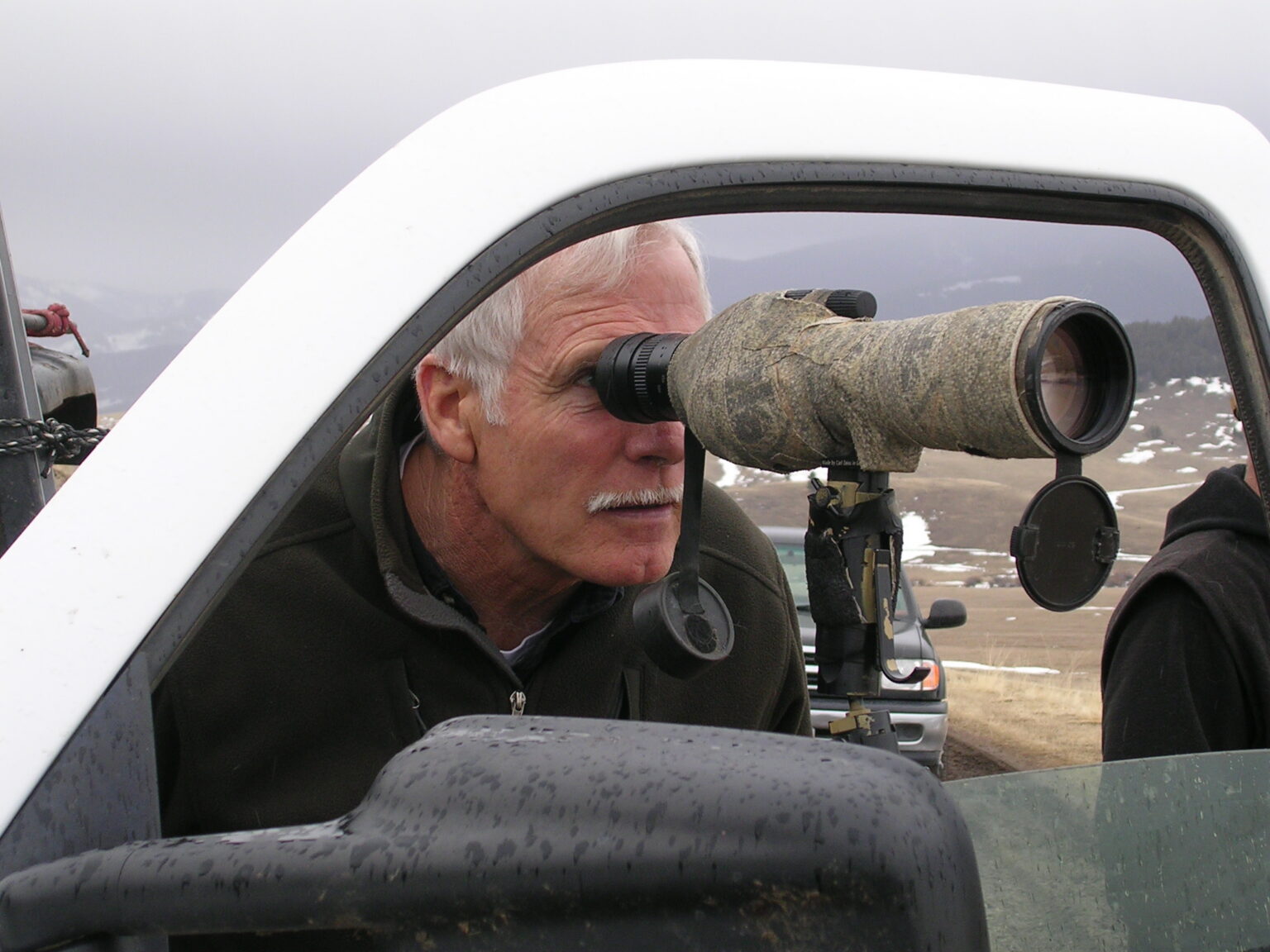
When it comes to describing Ted Turner’s impact on conservation, Mike Phillips recalls a story he shared with the media mogul. It was 1998, and the Turner Endangered Species Fund (TESF) that TWS member Phillips had helmed since its inception a year earlier was about to release its first cohort of red-cockaded woodpeckers (RCWs) onto Turner’s 25,000-acre Avalon Plantation in Florida just east of Tallahassee.
Conserving red-cockaded woodpeckers (Dryobates borealis), which had been listed as endangered under the U.S. Endangered Species Act since 1970, had previously presented a challenge for wildlife managers. As habitat specialists, they required longleaf pine trees—a once common ecosystem in the U.S. Southeast that had disappeared from many areas in the decades since European colonization.
Phillips and others with TESF had determined some of the factors these picky birds required, including old growth longleaf pine. The team created artificial cavities in trees to boost the birds’ own efforts, promoting survival and reproduction.
Turner released the first of the 10 birds into the wild that year, and the organization would go on to release the same number the following four years. “Nobody had ever done an RCW project the way we were doing it,” Phillips said. “Without breaking his long stride, Ted replied, ‘Mike, we should always be the first to do the most difficult thing.’” Thanks to these and other efforts in the Southeast, the bird was downlisted to threatened in more recent years.
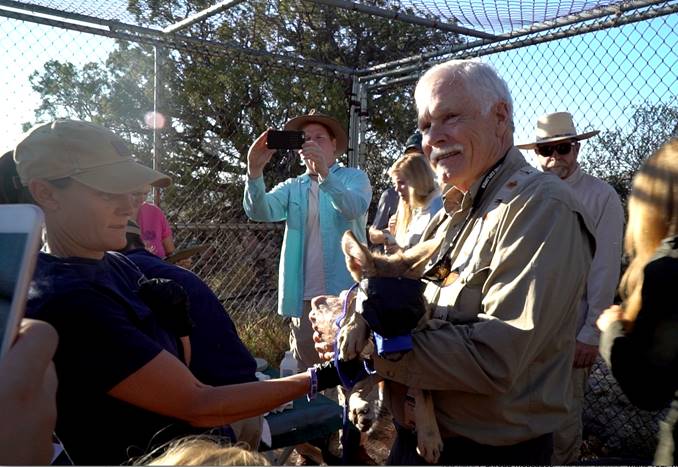
Turner died on May 6 at the age of 87 at his Avalon plantation home, where he released the first red-cockaded woodpecker years before. Aside from the woodpeckers, he leaves behind a legacy that has helped reintroduce numerous imperiled species like the Bolson tortoise (Gopherus flavomarginatus) and Mexican wolf (Canis lupus baileyi) to New Mexico as well as conserve other species like the black-footed ferret (Mustela nigripes), the Chiricahua leopard frog (Lithobates chiricahuensis) and plains bison (Bison bison bison) to other areas.
These are just a few of the species that the TESF has worked with. Turner’s estate holds vast properties like the Armendaris, Ladder and Vermejo ranches in New Mexico and Colorado and the Flying D ranch in southwestern Montana and McGinley Ranch in Nebraska. These and others are working ranches, producing bison for commercial trade and providing big game hunting opportunities. But they also concentrate on land and wildlife conservation of both imperiled and more common species.
“The man had a lot of vision about saving land,” said TWS member Kathy Granillo, a retired wildlife biologist for the U.S. Fish and Wildlife Service (USFWS). “Over my career I’ve evolved to where I think the most important thing we can do for wildlife conservation in this country is to set aside big chunks of land and connect them.” For decades, Turner has done exactly that on top of reintroducing species to these large land tracts.
Groundbreaking wildlife projects
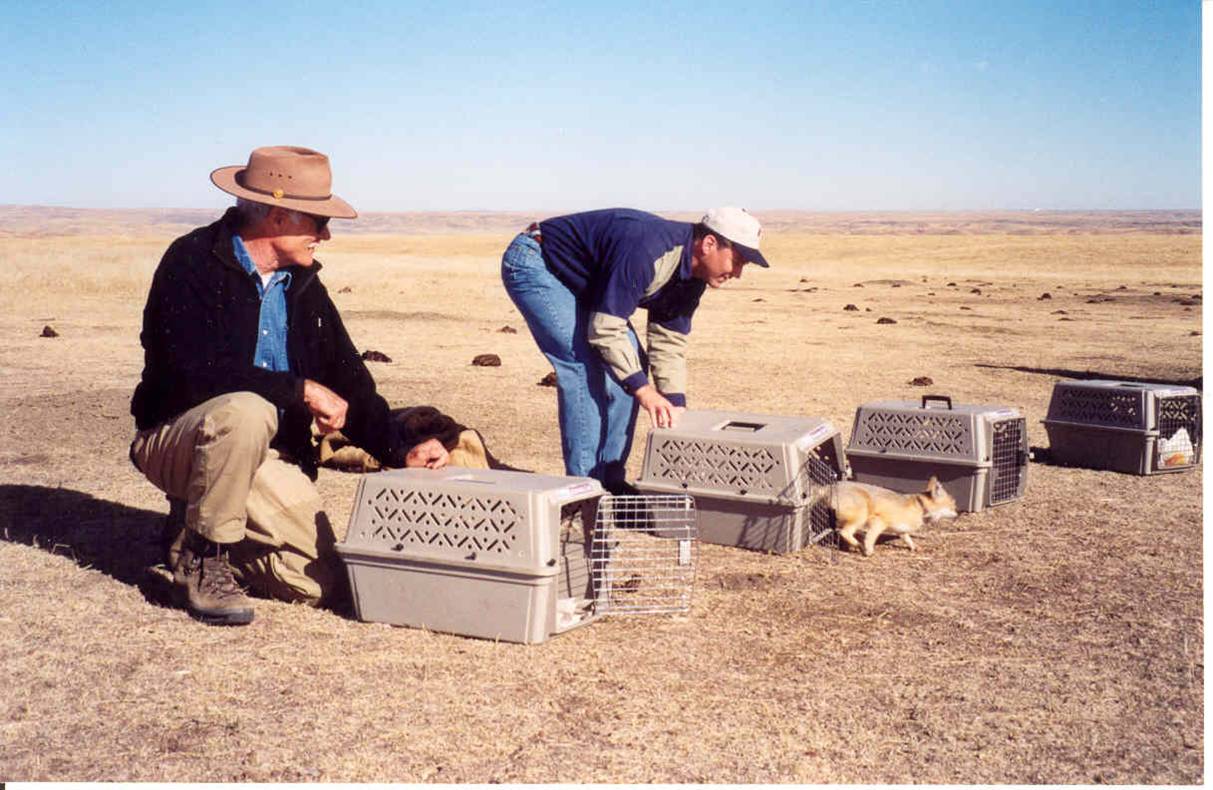
For years as a refuge manager, Granillo worked with Mexican wolves. She said that in the 1990s, when these efforts began, nobody knew how to captive-breed Mexican wolves. But Turner’s team figured out, helping USFWS biologists at the facility on Sevilleta National Wildlife Refuge and working at their own captive breeding facility on Ladder Ranch. They eventually released wolves in parts of western New Mexico and eastern Arizona, and, more recently, on the Ladder Ranch.
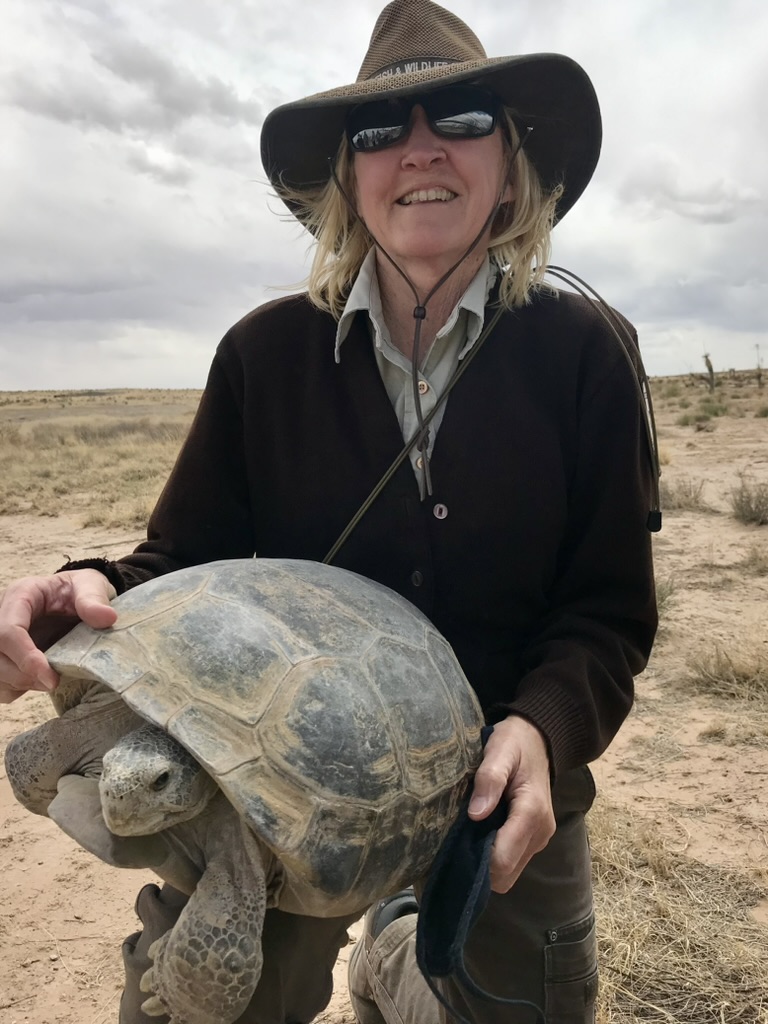
“That’s been significant to getting the Mexican wolf back on the landscape,” she said.
Granillo still remembers when Turner and his then-wife, Jane Fonda, came to Gallup, New Mexico, in 1999 as keynote speaker at the joint meeting held by the Arizona and New Mexico TWS chapters and the American Fisheries Society.
“They were very gracious and very humble,” Granillo said, recalling the baseball analogies Turner would bring in, being the owner of the Atlanta Braves at the time. “His keynote was great.”
A legacy for the future
With Turner’s passing, the focus on conservation doesn’t end, Phillips said. The New Mexico Land Conservancy holds the conservation easement on the Armendaris property, for example—it’s the second largest permanent conservation easement in the U.S. “Team Turner is best considered as the model for conserving wild working landscapes and for managing private-public partnerships,” Phillips said.
Phillips remembers when he first met Turner in 1995 at Yellowstone National Park when Phillips was leading the Yellowstone National Wolf Restoration Project. Turner was interested in introducing wolves to the Vermejo Ranch, but it was a little too small to host a population of wolves by itself, Phillips recalls. Their conversations eventually led to the creation of the TESF and the Turner Biodiversity Divisions in early 1997, whose goal, among other things, was creating viable populations of endangered or threatened species that could persist on their own. “Since inception, the divisions and TESF have collectively stood as the most significant private effort in the world to redress the biodiversity crisis through reintroduction of imperiled species to establish viable populations that could recover,” Phillips said.
For Phillips, Turner’s impact on wildlife conservation was vast but just a piece of his overall effort to improve the world, which included efforts to promote peaceful exchanges between the Soviet Union and the United States during the height of the Cold War, with the Goodwill Games or the founding of the Nuclear Threat Initiative that works to increase nuclear and biological security. “No one private individual has done more to advance humanity’s prospects than Ted Turner,” Phillips said. He recalls one way that Turner himself put it to him: “If we can keep the world from blowing itself up, it helps endangered species, doesn’t it?
The TESF and Biodiversity Divisions, which focuses on conservation on the ranch, will continue their work into the future—Phillips likes to think someone will be sitting in his chair a century from now continuing the work he started with Turner. “I’m proud of what we’ve done, but I’m excited about what we’re going to do,” Phillips said.
The agricultural research at Turner properties will also continue through the Turner Institute of Ecoagriculture, whose broad mission is to conserve private working wild lands.
“[Turner] created a future for us that would celebrate our past,” Phillips said. “The world would be a better place if more people made such choices.”
Article by Joshua Rapp Learn