


A desert pocket mouse with cheek pouches full of seeds dashes from bush to bush in the Sonoran Desert. The tiny rodent is stashing piles of seeds in multiple burrows to prepare for tough times.
But before the mouse can disappear into a nearby hole in the ground, a patch of sand seems to spring to life. It’s actually one of the many species of snakes slithering through the Sonoran Desert, which suddenly emerges and catches the mouse along with the carefully collected seeds in its cheek pouches.
Scientists discovered what happens to those seeds and published their findings in a new paper in Royal Society Open Science, showing that snakes, by proxy of their rodent prey, can disperse seeds through their feces that grow into healthy plants.
“We’ve documented a predator who was rescuing seeds that would have been cached and either eaten or forgotten,” said Gordon Schuett, a researcher at the Chiricahua Desert Museum in New Mexico and a co-author of the new study. “The snake is now an agent of rescue and dispersal.”
Stumbling upon seeds
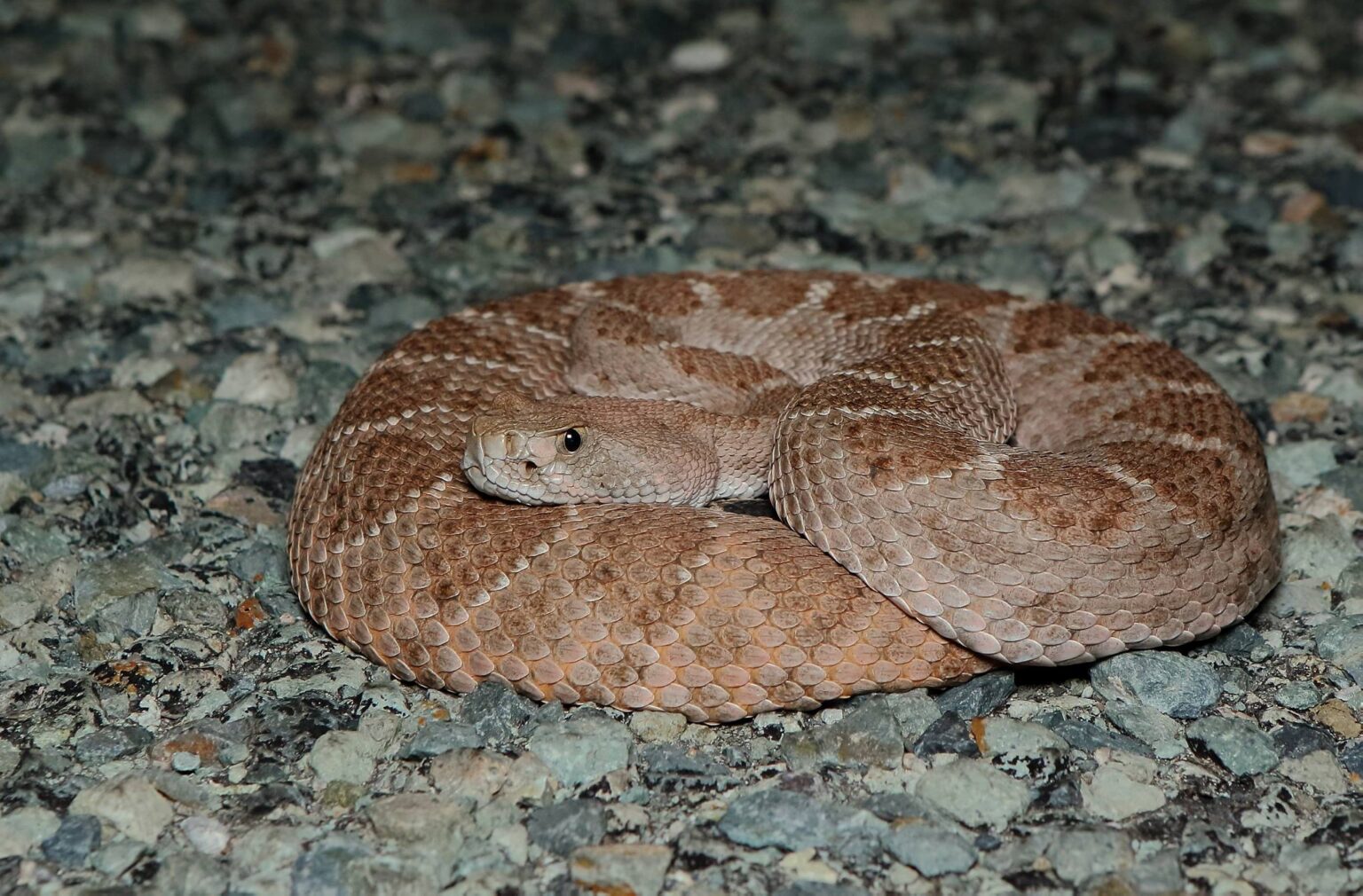
Within the University of California at Berkeley’s Museum of Vertebrate Zoology, there are more than 300,000 preserved amphibians and reptiles. Wanting to learn more about their diet, one of Schuett’s colleagues, who was a graduate student at the time, examined the stomach contents of 50 individuals within three species: sidewinders (Crotalus cerastes), Mojave rattlesnakes (C. scutulatus) and southwestern speckled rattlesnakes (C. pyrrhus).
His student unintentionally found something interesting in the snakes’ lower guts: hundreds of seeds. A reviewer on this first paper commented on how surprised they were that the phenomenon hadn’t been described earlier. There was only one other paper about the potential role of snakes as seed dispersers, and it dealt with only a few somewhat obscure African species.
All snakes are carnivores and lack the digestive processes to break down complex carbohydrates. They also famously don’t chew but rather swallow their prey whole—in this case, including their prey’s cheek pouches stuffed with seeds.
The researchers determined that the seeds, which were largely intact, were likely still viable—they even found 19 instances of seeds that started to germinate in the lower intestines of the snakes. “There’s enough time spent in the gut to kind of act like an incubator,” he said.
After making this discovery, the researchers wanted to see if, after passing through the gut of a snake, the seeds would still be viable and grow into normal trees. The seeds from the museum specimens had been soaked in formalin and ethanol for years, removing any chance of germination. They needed to replicate the seed dispersal process in the lab and test it for themselves.
Sifting through snake poop
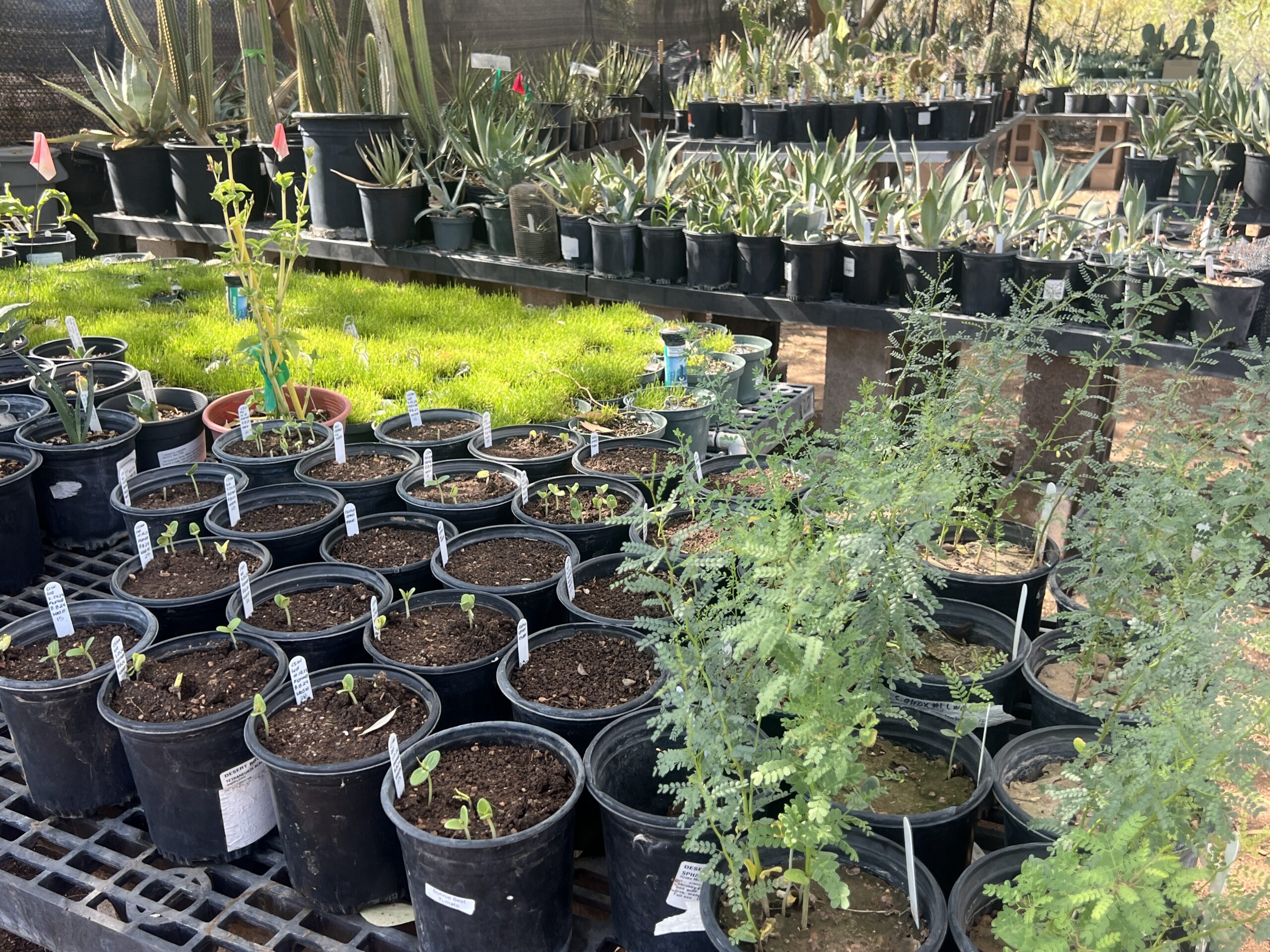
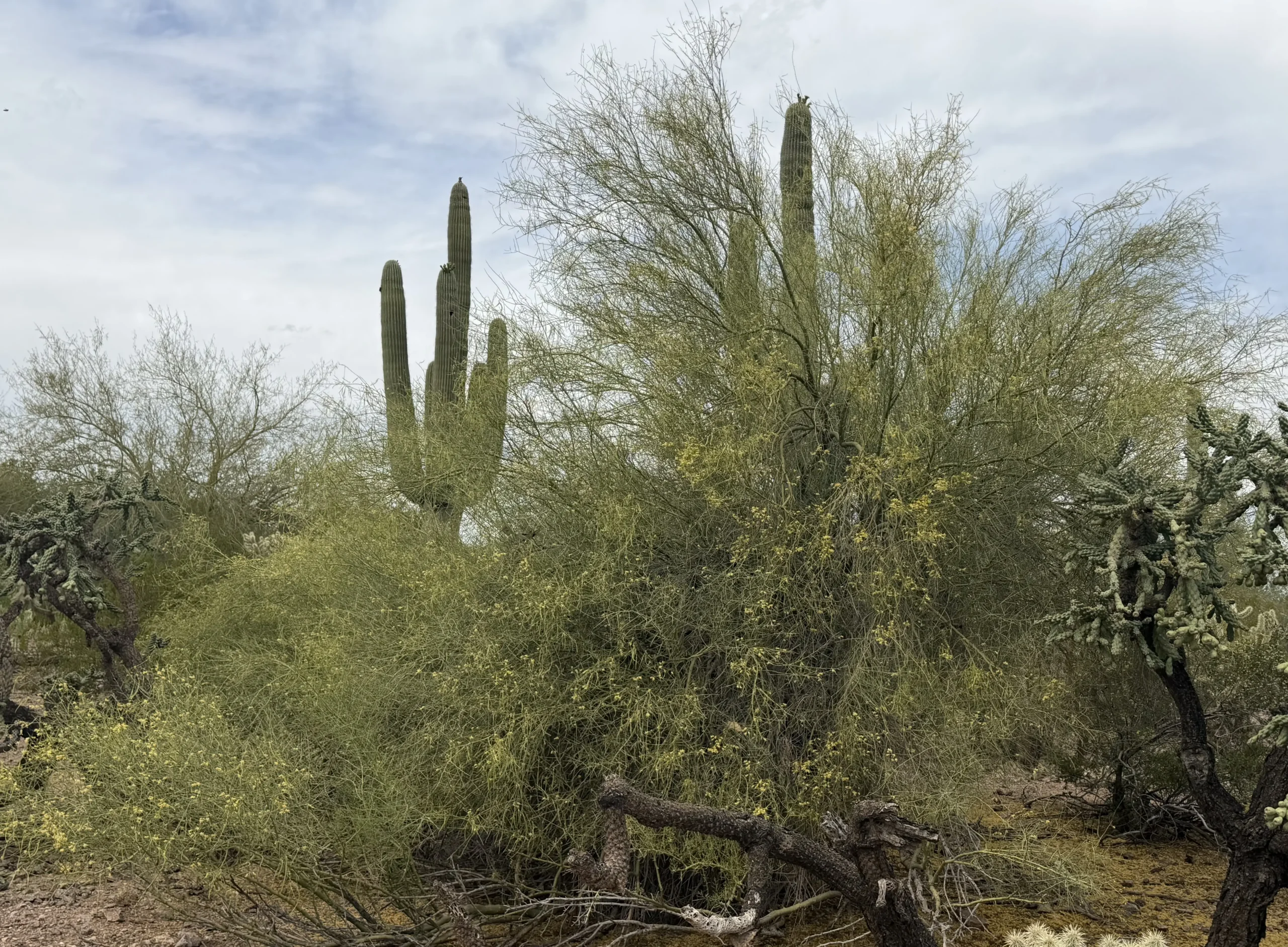
At the Desert Botanical Garden in Phoenix, Arizona, there’s a greenhouse full of baby foothill palo verde (Parkinsonia microphylla) trees with a unique backstory. They’ve each passed through the digestive tract of a snake.
The team chose to investigate Arizona’s state tree for its ecological importance. “The foothill palo verde is one of the most important plants in the Sonoran Desert,” said Andrew Salywon, a researcher at the Desert Botanical Garden and co-author of the study. The palo verde seeds are also important food for small mammals and create habitats for other plants and animals.
Doing their best to mimic what would happen in the wild, Schuett thawed frozen mice, made an incision in the abdomen and placed anywhere from 25 to 20 seeds—a sort of surrogate seed pouch. Schuett used his captive population of western diamondback rattlesnakes (Crotalus atrox) at the Chiricahua Desert Museum and also enlisted the help of zookeepers at the Phoenix Zoo.
After the snakes passed the seeds, which took on average between seven and 10 days, the researchers sifted through the snake poop, removed all the seeds and attempted to germinate them in the lab.
Through a series of experiments, the team first demonstrated that foothill palo verde seeds that have passed through the gut of a snake will germinate under ideal lab conditions.
But they still wanted to know if the seedlings would grow into healthy, full-grown plants. And even more importantly, they wondered if the seeds could germinate after lying dormant for many months in the snake’s excreta. The desert, after all, is a notoriously hard place for a plant to live.
‘The smell is pretty terrible’
In the wild, diamondback rattlesnakes will eat as late as November before retreating to caves or burrows when temperatures get too cold. They enter a state of brumation through the winter—the cold-blooded version of hibernation. Right before winter isn’t an ideal time for a new plant to germinate. To mimic the overwintering process, after collecting the seeds from the snake feces, Schuett put the seeds into a plastic bag and kept them in a cool place throughout the winter.
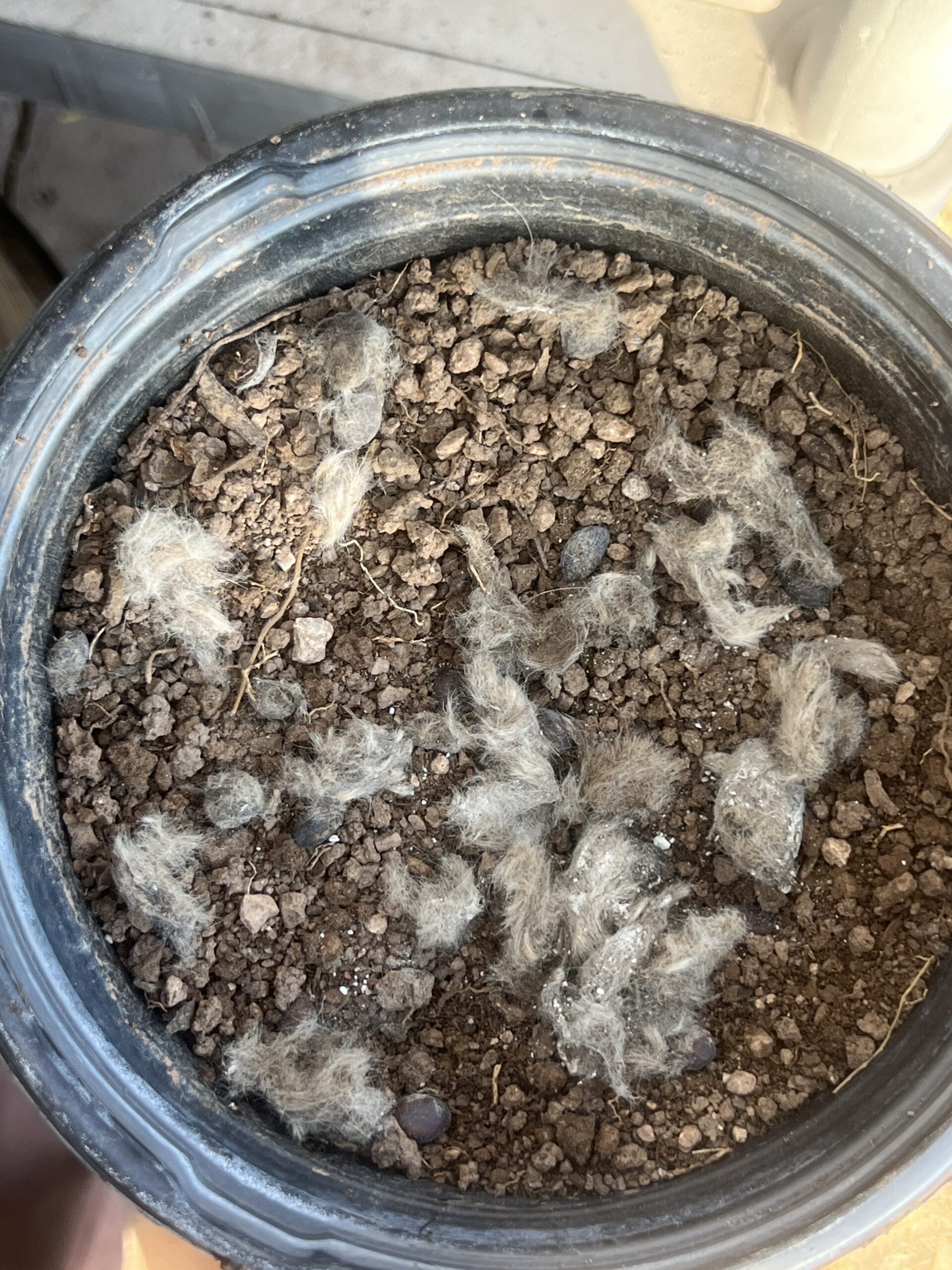
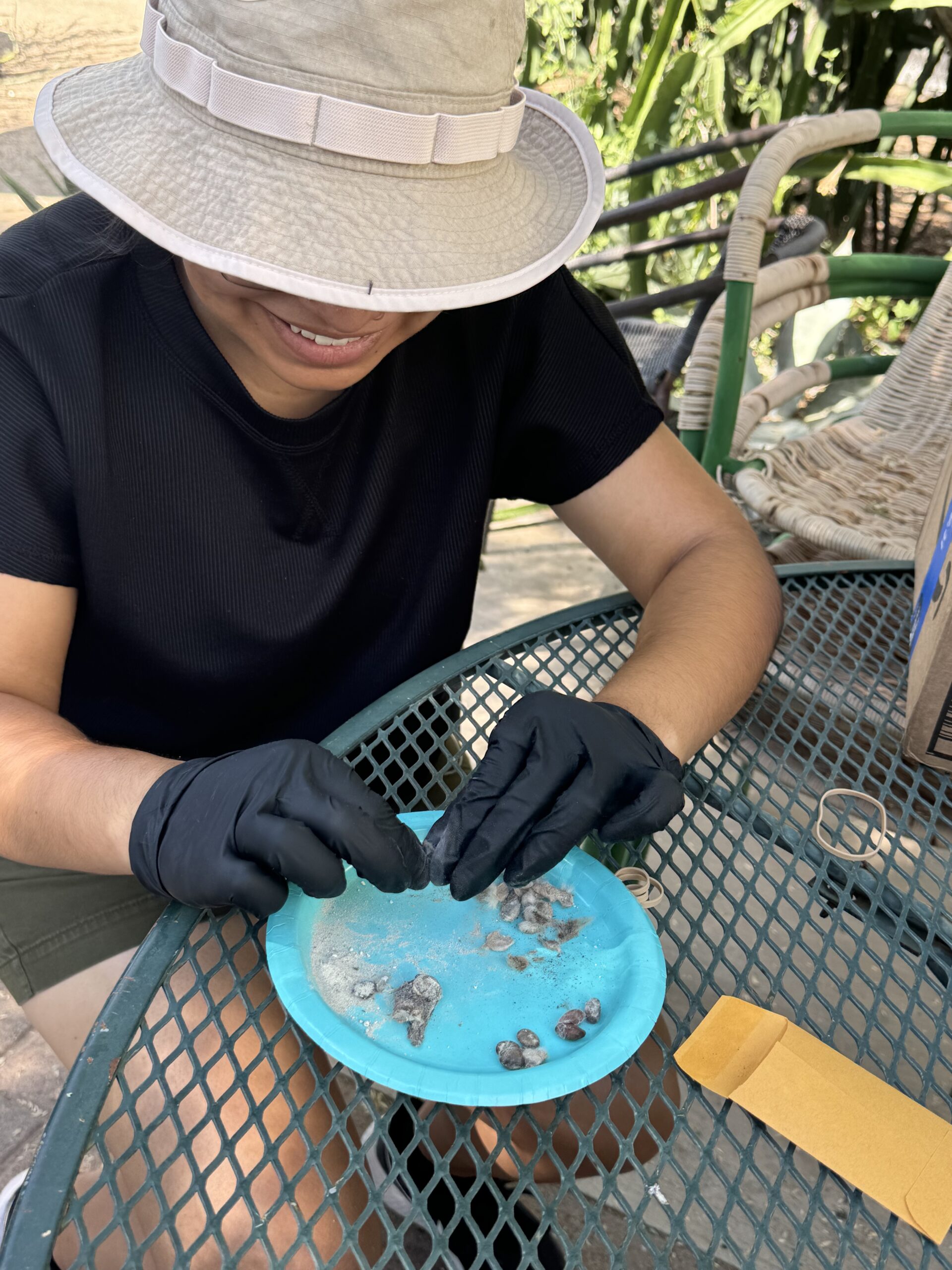
Then, come springtime, it was intern Mariana Acevedo’s job to plant the seeds. “The smell is pretty terrible, and it’s messy,” Salywon said.
Acevedo, the lead author on the new study, who is now a PhD student at the University of Arizona studying plant biology, grew the seeds into meter-high palo verde trees at the Desert Botanical Garden in Phoenix.
Trying to mimic natural conditions as closely as possible, Acevedo planted the seeds about a centimeter deep. Some seeds germinated immediately, while others took up to 150 days. Schuett said it was remarkable that, under natural conditions, Acevedo was able to grow the seeds into tall, healthy plants.
Acevedo also planted some of the seeds with rattlesnake excreta—the feces and urates, or solid urine—and the results were surprising. The seeds that were sown with the excreta germinated at a higher rate of around 40% compared to the seeds without excreta, which was around 29%. The seeds that didn’t pass through the snake gut had a similar germination rate of around 28%.
A new image for snakes
These findings could change the way wildlife biologists—and the public—look at the role of snakes in an ecosystem. Schuett thinks that the role of snakes as important seed dispersers is being underestimated. “Everyone puts emphasis on mammals and birds, but these animals tend to destroy a lot of seeds,” Schuett said.
Rodents often have much more restricted home ranges than snakes. “Rodents occupy small areas, whereas a snake could travel several miles in a day,” he said. Through consuming the rodents and carrying the seeds with them, the snakes are dispersing seeds greater distances than their rodent prey ever would.
“It’s a new way to look at snakes as ecosystem engineers,” Schuett said. And when people think of beloved trees benefiting from rattlesnakes, they might think a little more fondly of their reptilian neighbors.
Article by Olivia Milloway