





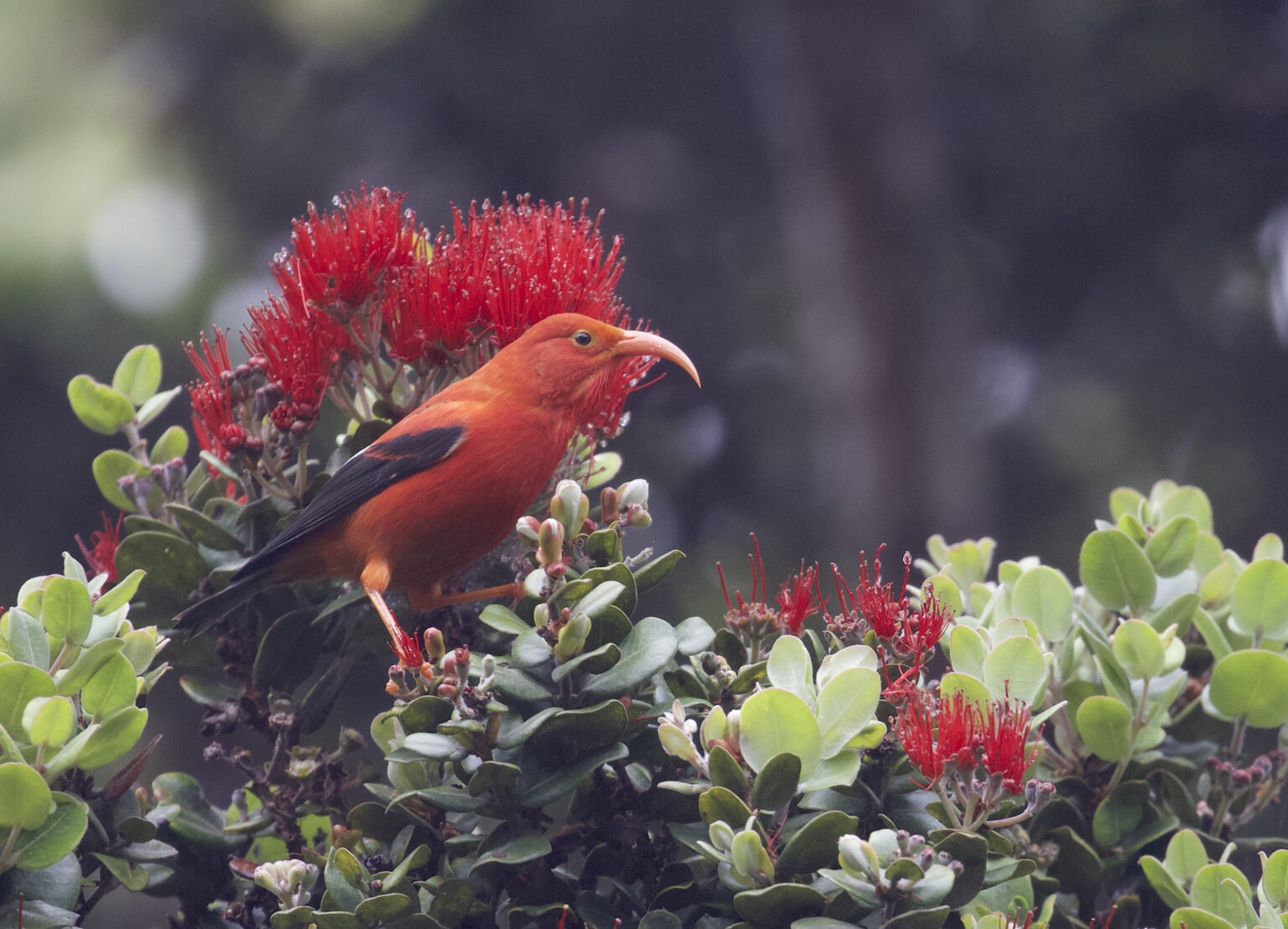
The dozens of unique honeycreepers found in Hawaii are mostly descended from an explosion of diversification that occurred more than 2.5 million years ago. According to new research, about 60 Hawaiian honeycreeper species all emerged from a single ancestor that arrived on the archipelago sometime after it formed. Many of those species are now extinct—only 17 honeycreeper species are extant in Hawaii today. Researchers with the Smithsonian Institute conducted genetic analysis to determine the relationships between living and extinct honeycreeper species. They found that most species appeared 2.5-3.5 million years ago, roughly when Oahu formed. A better understanding of these taxonomic relationships could help researchers learn more about how some species can better resist introduced diseases like avian malaria. “The genomic data we generated for this study should also be useful for understanding the morphological evolution of the honeycreepers, as well as to offer clues about how the genomic variation of some honeycreeper species may have influenced their ability to survive disease,” said Robert Fleischer, scientist emeritus at Smithsonian’s National Zoo and Conservation Biology Institute and senior author of the study, in a press release.
Read more at Smithsonian’s National Zoo & Conservation Biology Institute.