
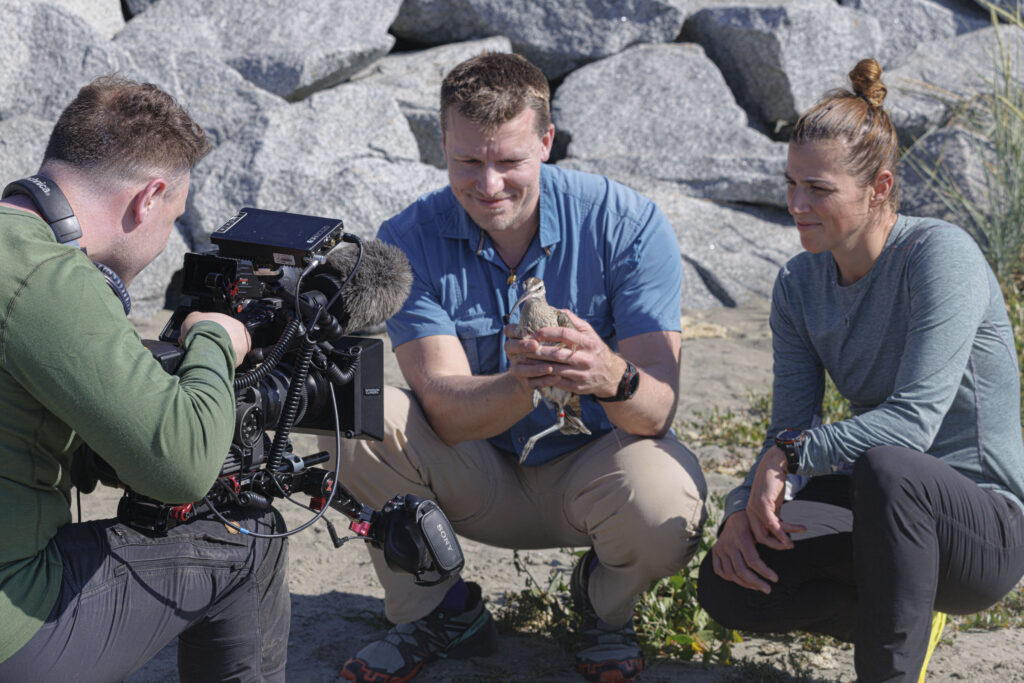
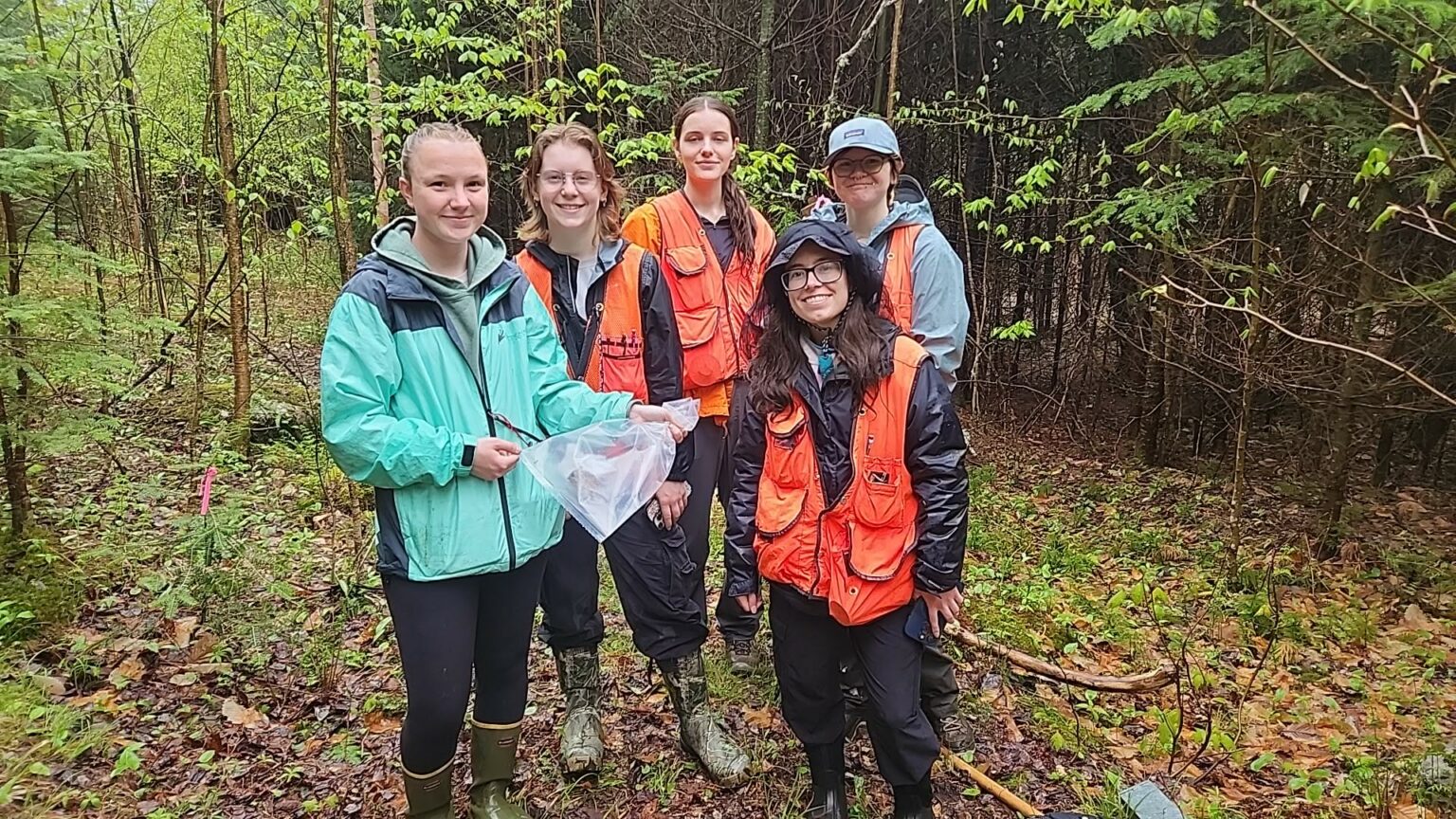
At a tiny college in upstate New York, a group of students gathered in a dissecting lab. They were there to observe the careful unzipping of a beaver—dissections are an important educational experience that would bewilder a business or English major.
But for TWS student member Alyssa Ross, a rising junior at the State University of New York Purchase and aspiring wildlife biologist, observing dissections and learning how to prepare a North American beaver (Castor canadensis) pelt are important parts of her training. “We casually ate lunch after [the dissection] like nothing happened and laughed about it later that day,” Ross said.
Ross learned the core skills that every wildlife student needs, like using radiotelemetry and camera traps, at the Northeast Section of The Wildlife Society’s 2026 student field course. She was awarded the New York Chapter of TWS’ scholarship to attend the class.
TWS member Val Titus, an associate professor of natural resources at Paul Smith’s College and coordinator for the field course, said they try to include a little bit of everything in the two-week residential course. “We even throw in some fisheries stuff when we can,” Titus said.

The program has been running more or less every year since 2009. TWS member John McDonald, a professor and chair of the environmental science department at Westfield State University, founded the program in response to dwindling educational opportunities for wildlife students—and a resulting decline in basic field skills. The Southeastern Section of TWS also hosts a wildlife and forestry field techniques course.
Titus was also one of the inaugural volunteer instructors. “We were surprised by how many schools, particularly big schools, were getting rid of their field classes,” Titus said.
The field course difference
The Northeast section’s field course awards three credits from the host institution, which has been Paul Smith’s College for the last two years. The course is held each May after the spring semester ends. “This is a residential summer course, so the students are immersed in the content without all of the other distractions that go along with life during a regular college course,” McDonald said. With full-time devotion to wildlife biology, instructors can linger on complicated topics and hold nightly review sessions. “The students can gain more confidence in those skills than they would in a single lab session,” McDonald said.

The instructors also focus more on practical skills and field experience rather than formal assessments. “We really want the students to be engaged with the instructors and the material and learning rather than worrying about what might be on a quiz or test,” McDonald said. “Our students are always motivated, and they take lots of notes, which we encourage, but we also remind them to be present in the moment.”
As a student, Ross benefited from the course’s in-depth, intensive approach. “I learned many things over the two weeks,” Ross said. “More than any of the classes I have taken prior.”
Her most meaningful takeaways from the course were the other students and volunteer instructors that she met.
Working as an instructor and organizer, one of Titus’ favorite parts of each field course is to see how each cohort builds community and camaraderie. This year, the group liked to sing while they trekked through the forest. “It was like the seven dwarves,” she said.
Supporting student wildlifers
The field course is entirely volunteer-taught to keep costs as low as possible for students, Titus said. It wouldn’t be possible without the help of volunteer instructors, some of whom are former field course graduates themselves. The overall cost of the two-week course, which includes room and board and awards three college credits, is only $1,300. Many state chapters provide scholarships so students can attend the field course.
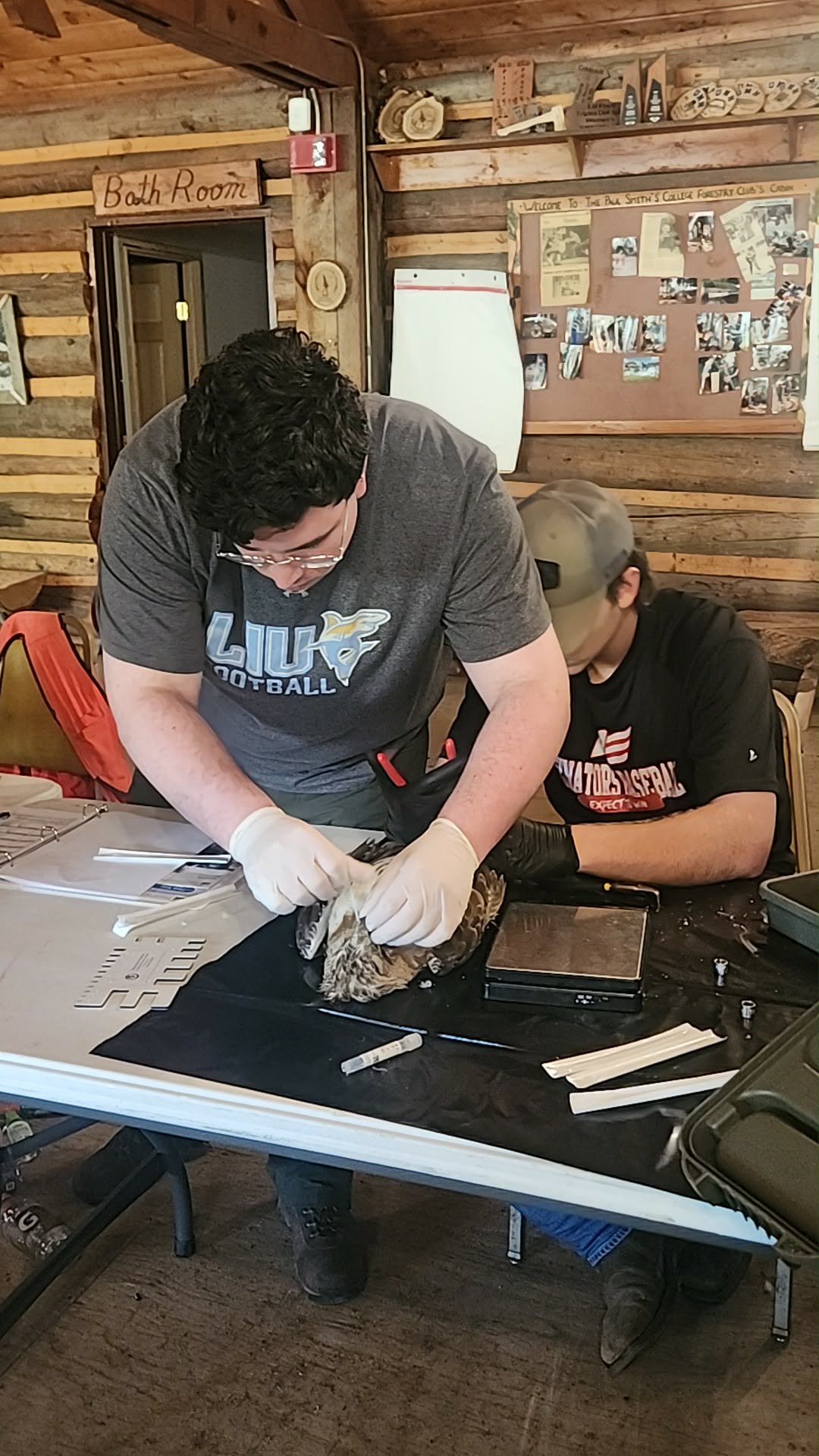
The New York Chapter’s immediate past president and wildlife biologist for the U.S. Department of Agriculture Wildlife Services, Stephan Beffre, led the raptor workshop. He said it was rewarding to see the impact of the chapter’s scholarship. “Our 2025 recipient was back in attendance as a volunteer assistant, and our 2026 recipient [Ross] expressed that she was interested in transferring to Paul Smith’s College as a result of this course,” Beffre said. “That speaks volumes to me about the success of this program.”
McDonald said the course isn’t just fun for students—but many volunteer instructors leave the experience inspired, too. “I’ve learned that the instructors, including me, really enjoy re-learning some of the skills we have been using for so long in our careers,” he said. “This turns out to be a good way to rekindle the joy of learning and to remember why you chose this career path in the first place.”
If you are interested in volunteering to help teach next year’s field course, or would like to donate, please reach out to ne***********@***il.com.
Article by Olivia Milloway