
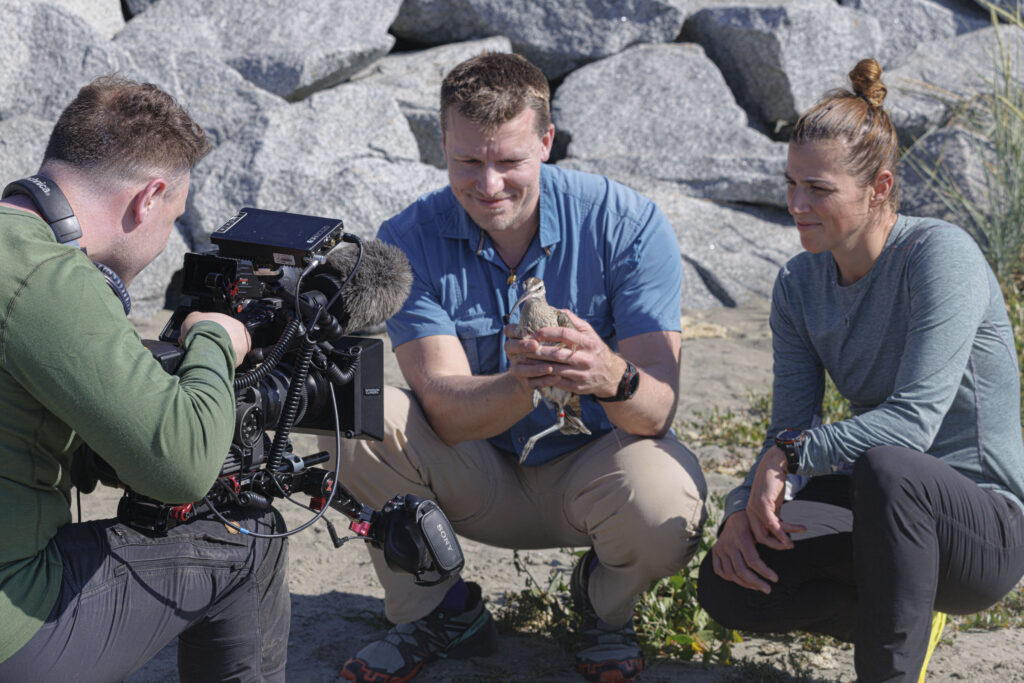

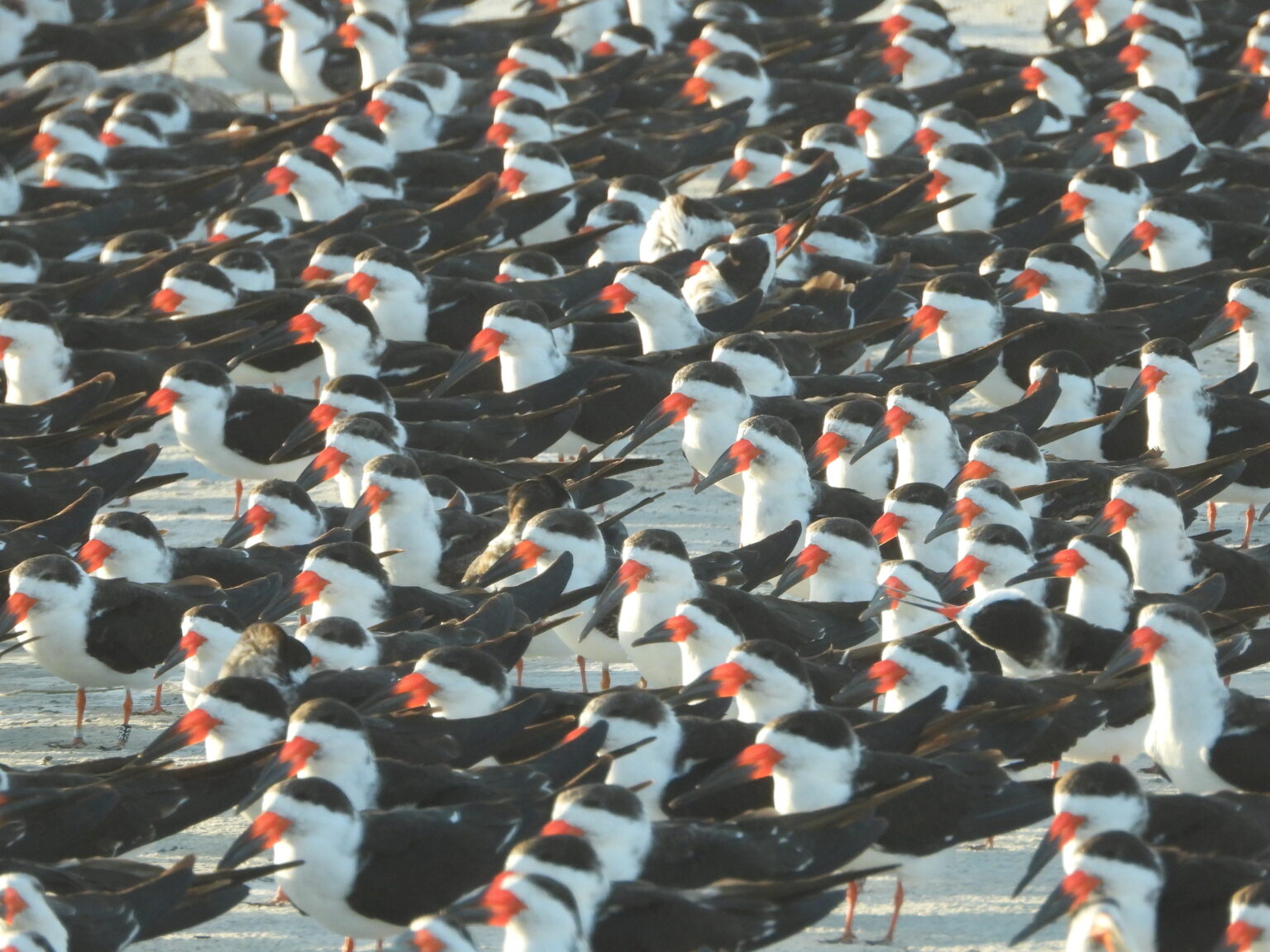
When the bell rings, high school science teacher Brett Moyer reaches for his binoculars and heads for the beach. Each month of the year, he’s on the hunt for one of Florida’s most beloved birds: black skimmers.
The only bird in the world that hunts by touch, black skimmers (Rynchops niger) get their name from skimming their bottom beak along the top of the water, feeling for fish. Moyer is training his camera not on their black and orange beaks but on their ankles.
Wildlife biologists at the United States Geological Survey’s Bird Banding Laboratory have caught and banded some of the skimmers. The lab has been tracking birds for more than a century to understand more about their migrations and populations. Usually, the project relies on hunters submitting banded birds of downed waterfowl or individuals sending in reports of dead birds they found in the wild. But citizen scientist Moyer decided to jump into the research himself by photographing the banded birds at a distance and submitting his findings to the Federal Bird Banding Lab. Over five years, he took more than 1,000 photographs of 347 distinct birds.
In new research published in PLOS One, Moyer showed that black skimmers can travel to Florida from states along the Atlantic coast, a journey of up to 1,500 kilometers. Moyer saw little dispersal from the Gulf, even though birds in western Florida were less than 250 kilometers away. He also documented the largest natal flight of any black skimmer ever recorded, meaning the journey from a bird’s birthplace to the first location it attempts to breed, at 281 kilometers. “The approach modeled here could be applied by citizen scientists investigating other bird species and non-avian species with field-readable tags,” Moyer wrote in his paper.