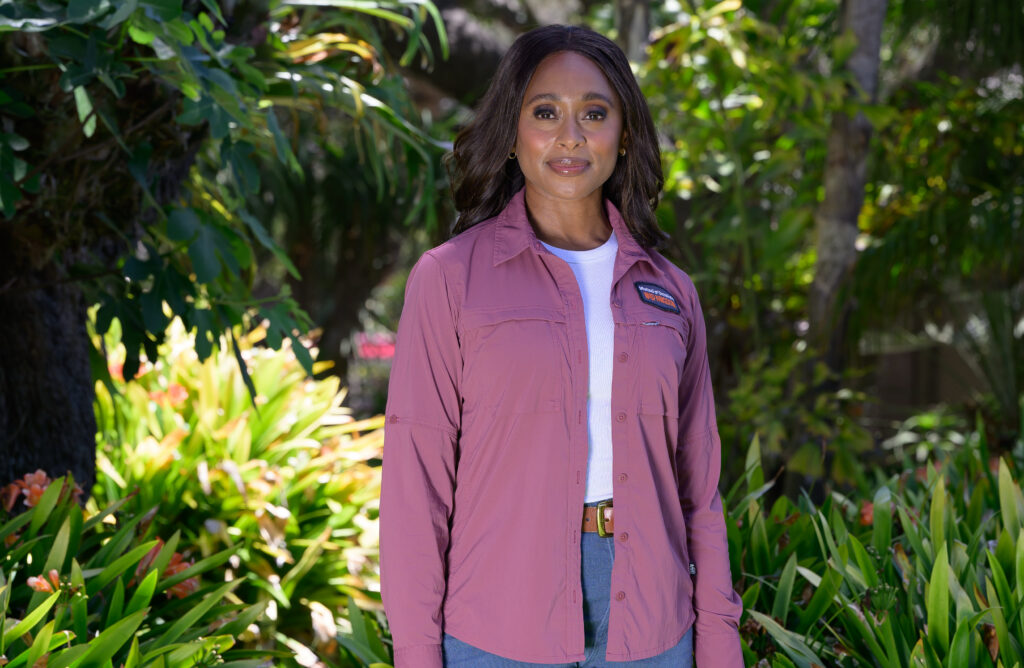
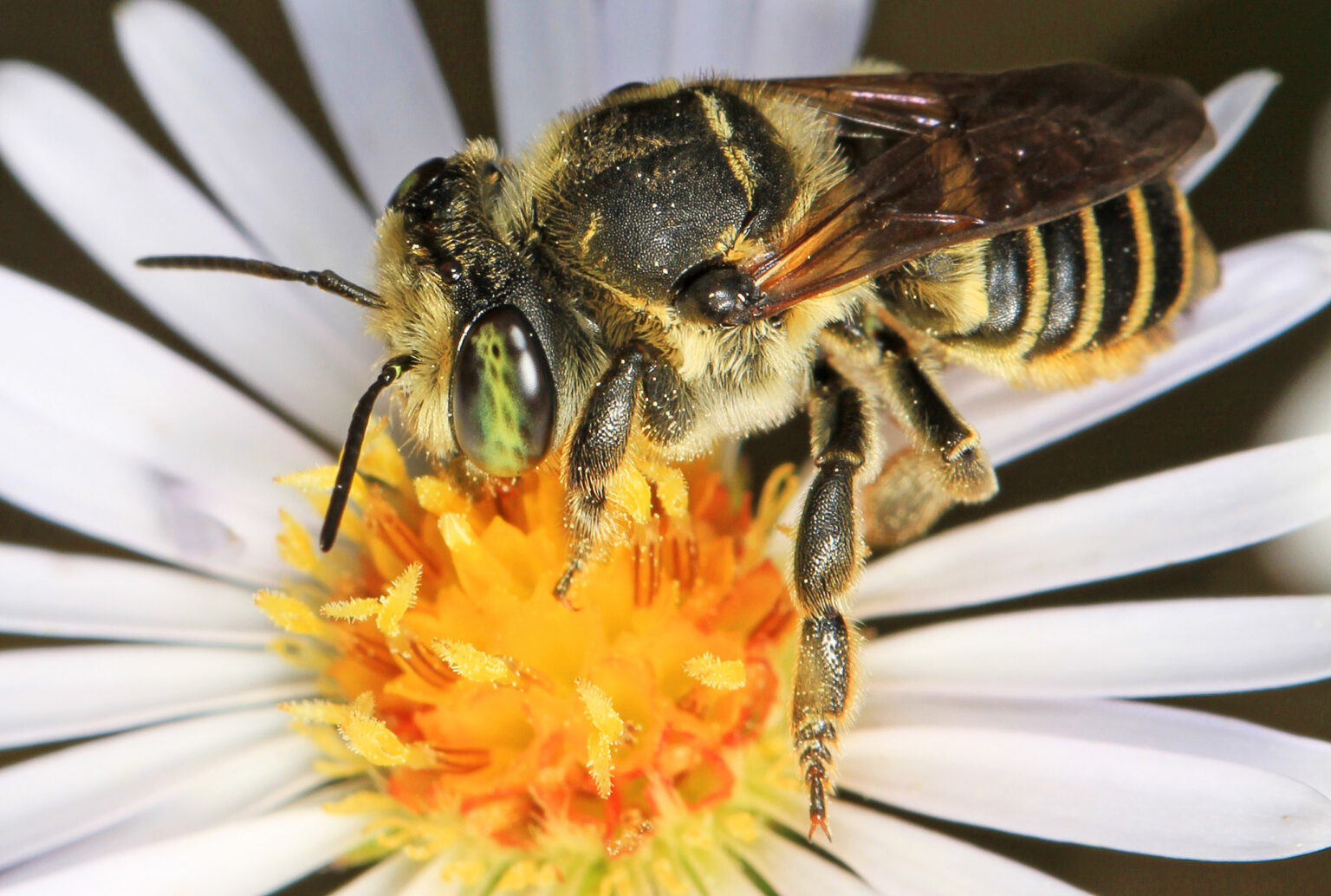
More than three decades ago, a disappointing apple harvest and a chance event set Dave Hunter on an unexpected path. After his wife came home buzzing about a neighbor’s apple tree that was producing thousands of apples while their tree sat barren, Hunter went searching for solutions to his comparatively disappointing backyard harvest. The answer was Mason bees, a genus native to North America.
Hunter soon began to build his first simple backyard bee house. Within a few years, his own tree was also heavy with fruit. His first bite of success sparked a fascination with native pollinators. Hunter is now the founder and owner of Crown Bees, a company dedicated to raising, releasing and providing habitats for native bees while educating backyard conservationists.
Crown Bees started focusing on boosting mason bee populations through their products but have expanded from a single species to a diverse community of cavity-nesting native bees. The company has shifted through time from “how do we use bees” for agriculture and gardening to “how do we understand them?”
Today, the company’s philosophy is “try to think like a bee.” Crown Bees focuses on what cavity-nesting bees need to nest and forage. The company leverages iNaturalist, a citizen science identification app, to teach people about the bees located in their own backyard. The company aims to support pollinator conservation while fostering healthy and productive landscapes.
For our latest Q&A, TWS spoke with Hunter about conservation of native bees and what success looks like.
What do you think is the biggest misconception about native bees?
The biggest issue isn’t just public misunderstanding. It’s ignorance baked into mainstream media. Newspapers, magazines, pundits—they almost always reach for pictures and video of honeybees, and they almost always interview the local honeybee club. The public hasn’t really had access to true wild bee advocates yet, so the honeybee becomes the default story by default, not by accident.
So when most people hear “bees,” they think honeybees. They’ve heard about colony declines, they’ve seen the headlines about hive collapses, and more recently, they’ve seen news of honeybee trucks tipping over on the highway or aerial mosquito sprays killing a hive. In most people’s minds, “saving the bees” means saving honeybees, nothing more.
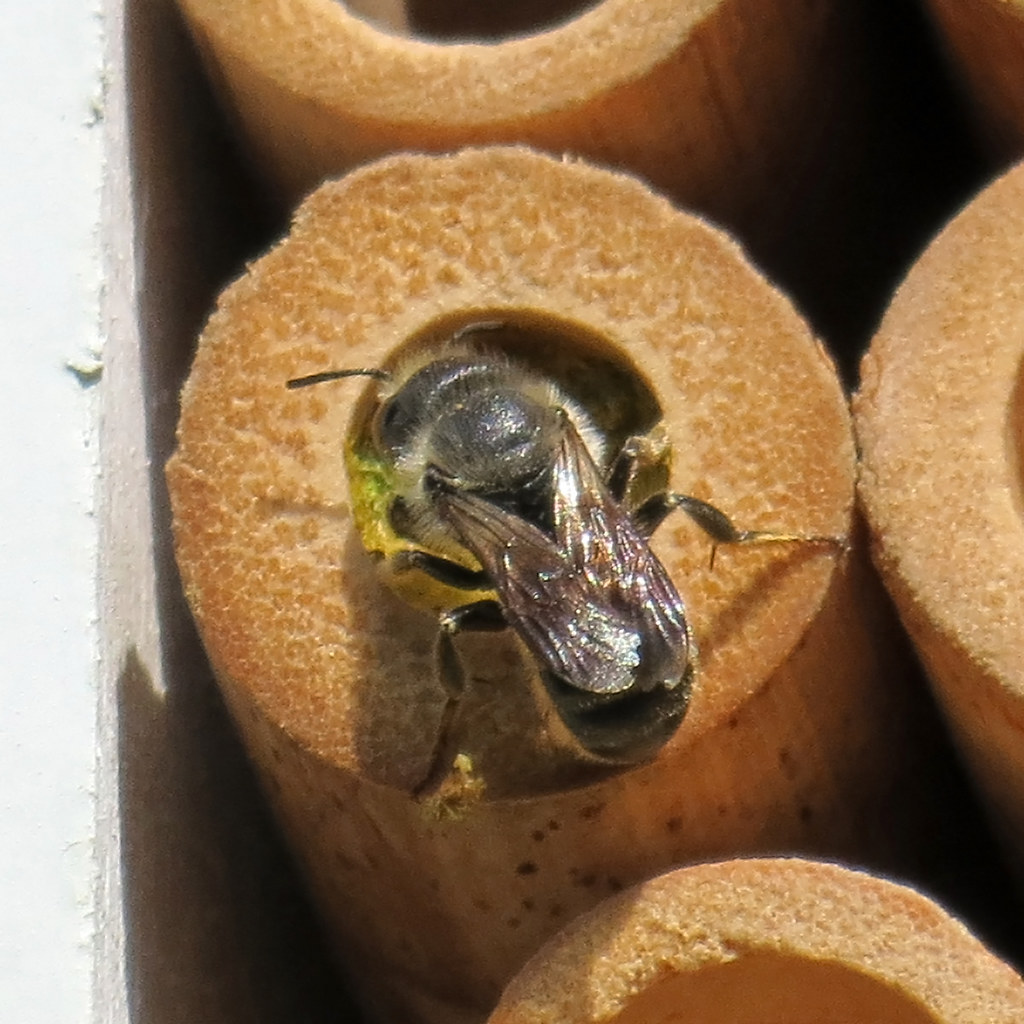
What gets missed is staggering. There are over 25,000 bee species worldwide, and only about a dozen of those are honeybees. In the U.S. alone, there are more than 4,000 native bee species, and most look nothing like what people picture. They don’t live in colonies. They don’t make honey. Most are solitary, meaning a single female does all its own work, and most are gentle because they have no hive to defend. When someone hears that for the first time, they’re genuinely amazed that there are bees whose whole job is simply to pollinate, quietly, without anyone managing them. And these are the bees actually running nature day to day.
My favorite part is what comes next. The next question tends to be, “How can I help?” People don’t want to just feel bad about a problem. Once they understand native bees are all around them and that they can support them in their own yard, they want to act. That instinct is real, and it’s exactly what we’re here to support.
Is the slogan “save the bees” a bad message?
“Save the bees” is a good starting point. It’s simple and memorable, and it gets people to stop and pay attention. The problem isn’t the phrase. The problem is when that’s the entire conversation, because then people are left holding a big, vague worry with nowhere to put it. Or they spend a lot of money on honeybee equipment and protective gear to ultimately fail.
We’re also riding a related shift right now: people are starting to understand that the most important pollinator isn’t the honeybee—wild bees do the heavy lifting. Save the right bee. That awareness is spreading slowly, mostly word of mouth, and we want to be part of that correction.
But we don’t try to teach someone all of native pollinator ecology in one sitting, either. That just flattens things in the other direction, where it gets so complicated people feel like they can’t possibly make a difference. So we focus on the “why,” and we hand it over in small, true pieces. Why does this bee need bare ground? Why does that one need a hollow stem left standing through winter? Why does the timing of your first warm days matter?
Then, we connect every “why” to one thing a person can actually do in their own backyard. Leave a patch of dirt unmulched. Plant something that blooms early. Put up a nesting house and learn to tend it. One small activity, done well, should genuinely change the environment right around you. That’s not a simplification—I believe that’s where conservation actually happens, yard by yard or friend by friend.
And the best part is what comes next. Someone does that one thing, sees the bees show up and tells a neighbor.
How do backyard conservation efforts connect to bigger restoration goals?
Advocacy takes time, and it almost always starts small. For a backyard gardener, the first step is just learning that pollen and nectar without chemicals in their own yard are a good thing. As they try raising spring or summer bees, something clicks: these bees don’t respect fence lines. They’re flying into neighbors’ yards, too, and they could be harmed there by chemicals the neighbor doesn’t even know to avoid.
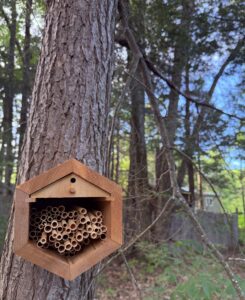
That realization is where we try to help connect with people. We teach them to put up a simple sign or hand neighbors a piece of paper that says something like, “Our bees will be flying in your yard for the next six to seven weeks. Would you mind holding off on spraying chemicals?” It’s a small, low-stakes ask, but it plants the idea that these bees, the ones pollinating the neighbor’s own garden too, are vulnerable to decisions made beyond a single property line.
For people who want to take that further, this is usually where advocacy begins. Once someone understands that their bees are affected by what happens around them, they start talking to neighbors, to their local community, sometimes to their city.
Not everyone is going to become an advocate, and that’s fine. But we believe awareness compounds. The more people in an area who understand what these bees need and who they’re affected by, the more groundwork exists for real legislative or landscape-scale changes down the road. Backyard action isn’t separate from policy. It’s usually where the support for policy comes from.
Your rewilding initiative uses iNaturalist observations to help people discover native bees in their communities. How has access to that data changed the way people think about pollinators and conservation?
The people we talk to usually start at a 101 level. The first surprise for most of them is simply learning that there are bees out there that don’t make honey and instead nest in holes. From there, as they try out mason bees or leafcutter bees themselves, we start introducing them to the wider community of wild bees that might already be living around their own home.
To support that next step, we built a tool called “Where the Wild Bees Are”, which draws on iNaturalist observation data. It zeroes in on the cavity-nesting bee and wasp species that have been recorded near a user’s location, so people can start to see, concretely, which wild bees might already be in their neighborhood rather than thinking of “bees” as one generic category.
What’s been most interesting isn’t a single dramatic pattern in the data so much as the shift it creates in how people think. Once someone sees that there are eight, ten, fifteen different cavity-nesting species potentially within range of their yard, the question changes from “how do I raise mason bees” to “what does this whole community of bees actually need.”
Our hope is that this awareness leads people to act on two fronts: planting pollen and nectar sources that bloom continuously from spring through deep summer, and putting out nesting holes in a range of sizes. Those two things, food and shelter across the season, are what actually give wild bees a chance to move in and stay.
What does success look like to you?
As a for-profit, mission-based company, success starts with something simple: increased sales mean more people learning about and trying out solitary bees. Every new customer is someone we get to teach, not just sell to. With each order, we’re handing over the basics of advocacy and the simple how-to’s that set them up to actually succeed with their bees, rather than give up after one bad season.
We also look at it beyond the transaction. More subscribers to our BeeMail newsletter, more followers on YouTube or social media, that’s the message spreading further than we could reach alone. Each of those is someone carrying a piece of this forward into their own circle.
We try hard to practice what we teach. Our bees are regionally sourced, so a customer in a given area receives bees that were actually reared nearby, not shipped across the country and dropped into an unfamiliar climate. We design our products with the bee’s needs first and the bee raiser’s needs second, because if the bee doesn’t thrive, nothing else matters.
But honestly, the clearest signal of success isn’t any of our metrics. It’s the warm, sometimes slightly emotional comments and questions we get from customers. Someone writing in to say they watched their first leafcutter bee emerge, or asking how to help a struggling cocoon, or just wanting to know more because they’re hooked. That tells us the message didn’t just get delivered; it landed. It became someone’s own curiosity and care, not just ours.
That’s success to us: sales that translate into stewardship, one customer at a time.
Crown Bee is a supporter of The Wildlife Society. All members receive a discount on Crown Bee products with their membership.
Article by Kaylyn Zipp