


The end had been coming for years in Newfoundland, but it wasn’t until 1992 that the Canadian government did something about the collapse of the Atlantic cod fishery that had once been among the most bountiful in the world. They announced a moratorium on any cod fishing after years of overharvesting had decimated the species’ population.
“The northern cod stock, which was this huge stock that was thought to be inexhaustible, was found to have declined by 99%,” said Tyler Eddy, a research scientist at the Fisheries and Marine Institute of Memorial University.
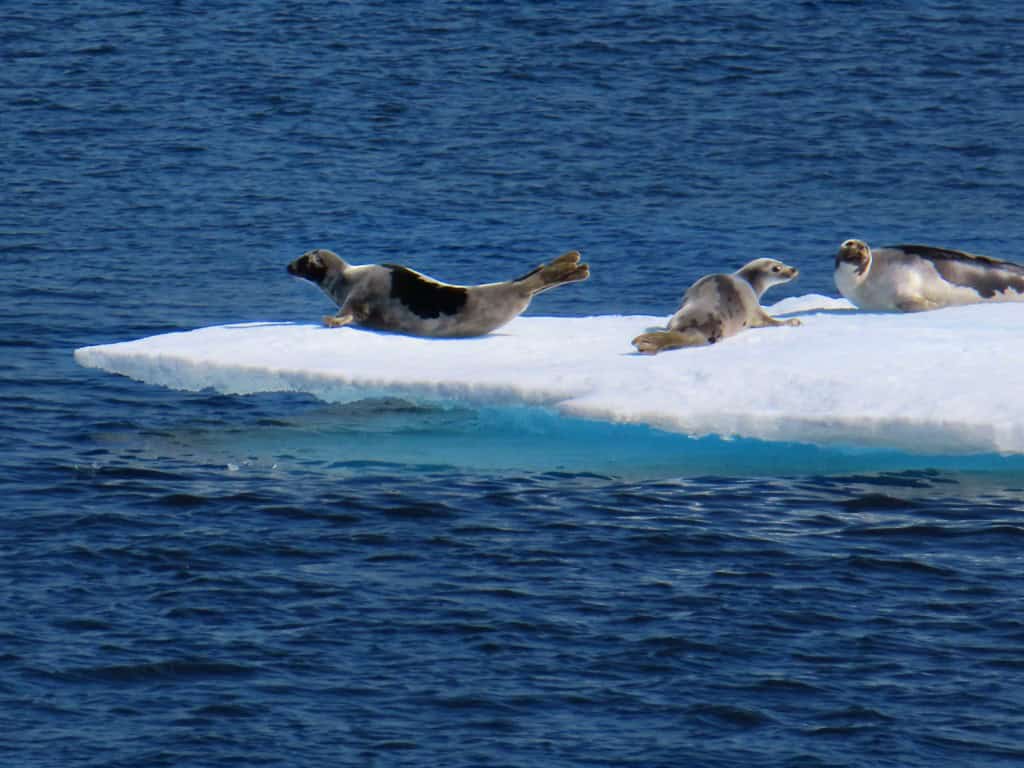
Fisheries thought the recovery would be quick, but it took 32 years before the government partially lifted the ban in 2024, with an allowable catch limit of 18,000 metric tons. In the time since the collapse, harp seals (Pagophilus groenlandicus) also declined in the area. But still, fishermen and others have blamed the slow recovery of cod on harp seals, which prey on Atlantic cod (Gadus morhua).
This purported problem, with harp seals having a larger impact on cod due to cod’s smaller population, was used to support the argument for increased seal hunting pressure. Environmental organizations responded in kind. “In some cases, Greenpeace really had shamed the seal harvesters,” Eddy said.
But in a new study published recently in Fish and Fisheries, Eddy, first author Pablo Vajas, a postdoctoral researcher at Memorial University, and others have revealed that the ecology of the North Atlantic is a little more nuanced.
Base of the ecosystem
Capelin, small forage fish, form more or less the base of the ecosystem in the North Atlantic. They are incredibly numerous and provide food for species as varied as cod, harp seals, seabirds and even humpback whales (Megaptera novaeangliae).
“Capelin have become the main support of all the ecosystem’s biomass,” Vajas said.
But before the collapse of cod numbers in the 1990s, capelin (Mallotus villosus)—a common prey species of cod—was the first to go. It’s unclear why, since back then, fisheries didn’t really focus on capelin. Eddy said that capelin go through a natural boom and bust cycle in the ocean. It’s also possible that capelin numbers fell due to a drop in zooplankton, tiny marine creatures that feed on phytoplankton. Factors including sea temperature, sea ice melt and other things can affect the abundance of phytoplankton.
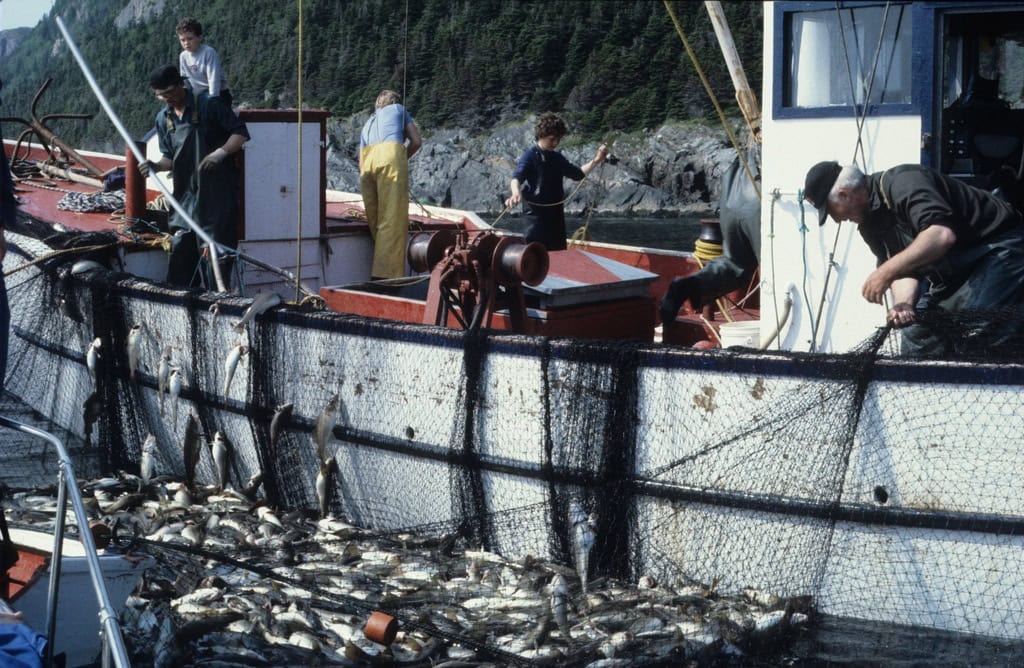
In any case, capelin declined right around the same time that fisheries were hammering cod populations. A mixture of top-down and bottom-up factors were hitting cod.
The team modeled the number of harp seals in various scenarios over three major periods: pre-collapse 1983-1985, invertebrate dominance 2013-2015, and partial groundfish recovery 2018-2020.
These simulations revealed that both harp seals and capelin numbers had an important impact on the number of cod around. For example, if 25% of harp seals were removed from the ecosystem, cod numbers only increased by about 3% in the Newfoundland and Labrador Shelf and by about 8% in the Grand Banks. But if capelin biomass is increased by about 50% while the harp seal population remains the same, cod numbers would fully recover in the Newfoundland and Labrador Shelf and go from critical to cautious in the Grand Banks. Critical is measured as less than 25% of historical abundance, while cautious is measured as 25-85% of historical abundance. Anything above 85% of historical abundance is considered a recovery.
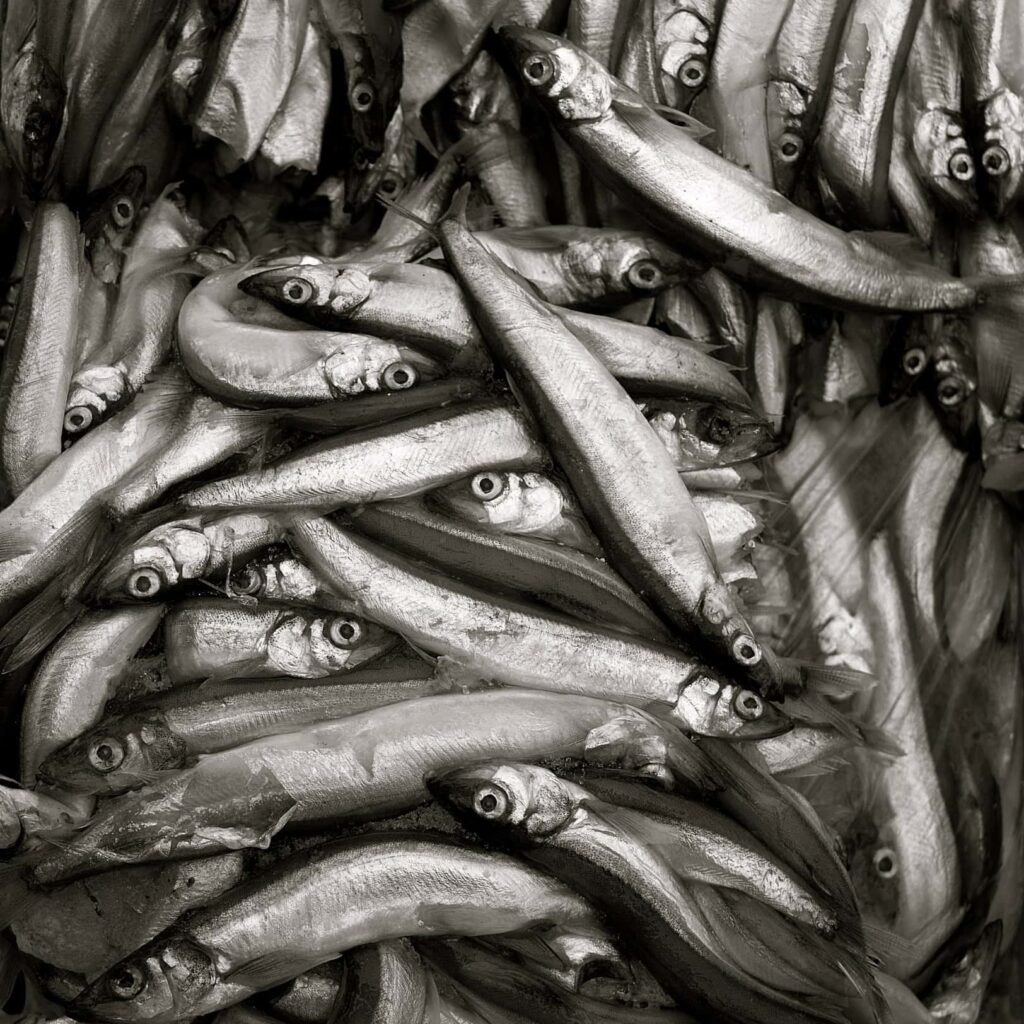
This shows that while harp seals affect cod numbers, it’s relatively minor compared to the effect that capelin have, even though their role in the ecosystem has increased, Vajas said.
Recovering capelin is unfortunately quite difficult, since there is no real mechanism to do so right now. Eddy said that the fisheries’ take on capelin is small enough that banning fishing boats would have little positive effect on capelin numbers.
Removing more harp seals would have only a small effect on cod numbers. Eddy said that harp seals—the second largest pinniped population in the world after crabeater seals (Lobodon carcinophaga) in Antarctica—have also dropped in the North Atlantic since the decline of cod and capelin. In the 1980s, harp seals numbered around 7 million, but today there are only an estimated 4.4 million. This decreased number is due to the declines of both cod and capelin, but also the loss of sea ice due to climate change, which harp seal pups depend on early in their lives.
The recovery of both cod and harp seals—and likely other oceanic creatures as well—depends on the recovery of capelin in the North Atlantic and a more resilient ecosystem. The question is if—and how—that will occur.