





Although there are similar species across both continents, European and North American strategies for waterfowl management are vastly different.
A new paper published in Wildlife Society Bulletin points to cultural and geopolitical factors that shape North American and European conservation strategies, offering opportunities for collaboration.
In our latest Q&A, TWS spoke with TWS member Kevin Ringelman, an assistant professor at the University of California, Davis, and lead author of the paper. He’s worked across all four North American flyways and studies the intersections of waterfowl behavior and population ecology with a focus on applied management.

Ringelman cowrote the paper after attending the Pan-European Duck Symposium and learning from European researchers and managers about the current trends and challenges in waterfowl management there.
We discuss what each continent can learn from the other when it comes to waterfowl research and conservation and what’s next in our latest Q&A. Ringelman’s answers are edited for style and brevity.
What are the differences in cultural values that drive conservation in North America and Europe?
In the United States and Canada, there’s pretty good alignment on conservation values among the public. There’s the understanding that hunters are part of the conservation enterprise. In both countries, hunters pay for licenses, the money of which goes back into habitat conservation programs. Most Americans are broadly supportive of legal, regulated hunting. In the U.S., we have conservation funding mechanisms like duck stamps and the Pittman Robertson Act, so while hunters take some birds out of the wild, they’re also giving back to habitat conservation.
But in Europe, that’s not necessarily the case. While there is variation among countries, generally speaking, hunting is seen as being at odds with conservation. It’s seen as a zero-sum game. Hunters kill birds, and wildlife should be preserved in their pristine state and not exploited. Generally, there are fewer institutionalized mechanisms by which hunters give back to conservation across Europe.
What does waterfowl management look like across both continents?
We’re at very different places in how we manage waterfowl. Europe is still working on understanding its populations. When populations breed in areas like northern Scandinavia or Russia, it’s hard to access and study them.
The regulations in Europe seem to be largely set on the precautionary principle—the idea that if we just don’t know, then we should just not harvest them. Their regulatory frameworks have much fewer levers to pull. In terms of duck hunting, North America has season lengths and bag limits by species. In Europe, the regulatory levers mostly involve whether the species is open to hunting or not. And some of the earliest regulations the U.S. and Canada have put into place, like bag limits and banning lead shot for waterfowl, night hunting and baiting for harvest, commonly still occur in parts of Europe.
What are some of the challenges of implementing waterfowl management plans in Europe?
There are really invested communities on both sides of the Atlantic. But here in North America, we have so many more institutionalized funding mechanisms from state governments, federal governments, universities and NGOs. Ducks Unlimited just this year completed a $4 billion fundraising campaign for habitat conservation, and there’s no Ducks Unlimited in Europe
If North America is where we have a lot of money to do waterfowl science and conservation, some of the onus is on us to reach out to our European colleagues with support. We could exchange students where they lack a lot of the institutionalized support mechanisms that we enjoy here.
Here in the United States, the federal government unifies a lot of our hunting regulations and follows scientific frameworks for how those regulations are set. Europe is a big place split into all these countries with its own federal governments and its own states within those federal entities. So, trying to coordinate waterfowl science and conservation across those countries within Europe is just a staggering challenge.
There isn’t a lot of alignment among European countries today. In the Scandinavian countries that have many more rural areas with low population density, hunting is much more accepted. And then places like France and the U.K. have a more mature sort of conservation enterprise than some of the former Soviet states.
What can each continent learn from one another about waterfowl research and management?
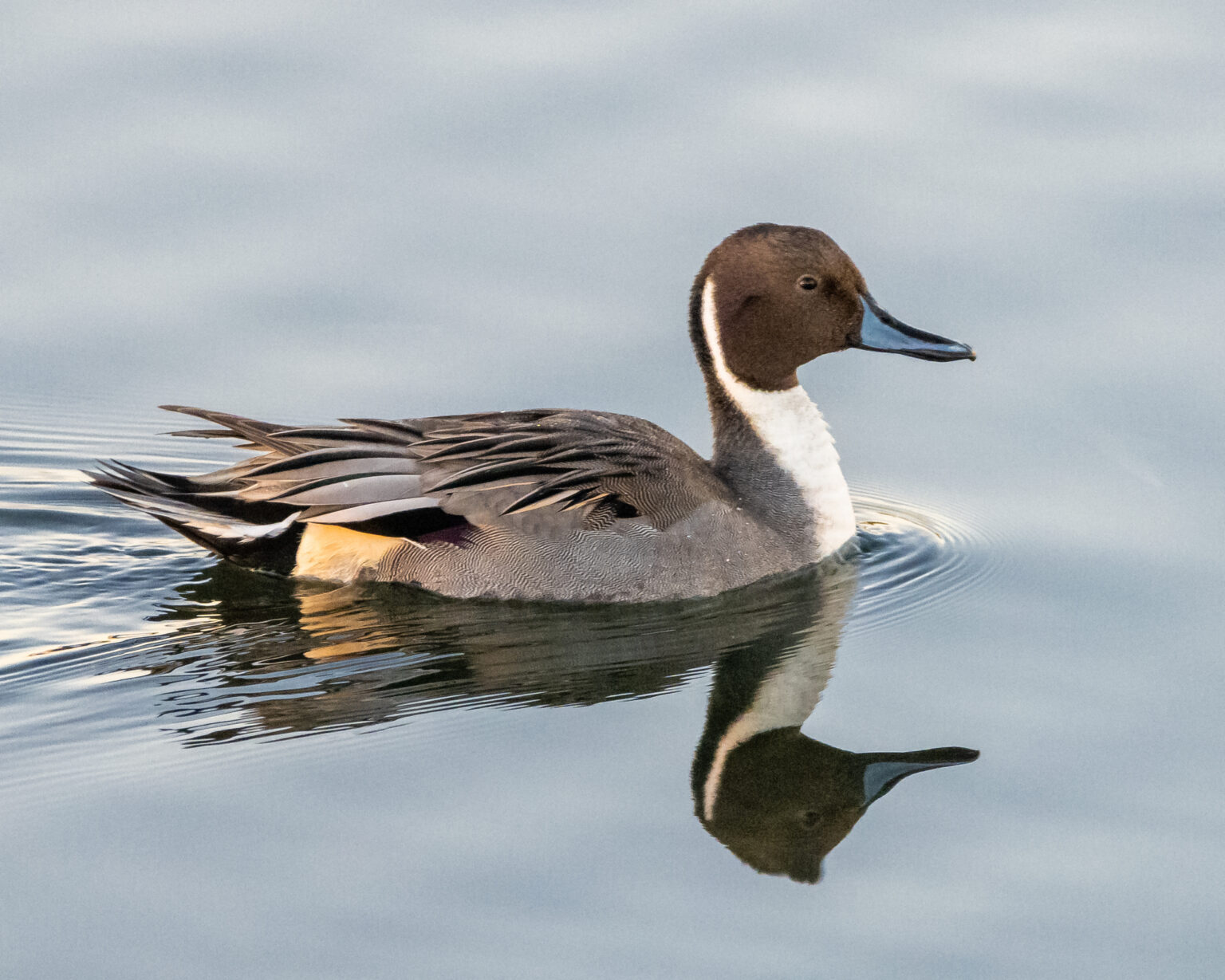
We share a lot of species, or have sister species, between Europe and North America, like the northern pintail (Anas acuta). In North America, we’ve learned so much about what makes these populations tick that could be translated to species in Europe.
For example, we’ve spent hundreds of millions of dollars putting transmitters on ducks to study things like habitat selection and use in response to conservation and migration routes. That same push for advanced telemetry studies hasn’t really taken off as much in Europe. Instead, they’re approaching questions of movement ecology from a more theoretical standpoint, making predictions of how ducks should move in relation to these resources.
We need to get those theoretical models to North America, and we need to deploy radio transmitters in Europe so that we can fully populate both sides of the equation.
Europeans also think a lot about waterfowl as a means of spreading species, like wetland seeds and invertebrates getting on waterfowl feathers or being ingested and spreading from wetland to wetland. When we think about the spread of wetland plants in the United States, we think about boats and waterways, but waterfowl are potentially one means of connecting wetlands. That’s another really obvious avenue where we can learn a thing or two and do some super cool research from an ecology perspective.
Article by Olivia Milloway