






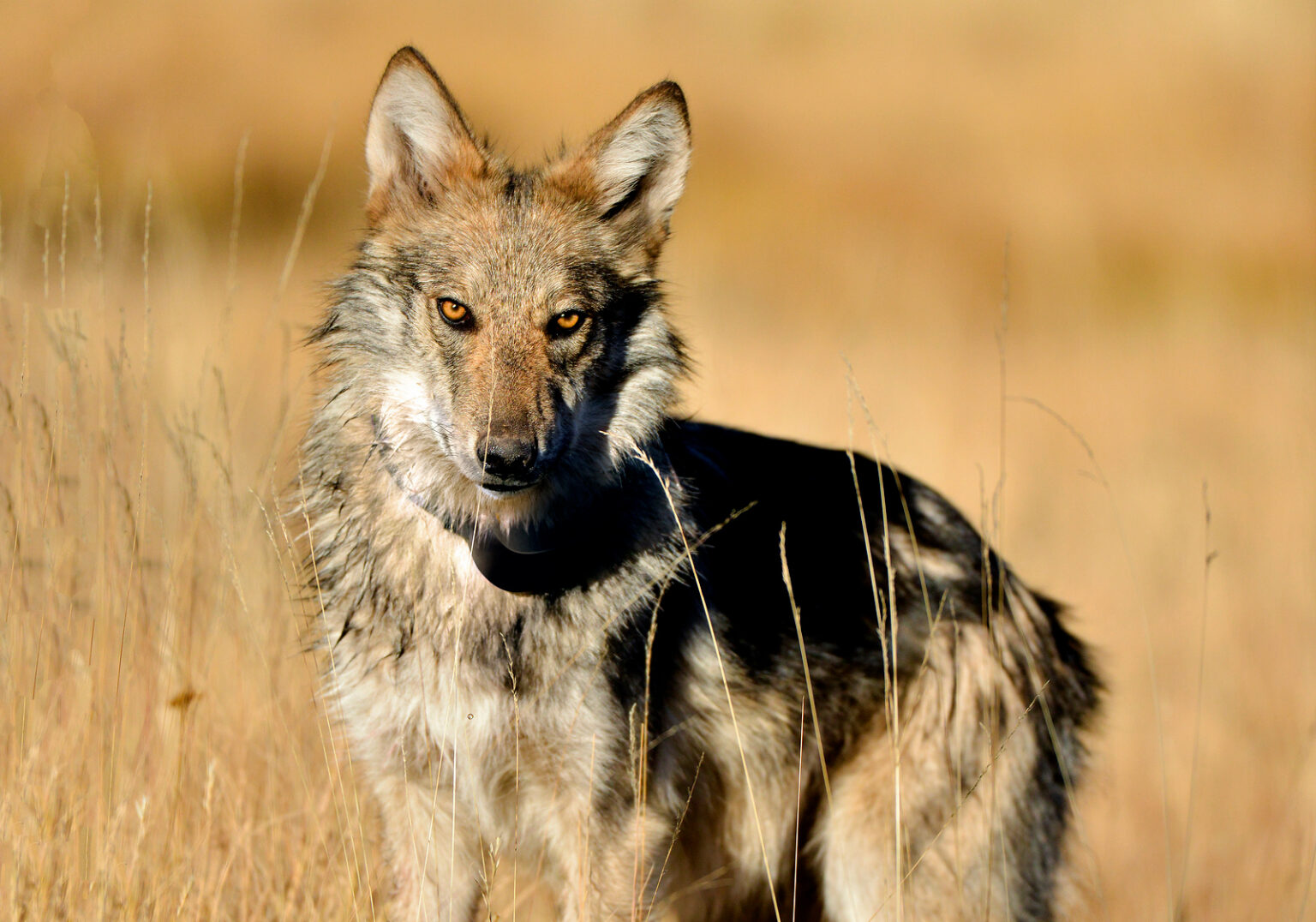
For a pack of wolves, fresh roadkill can be mouth-watering. Scientists are using this appetite for carrion to their advantage to keep the predators away from ranchers’ cattle—especially during the season when wolves are the hungriest.
Mexican wolves nearly went extinct in the 1900s, but wildlife biologists began to reintroduce them to Arizona and New Mexico in the late 1990s. These efforts continue today—biologists have now started reintroducing the animals to parts of Mexico. As their population grows, so does the conflict with ranchers.
Wildlife managers are using diversionary feeding to try to proactively reduce the burden on local ranchers who already operate in the margins and help a recovering wolf population at the same time.
“Wolves are always trying to balance their need to survive with what’s the lowest-risk situation,” said Matt Hyde, a TWS member and postdoctoral researcher at the University of California, Berkeley.
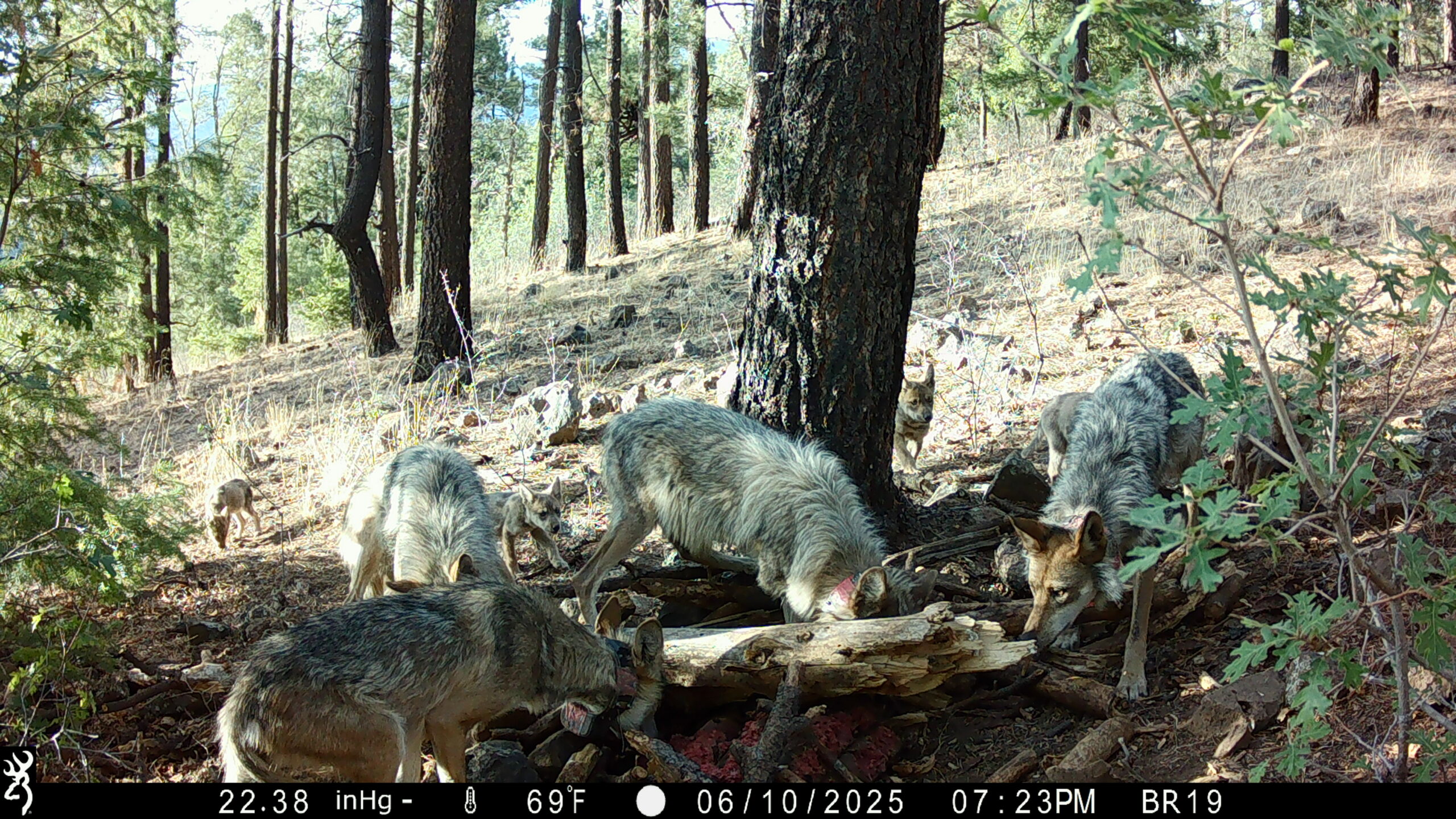
Diversionary or intercept feedings attract wolves away from livestock with an easy meal, like roadkill elk (Cervus canadensis), removing the incentives for conflict before it happens. With a live cow or elk, they might get kicked in the head and die—but not with carrion.
In a new study published in Animal Conservation, Hyde and his collaborators evaluated if this diversionary feeding actually worked to reduce the number of livestock killed by Mexican wolves (Canis lupus baileyi).
Highs and lows of the Mexican wolf
Humans persecuted Mexican wolves for decades in the early 20th century, and by the 1950s, the wolves were all but lost. They were eliminated from their former range in Arizona, New Mexico and Texas, and only a small, struggling population in Mexico remained.
But once authorities listed the wolves under the U.S. Endangered Species Act in the 1970s, the Mexican Wolf Recovery Program (MWRP), a collaboration of federal, state, Tribal and Mexican wildlife authorities, began a captive breeding program. In 1998, they released their first wolves into the wild. Since then, the population, which is concentrated in the Mexican Wolf Recovery Zone in Arizona and New Mexico, has grown to over 300.
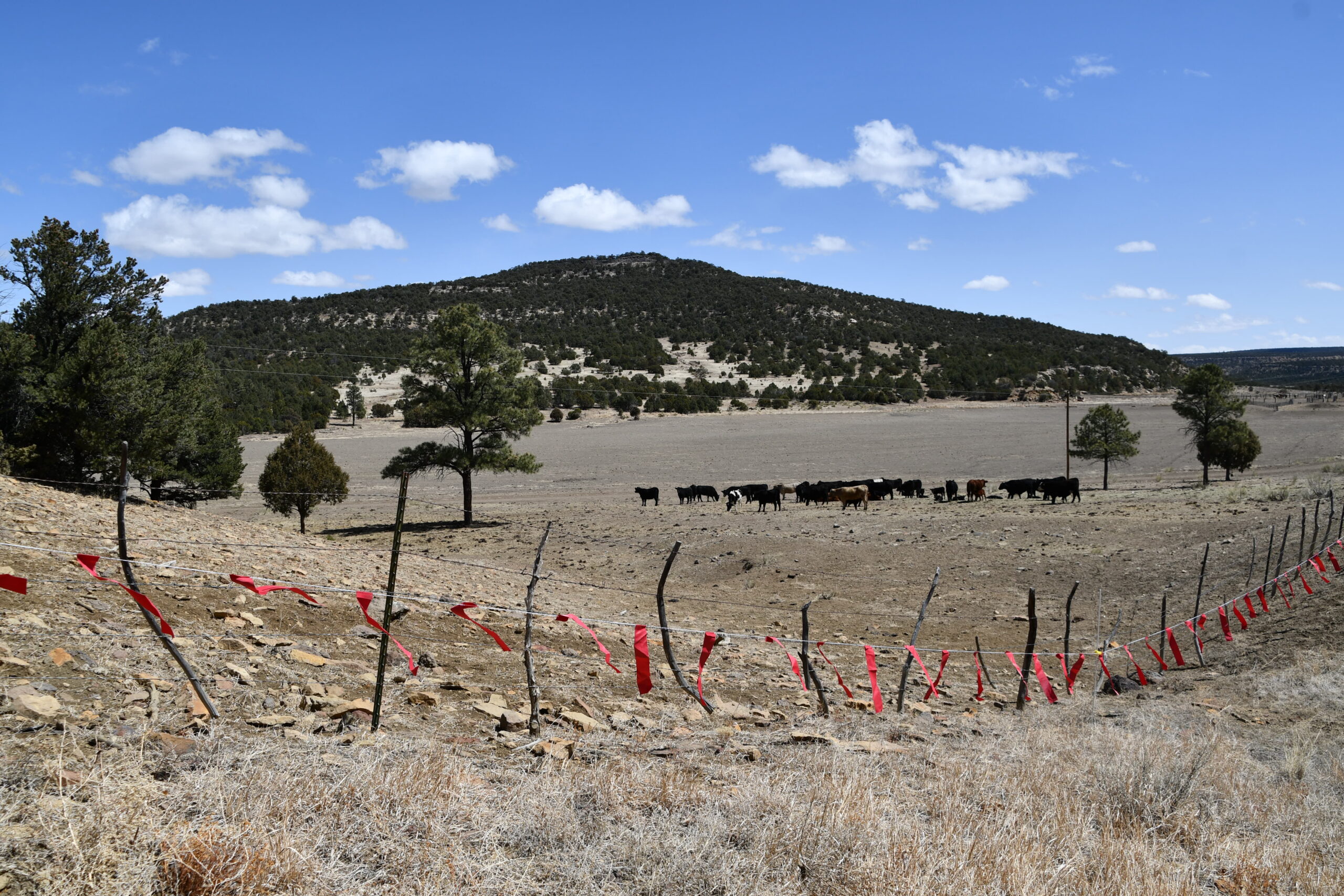
Though the population is still small compared to historic numbers, the wolves are numerous enough to cause problems for local ranchers who graze their herds on public land. “These are huge, expansive rangelands,” Hyde said. “A lot of tools that might be practical in other areas, like electric fences or more human supervision, just aren’t practical [here].”
Hyde noted that when it comes to predators, wildlife conflict management tools usually involve negative stimuli. Electric fences shock, beanbag rounds shot from guns bruise, and herdsmen scare the wolves away.
“The animal has to balance the reward of killing the animal behind the fence with the fear of that fence,” he said.
But the fear of repercussion only goes so far. In certain times of the year when prey is low and the pack is hungry—like when the wolves are denning and need to feed growing pups—the need for food may outweigh the risks.
Offense, not defense
In 2009, wildlife managers at the MWRP began diversionary feedings to try to reduce conflict with ranchers. They started their analysis in April, when denning season starts, and ended around May, fawning season for deer and elk, their natural prey. Once or twice a week during that six-week period, managers put roadkill elk or a horse sausage, which is commonly used to feed carnivores in zoos, in an area where wolves would likely find them.
According to a 2024 count, there are at least 60 active Mexican wolf packs in Arizona and New Mexico, each of which has two collared animals as part of ongoing monitoring by the MWRP. Hyde and his team looked at movement data from 2014 to 2021 to see how well the diversionary feeding program was working.
Hyde and his coauthors found that in the three months following diversionary feedings, the level of depredation by Mexican wolves on livestock dropped by 43%. They also found that before the feedings started, packs in areas with lower prey densities were more likely to prey on cattle. Smaller packs, too, were more likely to kill livestock. Potentially because larger, more powerful packs or even other carnivores stole their kills.
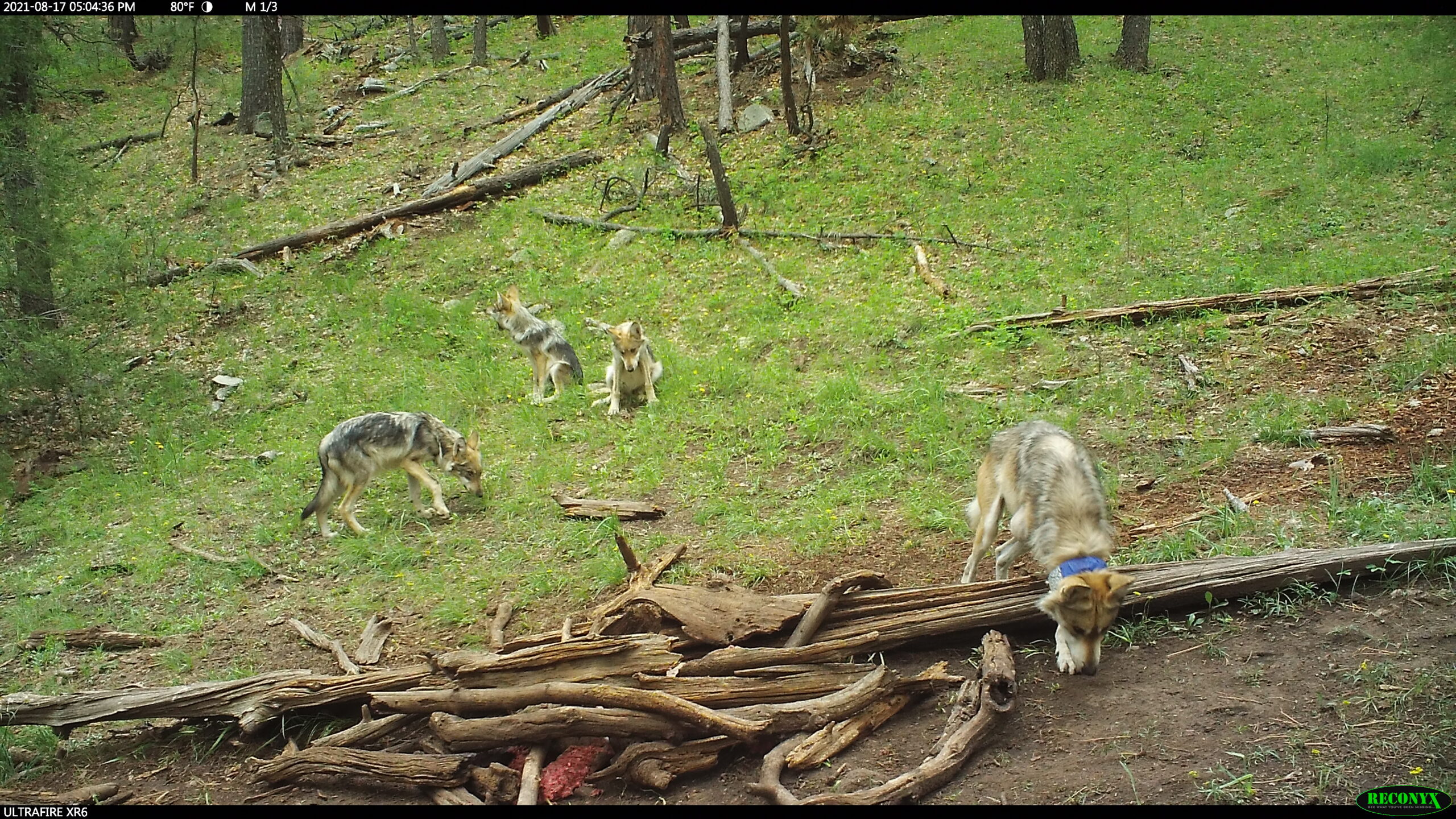
Hyde also found that in areas of less livestock density, there were more depredations, potentially because there was less surveillance. But he’s not as sure about these findings, as producers aren’t required to report livestock numbers in the western U.S. “We don’t have an accurate depiction of where livestock are at any one time,” he said. “That’s the great challenge of conflict mitigation.”
Helping wolves, helping ranchers
Hyde said that conflict will always be an issue with wolves and livestock.
While there are compensation programs for losses, Hyde said they often don’t account for the full scope of ranchers’ losses. He said it’s important for wildlife managers to understand the impact of depredations on ranchers, especially when they operate on such small profit margins.
Authorities can also kill problem wolves that depredate livestock again and again. But the wolves move around so much that it’s unpredictable how many heads of cattle a rancher might lose year to year. “Sometimes there might be one producer who loses 10 calves in one year, and then the next they don’t lose any,” Hyde said.
Though it is not a “silver bullet” solution, Hyde said the diversionary feeding is a win-win for recovering, highly monitored populations: wildlife managers draw wolves away from areas where the risk of conflict is high, and the wolves get an easy meal to feed their pups. And there’s no risk for habituation, as wolves often scavenge the landscape for dead and cached animals. “I think the goal is to reduce their conflict as much as possible while also recovering the wolves,” he said.
Article by Olivia Milloway