



Decades of data tracking monk seals and fisheries in parts of Hawaii have revealed patterns in fisheries as potential clues to why the endangered marine mammals declined.
While many were concerned that lobster fishing was removing seal prey, a look at the larger picture shows that if lobster fishing played any role, it was through indirect changes to the ecosystem.
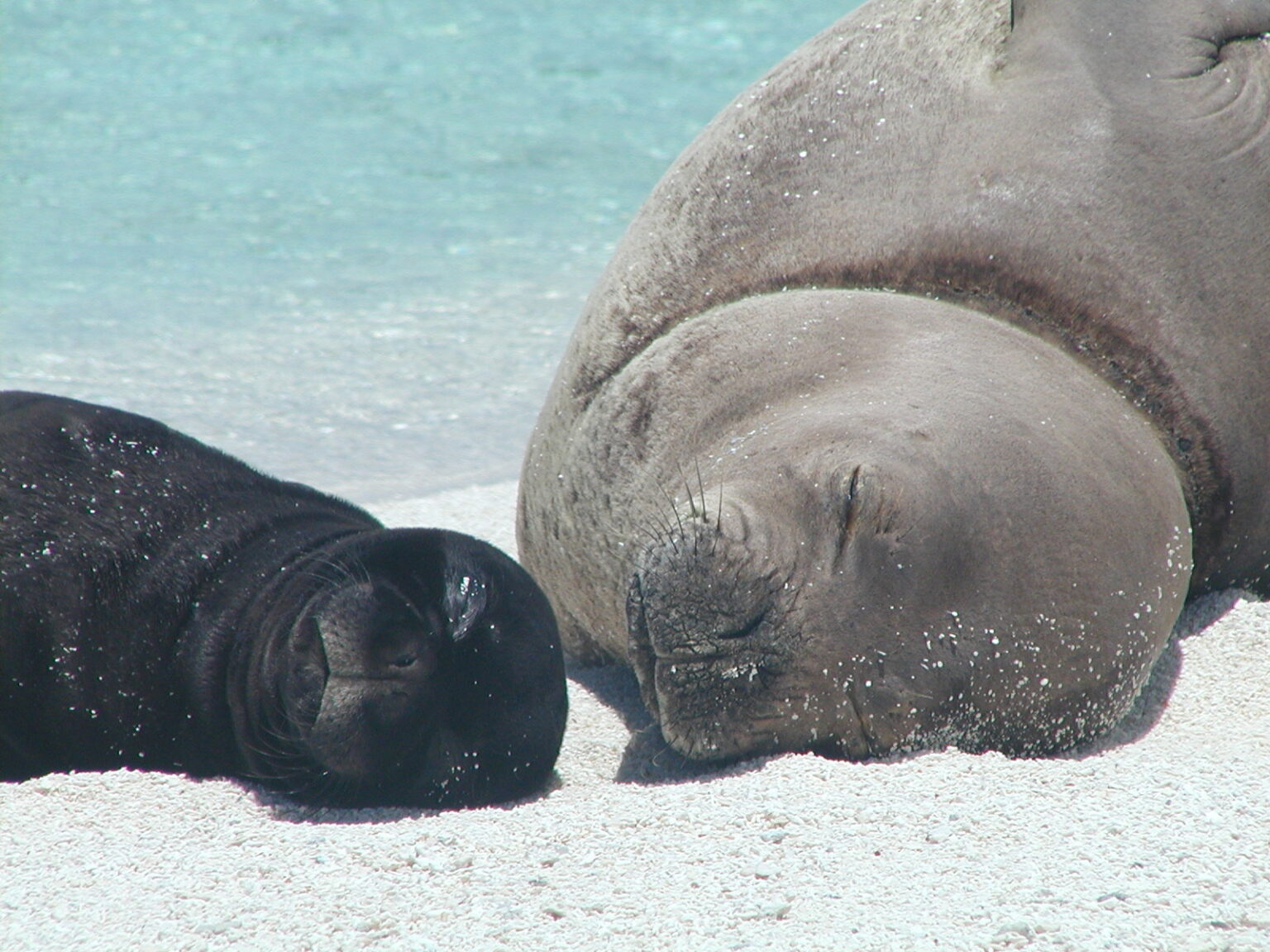
Instead, seals were found to mostly feed on bottom-dwelling fish that live far from shore, and competition with other predators may play a bigger role in the number of Hawaiian monk seals (Neomonachus schauinslandi) in the Northwestern Hawaiian Islands than previously believed. As a result, managers updated and revised the way they think about interactions in the ecosystem.
“As scientists, we need to see whether the evidence holds up from different angles, if there [are] things we wouldn’t have even considered,” said Frank Parrish, the now-retired ecosystem division director at the National Oceanic and Atmospheric Administration’s Pacific Islands Fisheries Science Center. “That was one of the challenges here.”
A species in decline
Parrish has studied monk seals for decades. In a study published recently in Marine Mammal Science, he and his colleagues looked at the Hawaiian monk seal population and fishing activity in French Frigate Shoals from 1948 to 2009.
When the United States established its Exclusive Economic Zone in the early 1980s, interest in fisheries increased in the remote Northwestern Hawaiian Islands. Prior to that, much of the human activity around the French Frigate Shoals was limited to an isolated Coast Guard installation. But the area was also considered a stronghold for monk seals, which were listed as federally endangered in 1976. At the time, researchers visiting the atoll found large numbers of seals hauling out on the beaches, with a population that initially appeared stable or growing.
By the late 1980s, that trend slowed and then began to reverse. Juvenile seals were underweight, suggesting limited foraging success and potential prey scarcity. In the mid-1990s, hungry sharks picked seal pups at higher rates than had been seen in the prior decade.
While seal populations declined at French Frigate Shoals, commercial fishing activity in the region continued, ringing alarm bells. People began to ask if the lobster fishery was driving a loss in seal numbers.
“We went into this [research program] looking for interactions. The big one everybody was most interested in was the fact that the lobster fishery expanded about the time that the seals started going into decline,” Parrish said, adding that many thought the fishery might be removing important prey for the seals.
But that initial question only led to more questions, highlighting how complex such ecosystem interactions can be. “It was really frustrating because we had an intuitive idea about how it was going to go, and it didn’t go that way,” Parrish said.
Not a straight line of inquiry
Early research found that monk seals didn’t just feed within shallow atoll reefs—the animals were not even eating lobsters.
Critter cams captured footage of underwater foraging behavior. Fatty acid analyses attempted to reconstruct seal diet by sampling every potential prey species across the ecosystem. Long-term field crews conducted nearly complete censuses, identifying individual seals and tracking them over time. They even captured seals diving deeper than previously known to capture prey.
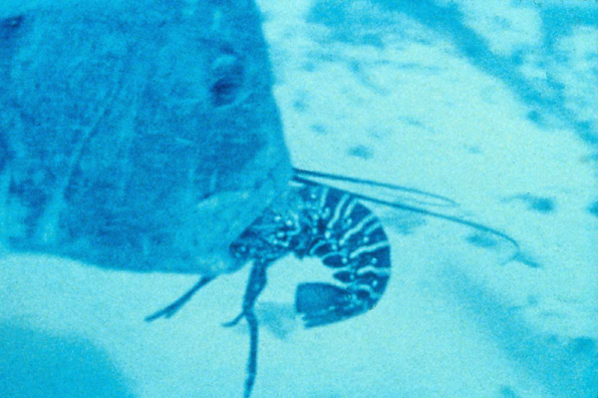
They were surprised to find that the seals were eating bottom-dwelling fish by pinning them to the ocean floor. Two species that comprised a minor component of the overall bottomfish catch were the most common prey items in the seal’s diet. One item in the diet stood out: North Pacific armorhead (Pseudopentaceros wheeleri), a fatty fish that provided monk seals much more energy than any other prey types.
The Pacific armorhead fishery occurs far from the atoll in international waters, where accurate data collection is difficult. However, in the study, Parrish and his collaborators found that changes in the fishery didn’t match changes in seal numbers, hinting that other factors must be at play.
A tangled food web weaved
Parrish and his collaborators speculate that a series of cumulative effects contributed to the monk seal decline in the French Frigate Shoals. Although researchers lack definitive data, they suspect the lobster fishery may have altered the behavior of species that both competed with and preyed upon monk seals, ultimately reshaping the ecosystem for a period that harmed the marine mammal’s population.
In the 1990s, lobster fishery workers were throwing overboard lobsters too small to sell as well as old bait and nontargeted bycatch as they fished, creating an easy buffet for jack fish, which compete for food with seals, and sharks, which prey on seal pups. In a two-for-one move, the lobster fishery may have been feeding the seals’ predators and competitors, relieving some pressure on monk seals. In the 1980s, the removal of competitors by the jack fishery ended, which left its population unchecked and able to increase. But they may not have negatively impacted the monk seals initially because they were snacking on lobster discards. When the lobster fishery ceased and the buffet ended, the researchers believed that the larger populations of sharks and jacks had to find food elsewhere, potentially causing problems for the seals.
The researchers hypothesize that Hawaiian monk seals from the French Frigate Shoals encounter and eat North Pacific armorhead as the seals dive deeper to avoid the predators and food competition in shallower water. A large shark fishing event in 1999 may have also provided a brief respite, stemming the accelerating decline of seals.
Looking to the future
Domestic fishing at the French Frigate Shoals ended in 2009 following the establishment of the Papahānaumokuākea Marine National Monument by President George W. Bush Jr. in 2006. But the international trawl fishery for armorhead continues on nearby seamounts outside the monument. Discards represent an indirect pathway by which fisheries could influence predator-prey dynamics in this ecosystem.
But researchers still don’t have all the answers about the historical problems affecting Hawaiian monk seals in the French Frigate Shoals. Monk seals coexist with active fisheries under different ecological conditions in the main Hawaiian Islands. The catch of jacks in the region may be reducing competition and assisting the monk seal population growth seen in the main Hawaiian Islands. In recent years, the French Frigate Shoals monk seal population has begun to increase and experience less shark predation, suggesting a possible shift of the ecosystem in favor of monk seals.
Part of the reason Parrish and his collaborators published this work is to get their decades of experiential knowledge, built from years on the ground and at sea, in paper. As veteran researchers retire, publishing helps ensure that their quiet observations and hard-earned instincts don’t fade away.
“The biggest satisfaction that I have of it is that it’s in the literature now,” Parrish said. “We’ll let other people pick it up and make whatever they want of it.”
Article by Kaylyn Zipp