
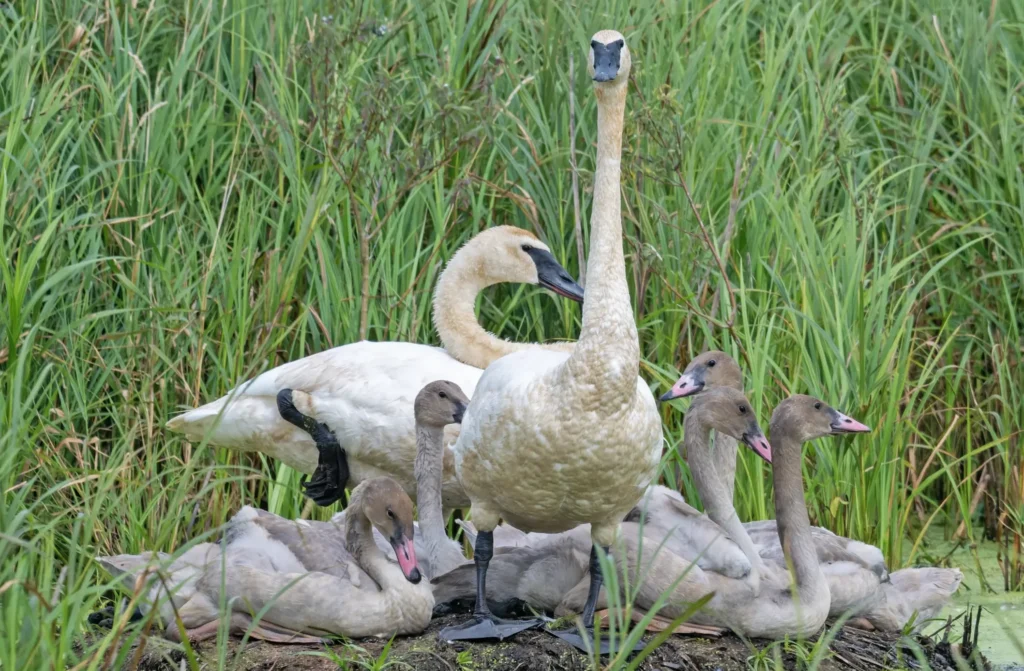


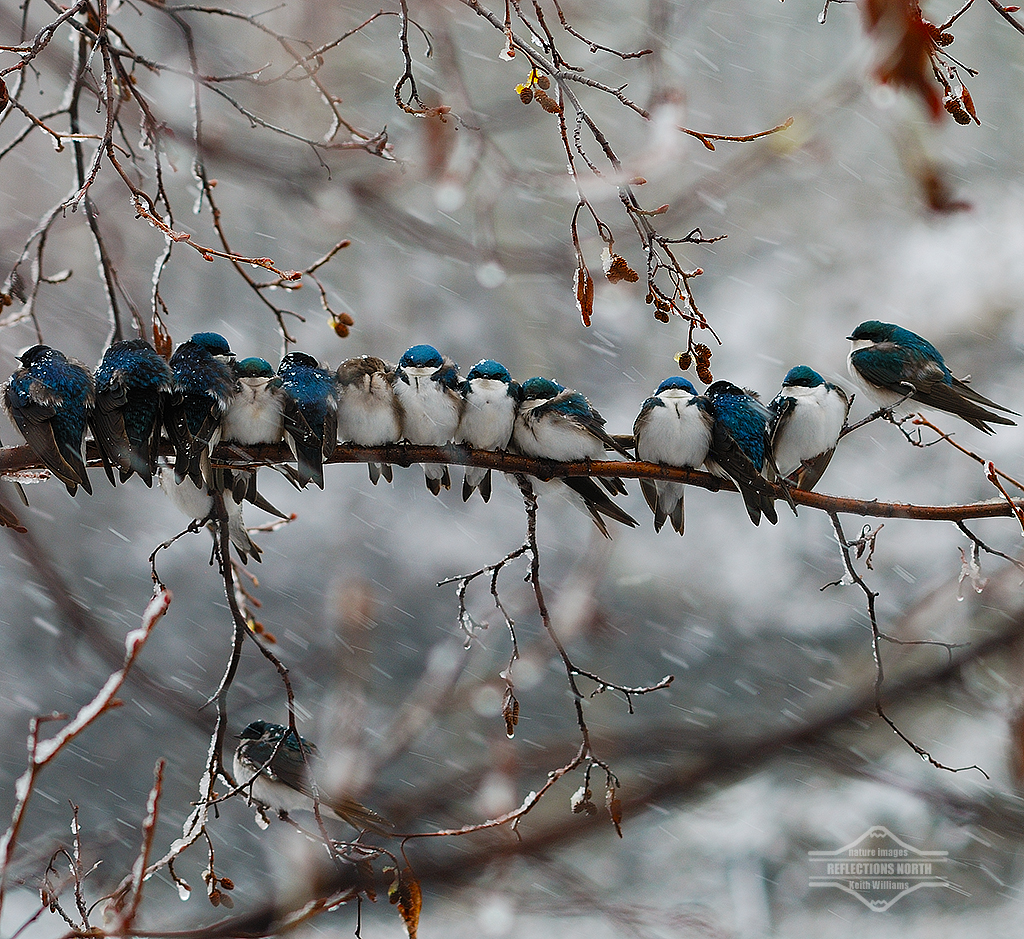
As climate change brings warmer springs, tree swallows are nesting up to two weeks earlier than they did in the 1970s. But just because there’s warm weather doesn’t mean it’s there to stay. When cold temperatures come back with a vengeance, tree swallows (Tachycineta bicolor) die en masse, and many nests fail.
In new research from Cornell University, scientists looked at four decades of research on nesting timing and survival in New York to see if individual birds changed their behavior during spring cold snaps and whether or not it helped their survival. Researchers considered about 150-200 nests each year in Tompkins County, the county where Cornell is located. They found that even a few days of cold temperatures in a row have a significant effect on swallow survival and behavior.
Their findings, published in Current Biology, were that cold weather changes how long parents incubate eggs and how often they feed their chicks. “In cold temperatures, we see a steady decline in feeding rates, which helps explain decreases in growth rate and nestling survival,” said Conor Taff, a researcher at Cornell University and coauthor on the paper.
Taff and his team think that this is because in colder weather, there are fewer insects and it’s harder for parents to find enough food. As they’re spending more time looking for food, the birds are also incubating their eggs less—eggs need the warmth, especially when it’s cold. The researchers determined that the adults who are more resilient to cold weather are more likely to raise healthier chicks. “Climate change, somewhat paradoxically, might increase exposure to cold snaps, because the birds breed earlier in warmer springs when the temperature is more variable,” Taff said. The researcher points to a larger theme in climate change research: temperature variability can be more harmful than rising average temperatures.
Read more at Cornell Chronicle.