





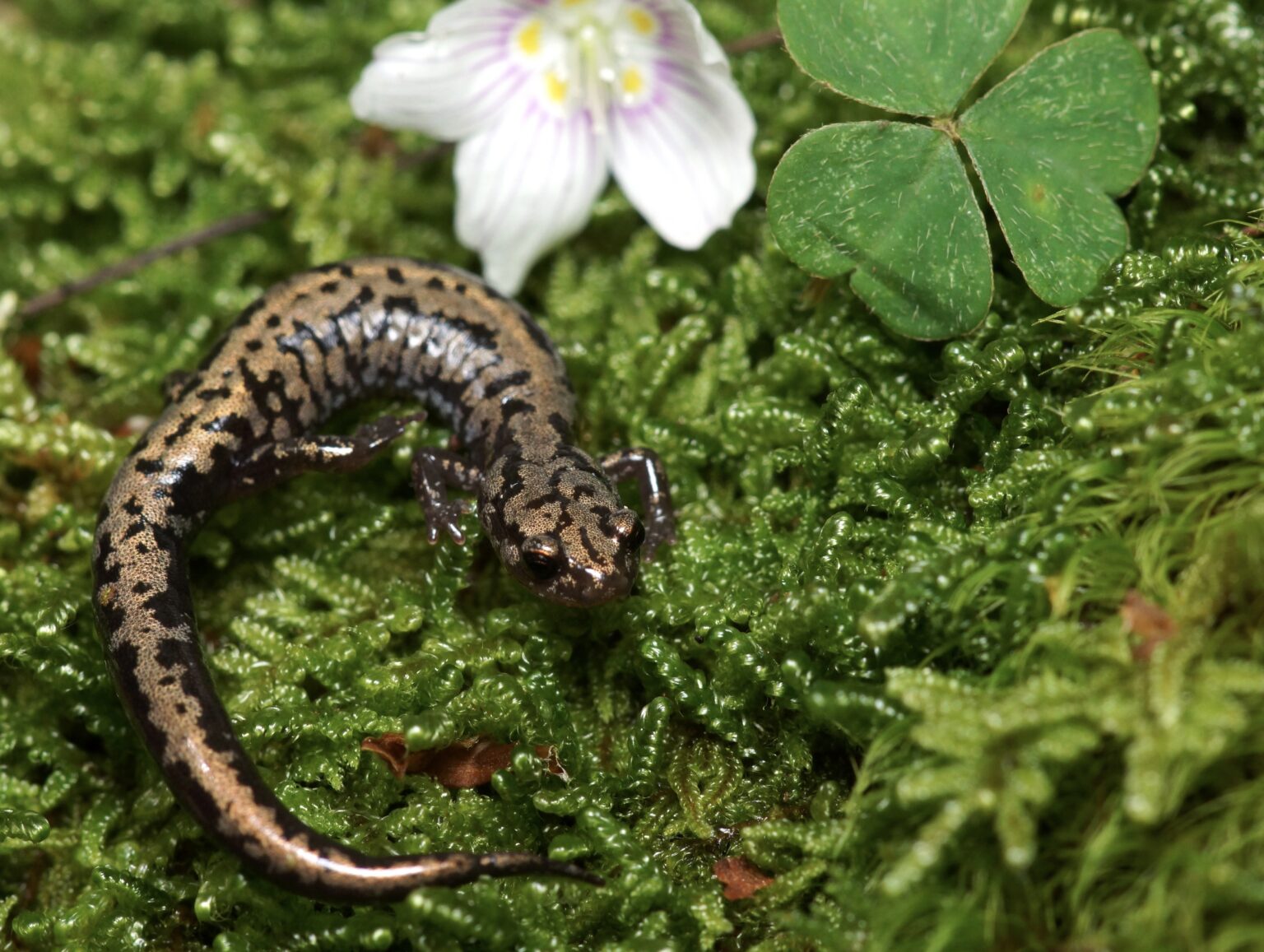
A rare salamander found along the spine of the Southern Appalachian Mountains may be more common than scientists previously believed.
But Weller’s salamanders’ requirement of high-elevation spruce fir forests in the summer still leaves the species vulnerable.
“I’m cautiously optimistic,” said TWS member Jon Davenport, an associate professor of biology at Appalachian State University in North Carolina.
Davenport was drawn to the species in part because of its “compelling history.” Weller’s salamanders (Plethodon welleri) are named after a high school student, Worth Weller, who declared he’d found a new species while hiking in the area around Boone, North Carolina. A researcher from Cincinnati came down to verify the discovery. But on his second trip to collect more specimens to describe the species, Weller fell off a cliff in the area and died—some unverified lore has it that his body was found with a collecting bag containing specimens. “They named the salamander after him,” Davenport said.
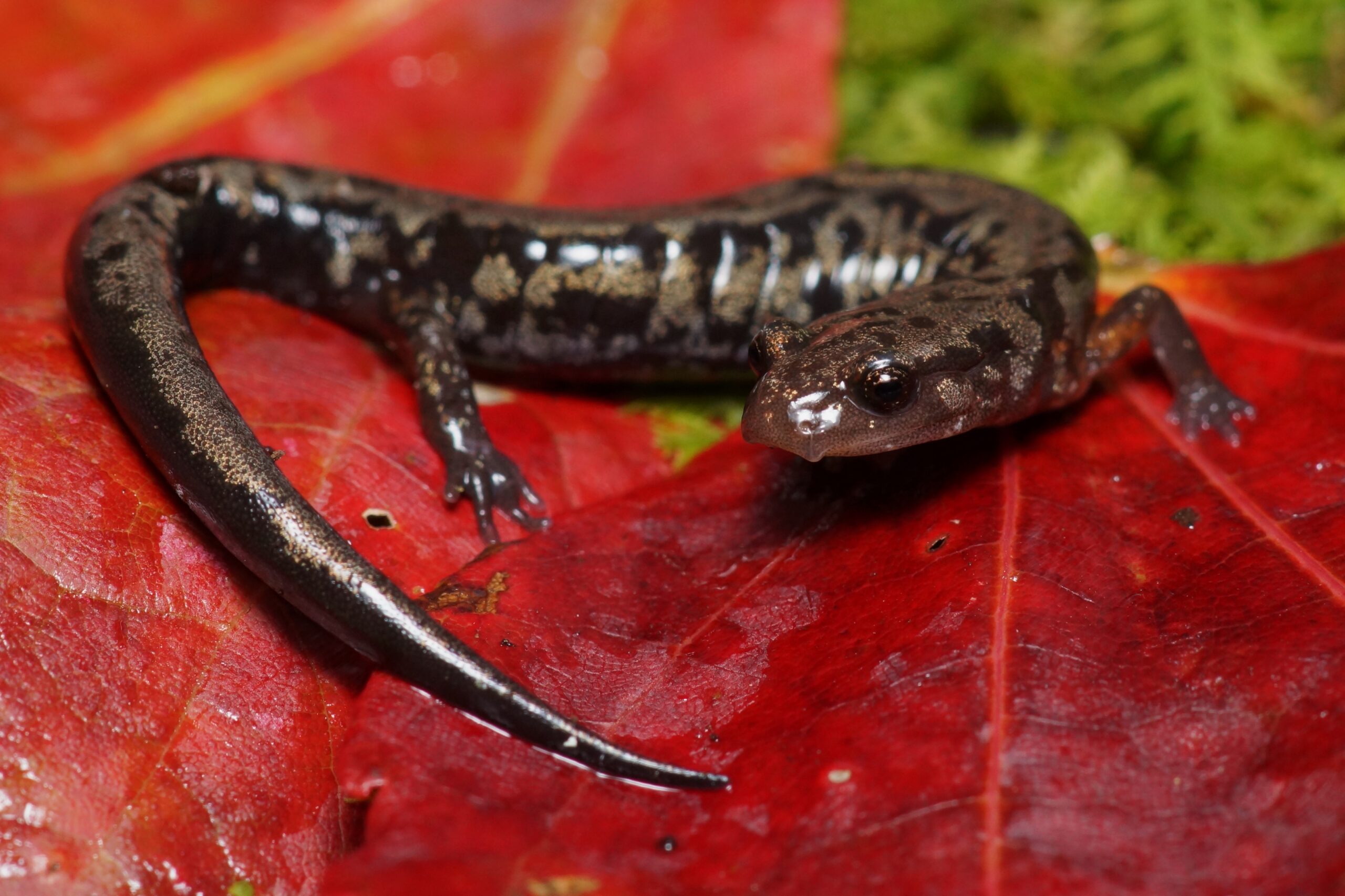
Weller’s salamanders are quite striking. They appear a little like eastern red-backed salamanders (P. cinereus), with a “very unique” brass-like sheen and black spots, Davenport said. The lungless amphibians are typically about 30 to 40 millimeters in length—a little longer than your average house key. They are found in a small area that straddles the borders of North Carolina, Tennessee and Virginia in the Appalachian Mountains. They are protected and listed in all three of those states, partly because the high-elevation spruce fir forests that they depend on aren’t doing well there.
Davenport and his colleagues had heard some reports of Weller’s salamanders in lower elevations than researchers traditionally associated them with. In a study published recently in The Journal of Wildlife Management, the team conducted surveys to better assess their distribution in eastern Tennessee and western North Carolina, where the majority of their distribution lies.
Expanding the known habitat of Weller’s salamanders
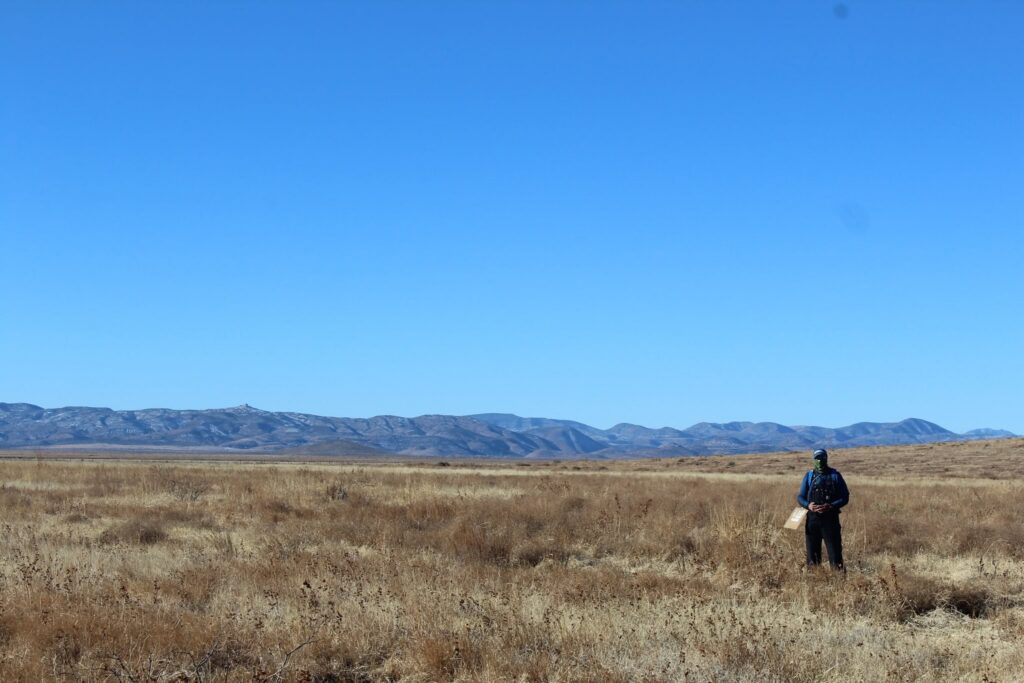
The team conducted night surveys and day surveys, which included flipping logs in about 40 sites on private and public land during the spring, summer and fall of 2021 and 2022 at different elevations and habitat types. When they found salamanders—there are about seven species in the area—they’d measure and weigh them before returning them.
The team found that while Weller’s salamanders weren’t as common as species like eastern red-backed salamanders, they aren’t exactly as rare as their reputation assumes.
“It makes me optimistic,” Davenport said. “Maybe these things don’t need to be listed federally.”
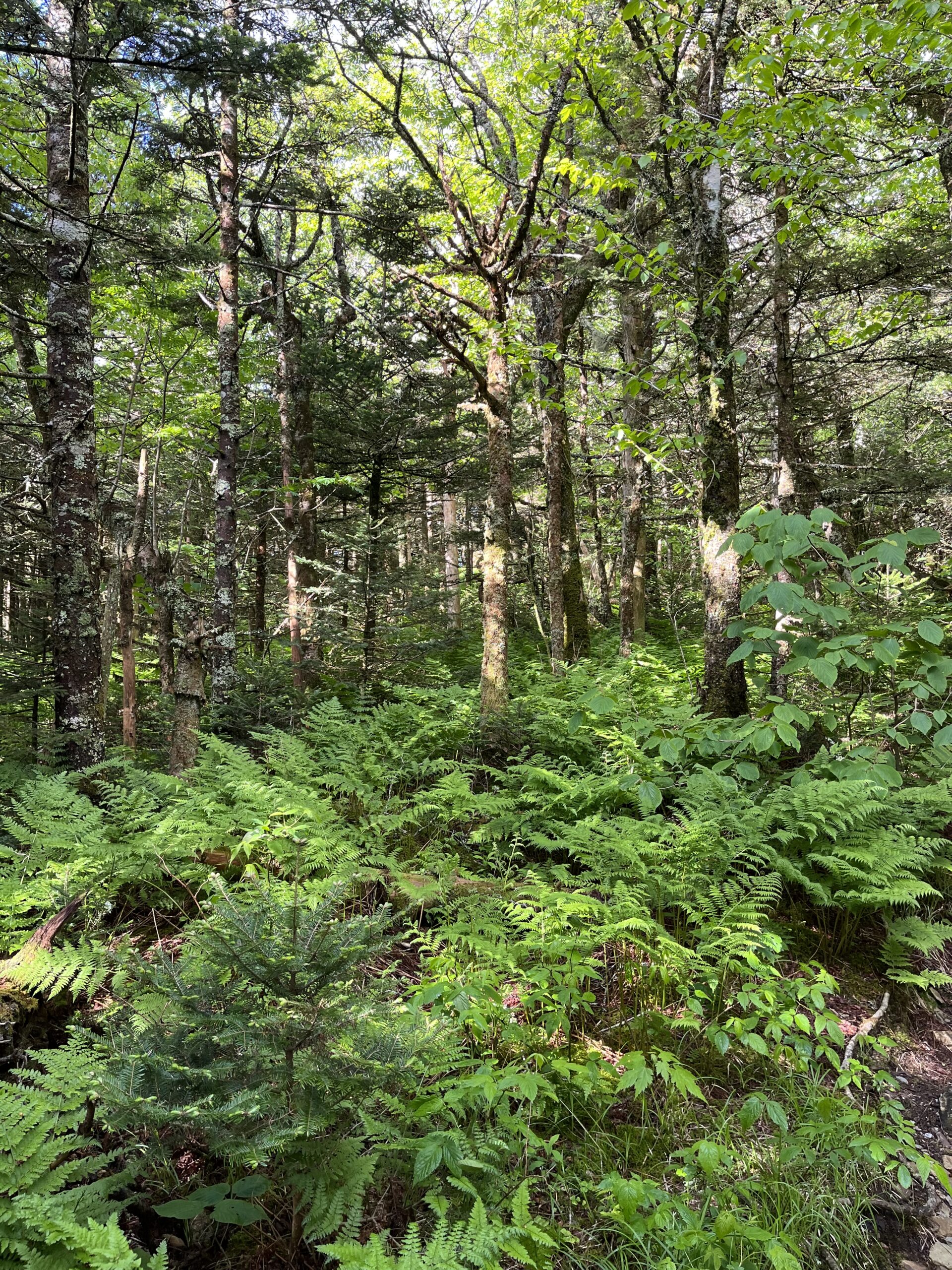
They also found that during the warmer months, as expected, Weller’s salamanders were mostly found in high-elevation spruce fir forests, defined here as more than 5,000 feet above sea level. But things were different in the fall and spring. “They are just as common outside of those spruce fir forests as in them,” Davenport said of warmer months.
In fact, Weller’s salamanders were slightly more common outside high-elevation spruce fir forests in some cases. But in all of these cases, the salamanders typically occurred at low-elevation sites in the fall or spring when the temperatures were a little cooler.
These results reveal that when thinking about conservation for Weller’s salamanders, high-elevation spruce fir forests are important, but other types of sites may be important as well. Conservationists should think seasonally when looking at protecting habitat for the amphibians, he said.
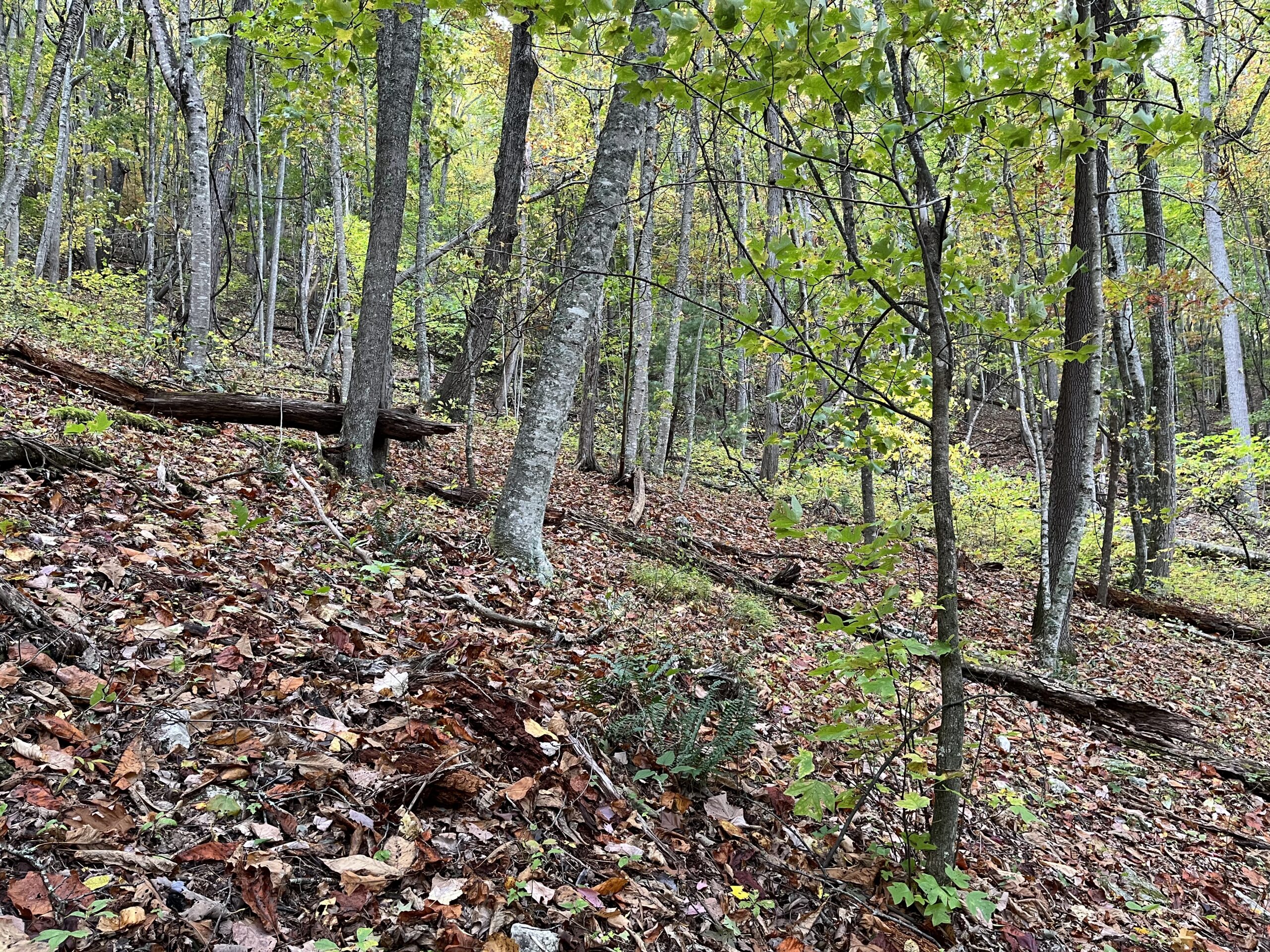
The species also seems resilient to disaster. In 2024, Hurricane Helene heavily affected part of Weller’s salamander range. This storm had ruined a lot of habitat for another amphibian, the Hickory Nut Gorge green salamander (Aneides caryaensis). But follow-up surveys as part of unpublished work afterward showed Weller’s salamanders were still doing quite well in that area. “We’re super happy it’s still there,” Davenport said. “These things are pretty resilient.”
This article features research that was published in a TWS peer-reviewed journal. Individual online access to all TWS journal articles is a benefit of membership. Join TWS now to read the latest in wildlife research.
Article by Joshua Rapp Learn