





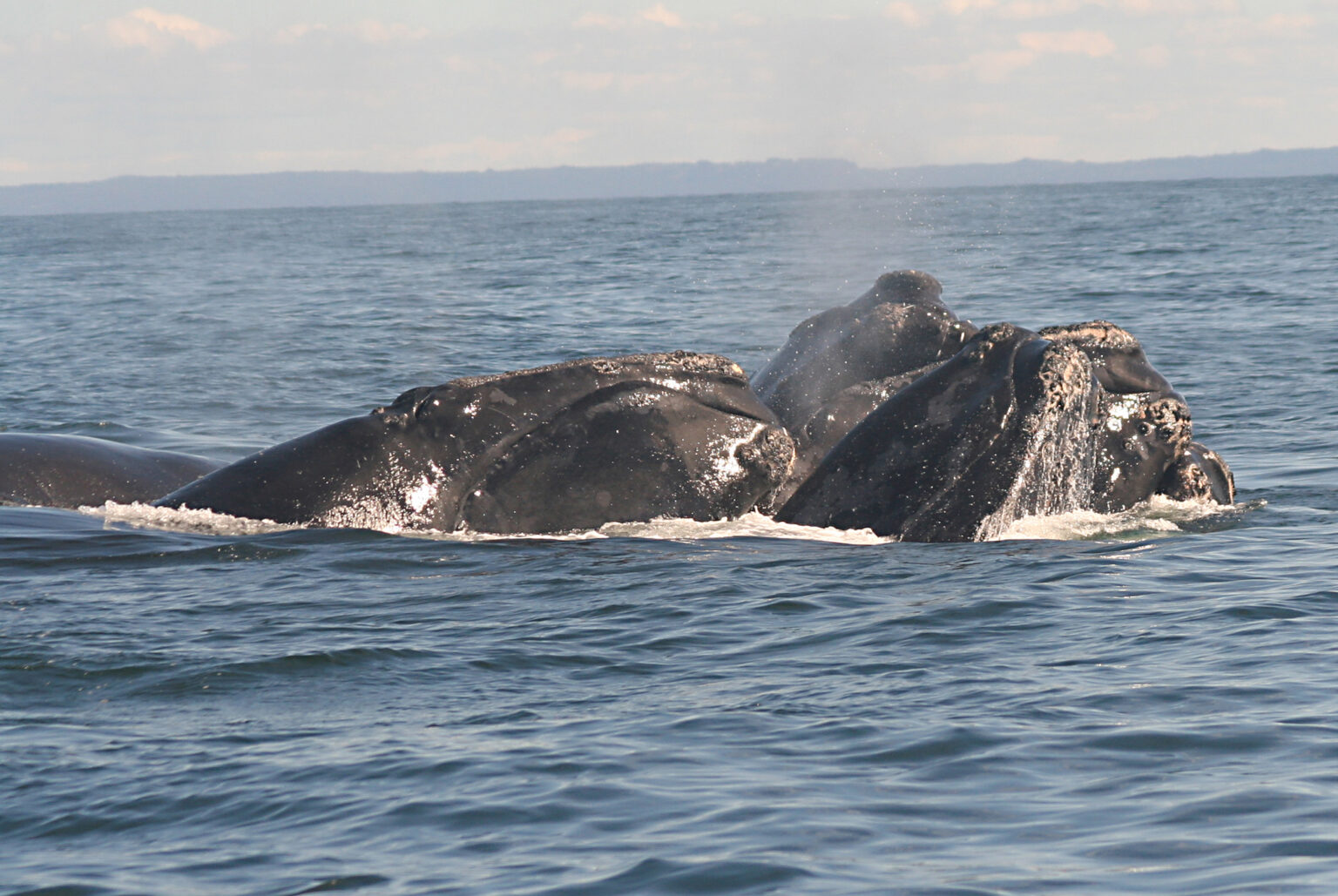
Risky nighttime feeding behavior discovered with the help of artificial intelligence may be putting endangered whales at risk from ship strikes.
Researchers from a study published recently in PLOS One placed trackers equipped with accelerometers, video cameras and other devices to analyze factors like position and depth on northern Atlantic right whales (Eubalaena glacialis) in the Gulf of St. Lawrence off the coast of Canada. They then used artificial intelligence programs to identify behavior related to feeding.
The researchers found that while the whales fed deeper during the daytime, they fed closer to the surface more often at night and spent 25% of their feeding time outside of vessel exclusion areas set up to protect the marine mammals from ship strikes.
“More time close to the surface means more time at risk of collision with vessels,” Jay Kirkham of Dalhousie University in Halifax, Canada, told earth.com. “Avoidance of right whales relies on visual observation—obviously this becomes really difficult at night.”