




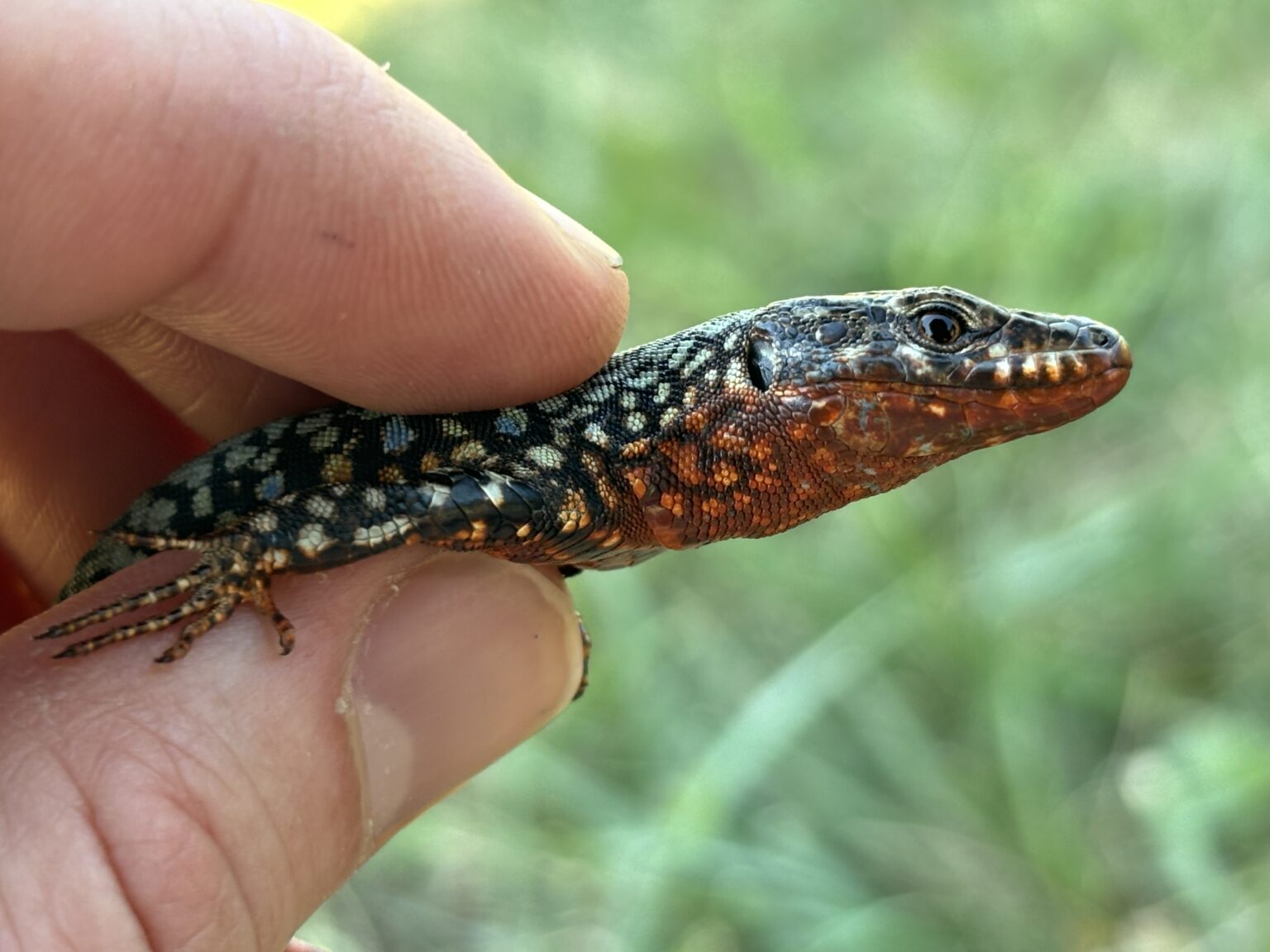
Unlike most invasions, biologists know exactly where and when European lizards began to capture the walls of Ohio. It all started in the early 1950s, when a young boy went on a family vacation to northern Italy. The boy enjoyed his trip so much that he wanted to bring a part of it home with him. He captured about a dozen European common wall lizards (Podarcis muralis), stuffed them into a sock in his baggage and released them near his home when the family returned to Cincinnati.
The Italian lizards found a good fit in a city named after a famous Roman statesman of the 5th century B.C. And much like the military leader Lucius Quinctius Cincinnatus, the lizards arrived to conquer. Over subsequent decades, they spread out through the city and other parts of Ohio, which offered a similar climate to their northern Italian homeland.
“There are gazillions of them,” said Eric Gangloff, a professor at Ohio Wesleyan University. “When you go to a city park in Cincinnati, you just see gobs of them running around.”
The story of these lizards represents a rare case, as the boy who released the lizards confessed about this childhood deed later in life in a detailed letter. Now, researchers have used genetics to confirm the origin of these wall lizards. Their research has also revealed that while these lizards today all descended from a handful of founding Italian individuals, the genetics of the Ohio wall lizards have proved very resilient in their new homes. They may have mutated in such a way to become more resilient to lead poisoning.
“It’s kind of amazing that an organism can be as successful as it can be in a new continent after such a low number of individuals are introduced,” Gangloff said.
From Milan to Cincinnati
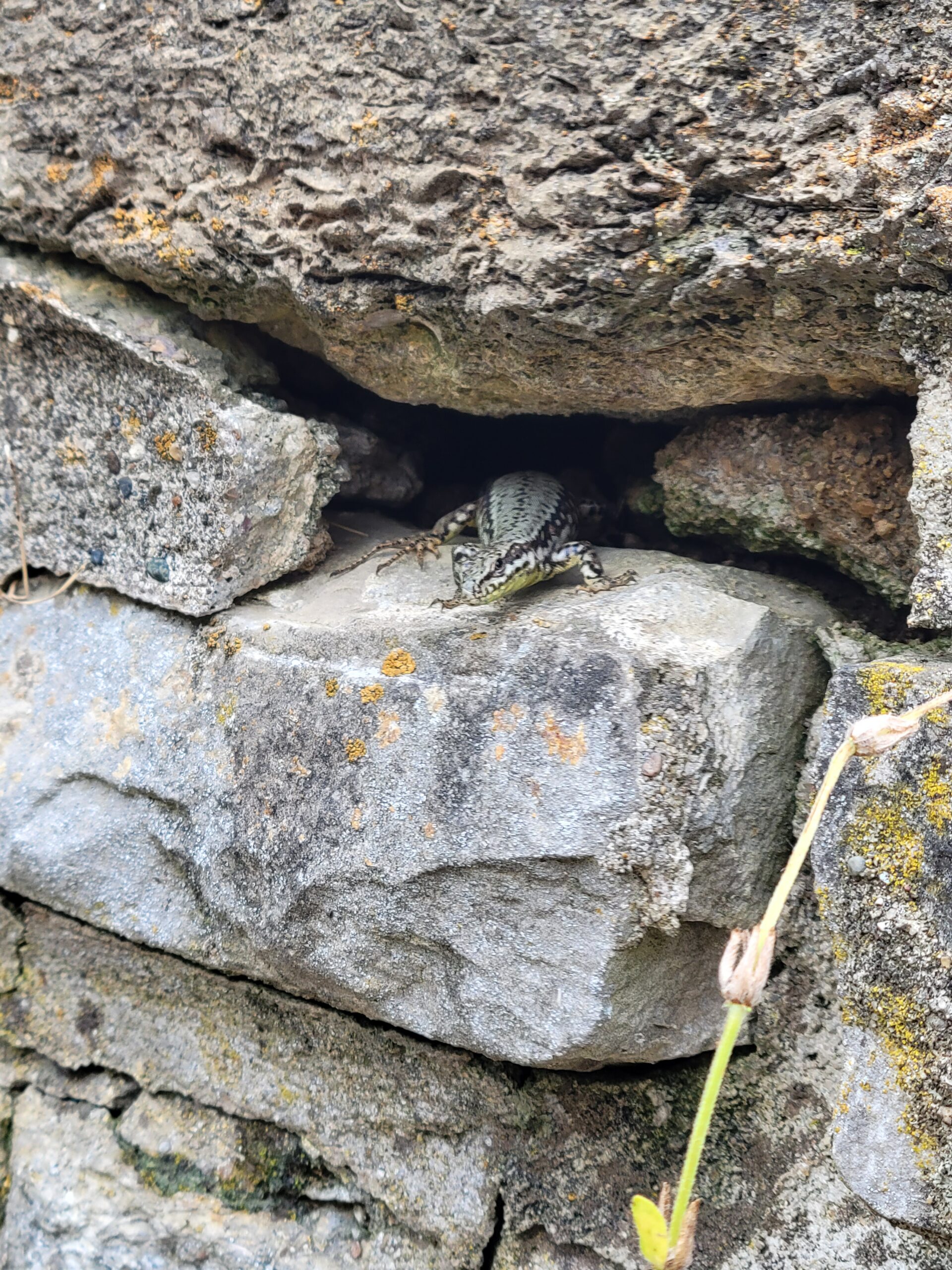
Common wall lizards are found widely across Central and Southern Europe. In their native range, these creatures are well adapted to urban areas—they can be seen scurrying about on Bronze Age ruins as well as city walls in major European cities. Aside from Ohio, they have also been introduced to parts of British Columbia in Canada as well as parts of Europe where they hadn’t been seen before, such as Poland and Great Britain.
In Ohio, they are primarily city dwellers—they haven’t ventured far beyond Cincinnati and the surrounding suburbs. Gangloff and his colleagues collaborated with a high school class to remove a small population in the school’s parking lot in Columbus, two hours from Cincinnati. “They’re pretty well adapted to the cold,” Gangloff said. Tests in the lab showed that with temperatures as low as 4 degrees Celsius, wall lizards had the energy to flip over when placed on their backs—what Gangloff calls their critical thermal minimum. A 1990 study reveals they can even survive freezing for short spells—in Europe, they are also found in ski resort towns in the mountains. They typically hibernate through the winter, though.
It’s difficult at this point to tell whether wall lizards are negatively impacting local species to any significant degree or whether they are truly invasive rather than just nonnative. Recent research published in The Journal of Wildlife Management has revealed that in Italian islands where a related species, the Italian wall lizard (P. siculus), has been introduced, the Italian wall lizard does better in human habitats, while the common wall lizard—native to the island—does better in natural areas. “The study warns against labeling the Italian wall lizard as uniformly invasive, advocating context-specific assessments to avoid misdirecting conservation resources,” the authors wrote.
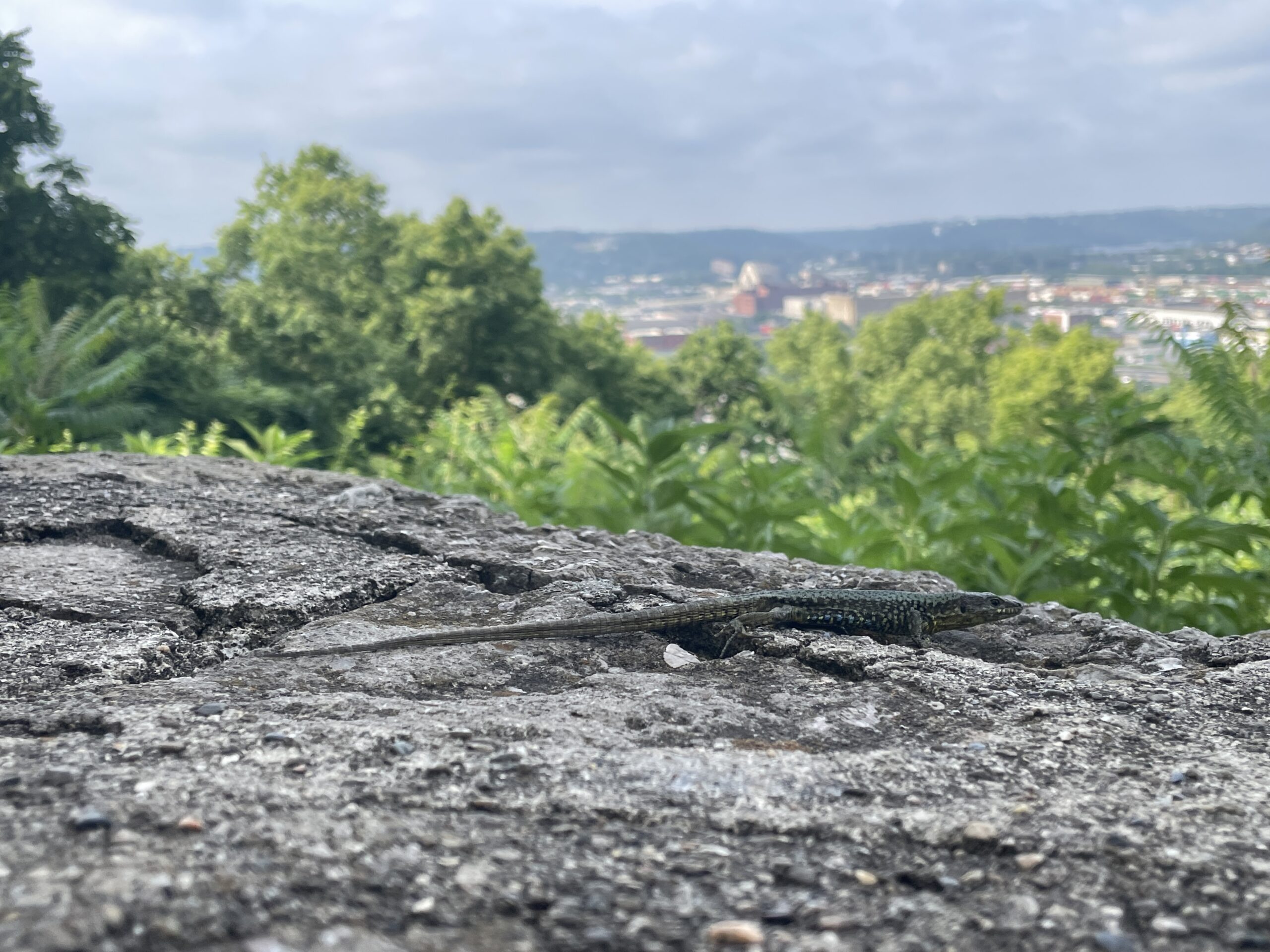
In Cincinnati, common wall lizards fit well in the novel city ecological niches, where they prey on small arthropods. In turn, cats and birds prey on them. “We just don’t have any evidence that they’re disrupting any local urban ecosystems,” Gangloff said. “That doesn’t mean that they’re not or they won’t in the future, just that we haven’t been able to document that explicitly.”
Testing the genetics of introduced wall lizards
Knowing so much about the origin of these lizards, the researches wanted to see what their DNA looked like—if they were adapting in different ways to their new environment, for example, and whether the historical data matched genetic evidence.
In a study published recently in Molecular Ecology, Emily Bode, who was an undergraduate student at Ohio Wesleyan at the time, Gangloff and their colleagues began collecting genetic samples from wall lizards in Cincinnati and Columbus. They also collected DNA from live animals and museum specimens of wall lizards originating from Italy, where the young boy spent his vacation 75 years ago. These samples included lizards from multiple time periods, so they could see how genetics changed over time. Overall, they had 35 DNA samples from the early 2000s to 2021.
The team found that newcomers quickly adapted to the Ohio environment. “In a short amount of time, these lizards have shown an increase in their genetic diversity and have overcome some effects of inbreeding to be a healthier population, much like their source population,” Bode, who continued this work during her master’s studies at The Ohio State University, said.
The reasons for this success are likely that Cincinnati’s rainfall, temperature and humidity patterns resemble those of Milan, where the lizards originated. “I joke to people that if you want to go on an Italian vacation, you can just go to Cincinnati, Ohio,” Bode said.
The compatibility of the weather allowed them likely to overcome some of the negative impacts of inbreeding.
Fully leaded lizards
By comparing the genes of the earlier Cincinnati lizards to more recently captured ones, the team could track how the DNA was changing. One area of particular interest is a region of the genome that, in humans, is related to lead poisoning response. “That’s particularly interesting because another study from my lab a few years ago showed that these lizards have extraordinarily high levels of lead in their blood relative to humans and other vertebrates,” Gangloff said.

The lead likely comes from old paint on the walls the lizards climb on or from living near older roadways that carry residues of leaded gasoline. It could also come from other industrial processes.
But the lizards don’t seem too affected by the high lead levels. Inspired by similar recent work in Louisiana, the team has done some preliminary tests exposing wall lizards to lead and found that they aren’t too cognitively or physiologically affected. “They have an absolutely astounding ability to tolerate lead toxicity,” Gangloff said.
In the future, the team is also looking at whether these lizards can find success in wilder areas outside metropolitan limits in Ohio and whether they cause negative effects to native wildlife.
Article by Joshua Rapp Learn