



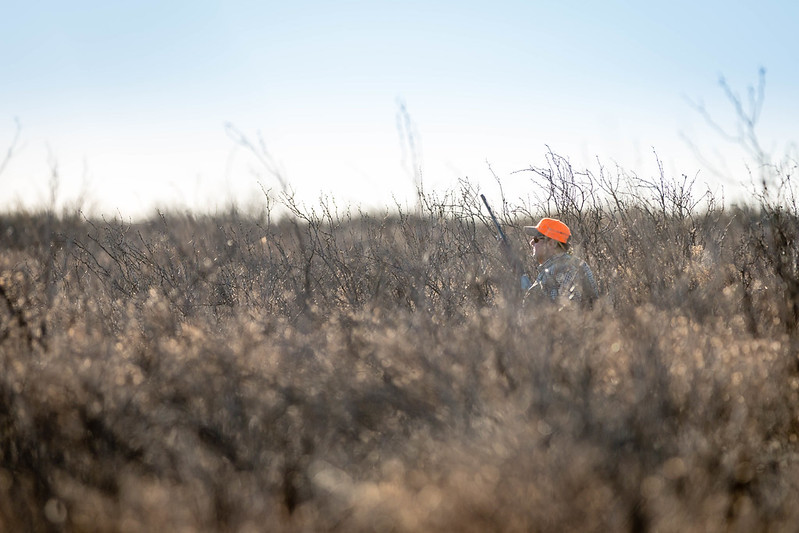
TWS Council approved this revised version of what was previously its Position Statement on Hunting in March 2026. This statement provides background information historical, traditional, and modern practices of hunting, and how these fit in to the broader framework of wildlife management and conservation in North America. It establishes the policies of TWS regarding hunting.
Hunting co-evolved with the needs and cultures of humankind. Archaeological, historical, and traditional evidence indicates that earlier cultures hunted and relied on wild animals for subsistence, and many cultures continue to depend on wildlife for both partial and primary subsistence. As skills in animal husbandry and agriculture were acquired, dependence on hunting for subsistence decreased among many cultures, although it remains important in various communities for both cultural and nutritional reasons.
We define modern hunting as the fair1 and legal pursuit of free-ranging wild animals with intent to harvest. Modern hunting is typically regulated and enforced by natural resource management agencies with the goals of sustainable population management, conservation, ethical harvest, safety, public enjoyment, and traditional use by rights-based hunters.
Modern hunting has many values, including recreation, subsistence, heritage, use of the harvestable surplus to benefit people, control of overabundant wildlife, and sustainable management of populations and their habitats. Hunting provides a source of non-farmed and locally sourced meat. Sociologists have documented that hunting provides deep, central life meanings for many participants and their families and, in many cases, core identities to social and cultural groups throughout the world (Anderson 2001, Fischer et al. 2013, Arnett and Southwick 2015). Individuals who participate in hunting report valuing a connection to an earlier time in history, a deeper relationship with nature, and the pursuit of the ideal of self-reliance. Hunting often elicits a deep passion among participants that transcends gender, ethnicity, religion, and socioeconomic class. Outdoor pursuits such as hunting help teach valuable lessons in ethics and responsibility, and help participants develop a conservation and land ethic. These important values often extend beyond participants to families, friends, acquaintances, landowners, and communities.
Hunters’ deep personal interest in healthy and well-managed wildlife resources provided an important keystone to modern wildlife management. Hunting activities yield billions of dollars in revenue and tens of thousands of jobs (U.S. Fish and Wildlife Service 2022). Sales of hunting and fishing licenses, stamps, permits, and fees have collectively provided a major source of financing for habitat acquisition and improvement, research, and management programs for all wildlife, both game and nongame, in North America. Additionally, the U.S. federal excise tax on firearms, ammunition, and archery gear paid by the hunting and shooting public has been a critical source of funding for state wildlife programs. It is important to recognize, however, that hunters, per se, are providing a declining proportion of the excise tax on firearms and ammunition, which could threaten the exclusive use of these funds for wildlife conservation. Additionally, as the number of hunters declines, other revenue streams associated with hunting (e.g., duck stamps, big game tags) have declined.
Managed hunting is an important tool for the effective and sustainable management of many wildlife populations. Conversely, harvest by humans has in the past severely reduced some wildlife populations, occasionally to the point of local extirpation and, in rare cases, extinction. Illegal harvest (or overharvest or unregulated harvest) currently threatens numerous species with the same fate. Therefore, it is imperative that hunting be managed in a sustainable way, consistent with local and Indigenous Knowledge and science. Hunting, when based on biological information and properly regulated, can be used effectively to manage wildlife in a sustainable and socially acceptable manner. Such management needs to recognize formal treaty rights and cultural and subsistence practices of the many Indigenous Peoples.
The policy of The Wildlife Society regarding hunting is to:
- Endorse and promote the principle that hunting, when properly regulated, is an appropriate and responsible use of wildlife and a means of managing wildlife populations.
- Encourage decision makers to use the best science and local and Indigenous Knowledge to weigh biological, societal, cultural, and economic considerations when making decisions about hunting and the welfare of wildlife.
- Encourage the establishment of formal agreements to manage harvest of shared wildlife resources with sovereign tribes, First Nations, and other Indigenous Peoples that share wildlife resources.
- Encourage laws and regulations that promote principles of fair chase and ethical treatment of wildlife.
- Encourage and promote hunter education programs that emphasize hunter ethics, skills, and responsibilities, and enable hunters to increase their knowledge of wildlife ecology and management.
- Increase public awareness of the biological, ecological, cultural, and economic necessity of regulated hunting to the conservation and integrity of natural resources.
- Support retention of public lands and access to public and private lands with access agreements for hunting and other compatible uses.
- Support the continued use of tax and fee revenues generated by hunters for wildlife conservation and research.
Literature Cited
Anderson, D. G. 2001. Hunting caribou and hunting tradition: Aboriginal identity and economy in Canada and Siberia. Senri Ethnological Studies 59:7-25.
Arnett, E. B. and R. Southwick. 2015. Economic and social benefits of hunting in North America. International Journal of Environmental Studies 72:734-745.
Fischer, A., V. Kereži, B. Arroyo, M. Mateos-Delibes, D. Tadie, A. Lowassa, O. Krange, and K. Skogen. (De) legitimizing hunting–discourses over the morality of hunting in Europe and eastern Africa. Land Use Policy 32:261-270.
U.S. Fish and Wildlife Service. 2022 national survey of fishing, hunting, and wildlife-associated recreation. U.S. Department of the Interior, U.S. Fish and Wildlife Service, Washington, D.C., USA.
1 The ethical, sportsmanlike, and lawful pursuit and taking of any free-ranging wild game animal in a manner that does not give the hunter an improper or unfair advantage over the game animals. Boone and Crocket Club