




Gone may be the days when a farmhand paced the barn with a clipboard in hand to assess the health of a turkey flock. As the poultry industry faces labor shortages, rising disease concerns and pressure to meet welfare standards, researchers at The Pennsylvania State University are testing a modern alternative: drones, cameras and artificial intelligence.
In a first-of-its-kind study, researchers at Penn State’s Poultry Education and Research Center flew drones over groups of domestic turkeys (Meleagris gallopavo). They used drone footage and a You Only Look Once (YOLO) computer vision AI model to identify eight behaviors: standing, sitting, feeding, drinking, huddling, perching, wing flapping and dead.
“This work provides proof of concept that drones plus AI can potentially become an effective, low-labor method for monitoring turkey welfare in commercial production,” said Enrico Casella, an assistant professor at Penn State. “It lays the groundwork for more advanced, scalable systems in the future.”
Although promising, the model still needs a little more time in the oven. Currently the model struggles to distinguish similar behaviors and to separate individual birds within the flock. And while it performed well in controlled, lower-density pens, the real challenge will be commercial barns, where crowding may make detection more difficult.
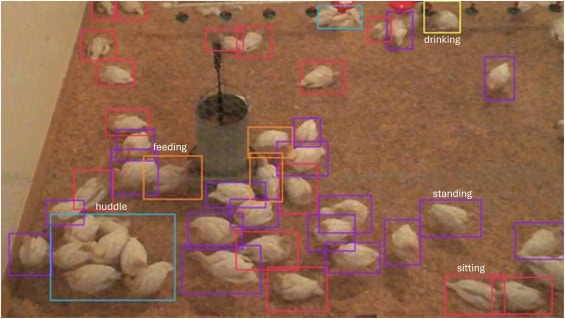
Drones with cameras and AI models could transform flock management by offering flexible, wide-area, non-invasive monitoring that gives insight into bird health, behavior, and environmental conditions. It could improve daily welfare assessments so you can feel better about the bird on your plate.
Article by Kaylyn Zipp