


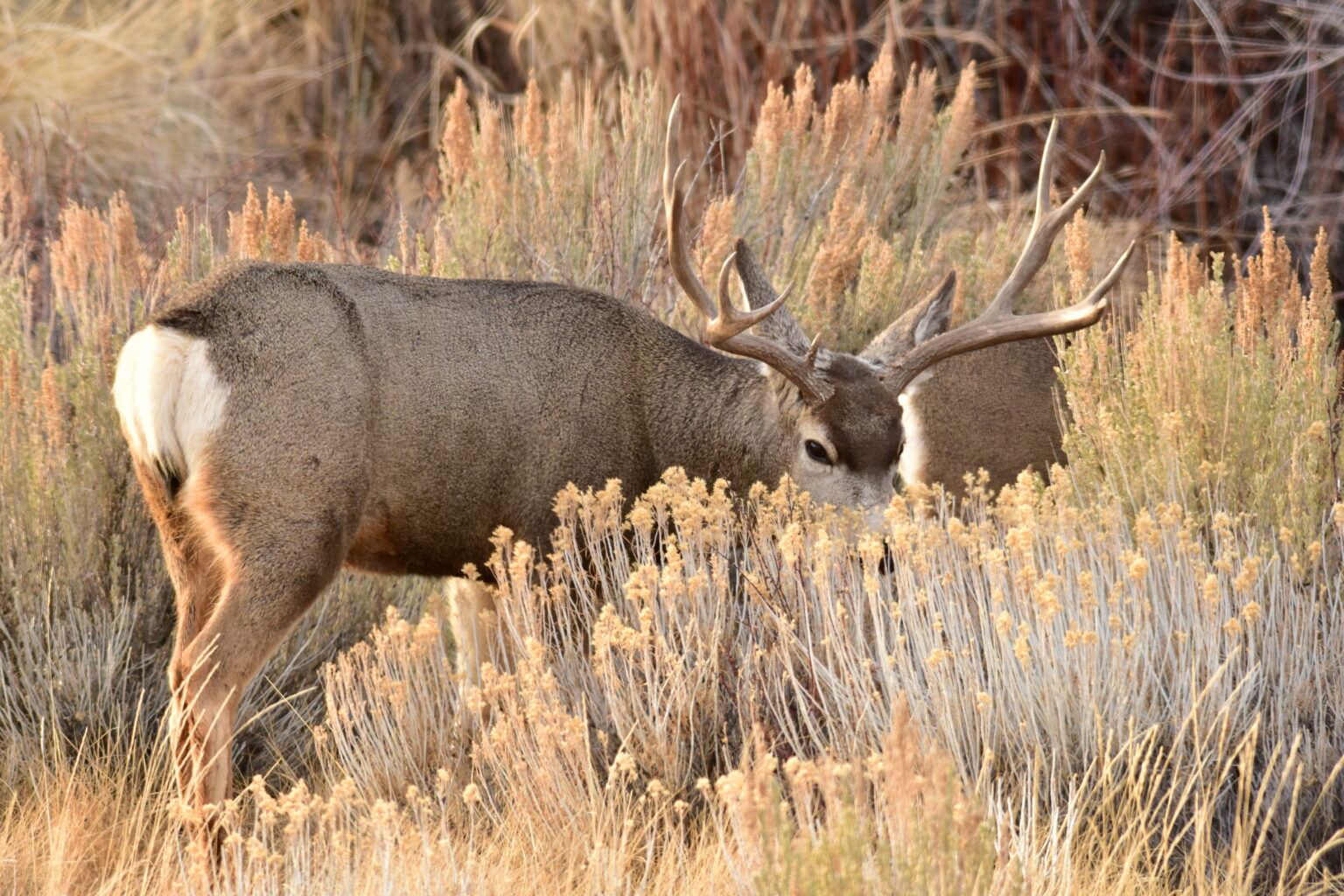
The farther mule deer roam, the fatter they get and the more successful they are, according to new research studying herds in Wyoming. As deer migrate through the mountains, they have the chance to munch on more diverse, energy-rich plants. They are more likely than resident deer to gain fat, resulting in more successful pregnancies and longer lives. Researchers at the USGS Wyoming Cooperative Fish and Wildlife Research Unit, the Bureau of Land Management and the Wyoming Game and Fish Department (WGFD) studied the Sublette herd of mule deer (Odocoileus hemionus) for nearly a decade, observing and capturing them using helicopters. They monitored the body condition, reproductive success and survival of the females in the herd and compared those factors to their migratory routes. “Long-distance migrants have a lot of risk associated with them, with fences, vehicles and predator assemblages,” said Brandon Scurlock with WGFD, who helps manage the herd, in an interview with High Country News. “But is the risk worth it? It seems like it is.” Unlike other migratory species, mule deer tend to follow the same paths as their family members rather than making different movements each year according to environmental conditions. Researchers said these findings highlight the importance of removing barriers to mule deer migration.