


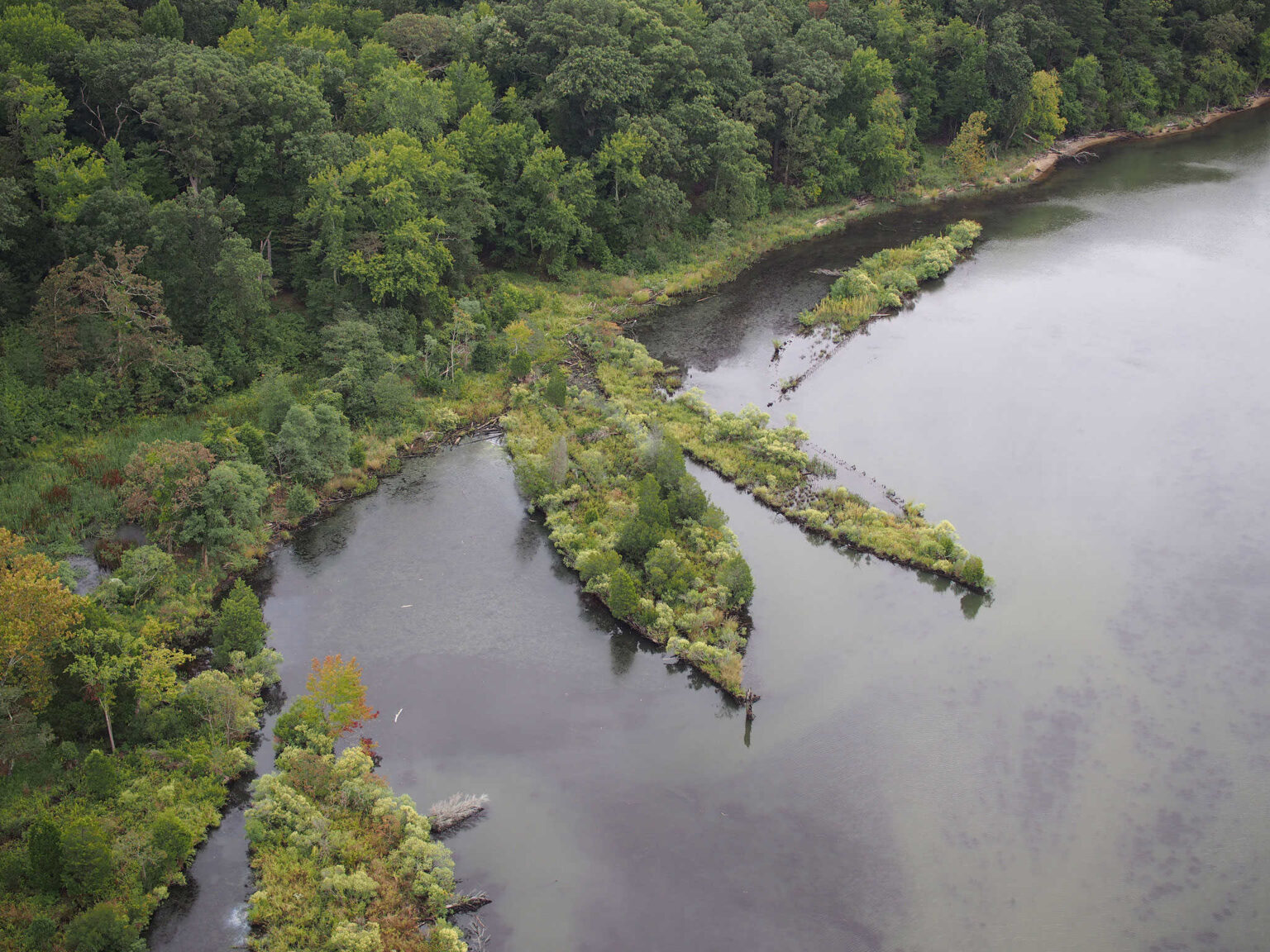
After World War I, dozens of wooden steamships were brought to Mallows Bay in the Potomac River so a local company could burn them and scavenge the remains for scrap metal. Over the next century, the skeletons of many of these ships have been partly swallowed by the local environment. A new paper mapping the Ghost Fleet was published in Scientific Data, showing that the ships have become a haven for local wildlife, including birds like osprey (Pandion haliaetus) as well as several marine species. “I’m sure that this was, in many ways, environmentally catastrophic when it first happened,” study coauthor and Duke University marine biologist David Johnston told Scientific American. “But life is so strong that it just takes that and makes it its own.” The ships are a part of the Mallows Bay-Potomac River National Marine Sanctuary, a protected ecological and historic site established in 2019 using data collected via drones by Jonston’s Marine Robotics and Remote Sensing Lab. As factors like sea level rise continue to threaten marine and coastal environments, Johnston said the new maps will help them understand how the biodiversity and ecosystem function of each ship occurs “in a rapidly changing world.”
Read more at Scientific American.
Article by The Wildlife Society