

TWS Council approved this revised version of what was previously its Issue Statement on Wildlife Killing Contests in March 2026. This statement provides background information on the practice of harvest competitions for wildlife, public support for/understanding of competitions, and related challenges facing wildlife professionals. The statement establishes the policies of The Wildlife Society regarding competitive events or programs related to the take of wildlife.
The “take” of wildlife, including when done while hunting and trapping, occurs in North America under a framework of state, provincial, tribal, and federal laws and regulations. These regulated activities have played a key role in the management and conservation of wildlife populations. Specific legal code and detailed regulations, as well as ethical philosophies, direct the manner in which hunting occurs and can include competitions.
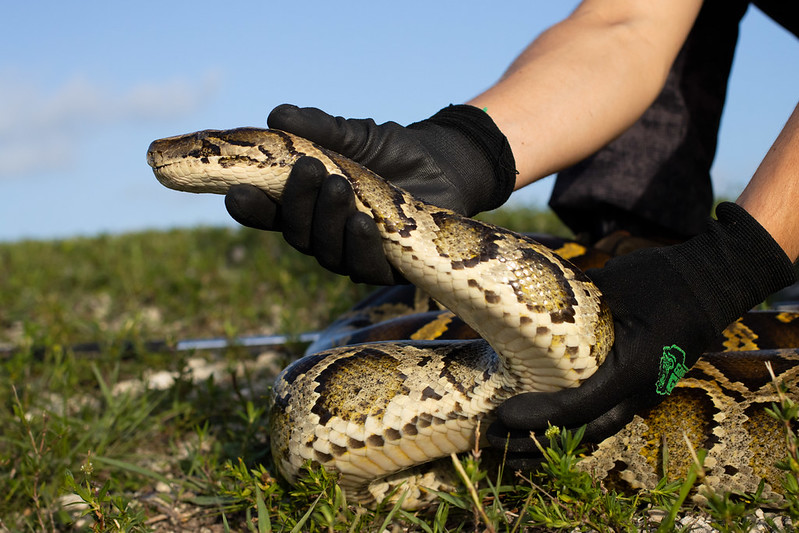
Harvest competitions may include loosely or highly organized events (e.g., the biggest buck pool at a deer hunting camp vs. Florida Python Challenge) and may be run by private individuals, groups, sporting goods companies, or government agencies. For all competitions, jurisdictional rules and laws must be followed. In some cases, additional “rules” focused on equipment, skills, perceived ethics, and other specific aspects of competition may be imposed by the organizing entity. Due to varying regulations and state/provincial laws among jurisdictions, these events may operate differently across North America. Competitions vary in geographic scope with competitive harvest occurring on an individual property or multiple properties within or beyond a specific jurisdiction. Competitions may or may not offer monetary prizes. When offered, monetary prizes can vary in value significantly and include anything from cash prizes, trucks, boats, and hunting or fishing equipment, to hats, game calls or pins, certificates, or trophies. Personal satisfaction or entry into record books can provide additional incentives.
Competitions may have a conservation benefit, be neutral, or have deleterious effects on the conservation of a species. Competitions can take many forms depending on the species involved and the goals. Specific examples of contemporary competitions involving take include those for invasive species (e.g., Burmese pythons), species that are perceived as a nuisance (e.g., prairie dogs), predatory mammals (e.g., foxes, coyotes, bobcats), and big game species (e.g., deer, bear, moose, elk).
Most people in North America do not hunt or trap, but resources are managed for all people with respect to consumptive and/or intrinsic value(s). The public is generally supportive of regulated hunting and trapping, though that support varies based on the reason for the take of wildlife1. Competitions centered around wildlife may receive increased public attention and scrutiny through social media, print, and television coverage. The public may vary in its acceptance of competition as it relates to wildlife take. Among the hunting community, the value, appeal, and support of these events are variable. Issues of “fair chase,” “ethics,” and appropriate methods are not universally agreed upon by both the hunting and non-hunting community. Public support for a competition will depend on whether there is a clear management objective that is scientifically supported. If competitions directed at species that are perceived to conflict with humans are not clearly based on science, at least two negative consequences may result. First, the public may react negatively to the competition and, potentially, to hunting more broadly. Several states have banned competitions as a result. Second, the competition may mislead the public about the roles of the species in question within the ecosystem, or the effectiveness of the competition as a management tool.
It is the policy of The Wildlife Society regarding competitive events or programs related to the take of wildlife to:
- Oppose competitions that are inconsistent with conservation of wildlife.
- Recommend that, if a jurisdiction has authority, competitions should be evaluated on a case-by-case basis regarding purpose, use of the animals taken, ethical use, conservation outcome, and sustainability of the species of interest to provide recommendations or requirements to organizers and inform future regulations and laws.
- Recommend against the use of pejorative inflammatory terminology that is not in the best interest of the hunting community or wildlife managers, as this terminology does not capture the full context of competitive harvest.
- Encourage that in every case, the state, tribal, or provincial fish and wildlife agency should be consulted during discussions about competitive hunting.
- Encourage the use of Animals taken in these events to the extent appropriate and practical and in accordance with state, provincial, tribal, or federal laws.
- Promote programs that inform the public and competition organizers and participants on the values and benefits of properly regulated, sustained, and responsible use of wildlife. These programs should include science-based information on the role of native species in ecosystems, alternative strategies for wildlife management, and the benefits and limitations of competitions in managing wildlife populations and damage.
- Recommend that jurisdictions with authority, require competition organizers to provide participants with information on all applicable regulations and laws in the jurisdiction(s) of take, and require proper disposal of dead wildlife to limit disease exposure and expansion.
- Encourage appropriate regulations precluding the wanton waste of wildlife by responsible agencies to ensure animals are harvested for legitimate purposes, and that competitions are compatible with the management of other species, including threatened and endangered wildlife and plants.
- Recognize that the values of the public regarding wildlife and the method and purpose of take varies across communities. Evaluation of the value of competitions should incorporate a variety of public opinions, while ensuring the legitimacy of regulated hunting and trapping activities in the future.
1 Outdoor Stewards of Conservation Foundation. 2023. Americans’ Attitudes Towards Legal, Regulated Fishing, Target/Sport Shooting, Hunting and Trapping.