





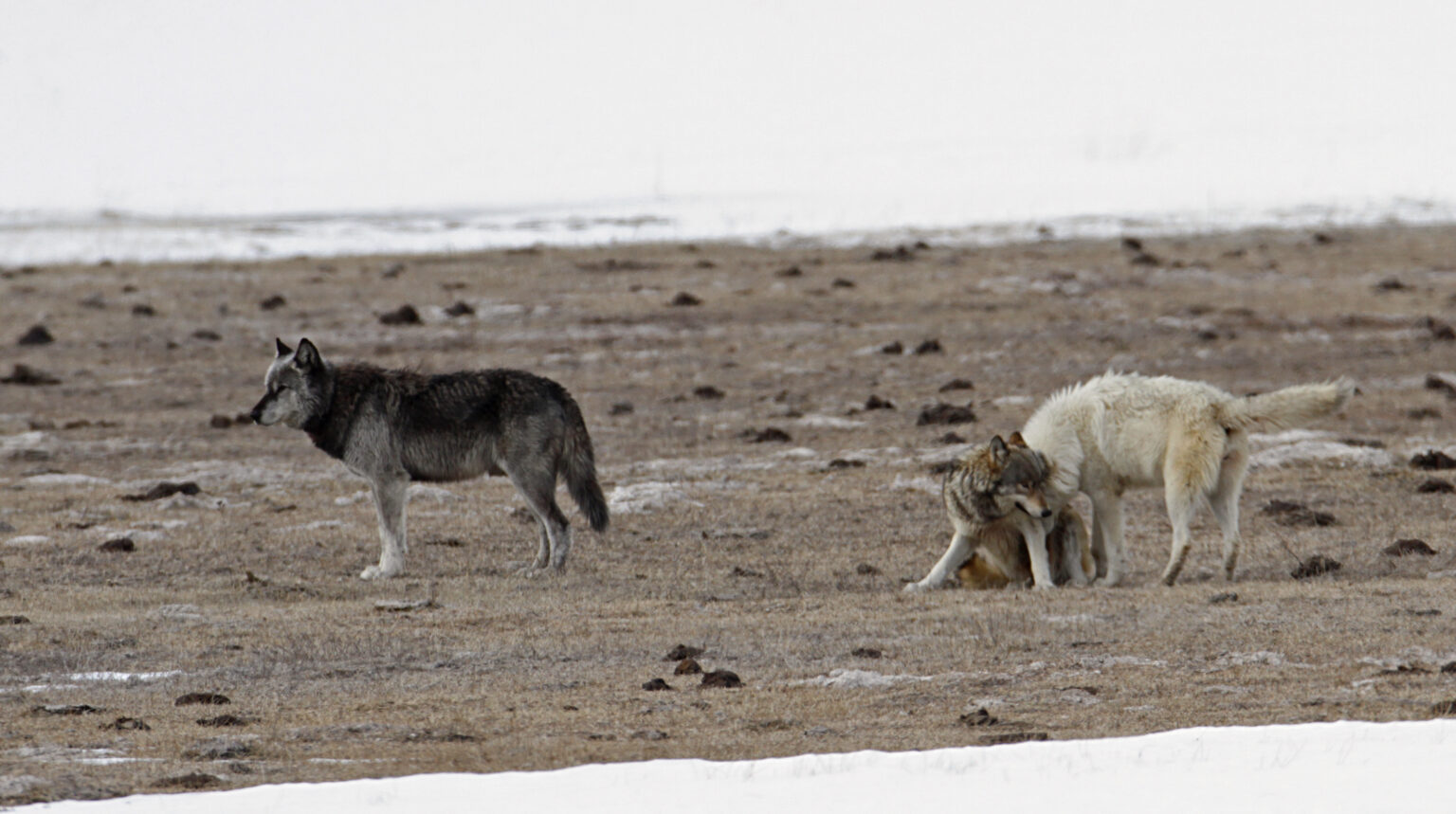
Wolves and house cats have few similarities, except potentially a behavior-altering parasite. Toxoplasma gondii, also known as the mind control parasite, typically lives in felines but can infect all mammals and spread to new hosts through infected feces. Wolves (Canis lupus) act as a secondary host for the parasite. New research shows that being positive for toxoplasmosis, the disease caused by the parasite, shortened the time it took for wolves to leave their packs in Yellowstone National Park, which can increase their chances of dying. Wolves positive for Toxoplasma gondii were also twice as likely to become pack leaders. Researchers hypothesize that one potential way wolves are becoming infected is by consuming the feces of infected cougars (Puma concolor) that share habitat with wolves. The mind-altering behavior from the parasite has the potential to shape wolf populations and ecosystem dynamics by impacting who leads packs and when.