


Invasive species are a significant threat to ecosystems, so seeing invasion rates decline may cause a sigh of relief. But what if the decline isn’t real? New research suggests that files collecting dust on desks and clogged to-do lists may mask the true invasion rate.
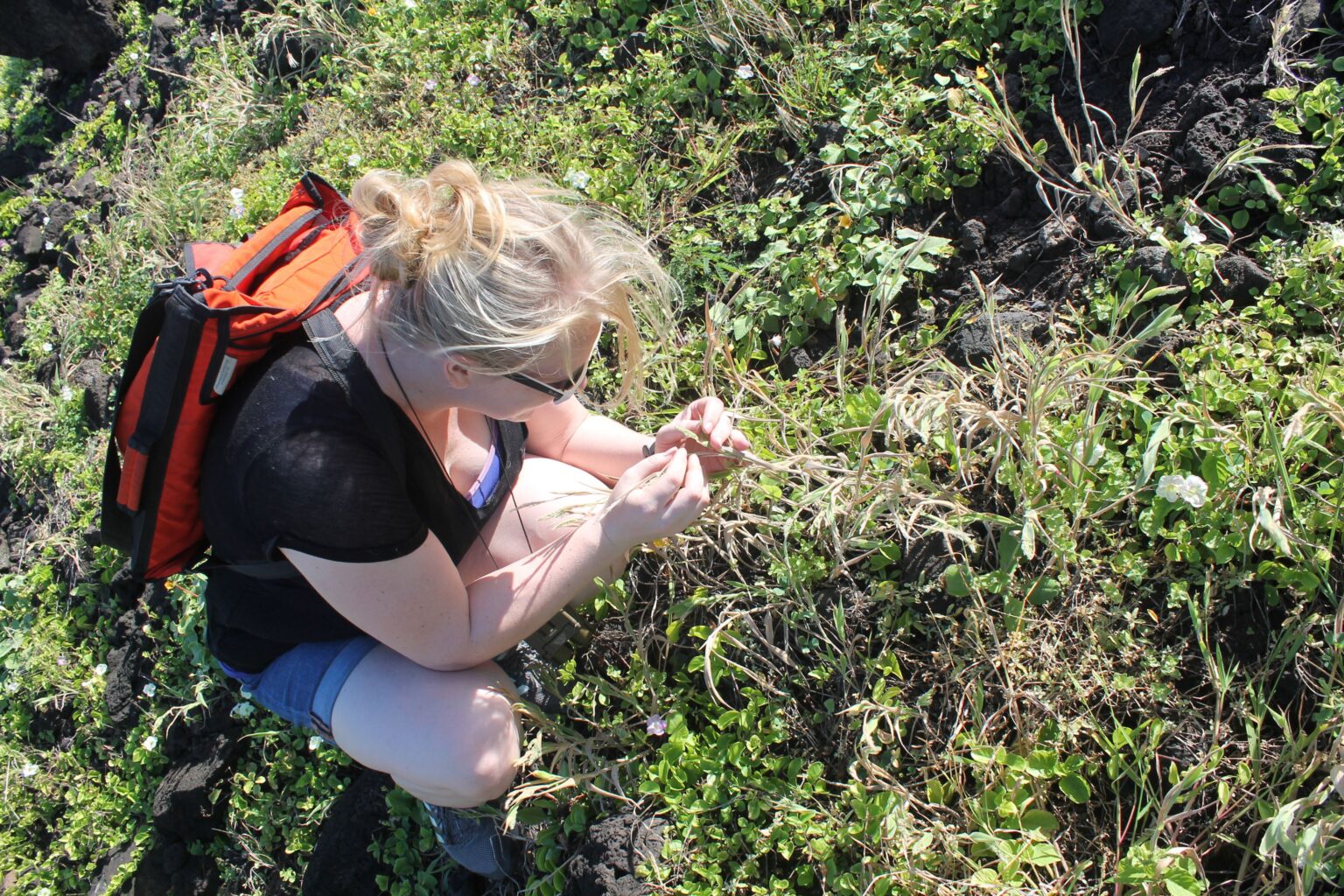
Kelsey Brock, a professor at the University of Wyoming, stumbled across this problem before working on her PhD when her job was to record and manage new invasive species in Hawaii. “I ended up collecting specimens and then accumulating a pile of brand-new species that I had to report. There is always more,” she said, making her intimately familiar with the lag in data processing.
When a paper published by Sebeens et al. (2020) emerged showing a slowdown in invasive species in the Pacific Islands into 2050, Brock began to wonder why its findings did not match what she and her mentors were seeing on the ground.
Researchers recognize that detection lags—the time between when a species first establishes and when someone finds it in the field—distort our understanding of invasive species. An insect population may become well-established before wildlife managers detect it. After detection, it takes time to identify samples, verify taxonomy, publish a report and ultimately incorporate that information into databases or checklists. And this is all if organizations have the staff to conduct all this work—retirements, personal leave and layoffs can put significant obstacles in the process of recognizing invasive threats.
Brock and her collaborators published a study recently in Global Ecology and Biogeography that modeled different post-detection lag scenarios to explore how delays in reporting species observations affect the invasion rate. They also conducted a case study exploring how missing records affect perceived invasion trends on two Hawaiian invasive species datasets. Their analyses showed that using information only from finalized reports or published databases can make recent invasions appear artificially rare, because many new records haven’t yet been made through the reporting system. Shortening data processing lags and improving the completeness of record retrieval can help rescue trendlines from slowdowns.
Although reporting new invasive species has improved, there are still limited, universally accepted platforms for documenting new invasions that leverage the knowledge of local field biologists and are curated by taxonomists. “We really lack a real-time database that has consistent funding or doesn’t rely on the passions of one person,” Brock said.
Another potential source of the delayed records is the decline in the number of dedicated taxonomists. “Someone will be like, ‘I know a taxonomist that could identify that or help, but I think they may be retired,’” Brock said. Although taxonomic notes about invasions are very important scientifically, some people may prioritize high-impact publications with more funding over these notes, forcing scientists who do this work to make choices about how they use their time.
The slowdown could be an illusion, but the invasions are not. Brock concluded that if we don’t have the infrastructure and proper staffing in areas with many invasive species, we may be accidentally examining the invasion story through rose-colored glasses.
Article by Kaylyn Zipp