
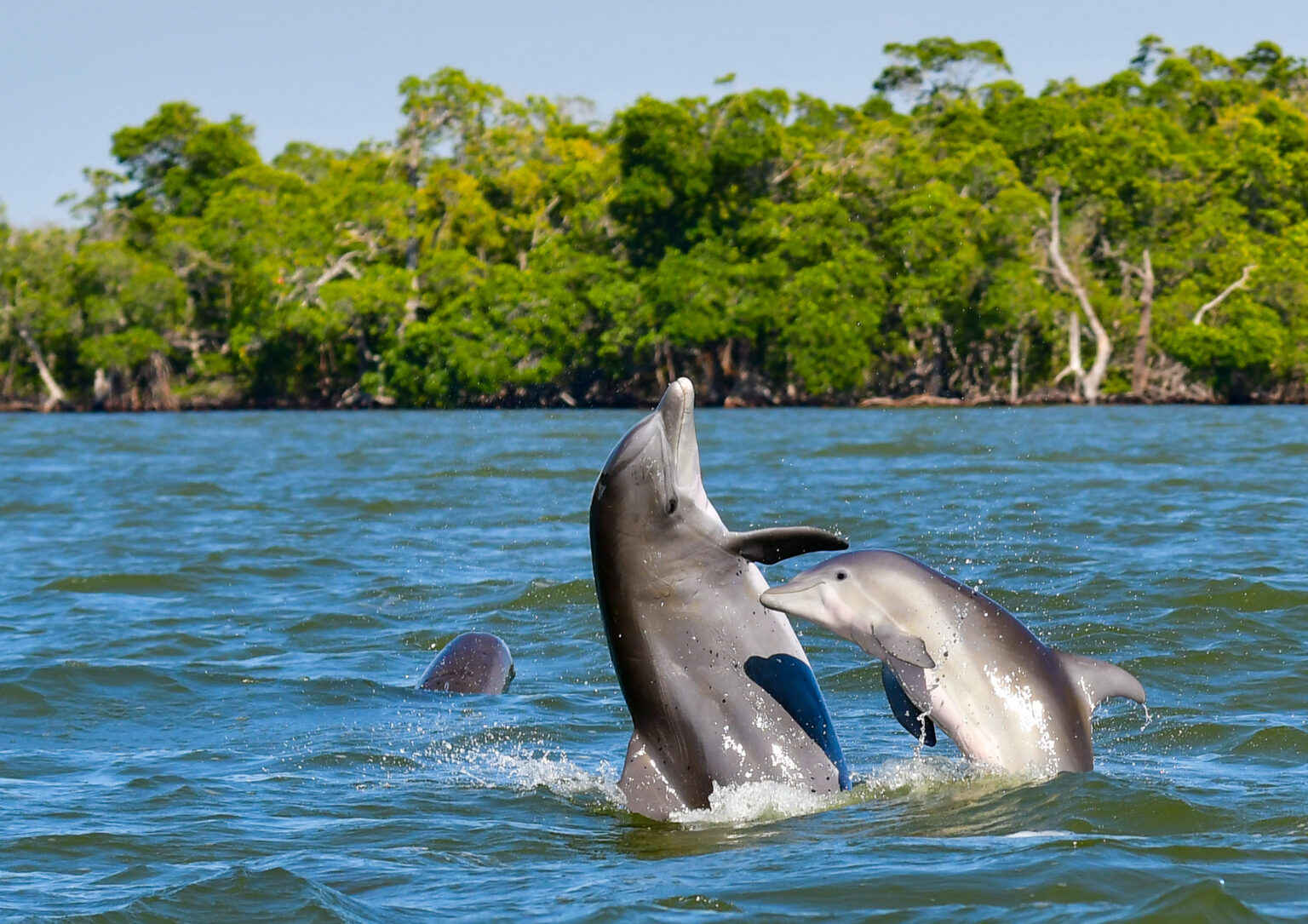
Wild dolphins are known for their chatty nature and complex social lives. But human activity combined with environmental stressors in areas like Florida’s Sarasota Bay can change these social structures.
New research shows that bottlenose dolphins (Tursiops truncatus) in Sarasota Bay that take risks to find food, like picking off bait and catch from fishermen or even approaching humans for food, are more likely to associate with dolphins that have similar behaviors.
The research, published in Animal Behavior, took into account environmental stressors like red tides that wipe out food sources. After such red tide events in the early 2000s, researchers found that dolphins who interacted more with humans to find food associated with one another. They also found that the proportion of dolphins foraging around humans increased over time, from 12% before the red tide period to 41% afterward.
“This study shows that human activities can do more than change where dolphins feed or how they find food,” said Kyra Bankhead, the lead author of the study and a PhD student researcher at Oregon State University. “They can influence the social fabric of a dolphin community, especially when that community is already experiencing environmental stress.”
Researchers say the study is especially relevant given that extreme events like red tides are expected to increase due to the effects of climate change.