

There may be no spa nearby, but rattlesnakes sometimes exfoliate in group sessions.
The reptiles, once thought solitary snakes, may shed socially, though the reasons are still obscure. The discovery has implications for habitat conservation. If snakes gravitate toward each other to shed, managers can target their translocations accordingly.
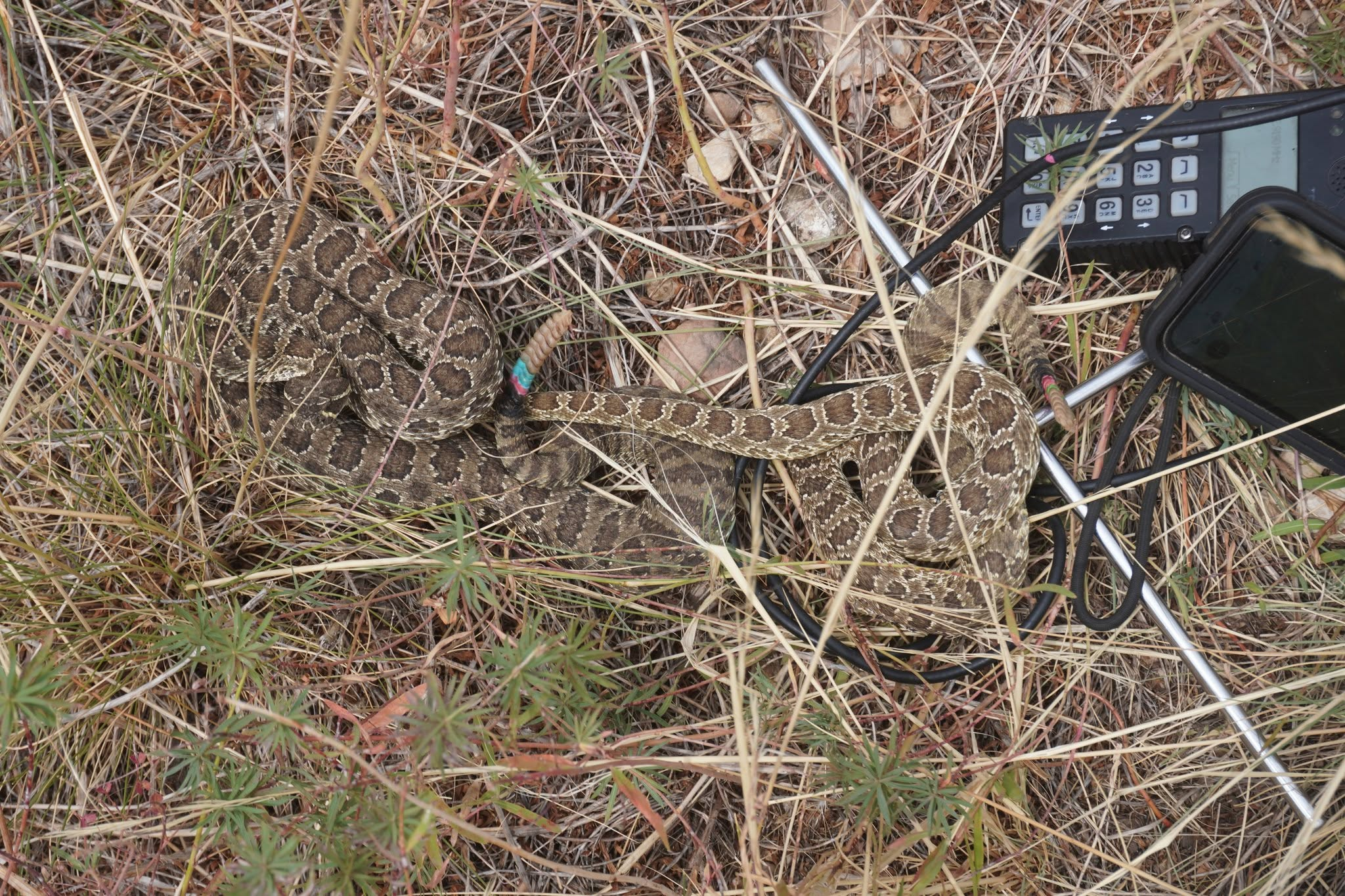
“We would find piles of rattlesnakes, and one or two of them would be shedding,” said TWS member Emily Martin, a PhD candidate in biology and natural resources at the University of Idaho.
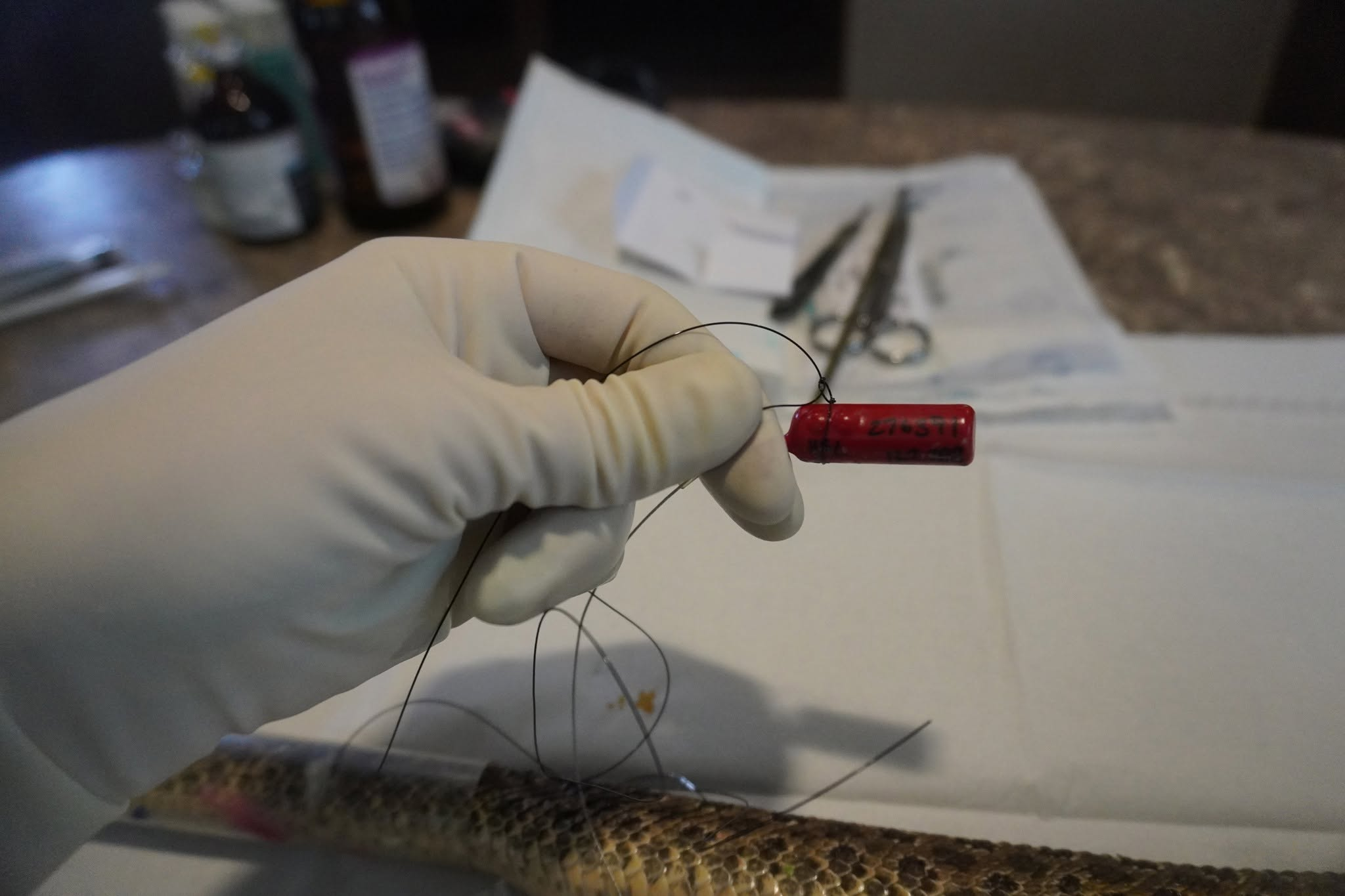
Wildlife managers had been translocating prairie rattlesnakes (Crotalus viridis) that people had reported as either striking someone or being too close to trails to more remote areas of Sinks Canyon State Park in Wyoming. Since rattlesnakes have an internal compass that can guide them back to their preferred range, Martin, a self-identified “head rattlesnake wrangler” at Sinks Canyon, and her colleagues implanted VHF tracking devices on the reptiles to learn more about survival and movement after reintroduction.
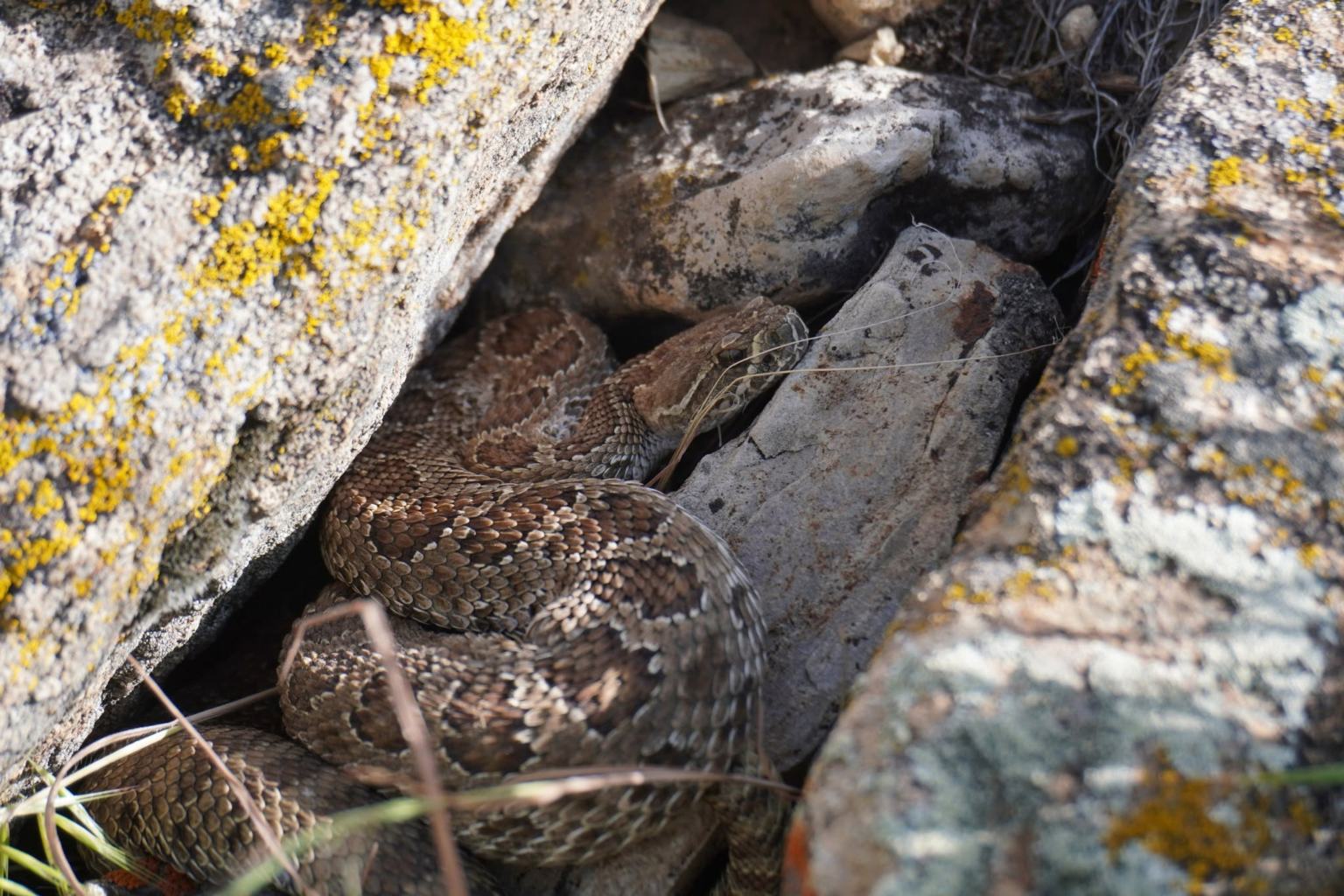
Prairie rattlesnakes sometimes aggregate during the winter or breeding seasons. But one detail Martin observed stuck out—sometimes two snakes in the ball of writhing serpents would be shedding.
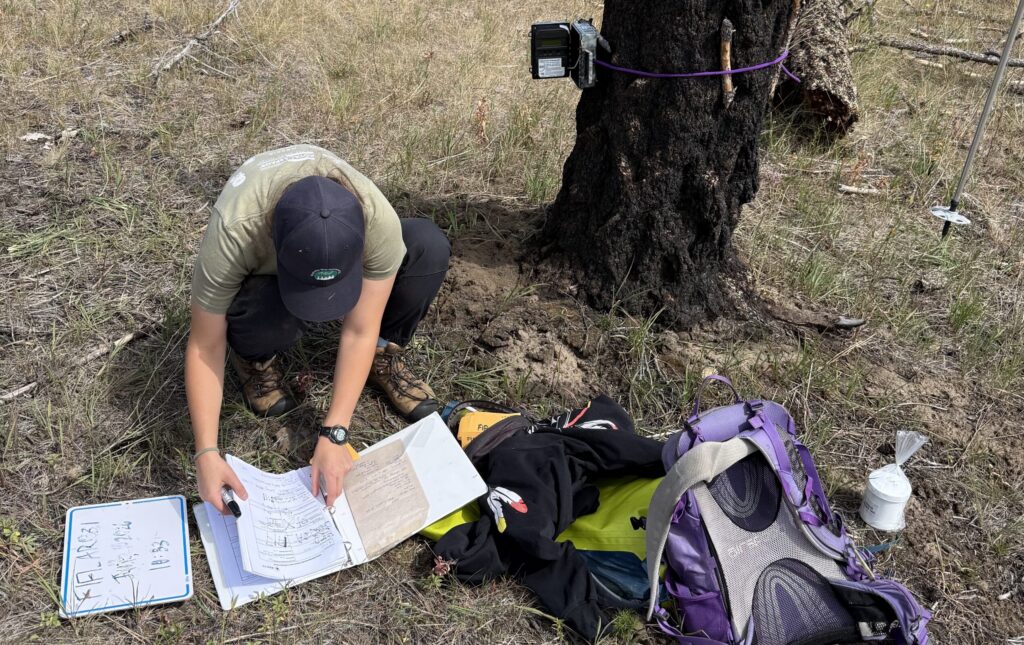
Martin would head out in the field, often early in the morning, trying to triangulate a snake’s position by holding up the VHF antenna. They weren’t always easy to see, even if she was right on top of them. Once she’d spotted a snake and homed in on it, “it’s like immediately you’re overstimulated,” she said. She remembers occasions where she would see four snakes together, including one big male with a tracking device she was looking for.
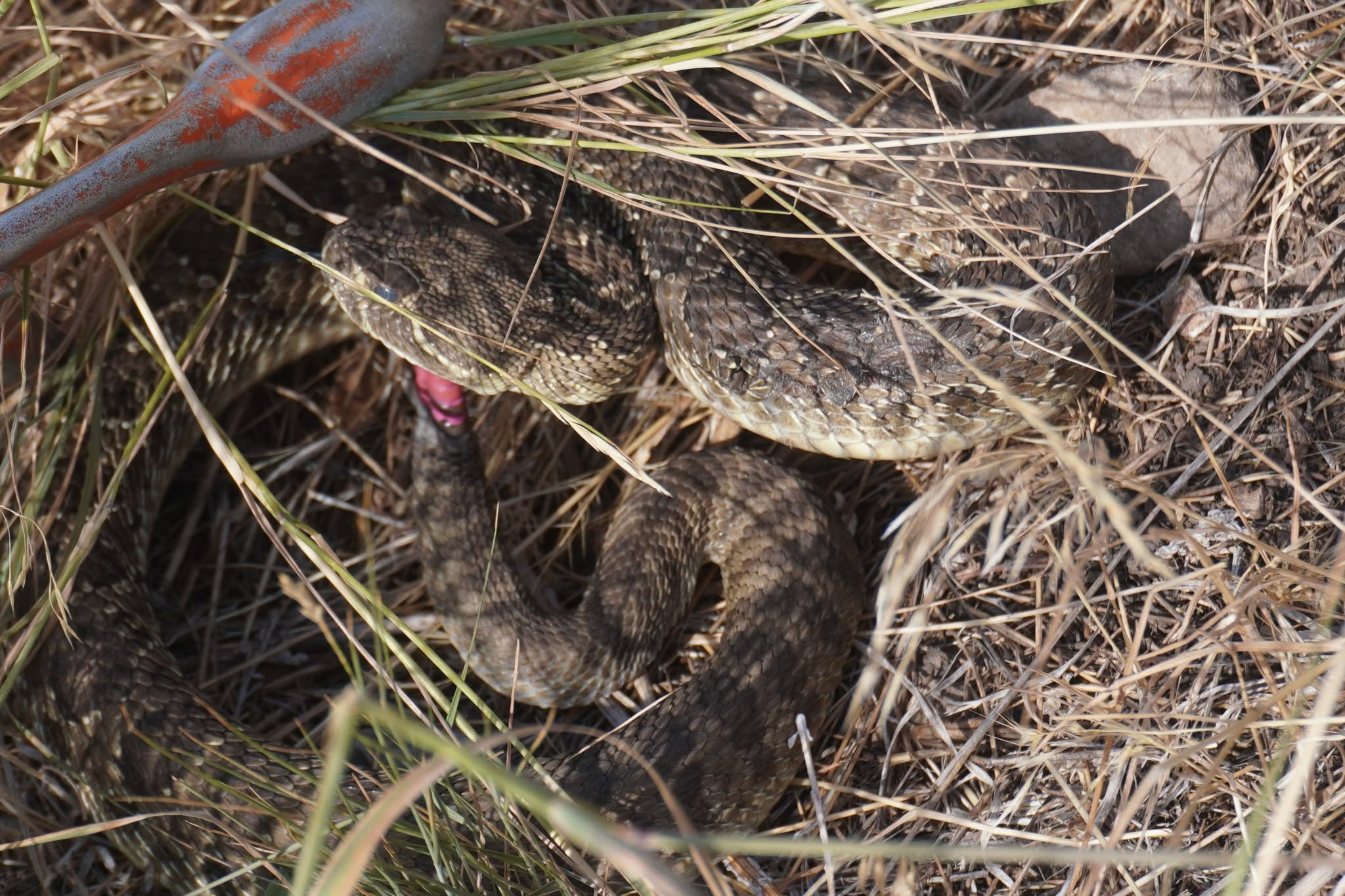
Paralyzed with her snake-catching tongs, it sometimes took a minute to plan her attack. “It’s like the biologist version of target panic,” she said.
The first one she noticed shedding was in August 2024, early in the morning. The temperature was about 65 degrees Fahrenheit—it was cool but sunny. She saw a bundle of snakes, some on top and some below. “There was at least one shedding in that group, and then one went into shed right after,” Martin said.
She later returned to the same spot and found four or five sets of shed skins on the rocks. She started to notice this was a pattern.
Getting under the skin of snake behavior
In a study published recently in Ecology and Evolution, Martin and her supervisor Courtney Conway, a biologist at the U.S. Geological Survey’s Idaho Cooperative Fish and Wildlife Research Unit and TWS member, detailed this previously undescribed behavior in prairie rattlesnakes. Their research was mostly based on Martin tracking down snakes in Sinks Canyon via VHF tracking devices.
The average size of the aggregations was 2.5 snakes—most only had two snakes, but some had three or four. The team analyzed a total of 24 aggregations in this study.
“We hardly ever saw snakes together if there wasn’t shedding taking place in at least one member,” Martin said.
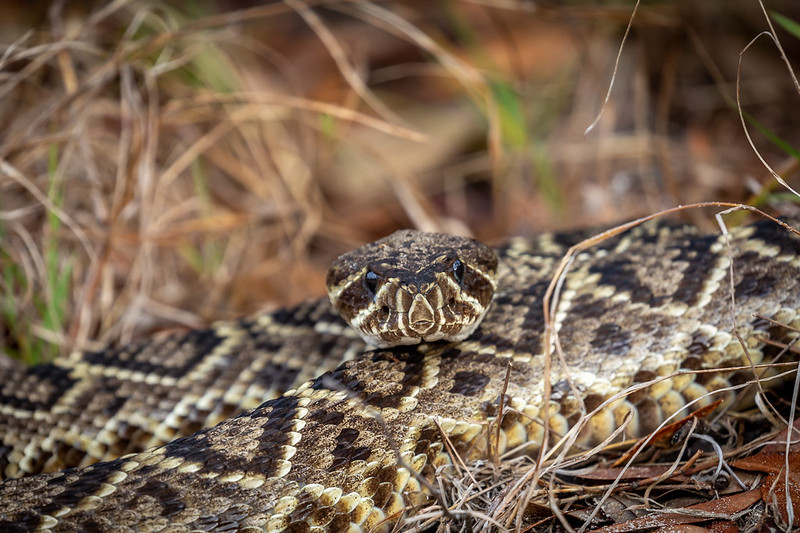
Prairie rattlesnakes aren’t the only pit vipers to perform this behavior—Martin said scientists have observed midget faded rattlesnakes (C. concolor), northern Pacific rattlesnakes (C. oreganus) and cottonmouths (Agkistrodon piscivorus) doing this as well. Researchers aren’t sure why they gather to shed, but they have a few theories.
It could have something to do with reproduction. By shedding skin, Martin said, snakes might change the ways they release pheromones, the chemical signals released to advertise their mating availability, or it might change how detectable these pheromones are to other snakes. Or the snakes might just be aggregating for mating purposes, and the shedding is a secondary effect. “In some rattlesnakes, we find that shedding is a pre-reproductive event,” Martin said.

They also may aggregate during shedding in an effort to reduce the potential for predation. While shedding, some snakes have reduced visibility as the eye cap in their shed skin can get cloudy. By gathering together, rattlesnakes may increase the likelihood of one of the reptiles perceiving predators.
Finally, it may have something to do with thermal regulation—warming up during colder periods, for example.
In any case, Martin’s results didn’t seem to show that the snakes were going back to the same places to aggregate, so the company seems more important than the venue as far as shedding aggregations go.
In some ways, this discovery highlights how much researchers need to learn still about these snakes. Martin said that researchers aren’t even sure when this population of the cryptic species breeds—this information would help narrow down the reasons for these aggregations in the future.
More information on these aggregations could also shed light on how best to translocate snakes. “If snakes aggregate because there are only a small number of suitable shedding locations, we can release translocated snakes near those locations,” Martin said. Or wildlife managers could co-release snakes or release them into areas that already have resident snakes in the area. “Understanding aggregation is a really helpful piece of the puzzle.”