








Rats tend to stay in close-knit social groups within a few city blocks. But as they migrate through Boston, they may spread a potentially deadly disease.
Most common in cities on the East Coast, brown rats have plagued urbanites for centuries. As their estimated numbers have surged even in the last few decades, so has the risk they pose to public health.
But some pest control campaigns might cause rats—who are otherwise fairly stationary—to migrate, which would increase disease transmission, said Marieke Rosenbaum, a public health veterinarian at the Cummings School of Veterinary Medicine at Tufts University in Massachusetts. Rosenbaum researches how urban wildlife impacts human health in shared urban spaces. “Our management of rodents is impacting their movement, which could actually facilitate transmission of disease between rat populations that otherwise don’t normally intermingle that much,” she said.
In a new study published in Neglected Tropical Diseases, Rosenbaum and her colleagues investigated the prevalence of a deadly bacterium that causes the disease leptospirosis in humans and other mammals within rat populations in Boston.
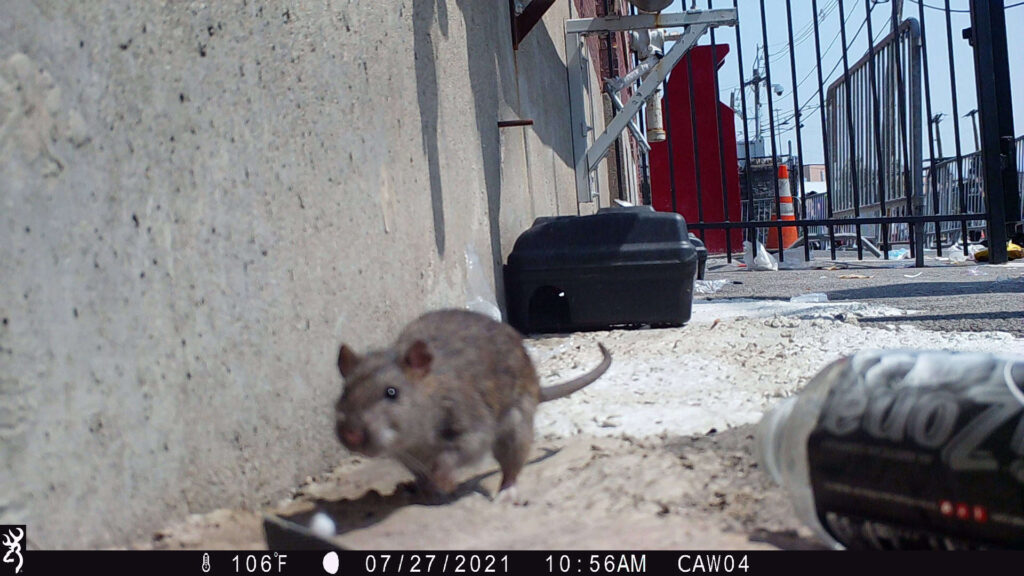
Brown rats (Rattus norvegicus), which spread from Asia to Europe to North America in the 1700s as stowaways on trade ships, carry a host of pathogens, including Leptospira. This bacterium causes leptospirosis, a disease that affects many mammals, including humans. While leptospirosis can often be asymptomatic, especially in rats, it can sometimes cause serious symptoms, ranging from fever, muscle aches, nausea and vomiting to coughing up blood, chest pain and even death in severe cases. In Boston, one person who contracted the disease in 2018 was admitted to the emergency room with multi-organ failure. Globally, it is the most widespread bacterial zoonotic disease, with over 1 million human cases and nearly 60,000 deaths annually.
Laboratory collaborations
To conduct their study, Rosenbaum and her team received rat carcasses from the Boston Inspectional Services Department and also personally collected samples. They attached sensors to the rat traps that notified their phones each time a rat activated the trap. The team also tested historical frozen samples kept in their lab for pathogens so they could track changes through time.
After conducting necropsies on the rat samples they collected at Tufts, the team shipped the kidneys—where Leptospira likes to hide—to the U.S. Department of Agriculture (USDA). The USDA used molecular tests to determine if the rats were infected with Leptospira and sequence the bacteria’s genome.
Dave Wagner, a disease ecologist at Northern Arizona University, also developed new molecular tools to look for genetic similarities among clades of the bacterium.
Of the 328 rats sampled in the study, about 18%, or 59 individuals, tested positive. They were all asymptomatic but still carried the infection in their kidneys.
Researchers also discovered a close relationship between one of the Leptospira clades they isolated and a human case from Boston in 2018. “It suggests that maybe the human got infected in the area that the rats were,” Wagner said. Rosenbaum also said that cases have been increasing in the Northeast.
The researchers then used genetic markers to delineate rat populations in the city and track their migration through time. They found that rats in Boston would need to travel over one-third of a mile to reach another genetically distinct population of rats, which they rarely did. “Other studies have shown that rats have high site fidelity and like to stay within a few city blocks of their burrowing systems,” Rosenbaum said. While greenways and parks facilitated rat migration, large roads were barriers to their movement.
“We found most of these rats don’t go very far,” Wagner said. But there are exceptions—one rat moved a long distance that corresponded with a Boston subway line. Researchers think it hitched a ride on a truck or train, another example of how humans can unwittingly influence rat migration.
Focusing on at-risk populations
Another cause of rat migration is construction, which disturbs rat nests and burrow systems. If rats lose their homes, they will move into other communities, carrying whatever diseases they have with them.
Pest control campaigns can eradicate a population of rats, but it also opens up the habitat. “You create an open niche for pests to come in,” Rosenbaum said.
Rosenbaum said it’s important to understand how pest control affects disease transmission among urban rats because many campaigns are focused on reducing populations wherever they exist. “But the idea that we can ever eradicate rats from these major cities is really not feasible,” she said. “We need to shift our focus to high-risk areas where we know both the rats are carrying the disease and the humans in that area are vulnerable.”
The researchers also tested the rats for Seoul virus, a type of hantavirus that is one of the main causes of hemorrhagic fever with renal syndrome. Of the 200 rat lungs they tested, 8.6% were positive for Seoul virus. “This disease is rarely looked for in the Northeast, but it is present and zoonotic,” Rosenbaum said.
Leptospira is transmitted through the urine of infected rats, contaminated environments or sometimes through rat bites. People experiencing homelessness, those engaging in outdoor injection drug use and sanitation workers are at a higher risk of contracting leptospirosis because they come into closer contact with rats and contaminated environments.
“It’s worth understanding how frequently these at-risk populations are being exposed and infected,” Rosenbaum said. “And right now, there’s no surveillance to understand these dynamics at all,” she said. “Understanding how it behaves within these rat populations is the first step.”
Article by Olivia Milloway