



When reviewing research, you could be forgiven for thinking that seabirds jump directly into the breeding population after fledging. The vast majority of peer-reviewed publications in the field focus only on nest production and fledging success or on adult survival.
But a huge proportion of seabird numbers—sometimes more than half, depending on the species—aren’t chicks, fledglings or breeding adults. After leaving their nests, most seabirds spend years at sea, largely lost to researchers, before they ever settle down to find a mate. Birds in this prebreeding period account for about half of most species’ entire populations.
“This is truly like the lost years mystery at sea,” said Liam Taylor, a postdoctoral researcher in evolutionary ecology at Bowdoin College in Maine.
But conserving these prebreeding birds may be more important in many cases than researchers have given them credit for.
“[Seabirds] are facing so many threats that we’re trying to think expansively about how to protect them,” Taylor said.
From Leach’s storm-petrels to the wider world of seabirds
Taylor, who uses the pronoun “they,” and their colleague Eleanor Gnam from Memorial University of Newfoundland mostly study Leach’s storm-petrels (Hydrobates leucorhous). These small gray seabirds nest in underground burrows on islands across the North Pacific and North Atlantic. Some 40 to 50% of the population of Leach’s storm petrels is of prebreeding age. These birds spend at least three years in this prebreeding period, though it’s often closer to five or six years.
Colonies on small islets are vulnerable to predation from invasive species like feral cats (Felis catus), dogs, rats or foxes—it only takes a few, in some cases, to wipe out an entire colony of Leach’s storm-petrels. Taylor wants to learn how to attract younger adults to replenish these islets when adult populations are knocked down by invasives or other problems, but it’s difficult to know where to start due to a lack of knowledge. “This is a population on the ropes, and we know nothing about the prebreeding birds,” they said.
In a study published recently in Frontiers in Ecology and the Environment, Taylor and Gnam set out to learn more about prebreeding birds and their importance for conservation overall.
The team reviewed thousands of papers published on seabirds, looking mostly for two types of research. The researchers looked at long-term productivity studies that tracked how many eggs seabirds laid and how many chicks hatched and fledged. Taylor and Gnam also looked at mark-recapture studies that analyzed survival year over year.
The prebreeding years
The team collected data on 90 species of seabirds—everything from wandering albatrosses (Diomedea exulans) to sea ducks. The researchers analyzed this data in three different ways.
The first analysis the researchers conducted was meant to help them understand population dynamics. Their findings revealed that a large proportion of seabird species are prebreeding adults—usually about 40 to 50%, depending on the species.
The team then conducted an analysis to examine which class of seabird was most critical for maintaining populations. Many seabird species are long-lived, meaning that breeding adults can produce multiple broods of chicks throughout their lives. Conservationists have often homed in on conserving breeding adults, since a smaller proportion of chicks and prebreeding adults seem to make it to breeding age. It’s also easier to find the breeding adults, which tend to nest in the same colonies every year.
The researchers found that, in general, focusing on breeding adults probably still provided the best bang for the conservation buck. But that’s not true in every case, and prebreeding birds are always important.
Sometimes, factors like hurricanes or invasive species can lower breeding population numbers. In such cases, conserving prebreeding adults becomes more important because there are few breeding adults left, Taylor said.
The third analysis looked at potential solutions to seabird conservation. Many seabirds spend years in this prebreeding period before they start to mate and build nests. But if these younger adults can somehow be recruited to breeding sites, they might be able to boost nest production overall in struggling populations.
In their analysis, Taylor and Gnam found mixed results for different species in terms of how important it is to get birds to breed earlier. In earlier research, they found that prebreeding birds in species like northern gannets (Morus bassanus) will actually breed earlier than usual when populations experience crises. When disease, such as highly pathogenic avian influenza, lowers the population density of northern gannets, more younger birds come in to fill in the gap and refresh colonies.
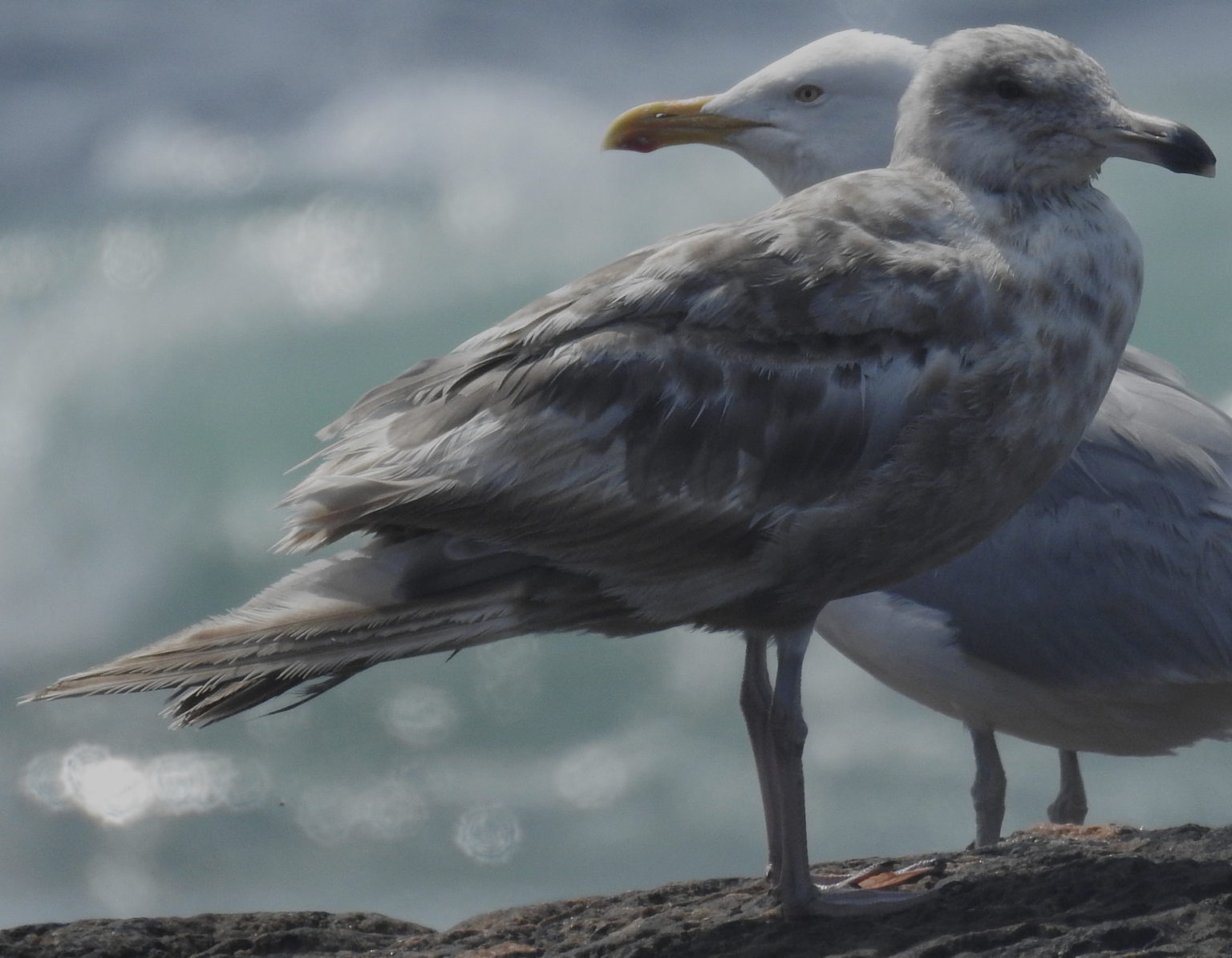
Another study revealed that culling herring gulls (Larus argentatus), which normally begin to breed at four or five years old, tended to reduce the breeding age, on average.
Taylor is still only speculating about how knowledge of prebreeding Leach’s storm-petrels could help conservationists attract younger birds to breeding colonies, but learning more about where they spend time would be a good start.
Part of the problem is that these young birds often fly long distances across the globe, so it’s difficult to track them. “A lot of seabird researchers are really interested in [this period], but the problem is there’s no way in,” Taylor said.
Taylor and Gnam hope that the continued development of new tracking technology will help clear up some of this opacity in this important period of seabird lives.
Article by Joshua Rapp Learn