




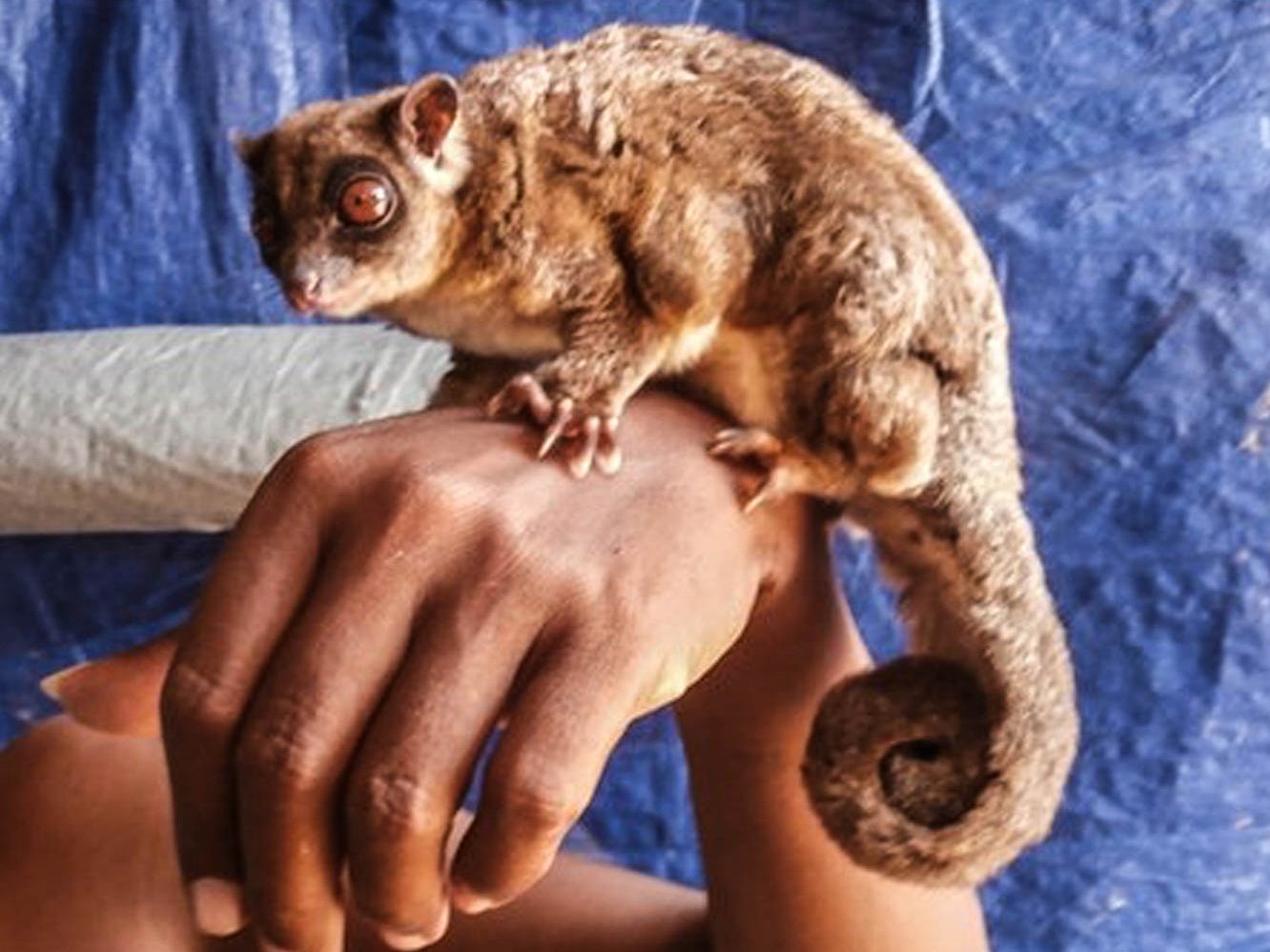
New species are being described—and disappearing—faster than ever. But what’s much less common? Species popping back up that were thought to be long extinct. Not one, but two marsupials thought by scientists to have been gone for thousands of years have been documented living in the rainforests of New Guinea. The pygmy long-fingered possum (Dactylonax kambuayai) and the ring-tailed glider (Tous ayamaruensis), species once thought to be extinct before metaphorically rising from the dead, join the Lazarus taxon. A long-fingered possum, which uses its namesake finger to feed on insect larvae buried in logs, was collected, misidentified and used as a teaching specimen in the Australian Museum in 1992. Researchers thought the species had disappeared during the last ice age, at least 6,000 years ago. It wasn’t until recently that scientists compared the specimen to fossil fragments and recently captured photos that the marsupial’s identity was revealed. The other marsupial, the ring-tailed glider, was first described via fossils in the 20th century by an Australian paleontologist. Some Indigenous groups consider the animal sacred. Rika Korain, a local Maybrat woman and coauthor on the recent paper published in Records of the Australian Museum, said that collaboration with local Indigenous groups was crucial for this research.