




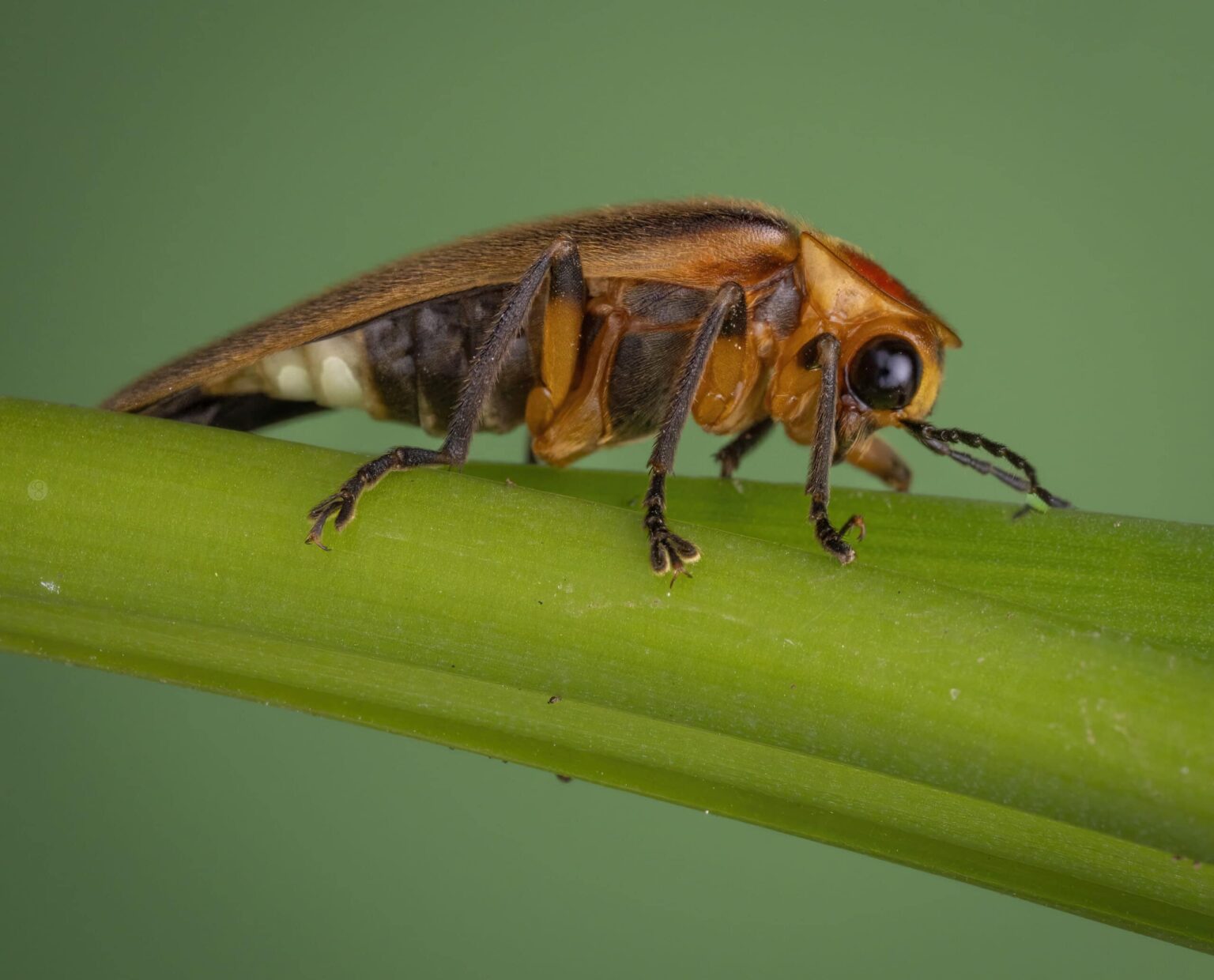
In the Mexican city of Morelia, three generations of sightings have revealed that fireflies don’t light up the night sky like they used to.
“We don’t know if we’re talking about a local extinction or just a displacement of fireflies,” said Cisteil Pérez-Hernández, a postdoctoral researcher and entomologist at the Universidad Michoacana de San Nicolás de Hidalgo in Morelia, Mexico. “But we do know that little by little, fireflies are disappearing from Morelia.”
Through conducting 112 interviews and surveys, Pérez-Hernández found that most Morelians still knew what fireflies were—but the number of firefly sightings and their general abundance were decreasing over time. She also found that younger generations of Morelians are losing touch with this culturally important species. While every elder surveyed reported having seen fireflies in nature, only two of every 10 respondents under the age of 25 reported having seen them.
Traveling back in time
Pérez-Hernández came to Morelia for a postdoctoral research position to study beetles. One night, a colleague invited her to sample for fireflies in the city. “This really caught my attention because I had always gone out to the countryside or conservation areas to look for fireflies, but I had not considered looking in urban areas,” she said.
A few years later, she started a project on fireflies, hoping to understand how different levels of urbanization affected firefly distribution across the city—the capital of the central-western Mexican state of Michoacán, Morelia is home to around 800,000 people and continues to grow.
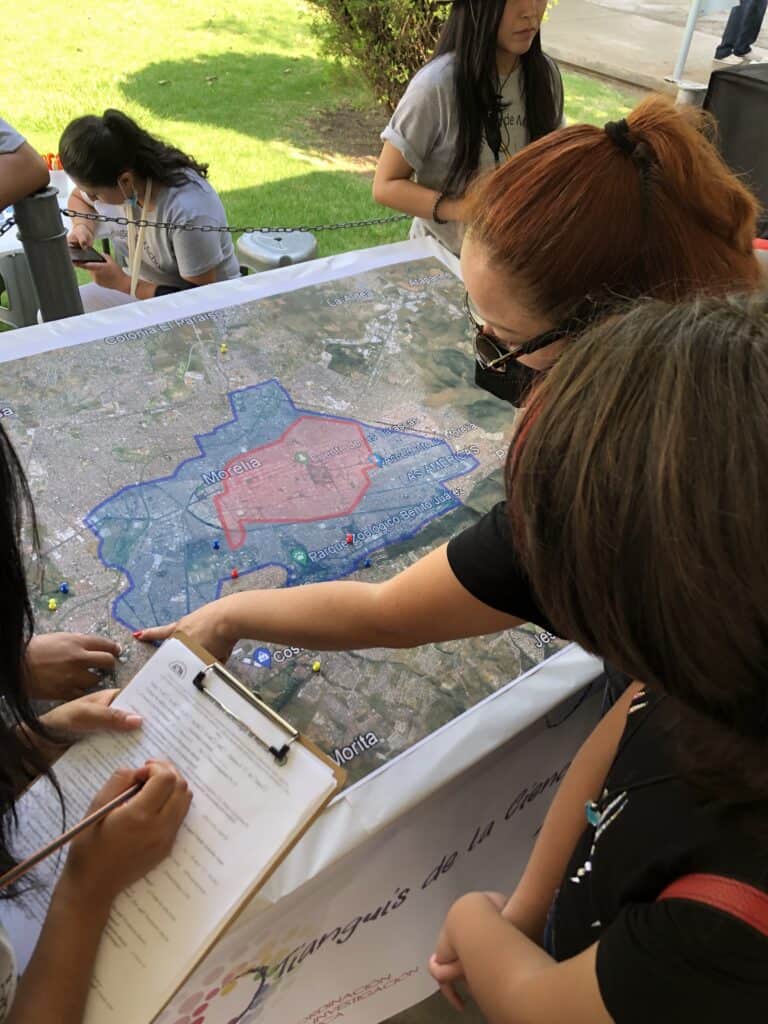
For a new study published in PeerJ Life & Environment, Pérez-Hernández started out by making a list of fireflies in the city based on where they were found on a gradient from highly urbanized to rural. But the deeper she dove into the literature—databases, entomological records and specialized literature—the less information she found. She only found two species recorded within the city through entomological records. “In many European countries, they have information dating back centuries. But in most of Latin America, we don’t have those sources of information,” she said. Scientists have more thoroughly studied certain areas in the country, like the state of Veracruz. “But in many regions, the studies are scarce.”
Pérez-Hernández turned to iNaturalist, a user-sourced citizen science platform where anyone can upload observations of flora and fauna. She found around 15 different species of fireflies documented throughout the city. “So, we started asking people, ‘Hey, where have you seen them?’”
Older Morelians started sharing stories of seeing fireflies as children. “I was left with the feeling that people have a lot to say,” Pérez-Hernández said, so she created a formal study that would use oral histories to document firefly abundance in Morelia throughout the past five decades.
Reversing the decline
The team found a total of 116 sites where fireflies had been documented in Morelia through interviews, iNaturalist sightings, sampling and entomological records. A total of six genera and 19 species of nocturnal fireflies were recorded in the city and its surrounding areas.
Firefly sightings from 2016 to 2022 were associated with green areas in urban zones with vegetation, high soil moisture and low light pollution. These factors likely helped firefly populations maintain a foothold through time.
Fireflies are highly sensitive to changes in the environment and can serve as bioindicators for urban ecosystems more broadly. The areas where elders reported seeing fireflies in the past but not in the present coincided with environmental changes like urbanization and loss of green space, which fireflies rely on. “Through the oral histories, we saw that the most relevant factors that have caused the loss of fireflies in Morelia are the increase in light pollution and the loss of green spaces,” she said.
Possibly, other factors like the use of pesticides, herbicides and insecticides—which are driving insect loss more broadly in the country—could also be behind the loss of the fireflies. But the team didn’t examine causes in this study.
Fireflies need clean bodies of water, green areas where they can find food, and very low levels of pollution—both chemical and light pollution. “All of these conditions are what humans require to have a good quality of life, too,” she said. “In some way, the loss of fireflies indicates that the quality of life we now have in those places is lower.”
Many Morelians reported last seeing fireflies years ago. “It was beautiful to witness them going back in their memories and recounting what they experienced,” she said. “But then they suddenly realized that [the fireflies] are no longer there, and their feelings changed from excitement to sadness.”
Collective amnesia
Pérez-Hernández said it was hard for respondents to believe that their children hadn’t seen any fireflies because they were common even up until about 20 years ago in the city.
This loss of collective memory, where a younger generation is brought up in a city without fireflies, might be the early stages of the societal extinction of Morelia’s fireflies. Societal extinction refers to the phenomenon of “gradual fading of cultural knowledge and collective memory of a species.”

Societal extinction can lead to another dangerous phenomenon called shifting baseline syndrome, where new generations accept a degraded environment as normal, natural or the default. When a society has assumed a species has blinked out or forgotten it was ever there in the first place, it can make it hard for conservationists to rally public support to save the species.
“When people are not aware of a loss of nature, it is more difficult for them to get involved in conservation strategies or even to alert their leaders that something needs to be done,” Pérez-Hernández said. At least in this case, the older generation was still concerned after they realized the bioluminescent insects were blinking out. “Practically everyone would then ask, what can we do to make them shine again?”
Article by Olivia Milloway