


Bears in Japan are a conservation success story that might be a little too successful. Last year saw a huge surge in bear attacks on people, killing 13 and injuring more than 100. Wildlife biologists say a combination of factors are to blame, including more bears, less food for them and paradoxically, fewer people.
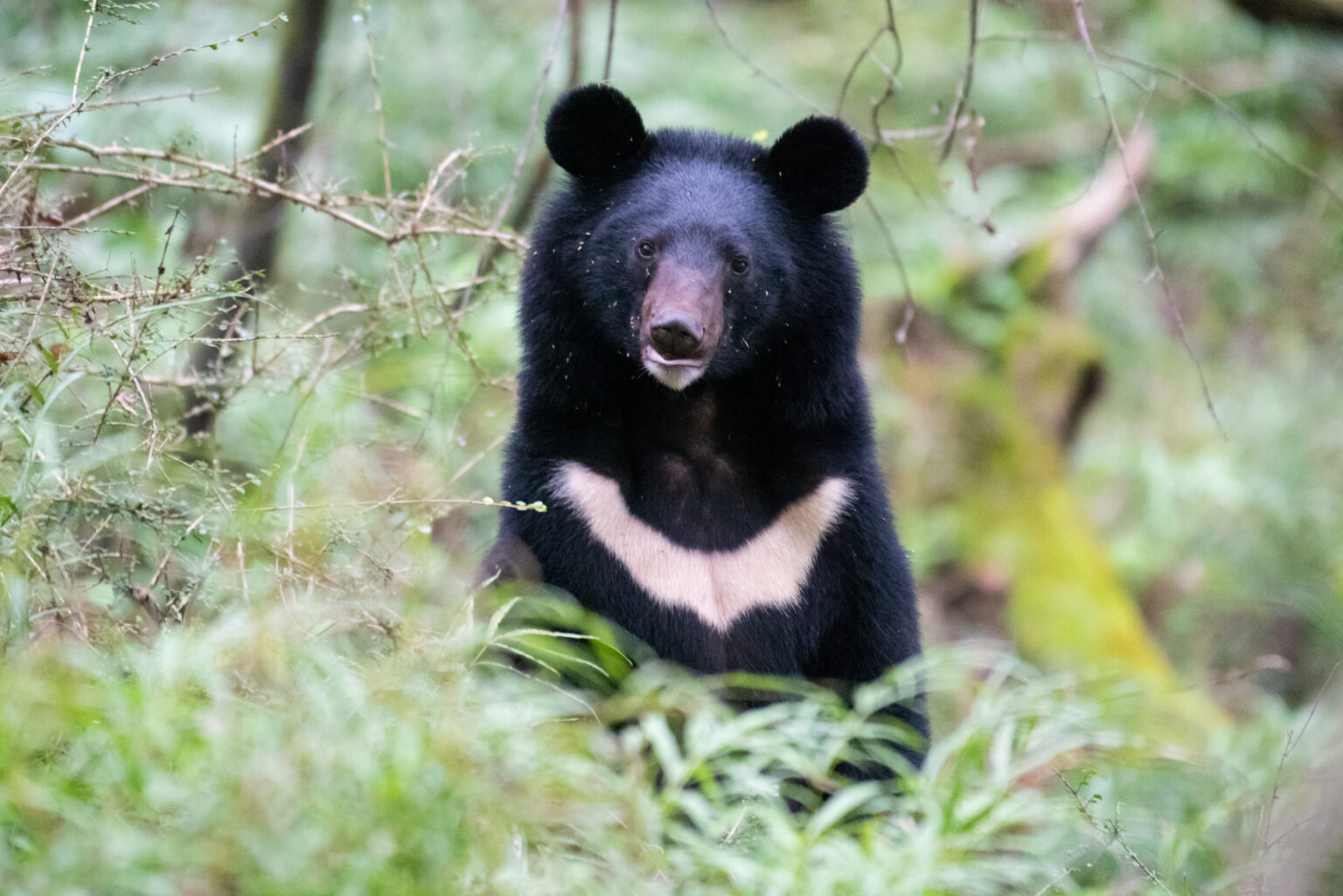
Japan is home to two species of bears, one of which is the Asiatic black bear (Ursus thibetanus), which populates three regions, including Japan’s main island. Hokkaido, a mountainous island in northern Japan, is also home to the Ussuri brown bear (Ursus arctos lasiotus).
By the 1980s, overharvesting had led Asiatic black bear populations to plummet, and some areas had lost the species entirely. But the bears began to rebound after conservation plans limited hunting. By November of last year, 2025 had seen 235 bear attacks and more than 20,000 reported sightings across the country.
“One reason this human-bear conflict has increased is because the distribution of bears expanded in the last 20 years,” said Masahiro Ohnishi, a TWS member and principal research scientist at Wildlife Management Office in Japan. But the reasons for the uptick in attacks are complex, with overlapping forces pushing hungrier, bolder bears into the fringe of urban areas.
As the number of bears has increased, Ohnishi said that many prefectures are unequipped to deal with them, leaving people—and bears—at risk.
Bears on the move
Sharing a common ancestor with American black bears, Asiatic black bears, also known as moon bears, are on average a little smaller than their North American counterparts. They have a crescent moon-shaped cream marking on their chest, hence the nickname, and ears reminiscent of a certain famous mouse.
Ohnishi said that Asiatic black bears tend not to be aggressive. “When we see the Asiatic black bear in the forest, they’re shy, like American black bears,” he said. Like American black bears, they are also predominantly scavengers and rarely kill for food.
But in Japan, black bears have recently been moving in unexpected ways in search of food. Because Japan has a temperate climate with strong seasonality, these bears typically hibernate each winter. And before they hibernate, they eat anything they can get their paws on, relying heavily on acorns and beech nuts in the fall. But in 2025, there was a mass failure in acorn and beechnut production, so bears, including mothers and cubs, had to travel farther into unknown territories to find food. Sightings and camera trap data have caught females and cubs traveling into suburban areas. In the north, the government deployed the Japan Self-Defense Forces to help local hunters move bear traps in residential areas. Only licensed hunters were permitted to kill the bears.
Some scientists in Japan have pointed to climate change as one factor that caused unusual weather patterns and contributed to last year’s failed beechnut crop. Past studies have linked climate change and human-wildlife conflict in other areas, as shifting weather patterns cause wildlife to move in new and unexpected ways. Ohnishi doesn’t think that climate change is part of the equation in Japan’s spiking bear attacks, though, pointing to natural low years in beechnut and acorn production cycles.
Compounding factors
Beyond last year’s dramatic decrease in acorns and beechnuts, there are other, longer-term factors at play. Japan is facing a human depopulation crisis, especially in rural areas. “Farms and orchards have been abandoned by many farmers because they don’t have successors to take care of them,” Ohnishi said. “And those resources have become food for many species, including bears, deer and boars.” While in the past, farmers have been able to push the bears back through maintaining fencing and working with local hunters, Ohnishi said that many of them no longer have the ability to.
Local hunting clubs, too, have decreased in popularity and are struggling to recruit new members. Ohnishi, who is himself a hunter, said the hobby is dying out. “The average hunter age has been around 65 years old for many years,” he said. As the Japanese population decreases, so does the already small sliver that would be hunters.
There are two types of attacks: defensive and predatory. In Japan and around the world, there are far more defensive than predatory encounters. But in Japan in the last year, predatory attacks were on the rise in both forested and residential areas.
The country’s Ussuri brown bears kill one or two people, if any, each year in defensive attacks, which Ohnishi said is “normal.” Brown bears can become aggressive when startled, especially if it’s a female with cubs or they’re defending a carcass. Attacks have become more frequent as populations have increased, but nowhere near as high as what’s happening with the Asiatic black bears. “We didn’t know that they are capable of killing 13 people, even with the increase in population size,” he said.
Without eye-witnesses, it can be hard to tell if an attack was predatory or defensive. But as bears are moving into areas inhabited by humans, there have been cases of surveillance footage capturing the attack. In one instance on Oct. 8 on the northern side of Japan’s main island, a bear attacked an 82-year-old woman from behind while she was on her morning walk. In a now-infamous example in a neighboring prefecture, a 60-year-old spa worker was mauled while cleaning an outdoor bath on Oct. 16. His body was found a day later, just 2 kilometers from the site of another fatal bear attack that happened a few weeks prior.
There are an estimated 12,000 brown bears on Hokkaido, and Japan’s main island has an estimated 20,000 to 40,000 Asiatic black bears. “Still, I think we are underestimating the population size,” Ohnishi said. “Some parts have a very high density,” he said, especially in the north. And each prefecture—of which there are 47—has its own way of estimating bear numbers, which makes it hard to standardize estimates across the country.
Removing bears from the population has been the main tactic for population control. Last year, around 12,000 Asiatic black bears and 2,000 brown bears were culled across the country. Hunters with permits predominantly shot these animals after encountering or trapping them within, or just outside, city limits. “That’s a lot of bears,” Ohnishi said. “We need to be more calm and systematic in our approach.”
Japan’s model of wildlife management
Wildlife management in Japan looks different than it does in the United States, and Ohnishi has experience in both systems. Before his career in Japan, Ohnishi lived in Texas for 15 years, where he earned his PhD and worked as a research scientist at the Caesar Kleberg Wildlife Research Institute. Now, Ohnishi works at Wildlife Management Office, a private organization that is contracted by the Ministry of the Environment as well as at the prefecture, or state, level to carry out wildlife research and management. He started studying the bears in 2022 using GPS collars and camera traps.
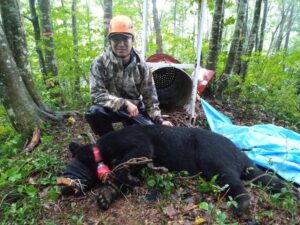
Unlike the U.S., the Japanese government employs few wildlife biologists. “We do have very limited numbers of wildlife biologists in the federal and prefecture agencies,” he said. Japan’s Ministry of the Environment has manuals for bear management. “But across the country—like from California to New York—can you apply the same bear management plan? Probably not,” he said.
The guidance is flexible, Ohnishi said, so that prefectures can customize their own management strategies. But some of the regions are left unprepared and with no existing strategies because they didn’t have bears before. Now with black bears’ recent range expansion, some areas are dealing with high levels of human-wildlife conflict.
And it’s not just the bears who have been changing their behavior. Humans, too, are responding. In part of Hokkaido’s biggest city, Sapporo, which hosted the 1972 Winter Olympics, Ohnishi said that it’s common to see people using bear bells. He said some people are so scared of bears, they don’t walk around at night in some parts of the city. In October 2025, a bear was trapped and removed from the parking lot of a bank building in the downtown area of a city on the northern side of Japan’s main island.
Preventing future attacks
Ohnishi thinks that managers need to implement more preventative and less reactive approaches. He likened opportunistic bear culling to playing whack-a-mole—they’re just trying to deal with problems as they come up. Rather, creating cities informed by science-based conflict-prevention methods, like securing trash, can stop attracting bears to residential areas.
Ohnishi also thinks that instituting bear management zones around major urban areas will create buffer zones of targeted bear deterrence to keep bears away but also maintain forested areas that can still act as conservation zones for the animals. “In Japan, we can learn a lot from wildlife biologists from other countries, including the United States,” he said, citing areas in the north and west where people coexist with large populations of bears.
“I think the number of people killed strongly impacted the Japanese people,” he said. “We have to make a more systematic way to deal with it.”
Article by Olivia Milloway