


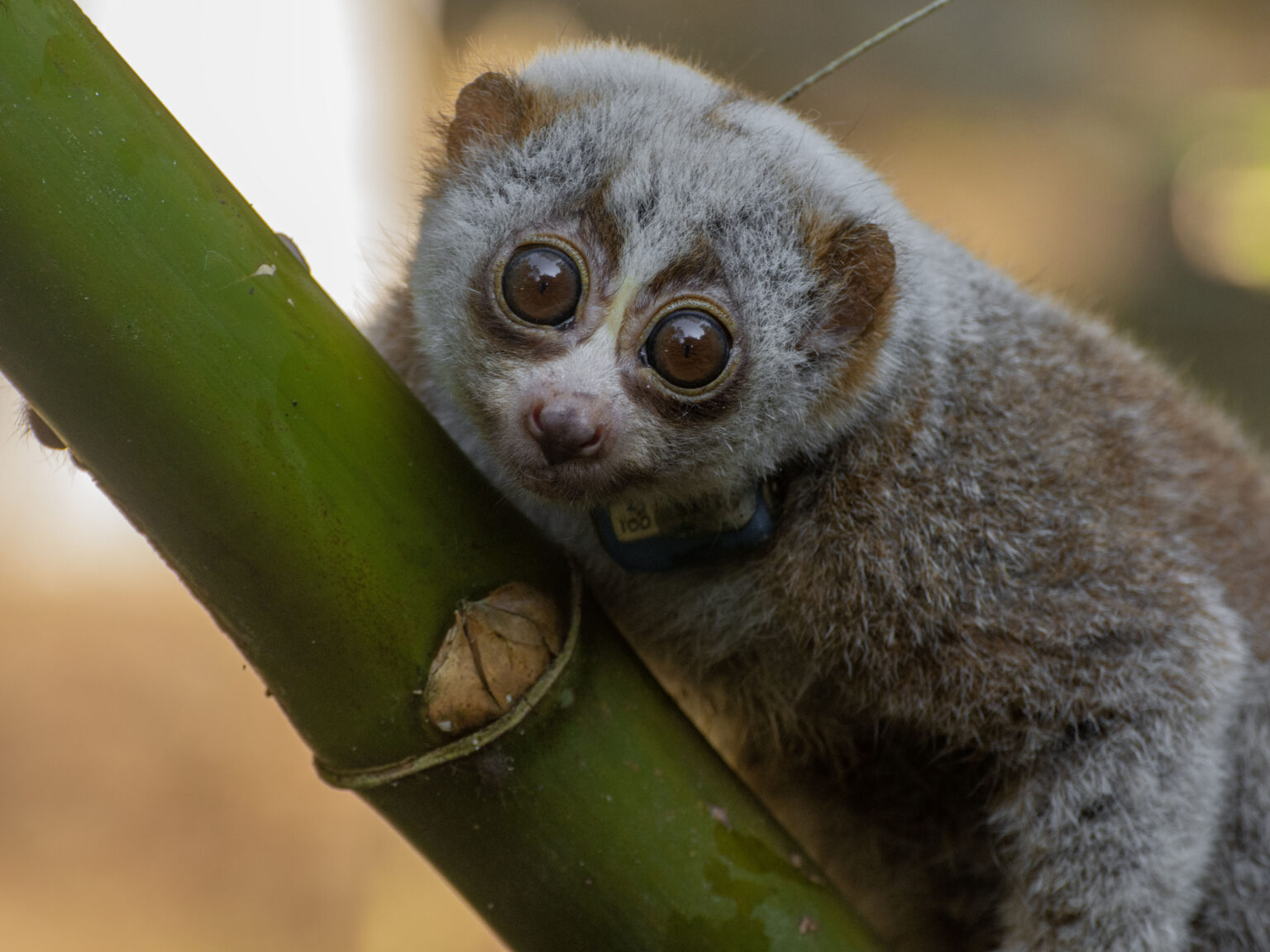
Just because an animal is rescued from the wildlife trade and released back into the wild doesn’t mean it’s out of the woods, finds a new study investigating one of the world’s most highly trafficked primates. Because of their large eyes and adorable appearance, Bengal slow lorises (Nycticebus bengalensis) are highly sought after in the illegal pet trade. But their slow, deliberate movements and cute eyes are misleading—they animals are highly territorial and the only known venomous primates. In a new study published in Global Ecology and Conservation, researchers from the Anglia Ruskin University in the U.K. studied the outcomes of Bengal slow lorises after being rescued and released in Bangladesh. Tracking the released animals via radio collar in a national park in Bangladesh, researchers discovered that only two of the nine lorises released survived. Researchers recovered the bodies of four of the seven and determined they were fatally attacked by other slow lorises in what were likely territorial disputes. “Many rescued endangered species are often released because the public expects it, but for animals such as the Bengal slow loris, this is not always the best course of action,” said Anna Nekaris, a researcher at Anglia Ruskin University in Cambridge, England. Among the nine recognized species of slow lorises, the International Union for Conservation of Nature classifies all as either critically endangered, endangered or vulnerable. The researchers emphasized the importance of understanding the behavior and ecological needs of the species being released to inform the sutiability of the release site, both for slow lorises and other animals targeted by reintroduction efforts.